Regulatory Compliance gaps that delay pharma launches
Author
Date Published
Reading Time
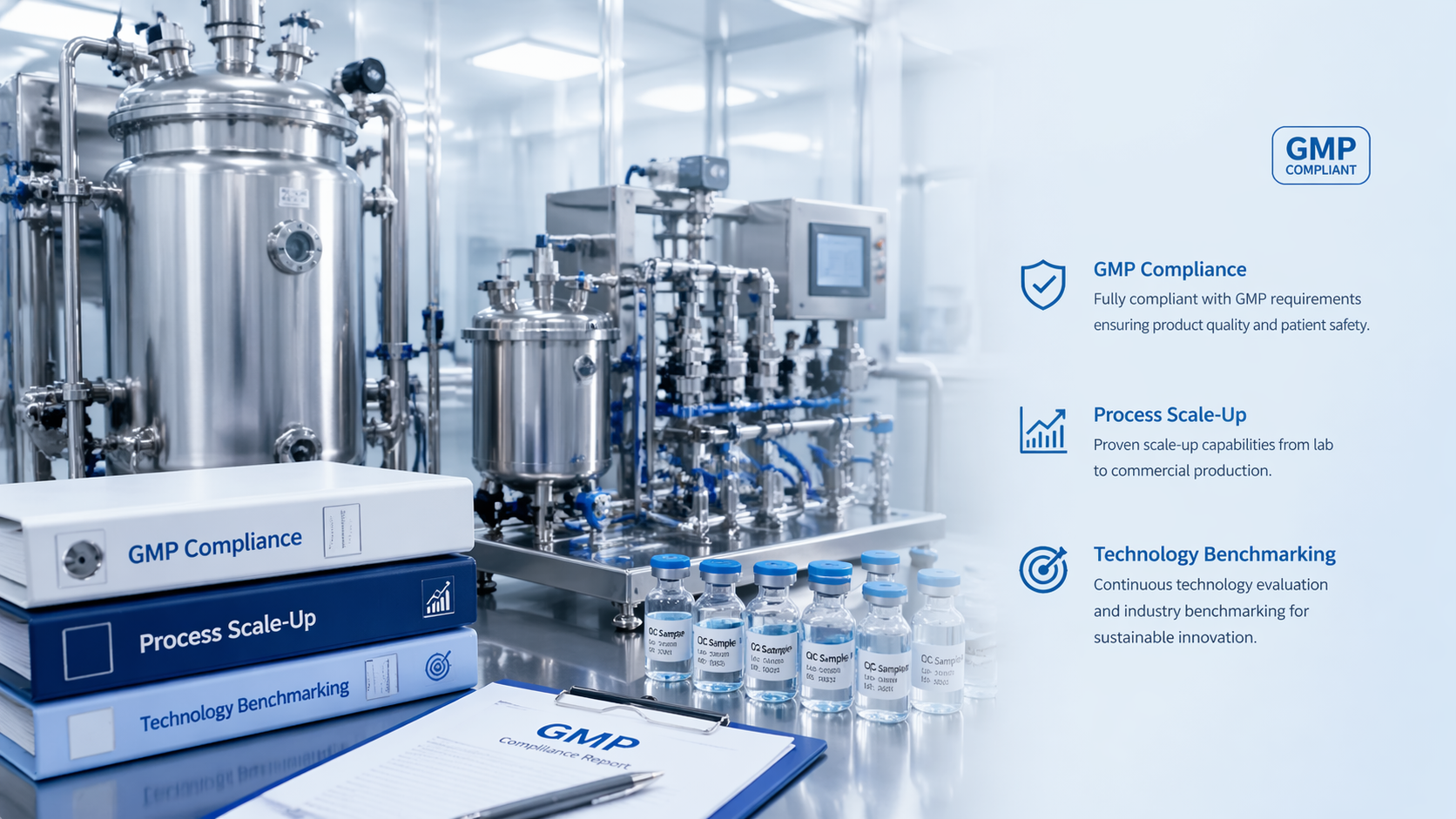
Regulatory Compliance gaps can quietly derail Pharmaceutical Production, extending timelines, inflating costs, and exposing risk during the R&D-to-Production Transition. For teams focused on Industrial Bioprocessing, Chemical Synthesis, and Biological Manufacturing, robust Technical Benchmarking, Process Optimization, and alignment with GMP Compliance and USP Standards are essential to accelerate launches with confidence.
For information researchers, technical evaluators, quality leaders, project managers, and enterprise decision-makers, the challenge is rarely a single failed audit point. More often, launch delays stem from small disconnects between lab methods, equipment capability, validation evidence, documentation control, and scale-up execution. These gaps often remain hidden until process transfer, engineering runs, or pre-approval inspection readiness reviews expose them.
In pharmaceutical and chemical operations moving from batch development toward continuous or hybrid production, compliance must be designed into hardware selection, fluid handling accuracy, material compatibility, cleaning strategy, data traceability, and change control from day 1. This article examines the most common regulatory compliance gaps that delay pharma launches, the operational signals that indicate elevated risk, and practical ways to reduce disruption through technical benchmarking and structured implementation.
Where launch delays begin: the hidden compliance gaps between development and commercial readiness
Many launch setbacks originate in the transition between laboratory success and production-scale repeatability. A formulation may perform well in a 1 L to 10 L development environment, yet the supporting documentation, equipment qualification package, and process control logic may be too weak for a 200 L, 500 L, or single-use commercial pathway. When this happens, teams face additional protocol work, repeat studies, and approval hold points that can add 4 to 12 weeks to a launch timeline.
One recurring issue is the mismatch between development equipment and production-intent systems. If benchtop reactors, microfluidic dosing tools, centrifuges, or pipetting platforms do not generate data under conditions that reflect GMP-relevant parameters, comparability becomes difficult. Even a small variance such as fluid dispense accuracy shifting from ±0.5% in development to ±2.0% in scaled execution can trigger rework in assay reproducibility, critical quality attribute review, and batch record updates.
Another gap involves fragmented ownership. R&D may own methods, engineering may own scale-up, quality may own deviation review, and procurement may own supplier onboarding. Without a shared compliance matrix, critical decisions are delayed. Teams often discover late in the project that a selected system lacks expected documentation such as material certificates, calibration traceability, software audit trail capability, or extractables support for product-contact components.
For organizations operating across biologics, chemical synthesis, and advanced therapeutics, the risk multiplies because each workflow has different sensitivities. Cell culture infrastructure may be highly vulnerable to contamination and sensor drift, while small-volume fluidic systems may be more exposed to precision loss, dead volume, and cleaning validation gaps. The result is not simply a technical delay; it is a launch governance problem that affects budgeting, site readiness, and market entry sequencing.
Four compliance disconnects that appear late but start early
- Development methods are not written in a way that supports direct transfer into GMP batch documentation or validation protocols.
- Equipment selection prioritizes performance output but overlooks data integrity, calibration interval, cleaning evidence, or supplier documentation depth.
- Scale-up decisions are made before critical parameters such as shear profile, mixing time, hold time, or temperature drift are fully characterized.
- Quality review begins too late, often after FAT, SAT, or engineering runs, when design corrections are slower and more expensive.
Operational indicators that a launch is at risk
Teams should treat repeated deviation closure cycles, unresolved supplier questionnaires beyond 10 business days, calibration exceptions, and version mismatches across SOPs and batch records as warning signals. If three or more of these indicators occur in one project phase, a delay risk review is usually justified before moving forward.
The compliance domains that most often slow approvals and validation
Regulatory compliance gaps rarely exist in isolation. In practice, launch delays are usually caused by a chain of weak controls across documentation, equipment qualification, process validation, raw material governance, and digital data handling. For pharmaceutical operations, the most common pain point is that technical teams can explain the process scientifically, but cannot demonstrate enough controlled evidence to satisfy review expectations.
Documentation is often the first failure point. Process descriptions developed during feasibility work may not define acceptable operating ranges, intervention criteria, or hold-time boundaries with enough precision. A temperature statement such as “controlled cooling” is not sufficient when the actual validated process needs a 2°C to 8°C range, a maximum excursion window of 15 minutes, and a defined response action if the threshold is exceeded.
Equipment qualification is another common bottleneck. Installation Qualification, Operational Qualification, and Performance Qualification are not just procedural steps; they are proof that the chosen hardware can repeatedly operate within defined limits. Problems emerge when pilot-scale reactors, single-use bioreactors, centrifugation systems, or automated liquid handlers are sourced without a clear documentation package. Missing calibration maps, software version records, wetted-material data, or sensor verification history can suspend execution for 2 to 6 weeks.
Data integrity has also become a major launch consideration. Modern manufacturing environments rely on digital setpoints, automated records, and electronic review. If a fluidic device or process-control subsystem lacks secure audit trails, user-level permissions, or time-stamped change records, the system may still be technically functional but operationally unsuitable for a regulated launch. In that situation, retrofitting controls later is far more expensive than screening for them during technical evaluation.
High-risk compliance areas by function
The table below summarizes where launch delays most often occur and what teams should review before process transfer or site readiness milestones.
The central lesson is that approval speed depends on evidence quality, not just technical performance. A system that performs well but lacks qualification depth is often slower to launch than a slightly less flexible system supported by stronger documentation, traceability, and change management controls.
Why fluidic precision and bioconsistent hardware matter
In microfluidic dispensing, automated pipetting, and low-volume biologics handling, small deviations can scale into major compliance concerns. Dead volume, carryover, pulse instability, or inconsistent tip performance may not appear critical in discovery work, but they become significant when lot comparability, assay precision, or cell viability acceptance windows tighten to narrow operating bands.
That is why benchmark-driven evaluation matters. Comparing systems against GMP expectations, USP-aligned methods, and ISO-relevant measurement practices helps teams identify whether a platform is suitable only for research convenience or genuinely ready for regulated process transfer.
How technical benchmarking reduces compliance risk before scale-up
Technical benchmarking gives cross-functional teams a structured way to evaluate readiness before compliance issues become launch blockers. Instead of comparing equipment on price or basic throughput alone, benchmarking examines whether a system can support process control, qualification, cleaning, traceability, and operational repeatability at the point where development data must become manufacturing evidence.
For example, pilot-scale reactors should not be assessed only on vessel volume or agitation range. A stronger review looks at heat transfer stability, sensor calibration frequency, control-system logging, wetted-surface documentation, and the ease of reproducing batch recipes between 3 runs or more. In centrifugation and separation workflows, teams should also measure ramp profile consistency, rotor traceability, and contamination control features that affect sample integrity and release confidence.
Benchmarking is equally important in liquid handling and precision fluidics. In personalized therapeutics or high-value biologics, dispensing accuracy at microliter or sub-microliter scale can influence potency, assay variance, and yield. If the equipment used for process development cannot maintain stable performance across viscosity changes, temperature fluctuations, or prolonged duty cycles of 6 to 8 hours, the risk of non-comparable process transfer rises sharply.
A practical benchmarking framework should combine engineering data with compliance readiness. That includes performance windows, supplier document availability, expected maintenance intervals, calibration burden, software reviewability, and cleaning or single-use suitability. This approach allows procurement and quality teams to identify systems that reduce total launch friction rather than simply lowering initial capex.
A benchmarking checklist for regulated scale-up decisions
- Define 5 to 10 critical process parameters tied to product quality, such as temperature range, flow stability, mixing time, hold time, and dispense precision.
- Review supplier support documents before final selection, including calibration records, material declarations, software controls, and maintenance guidance.
- Test under realistic process stress conditions such as maximum run duration, variable viscosity, or repeated clean-in-place exposure where relevant.
- Require cross-functional sign-off from engineering, quality, operations, and procurement before transfer milestones are locked.
- Record any gap that would require post-installation correction, because each open item can add 1 to 3 weeks during validation.
Benchmark categories by equipment type
Different equipment classes require different emphasis. Bioreactors need tight attention to sterility assurance, gas transfer, and sensor calibration. Microfluidic systems demand precision repeatability, dead-volume control, and pressure stability. Centrifugation platforms require separation consistency, rotor lifecycle control, and cleaning access. Automated pipetting platforms must demonstrate reproducibility across volume ranges, tip compatibility, and software-controlled traceability.
Using this method early can prevent a common error: selecting a technically advanced platform that later proves difficult to validate within the targeted launch window.
Procurement, supplier qualification, and documentation controls that protect launch timelines
Procurement plays a direct role in regulatory success. In many pharma projects, launch timing is influenced less by the purchase order date than by the quality of supplier qualification completed before ordering. If the commercial team buys a system based on throughput claims without validating the supplier’s document package, service response capability, or change notification process, the site inherits compliance risk that is difficult to correct under deadline pressure.
A qualified supplier should be evaluated on more than price, lead time, and technical fit. Decision-makers should ask whether the vendor can support FAT or SAT expectations, provide calibration traceability, supply replacement parts within a defined service window such as 48 to 72 hours, and maintain revision control for software and hardware components. This is particularly important for systems used in process development that are intended to generate data supporting later validation work.
Documentation control should also be embedded into procurement workflows. Teams often request manuals and certificates after equipment arrival, but by then delays have already started. A better approach is to define a pre-award documentation list and score suppliers against it. For regulated environments, that list may include user requirement support, installation documents, calibration references, material-contact information, software security features, maintenance intervals, and change-control communication procedures.
This matters across G-LSP’s five industrial pillars because each technology family carries different launch sensitivities. Pilot-scale synthesis systems may carry heat transfer and corrosion documentation risks. Bioreactors and cell culture infrastructure require stronger contamination and sterility controls. Precision microfluidics and automated pipetting platforms need tighter reproducibility and auditability. A procurement process that recognizes these differences will reduce late-stage compliance surprises.
Supplier evaluation factors that influence compliance readiness
The following table can be used as a practical decision screen when comparing equipment suppliers for regulated development and scale-up programs.
The strongest procurement decision is usually the one that lowers validation burden over a 12 to 24 month operating horizon. A slightly longer lead time can still be the better choice if it brings stronger documentation, better calibration support, and lower change-control risk.
Common procurement mistakes
- Approving equipment based on demo performance without reviewing qualification deliverables.
- Failing to align engineering specifications with QA expectations before supplier selection.
- Underestimating the cost of undocumented firmware or component changes after installation.
- Using research-grade accessories in workflows that will later support GMP transfer packages.
Implementation roadmap: how to close compliance gaps before they delay launch
Closing regulatory compliance gaps requires more than a final document review. The most effective approach is to build a phased readiness model that starts during equipment selection and continues through process characterization, qualification, and routine operation design. A well-managed project can divide this work into 4 practical stages: readiness mapping, benchmark verification, qualification planning, and launch-control review.
In stage 1, teams identify the process-critical elements that will shape launch readiness. This usually includes 6 to 10 items such as product-contact materials, control ranges, software traceability, calibration intervals, cleaning approach, and expected batch documentation outputs. At this point, quality and engineering should agree on what evidence is needed before scale-up approval is granted.
In stage 2, the organization performs technical benchmarking under realistic operating conditions. That means comparing equipment and process behavior across actual viscosity ranges, temperature bands, run durations, and cleaning scenarios. Stage 3 then translates those results into qualification logic, document ownership, protocol planning, and supplier support actions. This is where many launch teams regain 2 to 8 weeks that would otherwise be lost to late corrections.
Stage 4 focuses on launch-control review. Before commercial readiness or regulatory filing support activities proceed, project leaders should confirm that open deviations are understood, change-control records are current, training completion is documented, and critical equipment documentation is archived in controlled form. This is especially valuable in cross-site transfers where one missing version-controlled file can stall execution.
A practical 5-step execution model
- Map critical process and equipment risks within the first 2 project weeks.
- Benchmark shortlisted systems against GMP, USP, and operational transfer requirements.
- Assign document owners for protocols, calibration evidence, software records, and change control.
- Run pre-transfer reviews before FAT, SAT, or engineering batches begin.
- Use a final readiness gate that requires closure or formal justification of all critical gaps.
FAQ for project and quality teams
How early should compliance gap assessment start?
Ideally, it should start during user requirement definition or supplier screening, not after equipment arrives. Beginning 8 to 16 weeks earlier can significantly reduce qualification delays and emergency document requests.
Which equipment types need the most benchmarking attention?
High-impact categories include pilot-scale reactors, bioreactors, precision liquid handling systems, microfluidic devices, and laboratory centrifugation platforms. These systems directly influence process reproducibility, contamination control, and data integrity.
What is a common mistake during process transfer?
A frequent mistake is assuming development data automatically supports commercial transfer. If parameter ranges, equipment behavior, and documentation controls were not generated under transfer-relevant conditions, additional studies are usually required.
How should decision-makers prioritize corrective actions?
Start with gaps that can block qualification or inspection readiness: missing audit trails, incomplete calibration traceability, product-contact material uncertainty, and uncontrolled document versions. These typically have a greater schedule impact than lower-priority efficiency issues.
For organizations managing complex R&D-to-production transitions, compliance speed depends on early alignment between process science, hardware capability, documentation discipline, and supplier readiness. Benchmark-driven evaluation across reactors, microfluidics, bioreactors, centrifugation, and automated liquid handling systems helps prevent small technical gaps from becoming costly launch delays.
G-LSP supports this decision process by connecting technical benchmarking with the regulatory and operational realities of modern pharmaceutical and chemical manufacturing. If your team is assessing scale-up equipment, validating process transfer pathways, or tightening GMP and USP alignment before launch, now is the right time to review your readiness model. Contact us to discuss your application, obtain a tailored benchmarking approach, or explore solutions built for faster, more reliable launch execution.
Expert Insights

Chief Security Architect
Dr. Thorne specializes in the intersection of structural engineering and digital resilience. He has advised three G7 governments on industrial infrastructure security.
Related Analysis