What affects polarimeter wholesale pricing in 2026?
Author
Date Published
Reading Time
What Affects Polarimeter Wholesale Pricing in 2026?
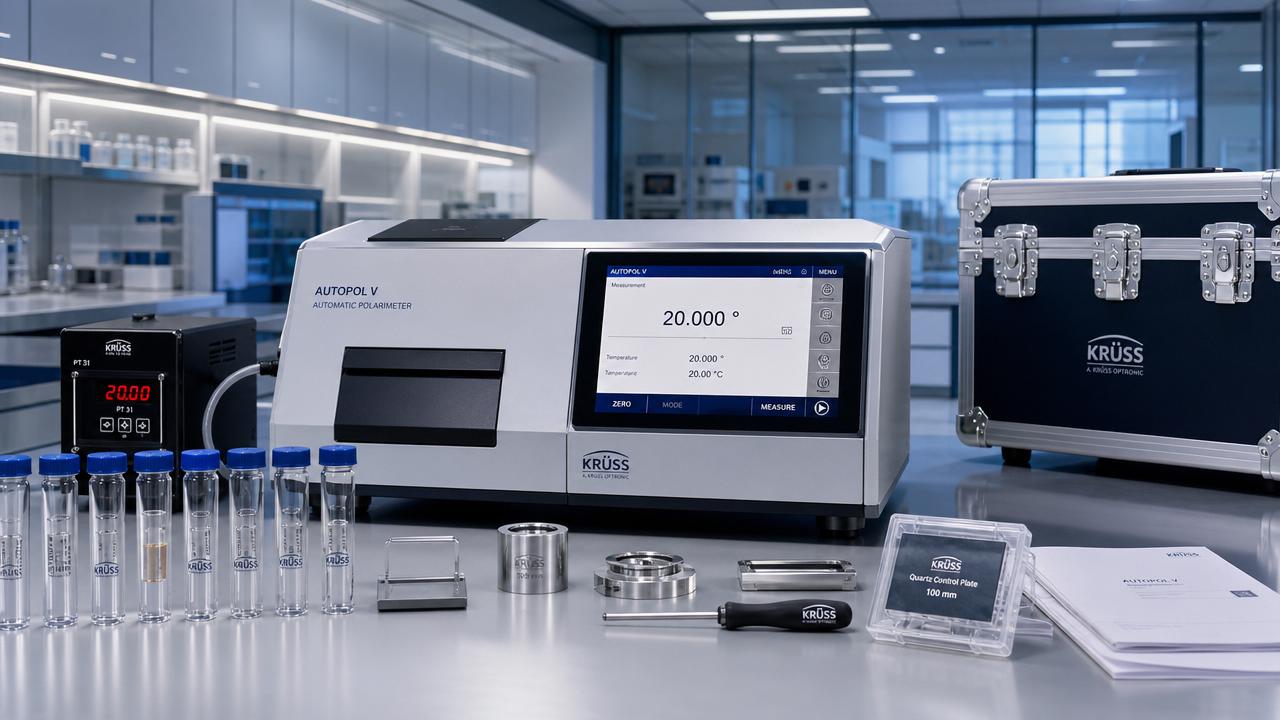
In 2026, polarimeter wholesale pricing is shaped by more than unit cost—it reflects optical precision, automation depth, regulatory readiness, supplier scalability, and lifecycle support.
For business evaluators comparing lab-scale or production-adjacent instrumentation, understanding these pricing drivers helps avoid false economies and supports long-term analytical reliability.
This guide examines the commercial and technical factors influencing polarimeter wholesale costs across pharmaceutical, chemical, food, academic, and industrial quality environments.
Why Polarimeter Wholesale Pricing Needs a Checklist Approach
Polarimeters measure optical rotation to verify concentration, purity, identity, and stereochemical behavior. Small specification differences can create large performance gaps.
A low polarimeter wholesale quote may exclude temperature control, wavelength flexibility, compliance documentation, calibration support, or integration capacity.
Checklist-based evaluation protects against under-specified instruments, hidden service costs, and supplier promises that cannot scale beyond sample demonstrations.
In 2026, the strongest value comes from matching optical architecture, workflow automation, and compliance depth to the actual operating environment.
Core Checklist for Evaluating Polarimeter Wholesale Cost
- Verify angular accuracy, repeatability, and resolution under realistic sample conditions, not only under ideal factory calibration data.
- Compare wavelength options, because sodium D-line, multiple LED wavelengths, and UV capability carry different polarimeter wholesale implications.
- Confirm temperature control stability, since sucrose, APIs, essential oils, and specialty chemicals can show temperature-sensitive rotation behavior.
- Check tube materials, path lengths, filling convenience, and corrosion resistance before treating accessories as minor cost items.
- Assess automation functions, including barcode input, method storage, auto-ranging, sample recognition, and direct data export.
- Require clear compliance support for GLP, GMP, USP, 21 CFR Part 11, audit trails, and electronic signatures where applicable.
- Evaluate software update policy, cybersecurity posture, user permission control, and database backup before finalizing polarimeter wholesale terms.
- Ask for calibration certificates, traceability references, validation documents, and service response commitments in writing.
- Calculate total ownership cost, including consumables, validation labor, training, preventive maintenance, downtime, and replacement accessories.
- Test supplier batch capacity, spare-parts availability, lead time reliability, and packaging quality for multi-site deployment.
Optical Performance and Measurement Architecture
Optical design is one of the largest drivers of polarimeter wholesale pricing. Detector quality, light source stability, and optical path control matter.
Basic instruments may suit teaching or low-risk screening. High-precision models support regulated release testing, process development, and sensitive chiral analysis.
A supplier offering unusually low polarimeter wholesale rates may use simplified optical assemblies, limited temperature compensation, or narrower measurement ranges.
When comparing offers, request real repeatability data across dark, colored, viscous, and low-rotation samples. These reveal practical instrument strength.
Key Optical Questions to Ask
- Confirm whether accuracy is stated for optical rotation, specific rotation, concentration, or only selected reference materials.
- Request wavelength stability data and clarify whether replacement light sources require factory service or local maintenance.
- Check how the instrument handles turbid samples, colored liquids, bubbles, and low-transmission matrices.
Automation, Data Integrity, and Workflow Fit
Automation depth strongly affects polarimeter wholesale pricing in 2026. Manual units remain economical, but automated systems reduce operator variation.
Features such as method templates, automatic temperature correction, LIMS connectivity, and audit-ready reporting raise price but improve process control.
In high-throughput settings, an inexpensive instrument can become costly if manual transcription, repeated measurements, or revalidation consume labor.
Polarimeter wholesale evaluation should therefore include workflow mapping, not only specification comparison. Time savings are often measurable after installation.
- Map sample arrival, preparation, measurement, review, approval, and archiving before selecting automation level.
- Prioritize secure data export when results support certificates, batch records, or validated analytical methods.
- Avoid proprietary software lock-in unless update history, migration tools, and support continuity are proven.
Regulatory Readiness and Documentation Packages
Documentation can materially change polarimeter wholesale cost. Regulated environments often require more than an operating manual and certificate.
Installation qualification, operational qualification, performance qualification, change-control statements, and software validation support may be priced separately.
For pharmaceutical, biotechnology, nutraceutical, and fine chemical applications, weak documentation can delay method transfer or audit closure.
A higher polarimeter wholesale price may be justified when the package shortens validation, strengthens traceability, and reduces compliance remediation.
Documentation Items Worth Pricing Separately
- Include IQ/OQ/PQ protocols, factory acceptance records, calibration traceability, and recommended preventive maintenance schedules.
- Confirm audit trail behavior, user access control, electronic record retention, and export format compatibility.
- Review supplier change-notification policy for firmware, components, software versions, and critical optical parts.
Supplier Scale, Lead Time, and Wholesale Commitments
Polarimeter wholesale pricing also reflects production consistency. A supplier must support repeat orders without drifting specifications or delivery quality.
Volume discounts are useful, but only when aligned with serial traceability, packaging protection, spare-parts planning, and installation scheduling.
Global deployments require documentation language control, power compatibility, regional service options, and stable product lifecycle planning.
Before accepting polarimeter wholesale discounts, examine whether the quoted timeline assumes available stock or future production slots.
- Request delivery schedules by batch, not only a single estimated lead time for the entire order.
- Define acceptance criteria for damage, missing accessories, firmware mismatch, and incomplete calibration records.
- Secure spare tubes, lamps, seals, fuses, reference standards, and service parts before instruments enter routine use.
Application Scenarios That Change Price Expectations
Pharmaceutical and API Development
Chiral compounds and active ingredients often demand high sensitivity, traceable calibration, validated software, and strict temperature management.
In this setting, polarimeter wholesale value depends on regulatory confidence as much as analytical performance.
Food, Sugar, and Beverage Testing
Routine sucrose and concentration measurements may prioritize durability, easy cleaning, rapid readings, and stable temperature correction.
A mid-range polarimeter wholesale option can be sufficient if repeatability and throughput are validated under daily sample loads.
Chemical and Flavor Industries
Essential oils, solvents, fragrances, and specialty chemicals may require solvent-resistant tubes and strong performance with colored samples.
Accessory selection can shift polarimeter wholesale cost more than expected, especially for corrosive or volatile matrices.
Academic and Shared Research Facilities
Shared environments value user management, rugged interfaces, training simplicity, and serviceable consumables.
Lower polarimeter wholesale pricing is attractive, but excessive fragility or poor documentation can shorten usable life.
Commonly Overlooked Risks in Polarimeter Wholesale Deals
Hidden Accessory Gaps
Some quotations omit measurement tubes, reference materials, adapters, printers, validation kits, or software licenses.
Always compare complete working configurations, because incomplete polarimeter wholesale offers distort real budget planning.
Weak After-Sales Coverage
A low price loses value when local service is unavailable, response times are vague, or replacement parts require long import cycles.
Service terms should define escalation paths, turnaround expectations, loaner availability, and calibration support.
Specification Misalignment
A model optimized for education may not withstand production-adjacent quality control, even if baseline accuracy appears acceptable.
Polarimeter wholesale decisions should be based on intended use, matrix complexity, audit exposure, and operator variability.
Unclear Product Lifecycle
Discontinued platforms create problems for validation continuity, spare parts, software updates, and cross-site standardization.
Ask whether the instrument is in active production and how long critical components will remain supported.
Practical Execution Steps Before Ordering
- Define the measurement purpose, sample type, throughput level, compliance exposure, and required reporting format.
- Create a comparison sheet covering optics, temperature control, software, documentation, accessories, service, and warranty.
- Request a complete polarimeter wholesale quote that separates base instrument, options, validation support, and freight.
- Run sample-based trials using real matrices, including colored, viscous, low-rotation, or temperature-sensitive materials.
- Score suppliers on technical response quality, documentation clarity, lead time evidence, and post-sale support strength.
- Negotiate price together with spare parts, calibration intervals, training, software updates, and service-level commitments.
G-LSP style benchmarking emphasizes system fitness over simple price ranking. This is especially relevant for analytical instruments supporting sensitive transitions.
The best polarimeter wholesale decision balances micro-level optical precision with macro-level deployment reliability, documentation control, and lifecycle economics.
Conclusion and Action Guidance
Polarimeter wholesale pricing in 2026 is influenced by optics, temperature stability, automation, software integrity, documentation, accessories, supplier scale, and support quality.
A cheaper quotation may be appropriate for simple screening, but it can be risky for regulated, high-throughput, or production-adjacent work.
Before final selection, compare complete configurations, test real samples, verify documentation, and convert service promises into written terms.
Use a structured checklist to separate genuine polarimeter wholesale value from short-term discounting and build an instrument plan that remains reliable after installation.
Expert Insights

Chief Security Architect
Dr. Thorne specializes in the intersection of structural engineering and digital resilience. He has advised three G7 governments on industrial infrastructure security.
Related Analysis