China's Lab Equipment Export Surge at LABVOLUTION 2026
Author
Date Published
Reading Time
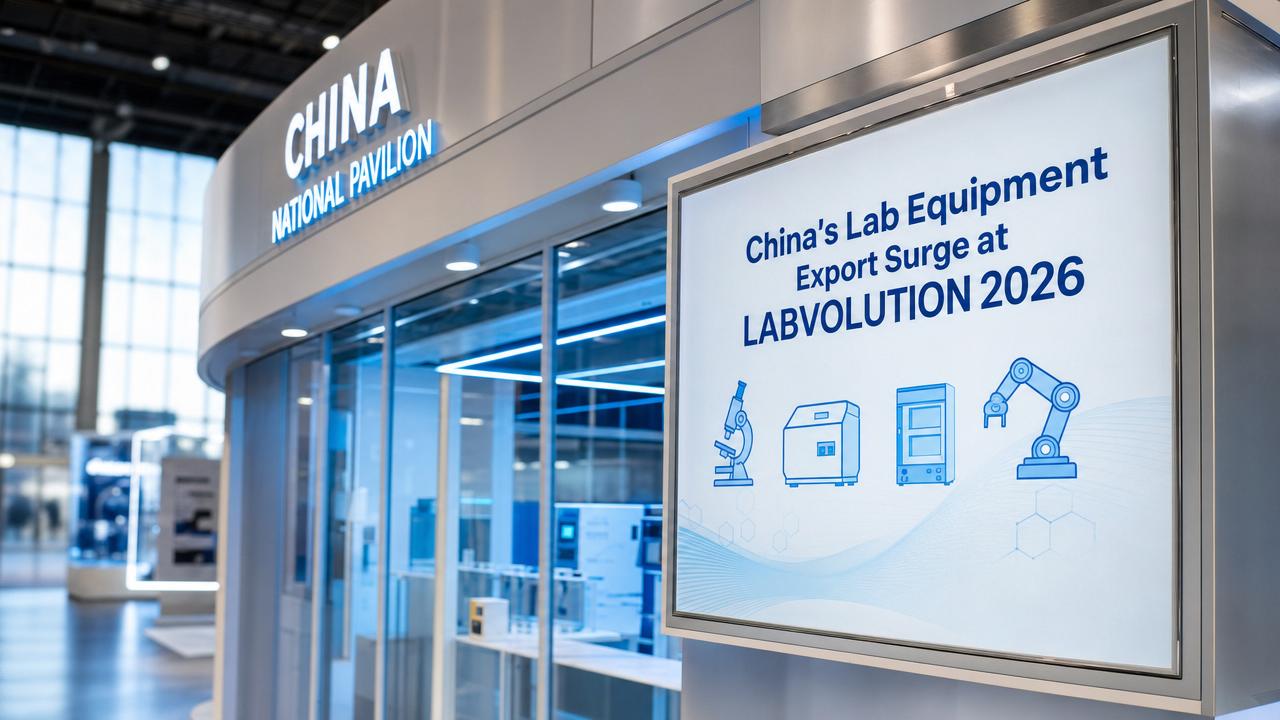
China’s laboratory equipment export momentum gained visible traction at LABVOLUTION 2026 in Berlin, which concluded on May 15, 2026. The expansion of the Chinese national pavilion — up 37% year-on-year in exhibition area — signals strengthened international recognition of domestically manufactured high-end lab instrumentation, particularly amid tightening global regulatory expectations for biopharmaceutical process equipment.
Event Overview
The LABVOLUTION 2026 exhibition in Berlin closed on May 15, 2026. Data from the event organizers confirmed that the China national pavilion expanded its total exhibition area by 37% compared to 2024. Within the Chinese delegation, ultracentrifuges and filtration units attracted the highest volume of qualified inquiries — ranking #1 and #3 respectively among all Chinese products exhibited. European and U.S.-based biopharmaceutical companies specifically requested documentation verifying particle retention efficiency (≥99.999%) under GMP-compliant operating conditions and biocompatibility validation reports for rotor materials.
Industries Affected
Direct Trade Enterprises: Export-oriented distributors and OEM/ODM service providers face heightened demand for technical documentation aligned with EU Annex 1 and FDA 21 CFR Part 211 requirements. Their ability to supply validated performance data — not just CE or ISO certifications — now directly influences lead conversion and contract terms.
Raw Material Procurement Enterprises: Suppliers of high-purity titanium alloys, ceramic composites, and pharmaceutical-grade polymers are experiencing increased inbound inquiries. Demand is shifting from volume-based procurement to traceable, audit-ready material certification packages — especially for rotor forgings and membrane substrates used in filtration units.
Manufacturing Enterprises: Domestic manufacturers of ultracentrifuges and sterile-grade filtration systems must now scale their quality management systems (QMS) to support concurrent regulatory audits across multiple jurisdictions. Notably, the emphasis on particle retention metrics implies tighter tolerances in machining, sealing, and cleanroom assembly — raising capex and validation timelines.
Supply Chain Service Enterprises: Third-party validation labs, regulatory consultants, and logistics providers specializing in temperature- and contamination-controlled transport are seeing elevated requests for integrated service bundles — e.g., pre-shipment GMP gap assessments paired with EU MDR-aligned technical file reviews.
Key Focus Areas and Recommended Actions
Prepare GMP-aligned technical dossiers — not just marketing specs
Biopharma buyers no longer accept generic performance claims. Companies should consolidate test reports on particulate shedding, pressure decay integrity testing (for filters), and cytotoxicity assays (for rotor alloys) into standardized, bilingual technical dossiers compliant with ICH Q5A(R2) and ISO 13485:2016 Annex A.
Prioritize traceability over throughput in production planning
With overseas buyers auditing batch records and material traceability down to heat lot level, manufacturers should review ERP configurations to ensure full serialization of critical components — especially for centrifuge rotors and filter housings — prior to next export cycle.
Engage early with notified bodies for EU MDR Class IIa alignment
Although ultracentrifuges and filtration units are often classified as ‘accessories’ under IVDR or MDR, recent EMA guidance (EMA/CHMP/CVMP/QWP/412325/2023) indicates that devices directly involved in viral clearance or final sterile filtration may trigger Class IIa designation. Proactive classification review is advised.
Editorial Perspective / Industry Observation
Observably, the buyer focus at LABVOLUTION 2026 reflects a structural shift: it is no longer sufficient for Chinese lab equipment to meet functional equivalence — it must demonstrate *regulatory interoperability*. Analysis shows this is less about technical capability and more about documentation discipline, audit readiness, and cross-jurisdictional quality language fluency. From an industry perspective, this trend favors vertically integrated manufacturers with embedded regulatory affairs functions — not just those with strongest R&D pipelines.
Conclusion
The 37% growth of China’s LABVOLUTION pavilion is a milestone — but one that marks the end of the ‘entry phase’ and the beginning of the ‘compliance maturity phase’ for domestic lab equipment exporters. Success will increasingly hinge on consistency of evidence, not frequency of innovation.
Source Attribution
Official statistics provided by Deutsche Messe AG (LABVOLUTION 2026 Post-Show Report, May 2026); GMP validation benchmarks referenced from EMA Guideline on the Quality of Water for Pharmaceutical Use (EMA/CHMP/QWP/146913/2022) and FDA Guidance for Industry: Sterile Drug Products Produced by Aseptic Processing (2022). Note: Regulatory interpretation of filtration unit classification under EU MDR remains under active review — continued monitoring of EMA’s Medical Device Coordination Group (MDCG) updates is recommended.
Expert Insights

Chief Security Architect
Dr. Thorne specializes in the intersection of structural engineering and digital resilience. He has advised three G7 governments on industrial infrastructure security.
Related Analysis
Core Sector // 01
Security & Safety
- How to Evaluate a Lab Centrifuge Manufacturer for GMP and High-Throughput LabsAuthor :Dr. Victor Gear

- How to Evaluate a Laboratory Centrifuges Supplier for Speed Range, Compliance, and SupportAuthor :Dr. Victor Gear

- How to Choose Lab Centrifuges for Bioprocessing Based on Cell Type and ThroughputAuthor :Dr. Victor Gear

- Japan Revises JIS T 0601-2-63 for Ultracentrifuge TestingAuthor :Dr. Victor Gear

- Japan Enforces JIS T 0601-2-63:2026 for UltracentrifugesAuthor :Dr. Victor Gear

- Japan Updates JIS T 0601-2-63 for Ultracentrifuge DurabilityAuthor :Dr. Victor Gear

- Ultracentrifuges Manufacturer Comparison: What Buyers Should Check Before Requesting a QuoteAuthor :Dr. Victor Gear

- DIN EMC Update Raises Export Bar for UltracentrifugesAuthor :Dr. Victor Gear