How automated pipetting systems reduce assay drift
Author
Date Published
Reading Time
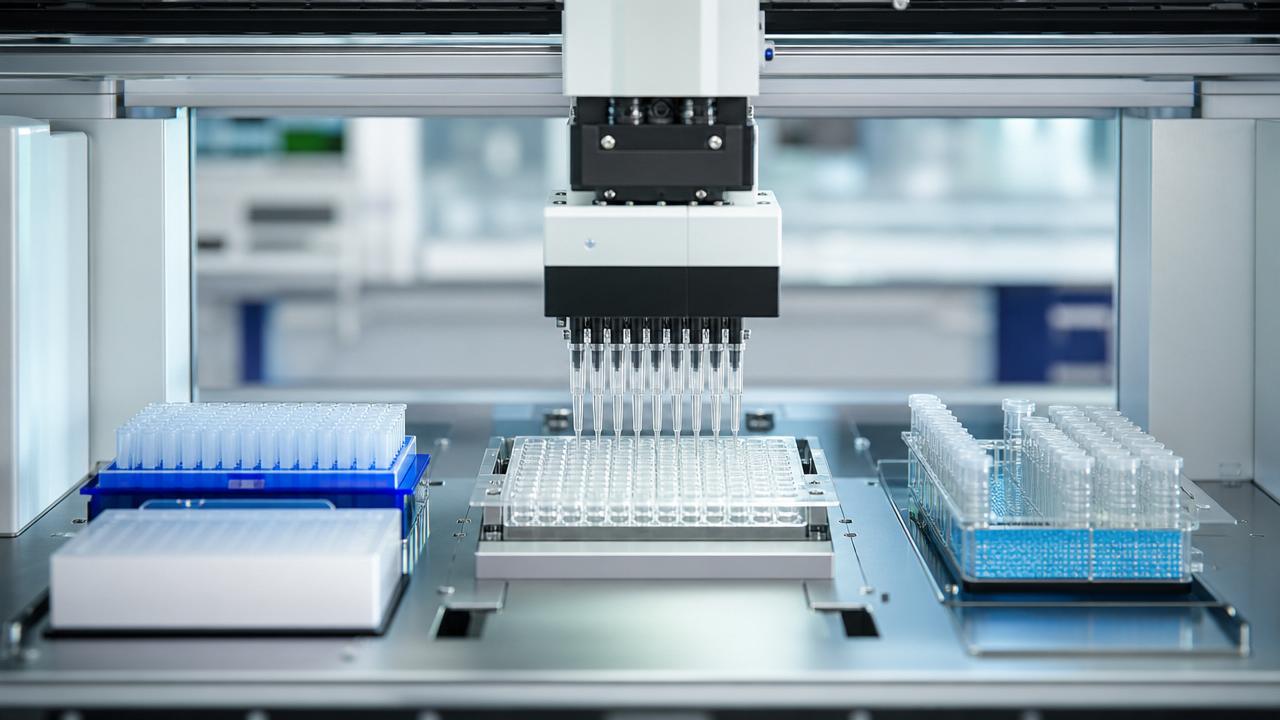
In assay-driven workflows, small liquid-handling errors often become large data problems. Volume inconsistency, timing variation, and operator technique can shift assay signals over time.
Automated pipetting systems for bioprocess engineering reduce that drift by standardizing dispensing, mixing, tip usage, and run sequencing. The result is stronger reproducibility, clearer trends, and fewer repeated experiments.
For lab-scale development and production-facing validation, this matters beyond convenience. Stable liquid handling supports better process transfer, tighter documentation, and more dependable analytical control.
What is assay drift, and why does liquid handling influence it so strongly?
Assay drift describes gradual changes in measured results during repeated runs, long batches, or multi-day testing. It is rarely caused by one factor alone.
Pipetting variation is a major contributor because assays depend on exact liquid ratios. A slight change in sample, reagent, or buffer volume can alter concentration and signal response.
Manual workflows also introduce timing differences. One plate may sit longer after reagent addition, while another may be mixed differently or exposed to temperature change.
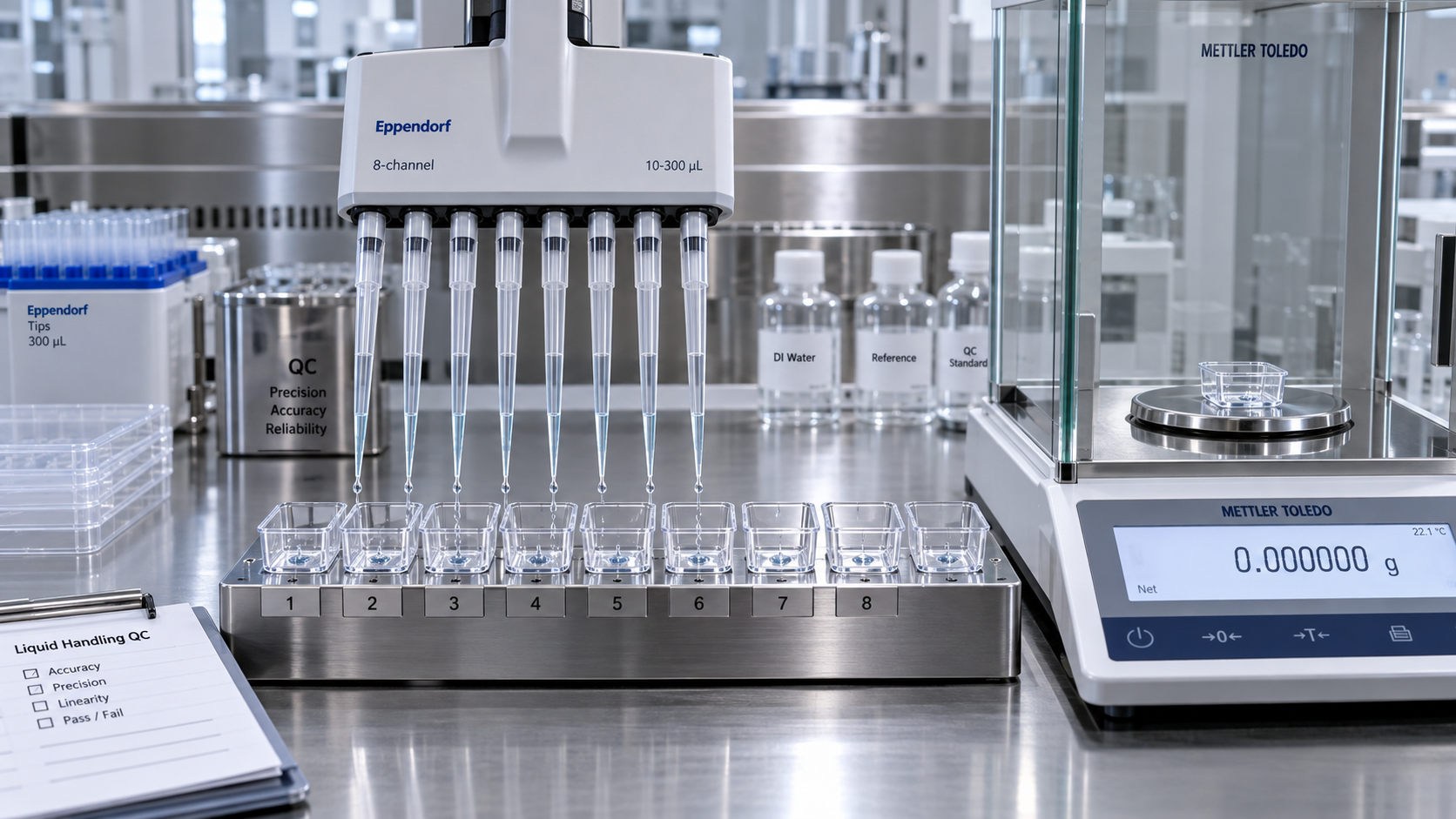
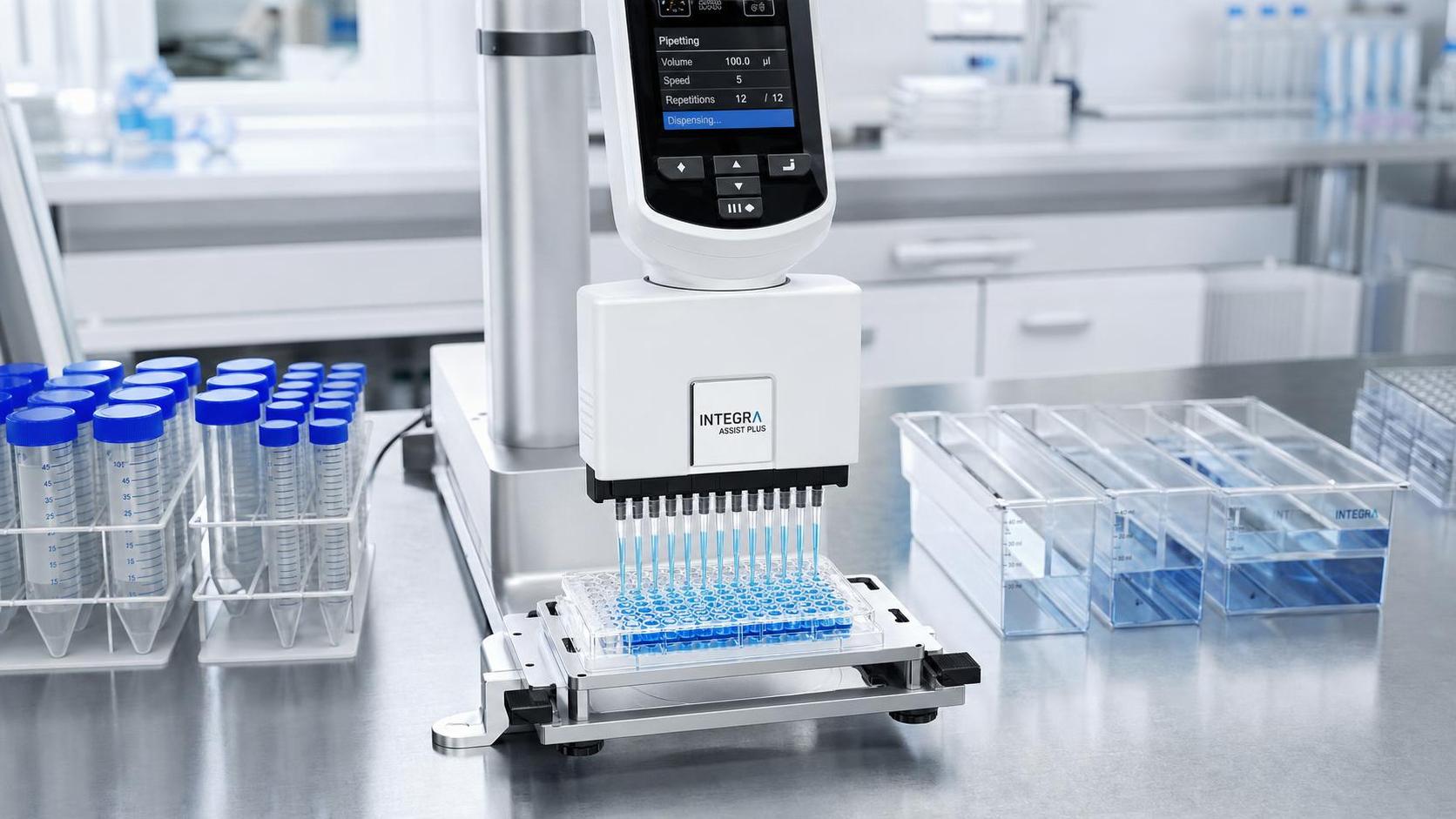
Automated pipetting systems for bioprocess engineering address these variables directly. They control aspirate speed, dispense speed, liquid class, dwell time, and sequence timing more consistently than manual routines.
In bioprocess settings, drift can affect cell-based assays, enzyme activity tests, media optimization, titer measurement, and formulation screening. When results drift, development decisions become less reliable.
Common sources of drift linked to pipetting
- Inconsistent aspirated or dispensed volume
- Uneven mixing between wells or tubes
- Variable tip immersion depth
- Different delays between transfer steps
- Operator fatigue during long assay runs
- Cross-contamination from poor tip handling
How do automated pipetting systems reduce assay drift in real workflows?
The main advantage is repeatability. Every programmed step is executed using the same movement pattern, timing logic, and liquid-handling parameters.
That consistency reduces lot-to-lot variation inside the workflow itself. It becomes easier to identify whether a signal change comes from biology, chemistry, or the process step.
Automated pipetting systems for bioprocess engineering also improve traceability. Run logs, method versions, and step records create a documented path for investigating assay shifts.
Precision is especially important at low volumes. Sub-microliter or narrow-range transfers are difficult to sustain manually across plates, replicates, and extended schedules.
Automation further reduces drift by controlling environmental exposure. Faster execution can shorten open-plate time and limit evaporation, especially in sensitive assays.
Key mechanisms behind drift reduction
- Standardized volume delivery across all samples
- Uniform reagent addition order and timing
- Controlled mixing and resuspension behavior
- Reduced human variability across shifts
- Integrated calibration and performance checks
Which bioprocess engineering applications benefit most from automated pipetting?
Not every workflow sees the same return. The strongest gains appear where assays are repetitive, volume-sensitive, time-dependent, or tied to scale-up decisions.
Media development is one example. Small concentration differences in nutrients, supplements, or inducers can influence growth and productivity conclusions.
Cell culture analytics also benefit. Automated pipetting systems for bioprocess engineering support viability staining, dilution series, sample normalization, and plate preparation with better reproducibility.
In downstream process development, automation helps with buffer preparation, sample aliquoting, binding studies, and analytical prep for chromatography-related screening.
High-throughput formulation work is another major use case. Stability screens and excipient studies often involve many combinations where manual drift can hide useful trends.
High-value use cases
- Cell-based potency and viability assays
- Media optimization and feed strategy testing
- ELISA and colorimetric assay preparation
- Serial dilutions for analytical qualification
- Formulation and buffer screening programs
- Sample normalization before detection steps
How should automated pipetting systems for bioprocess engineering be evaluated?
Selection should start with assay behavior, not brochure features. The best platform matches volume range, liquid type, throughput, and documentation requirements.
Viscous reagents, foaming solutions, volatile solvents, and cell suspensions need different handling profiles. Generic settings may reduce accuracy instead of improving it.
Method flexibility matters when workflows evolve. A rigid system may work for one assay today but create bottlenecks during transfer or expansion.
For regulated or quality-sensitive environments, audit trails, user permissions, and calibration support are essential. Data confidence depends on both hardware and record integrity.
What implementation mistakes can limit drift reduction?
Buying automation does not automatically fix assay drift. Poor method setup can transfer old errors into a faster workflow.
A common mistake is copying manual steps without optimizing them. Automated movement should reflect fluid physics, evaporation risk, and assay timing needs.
Another mistake is skipping liquid class development. Automated pipetting systems for bioprocess engineering need tailored settings for each reagent family.
Teams also underestimate verification. Before full deployment, compare manual and automated outputs using acceptance criteria based on assay performance, not only pipette specifications.
Maintenance discipline matters too. Worn seals, misaligned tips, or delayed calibration can reintroduce variability and weaken confidence in the platform.
Risk reminders during rollout
- Do not validate only with water-like liquids
- Do not ignore plate edge evaporation effects
- Do not treat all tips and consumables as equal
- Do not separate software control from QA review
- Do not delay preventive maintenance scheduling
What cost and timeline considerations should be expected?
Implementation cost includes more than equipment price. Method development, consumables, qualification, training, and workflow redesign shape the real investment.
However, drift reduction creates measurable operational value. Fewer repeats, lower reagent waste, faster comparisons, and more dependable release decisions can offset the initial expense.
Simple assays may be automated within weeks. Complex bioprocess programs often need phased deployment, especially when multiple liquid classes or integrated devices are involved.
A practical approach is to start with one high-drift workflow. Use baseline data, automate the highest-risk steps, then compare variance, turnaround time, and repeat rate.
Quick FAQ summary table
Automated pipetting systems for bioprocess engineering help reduce assay drift by converting variable manual actions into controlled, traceable, repeatable process steps.
For organizations moving from experimental screening toward robust production support, that consistency improves both scientific confidence and operational discipline.
The most effective next step is to map one assay with known variability, identify liquid-handling failure points, and evaluate where automation can produce immediate reproducibility gains.
Within broader benchmarking environments such as G-LSP, this approach aligns fluidic precision with scalable execution, helping assay quality support stronger development-to-production decisions.
Expert Insights

Chief Security Architect
Dr. Thorne specializes in the intersection of structural engineering and digital resilience. He has advised three G7 governments on industrial infrastructure security.
Related Analysis
Core Sector // 01
Security & Safety
- How to Verify Multichannel Pipette Calibration Across All Channels?Author :Lina Cloud

- ISO 8655 Pipette Calibration Compliance: Documentation, Intervals, and Audit ReadinessAuthor :Lina Cloud

- How Ergonomic Force Data Helps Labs Compare Pipette Cost and Injury RiskAuthor :Lina Cloud

- How to Evaluate a Mechanical Adjustable Pipette OEM for Accuracy and Batch ConsistencyAuthor :Lina Cloud

- Pipette Calibration for GMP Labs: Key Compliance Points and Audit-Ready PracticesAuthor :Lina Cloud

- How to Choose a Single Channel Electronic Pipette for Accuracy and Daily Lab WorkAuthor :Lina Cloud

- How to Choose an Autoclavable Positive Displacement Pipette for Sterile Viscous SamplesAuthor :Lina Cloud

- How to Choose Electronic Repeater Pipettes for High-Throughput Lab WorkAuthor :Lina Cloud