How to compare a liquid handling systems manufacturer
Author
Date Published
Reading Time
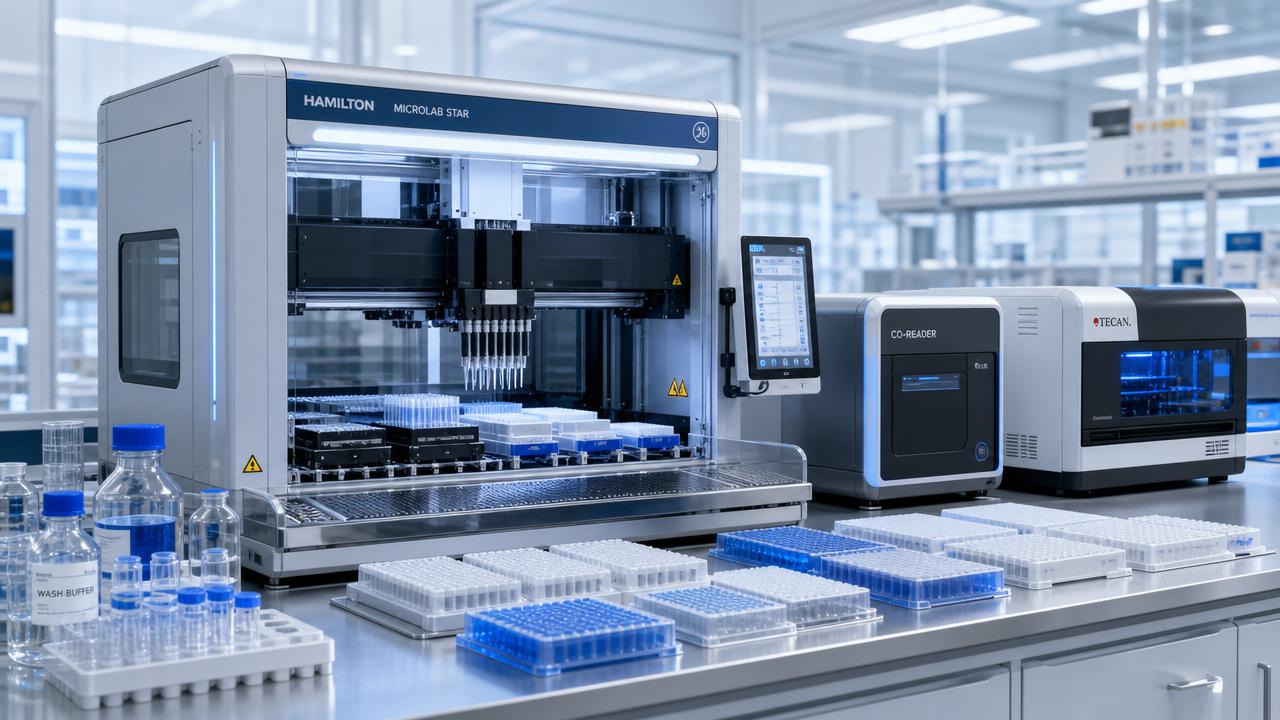
Choosing a liquid handling systems manufacturer affects precision, throughput, compliance, and total lifecycle cost. In regulated and high-mix environments, the right comparison method prevents expensive mismatches.
A strong evaluation goes beyond list price. It should test whether a liquid handling systems manufacturer can support current workflows, future scale-up, validation needs, and service continuity.
Why comparison standards change across real operating scenarios
Not every laboratory or pilot site needs the same platform architecture. A liquid handling systems manufacturer may excel in low-volume discovery, yet underperform in GMP transfer or continuous production support.
Scenario-based comparison creates a clearer selection path. It helps align fluidic precision, software control, consumables strategy, and maintenance requirements with the actual operating environment.
This matters across the broader industrial landscape. Pharmaceutical, chemical, biotech, diagnostics, and advanced materials workflows all impose different tolerance, contamination, and documentation expectations.
Scenario 1: Early-stage R&D needs flexible automation, not only speed
In early research, protocols change frequently. Here, a liquid handling systems manufacturer should be judged on method flexibility, dead-volume control, and quick adjustment between plate formats and reagent types.
Key questions include whether the system handles viscous fluids, volatile solvents, and small-volume dispensing without repeated recalibration. Software usability also matters because method edits are common.
Core checks for discovery and assay development
- Volume range accuracy at sub-microliter and low-microliter levels
- Rapid switching between tubes, reservoirs, and microplates
- Compatibility with aqueous, organic, and shear-sensitive liquids
- Simple protocol editing and intuitive workflow programming
- Low carryover risk between assay runs
In this scenario, overbuilt enterprise functions may add cost without adding value. A better liquid handling systems manufacturer offers modular expansion and practical precision rather than unnecessary platform complexity.
Scenario 2: Pilot-scale transfer requires repeatability and process consistency
When methods move from benchtop validation toward pilot-scale execution, repeatability becomes more critical than raw flexibility. The selected liquid handling systems manufacturer must support stable runs across batches and operators.
This is where fluid path design, calibration discipline, and integration logic become decisive. A small dispensing variation can distort formulation, sampling, or reaction outcomes during transfer.
Core checks for pilot transition
- Batch-to-batch dispensing consistency under real operating loads
- Auditability of calibration history and service interventions
- Integration with balances, readers, reactors, or LIMS environments
- Consumable reliability during longer production-like campaigns
- Availability of IQ/OQ documentation support
A credible liquid handling systems manufacturer should also explain performance under sustained duty cycles. Short demonstration runs rarely reveal drift, nozzle wear, or environmental sensitivity.
Scenario 3: GMP and regulated workflows demand documentation readiness
For validated environments, documentation can outweigh hardware elegance. The right liquid handling systems manufacturer must show traceability, software controls, data integrity features, and support for regulated change management.
This scenario includes pharmaceutical QC, cell therapy support labs, biologics development, and sensitive formulation workflows. Accuracy alone is not enough if validation packages are weak or inconsistent.
Critical regulatory comparison points
- Support for 21 CFR Part 11 aligned controls where required
- Electronic records integrity and user access management
- Documented IQ, OQ, PQ assistance and validation templates
- Material traceability for wetted components and consumables
- Change notification practices for firmware, software, and parts
A liquid handling systems manufacturer serving regulated sectors should provide evidence, not promises. Ask for sample protocols, audit support scope, and documentation delivery timelines before final comparison.
Scenario 4: High-throughput operations prioritize uptime and service architecture
In high-throughput screening or repetitive sample preparation, downtime quickly becomes more expensive than the instrument itself. Here, a liquid handling systems manufacturer should be compared on service response and spare parts availability.
The best platform is the one that sustains output with predictable maintenance. Robustness, remote diagnostics, and regional support infrastructure become major buying criteria.
What matters most in throughput-heavy settings
- Mean time between failures in real customer environments
- Preventive maintenance intervals and service predictability
- Regional field engineering coverage and training quality
- Consumables lead times and secondary sourcing options
- Recovery speed after software or mechanical interruption
How scenario needs differ when comparing manufacturers
Practical shortlist criteria for a liquid handling systems manufacturer
After defining the operating scenario, compare each liquid handling systems manufacturer against measurable criteria. This creates a more defensible sourcing process and reduces subjective bias.
- Verify published accuracy and precision with application-specific test data.
- Review performance across fluid classes, not only water-based demonstrations.
- Assess software maturity, permissions, reporting, and integration capability.
- Check service footprint, local support, and average response time.
- Calculate consumables cost, calibration frequency, and ownership burden.
- Confirm documentation depth for ISO, USP, GMP, or internal qualification needs.
A reliable liquid handling systems manufacturer should also provide customer references in similar applications. Reference quality is especially useful when comparing long-term reliability versus brochure claims.
Common comparison mistakes that distort the final decision
One frequent mistake is treating all dispensing technologies as interchangeable. Air displacement, positive displacement, syringe-driven, and acoustic methods differ in suitable use cases.
Another mistake is focusing only on purchase price. A lower-cost liquid handling systems manufacturer may create higher costs through failed validations, poor spare part access, or unstable throughput.
Many evaluations also ignore consumables lock-in. Proprietary tips, cartridges, or maintenance kits can reshape annual cost and sourcing resilience.
Finally, factory demos often use ideal fluids and ideal conditions. Always request scenario-matched trials using actual sample types, target volumes, and expected environmental conditions.
Next-step framework for choosing the right fit
Start with a written use-case map. Define volume ranges, liquid classes, throughput targets, compliance expectations, integration points, and acceptable downtime thresholds.
Then build a comparison matrix for each liquid handling systems manufacturer. Score technical performance, regulatory readiness, service support, scalability, and total cost of ownership.
Request application evidence, not generic catalogs. Practical test reports, validation examples, and installed-base references provide stronger decision support than headline specifications.
For organizations bridging lab development and production, G-LSP style benchmarking offers added value. It links fluidic precision, hardware consistency, and regulatory perspective across real deployment stages.
The best liquid handling systems manufacturer is the one that fits the operating scenario, supports future transitions, and reduces risk across the full lifecycle, not just the first purchase order.
Expert Insights

Chief Security Architect
Dr. Thorne specializes in the intersection of structural engineering and digital resilience. He has advised three G7 governments on industrial infrastructure security.
Related Analysis
Core Sector // 01
Security & Safety
- Testing Dilution Factor Precision and Repeatability in Automated Liquid HandlingAuthor :Lina Cloud

- How to Assess a European Liquid Handling Software Supplier for Lab AutomationAuthor :Lina Cloud

- Pipette Tip Fit for Automation: Checking Deck, Gripper, and Seal CompatibilityAuthor :Lina Cloud

- How to Evaluate an Automated Sample Dilutor Factory for Traceable Lab WorkflowsAuthor :Lina Cloud

- What Drives Liquid Handling Software Costs in Automated Laboratory Workflows?Author :Lina Cloud

- What to Verify in Validated Liquid Handling Software for GxP WorkflowsAuthor :Lina Cloud

- Selecting Automated Liquid Handling Systems for High-Throughput AssaysAuthor :Lina Cloud

- How to Validate Lab Automation Standards for Reliable, Compliant WorkflowsAuthor :Lina Cloud