NMPA Issues Guidance on Lab Automation Devices Registration
Author
Date Published
Reading Time

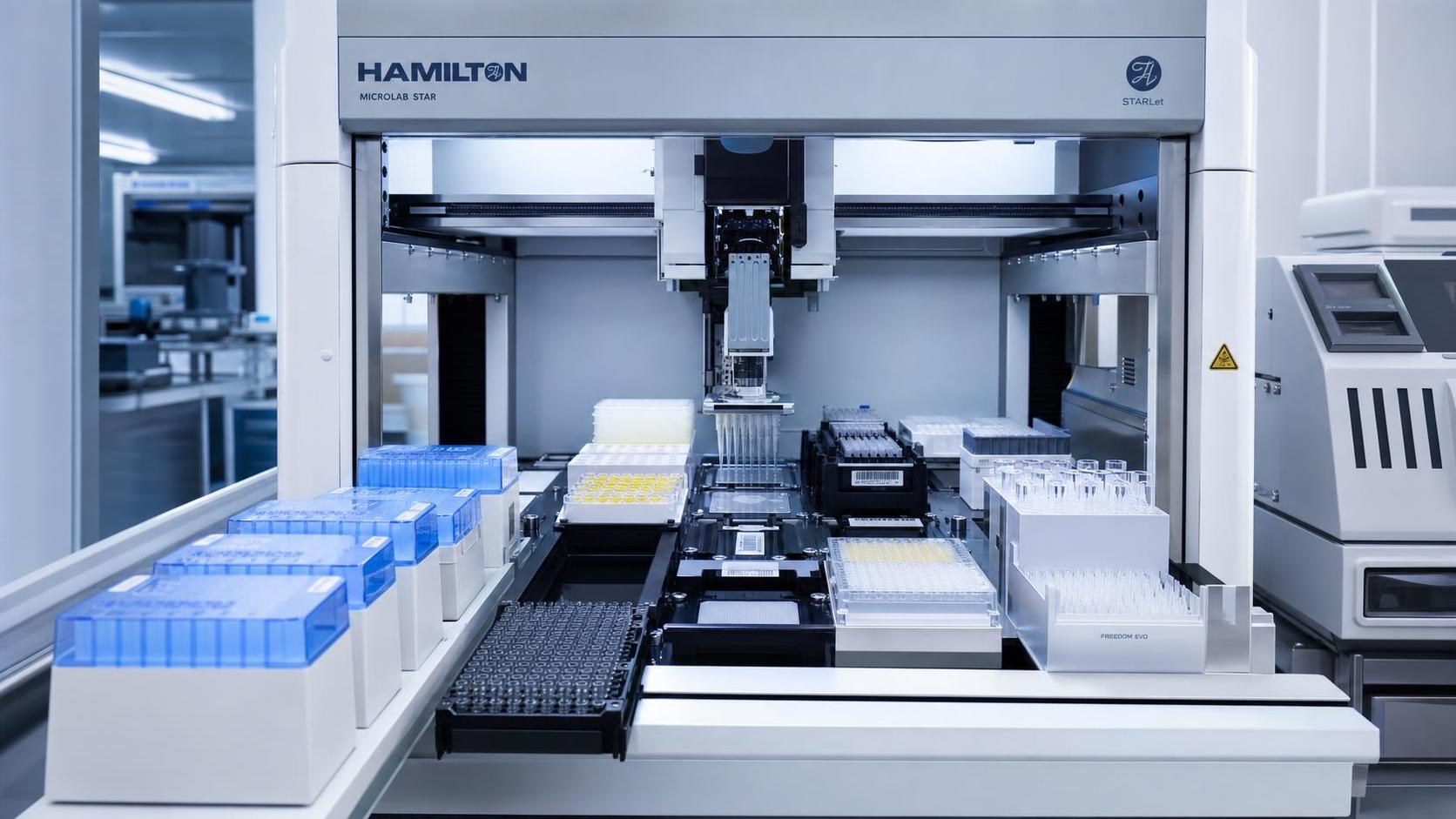
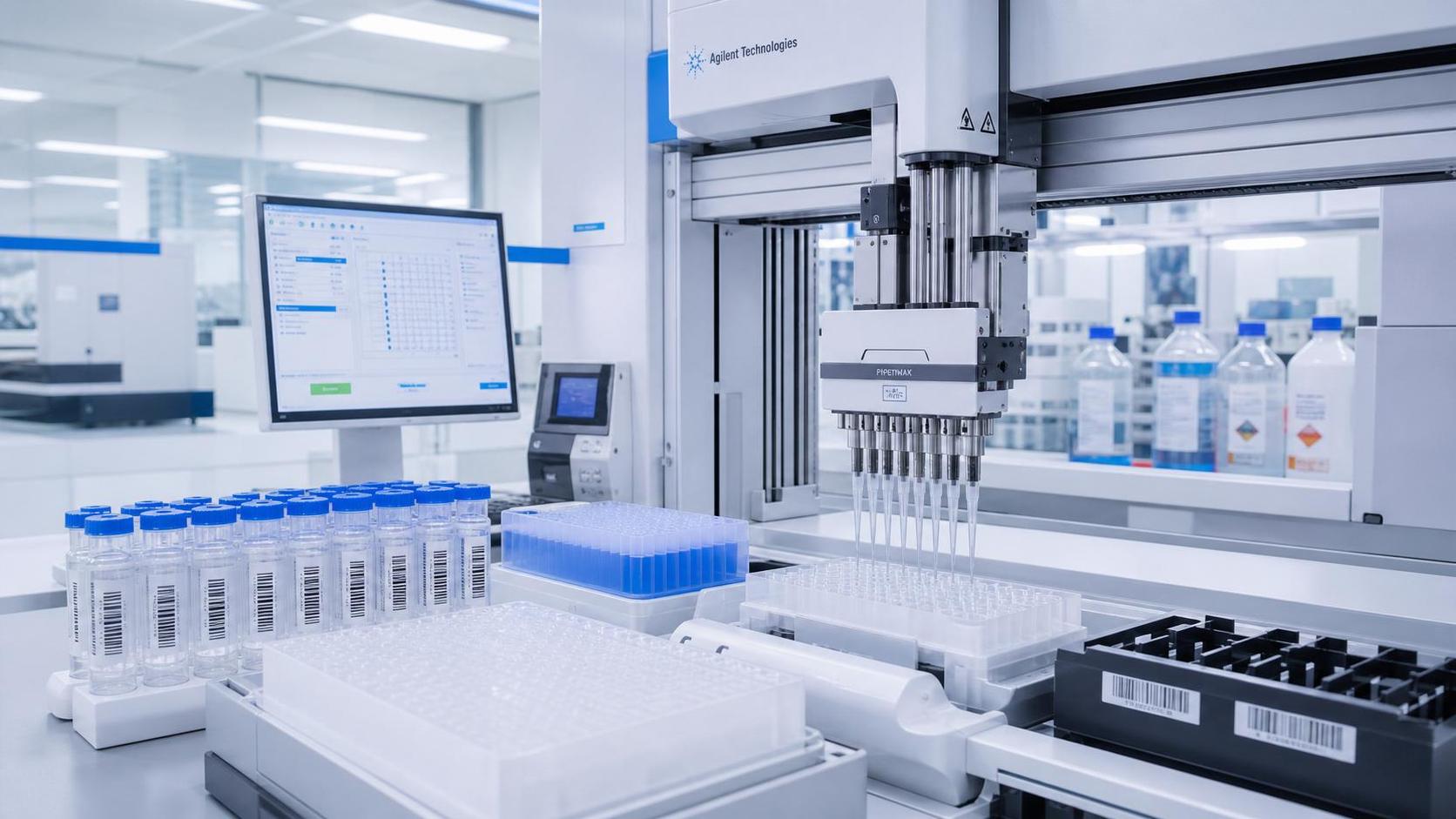
On April 27, 2026, China’s National Medical Products Administration (NMPA) released the Guidance Principles for Registration Review of Laboratory Automation Equipment (Trial). This marks the first time robotic arm liquid handling systems and multi-channel pipettes are explicitly classified as Class II medical devices in China—triggering new compliance requirements for both domestic manufacturers and importers. Life sciences instrumentation providers, IVD reagent developers, and clinical laboratory service operators should closely monitor implications for product registration, local deployment, and supply chain planning.
Event Overview
The NMPA published the Guidance Principles for Registration Review of Laboratory Automation Equipment (Trial) on April 27, 2026. The guidance formally brings robotic arm liquid handling systems and multi-channel pipettes under Class II medical device regulation in China. It mandates that all such devices—regardless of origin—submit: (1) third-party test reports verifying functional safety per ISO 13849-1 PLd; (2) logic diagrams demonstrating anti-misoperation design; and (3) collision force test reports confirming human-robot collaborative operation forces ≤10 N. The guidance takes effect on October 1, 2026.
Which Subsectors Are Affected
Direct Trade Enterprises (Import/Export Distributors)
These entities are affected because imported robotic arm liquid handlers and multi-channel pipettes must now undergo full Class II registration prior to market entry—not just customs clearance or filing-based procedures. Impact manifests in extended lead times for new model launches, increased pre-market documentation burden, and potential delays in fulfilling procurement contracts tied to Chinese laboratories’ automation upgrades.
Instrument Manufacturing & OEM Suppliers
Manufacturers supplying core components (e.g., precision motion modules, force-sensing end-effectors, or control firmware) face downstream pressure to align with ISO 13849-1 PLd architecture and provide traceable safety evidence. Impact includes revised design validation protocols, updated technical files for component-level safety claims, and possible requalification of legacy subassemblies used in newly regulated configurations.
Clinical Laboratory Service Providers & LDT Operators
Organizations deploying automated workflows—including central labs, reference labs, and laboratories operating under Laboratory Developed Test (LDT) frameworks—are affected due to stricter validation prerequisites for equipment used in diagnostic sample processing. Impact appears in delayed installation timelines, mandatory re-validation of existing automated processes post-October 2026 if equipment lacks compliant certification, and heightened scrutiny during NMPA routine inspections.
What Relevant Enterprises or Practitioners Should Focus On and How to Respond Now
Track official implementation clarifications from NMPA and provincial bureaus
The guidance is labeled “trial,” indicating possible refinements before full enforcement. Enterprises should monitor announcements from NMPA’s Device Evaluation Center and provincial regulatory authorities for interpretation notes, transitional arrangements, or lists of recognized testing institutions authorized to issue ISO 13849-1 PLd reports in China.
Identify and prioritize models subject to mandatory registration by October 2026
Not all liquid handling configurations may fall within scope—for example, non-CE-marked benchtop pipette aids without integrated robotic motion control may be excluded. Companies should cross-reference device intended use, risk classification rationale in the guidance, and current labeling/marketing claims to determine applicability before initiating registration dossiers.
Distinguish between policy signal and operational readiness
While the guidance sets a clear deadline, actual review capacity at NMPA-designated technical evaluation centers remains unconfirmed. Enterprises should avoid assuming uniform processing timelines and instead allocate buffer periods for dossier feedback cycles, especially for first-time applicants unfamiliar with Class II device submission formats.
Prepare documentation and third-party testing in advance
ISO 13849-1 PLd verification requires system-level hazard analysis (e.g., FMEA), safety-related software validation, and physical collision testing—processes that typically take 3–6 months. Companies planning market entry or renewal after October 2026 should initiate engagement with accredited labs (e.g., SGS, TÜV Rheinland, or CNAS-accredited domestic labs) no later than Q3 2026.
Editorial Perspective / Industry Observation
Observably, this guidance signals a structural shift—not merely a procedural update—in how China regulates automation tools embedded in diagnostic and quality-controlled laboratory environments. It reflects an alignment with global risk-based regulatory thinking, particularly regarding human-machine interaction safety in healthcare settings. Analysis shows the inclusion of specific metrics (e.g., ≤10 N collision force) and standardized functional safety levels (PLd) suggests NMPA intends enforceable, auditable thresholds—not just qualitative expectations. However, it remains a trial document; its long-term stability and enforcement consistency across regions require ongoing observation. From an industry perspective, this is less a finalized outcome and more a calibrated regulatory milestone—indicating increasing convergence between lab automation oversight and established medical device governance frameworks.
Conclusion
This guidance represents a formal step toward integrating laboratory automation hardware into China’s medical device regulatory ecosystem. Its significance lies not only in expanded scope but in the explicit linkage of mechanical safety performance, logical error prevention, and human-centered operational limits. Currently, it is best understood as a binding regulatory requirement for new registrations effective October 2026—with transitional implications for existing deployments still under assessment. Stakeholders should treat it as an operational inflection point requiring targeted technical and procedural preparation—not as a distant policy signal.
Information Source
Main source: National Medical Products Administration (NMPA) official notice issued April 27, 2026, titled Guidance Principles for Registration Review of Laboratory Automation Equipment (Trial). Ongoing implementation details—including accepted test report formats, designated evaluation institutions, and transitional provisions for currently marketed devices—remain subject to further official clarification and are noted here as pending observation.
Expert Insights

Chief Security Architect
Dr. Thorne specializes in the intersection of structural engineering and digital resilience. He has advised three G7 governments on industrial infrastructure security.
Related Analysis
Core Sector // 01
Security & Safety
- Selecting Automated Liquid Handling Systems for High-Throughput AssaysAuthor :Lina Cloud

- How to Validate Lab Automation Standards for Reliable, Compliant WorkflowsAuthor :Lina Cloud

- How to Evaluate an Automated Liquid Handling Robot Manufacturer for Reliable Lab Scale-UpAuthor :Lina Cloud

- What Drives Precision Dispensing Technology Cost in Automated Labs?Author :Lina Cloud

- How Liquid Handling Software for Scheduling Improves Throughput in Automated LabsAuthor :Lina Cloud

- How to Choose a Robotic Liquid Handling System for Throughput, Accuracy, and Workflow FitAuthor :Lina Cloud

- Pharmaceutical Liquid Handling for QC: Key Accuracy, Traceability, and Compliance FactorsAuthor :Lina Cloud

- Diagnostic Liquid Handling in Southeast Asia: How to Choose Systems for Throughput and ComplianceAuthor :Lina Cloud