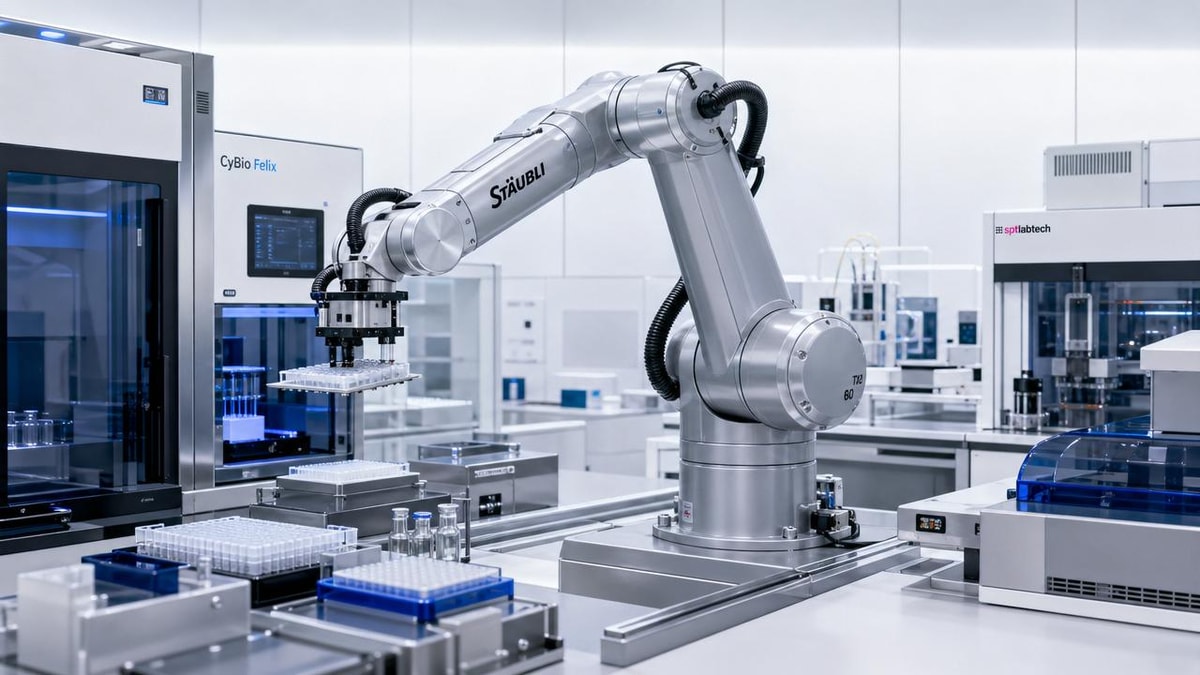
NMPA Issues Robotic Arm Liquid Registration Guidance
Author
Date Published
Reading Time

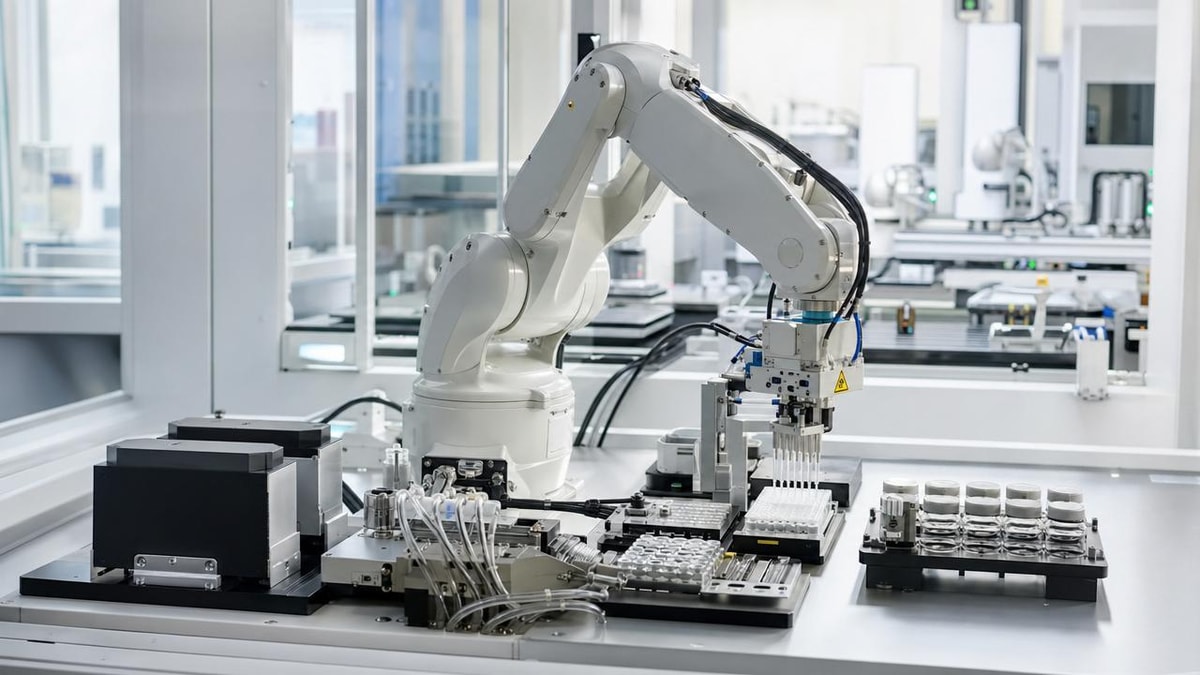
On April 26, 2026, China’s National Medical Products Administration (NMPA) released the Supplementary Guidance for Registration Review of Robotic Arm Liquid Handling Systems (Trial), mandating PLd-level human-robot collaborative safety per ISO/IEC 13849-1 for all Class II and Class III automated liquid handling systems seeking NMPA registration. This requirement directly impacts in vitro diagnostics (IVD), clinical laboratory automation, and life science instrumentation sectors — where precision fluid handling intersects with operator proximity and regulatory compliance.
Event Overview
The NMPA issued the Supplementary Guidance for Registration Review of Robotic Arm Liquid Handling Systems (Trial) on April 26, 2026. It stipulates that all automated liquid handling systems applying for Class II or Class III medical device registration must demonstrate human-robot collaborative safety performance at Performance Level d (PLd) as defined in ISO/IEC 13849-1. Applicants must submit a whole-system safety function verification report issued by a CNAS-accredited laboratory. The guidance takes effect immediately and applies to all pending and newly submitted registration applications.
Industries Affected by Segment
IVD Instrument Manufacturers
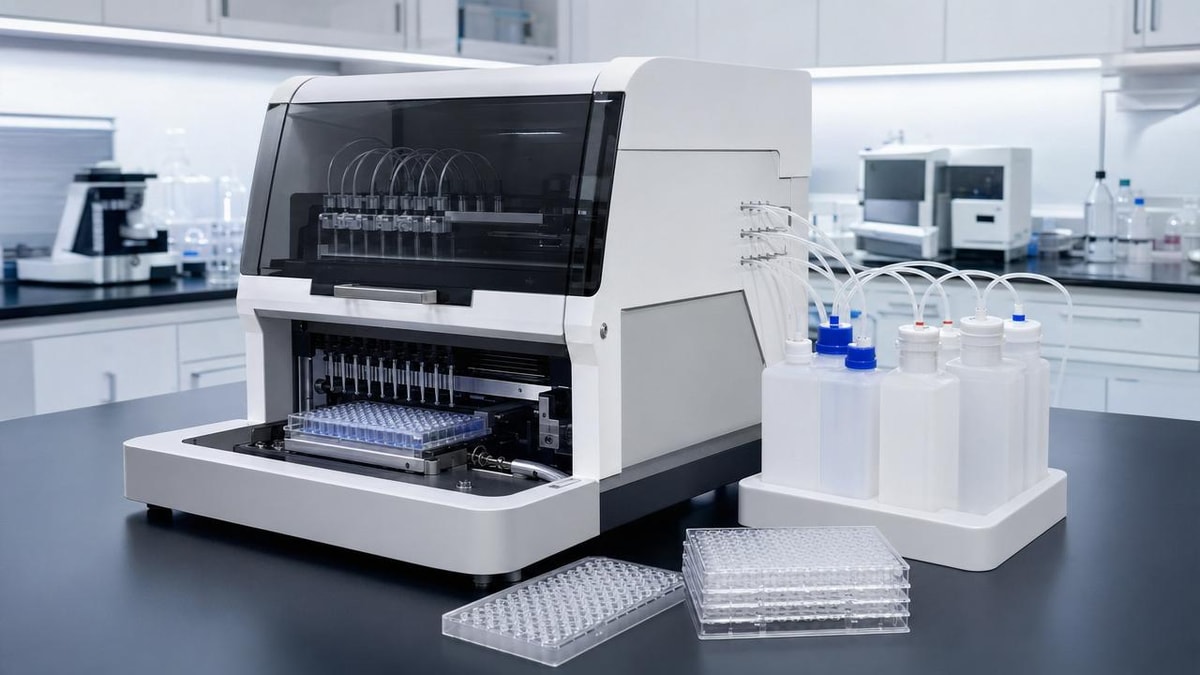
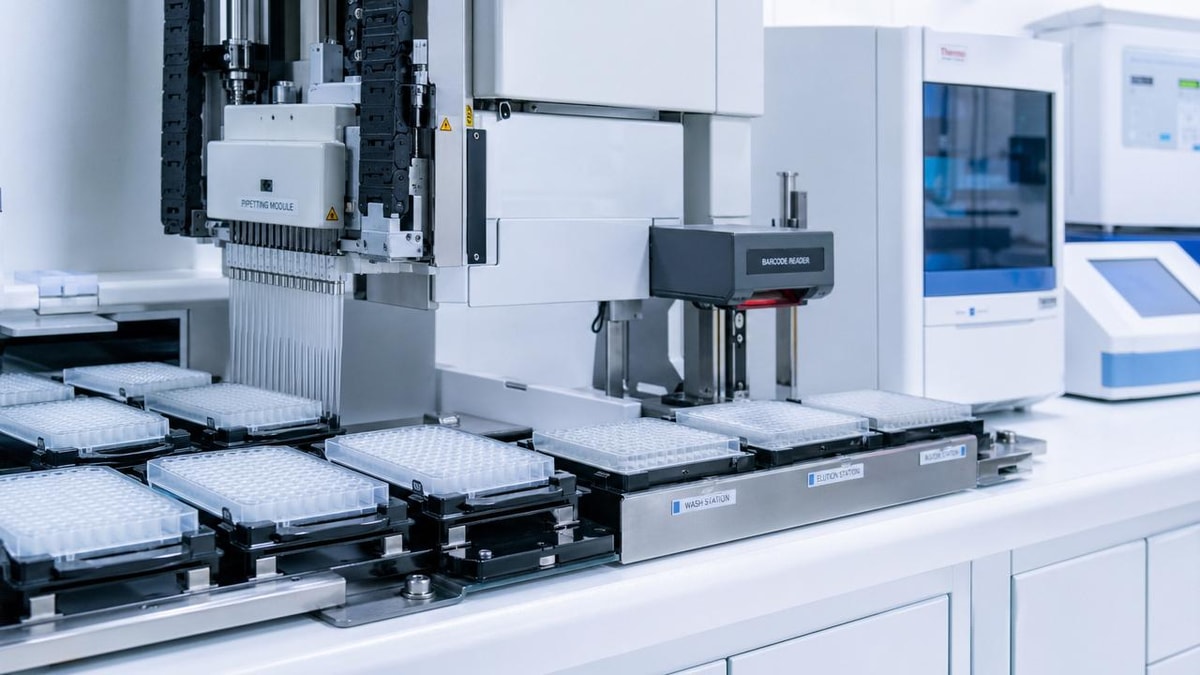
Manufacturers developing or marketing automated liquid handlers for clinical testing (e.g., sample prep, reagent dispensing, nucleic acid extraction platforms) are directly affected because their devices fall under Class II or Class III regulation. Impact manifests in mandatory safety architecture redesign — including redundant sensors, monitored safety controllers, and validated emergency stop logic — and extended verification timelines due to CNAS lab throughput constraints.
Laboratory Automation Integrators
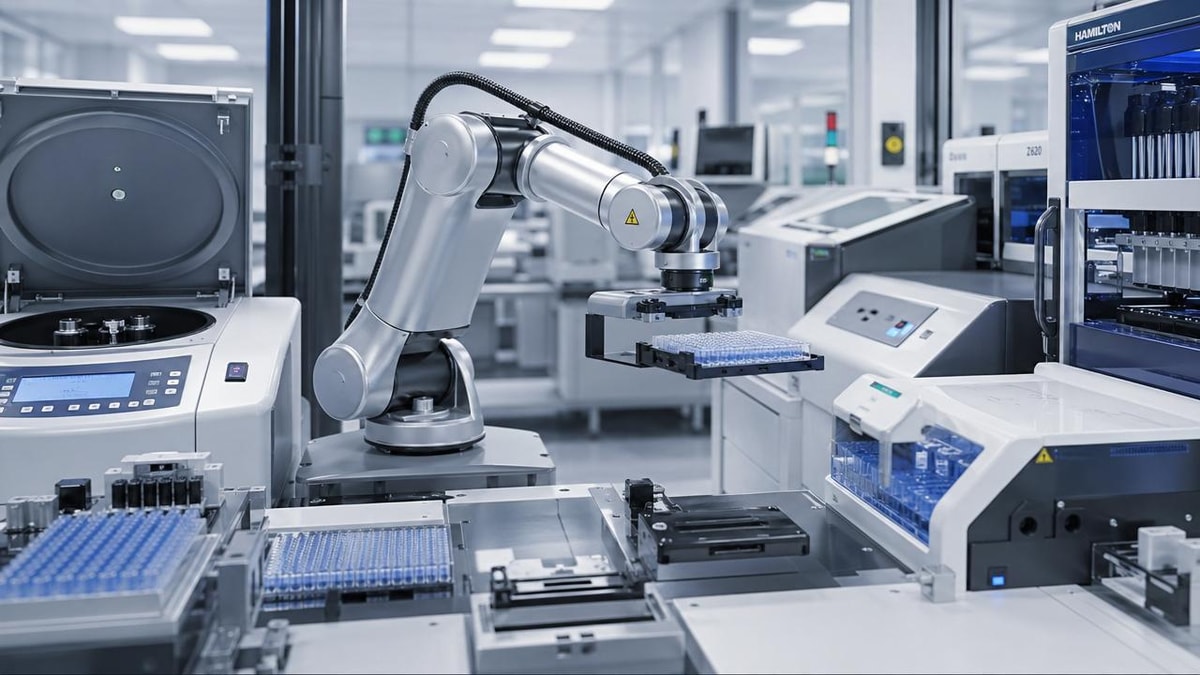
Companies integrating robotic arms into custom or semi-custom lab workflows (e.g., LIMS-connected workcells, multi-instrument automation lines) must now verify end-to-end safety performance of the integrated system — not just individual components. This increases validation scope, requires updated risk management files (per ISO 14971), and may necessitate requalification of previously deployed installations if subject to new registration submissions.
Medical Device Distributors & Importers
Distributors and importers of foreign-origin robotic liquid handling systems face revised pre-market entry requirements. All new registrations — including those for devices already CE-marked or FDA-cleared — must now include PLd-compliant safety documentation and CNAS-verified reports. This adds lead time and cost to market access planning, especially for products lacking prior safety certification aligned with ISO/IEC 13849-1.
Key Focus Areas and Immediate Actions for Stakeholders
Monitor official NMPA technical clarifications
The guidance is labeled “trial”, indicating potential refinements. Stakeholders should track NMPA’s Center for Medical Device Evaluation (CMDE) for supplementary Q&A documents, interpretation notes, or updates to the associated review checklist — particularly regarding acceptable test protocols and boundary conditions for PLd validation.
Assess current product safety architecture against PLd requirements
PLd implies ≤ 10−6 probability of dangerous failure per hour and mandates Category 3 or 4 architecture with diagnostic coverage ≥ 60%. Companies should audit existing safety-related parts of control systems (SRP/CS), confirm use of certified safety components (e.g., safety PLCs, dual-channel sensors), and identify gaps requiring design modification or component requalification.
Engage CNAS-accredited labs early for verification planning
Not all CNAS labs currently offer full-system PLd verification for robotic liquid handlers. Applicants should confirm lab capability, validate test setup alignment with intended use conditions (e.g., syringe pump load, tip ejection force, human-access zones), and secure scheduling slots well ahead of submission deadlines — given typical turnaround times of 8–12 weeks.
Review labeling, instructions for use (IFU), and risk management documentation
The guidance reinforces alignment between safety claims and documented risk controls. IFUs must clearly define safe operating modes, maintenance intervals for safety functions, and user responsibilities in maintaining PLd integrity (e.g., avoiding unauthorized modifications). Risk management files must explicitly address collaborative operation hazards (e.g., pinch points during liquid transfer, unexpected motion during calibration).
Editorial Perspective / Industry Observation
Observably, this guidance signals a formalized shift toward harmonizing China’s regulatory expectations for human-robot collaboration with internationally recognized functional safety benchmarks — specifically bridging IEC 61508/62061 principles into medical device-specific contexts. Analysis shows it functions less as an isolated technical update and more as an enforcement milestone: PLd was previously referenced in NMPA review practices but lacked binding, published criteria. Its codification now raises the bar for both domestic innovation and foreign market entry. From an industry perspective, the immediate impact lies not in new hazard identification, but in standardized verification rigor — making safety no longer a design consideration, but a registrable, auditable deliverable.
Concluding, this guidance establishes a concrete, enforceable safety threshold for a high-growth segment of laboratory automation. It does not introduce novel hazard categories, but significantly elevates evidentiary expectations for existing ones. Current interpretation should treat it as an operational compliance requirement — not a strategic signal awaiting further confirmation. Its implementation reflects maturing regulatory oversight aligned with technological deployment scale, rather than anticipatory policy for emerging capabilities.
Information Source: National Medical Products Administration (NMPA), Supplementary Guidance for Registration Review of Robotic Arm Liquid Handling Systems (Trial), issued April 26, 2026. Note: Ongoing observation is recommended for potential CMDE-issued technical FAQs or revisions to the trial guidance.
Expert Insights

Chief Security Architect
Dr. Thorne specializes in the intersection of structural engineering and digital resilience. He has advised three G7 governments on industrial infrastructure security.
Related Analysis
Core Sector // 01
Security & Safety
- NMPA Issues Robotic Arm Liquid Registration GuidanceAuthor :Lina Cloud
![]()
- Robotic Arm Repeatability Metrics That Matter in Daily RunsAuthor :Lina Cloud

- Microplate Washer Wholesale: Which Specs Affect Service Risk?Author :Lina Cloud

- Collision Avoidance Logic That Slows a Robotic Arm DownAuthor :Lina Cloud

- Where AI Improves Liquid Handling and Where It Still MissesAuthor :Lina Cloud

- How Much Microplate Processing Time Data Is Enough to Compare?Author :Lina Cloud

- How to Read Robotic Arm Payload and Reach BenchmarksAuthor :Lina Cloud

- Is Liquid Handling Still a Bottleneck in Covid and Flu Testing?Author :Lina Cloud