What automated liquid handling case studies reveal
Author
Date Published
Reading Time
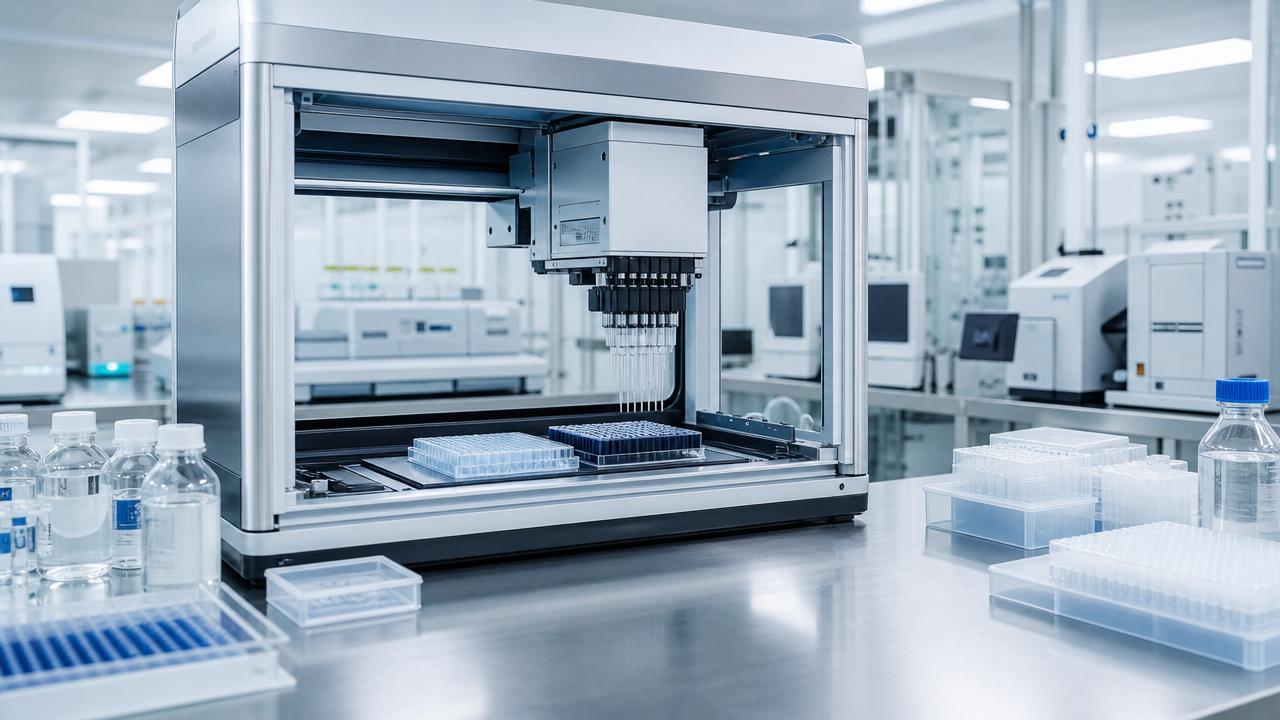
What do automated liquid handling case studies really reveal about performance, compliance, and scale-up readiness? For information-driven buyers and technical evaluators, they offer more than success stories—they expose precision limits, workflow gains, and integration risks across modern lab environments. This article examines how real-world evidence helps teams compare systems, reduce uncertainty, and make smarter decisions in high-stakes R&D and production settings.
For procurement teams, lab directors, and process engineers, the value of automated liquid handling case studies lies in what happens between the headline result and the operational detail. A claimed 30% throughput gain means little unless the study also clarifies sample viscosity, plate format, environmental control, operator training time, and deviation management.
In complex pharmaceutical, chemical, and biologics workflows, liquid handling is not an isolated purchase. It affects assay reproducibility, batch-release confidence, method transfer, contamination control, and the feasibility of moving from benchtop trials to pilot or semi-continuous execution. That is why benchmarking evidence matters.
Within the G-LSP perspective, automated pipetting and fluidic precision must be assessed as part of a broader micro-efficiency architecture. The most useful case studies connect dispensing performance with upstream sample preparation, downstream analysis, maintenance frequency, and regulatory documentation requirements across 3 to 5 operational stages.
Why automated liquid handling case studies matter beyond marketing claims
The strongest automated liquid handling case studies show whether performance is repeatable under real working conditions. In practice, buyers need evidence across at least 4 dimensions: volume accuracy, precision over repeated runs, software integration, and contamination or carryover control.
A system that performs well at 50 µL may not maintain the same reliability at 500 nL or with high-viscosity buffers. Likewise, a platform validated in a low-throughput discovery lab may struggle in a GMP-aligned environment that requires audit trails, user-level permissions, and documented calibration intervals every 3 or 6 months.
What technical evaluators usually look for
Most information-driven buyers read case evidence with a narrow question set. They want to know whether the platform can handle their plate density, liquid class, and throughput target without creating hidden manual steps. They also compare whether the observed gains came from hardware design, software scripting, deck capacity, or operator expertise.
- Transfer volume range, such as 300 nL to 1,000 µL
- Coefficient of variation at low and mid-volume points
- Recovery consistency across 96-, 384-, or 1536-well formats
- Run time per batch, often measured over 2 to 8 plates
- Cleaning, tip change, or decontamination frequency
- Compatibility with LIMS, MES, or assay analysis software
What weak case studies often hide
Not all published examples are decision-grade. Some omit ambient conditions, reagent properties, dead volume, or required user intervention. If a report shows improved throughput but ignores a 2-hour setup window, a 15-minute deck reconfiguration, or repeated nozzle maintenance, the operational picture is incomplete.
This is especially relevant when evaluating automated liquid handling case studies for scale-up readiness. A workflow that saves 1 technician-hour per day in a research lab can still fail procurement review if it increases consumable usage by 20% or requires a proprietary scripting environment that only 1 trained specialist can maintain.
Signals of higher-quality evidence
Higher-value case studies usually contain baseline-versus-post-automation comparisons, defined sample numbers, and measured error windows. They may not always provide broad market statistics, but they should show a clear process delta, such as reducing manual touchpoints from 9 to 3, lowering failed wells from 4% to below 1%, or improving run-to-run variation within a stated tolerance band.
What real-world evidence reveals about precision, compliance, and workflow risk
In regulated or semi-regulated settings, automated liquid handling case studies are most useful when they show the trade-offs between speed and control. Faster pipetting is beneficial only if it does not compromise aspiration stability, dispense uniformity, or traceable data capture.
For teams operating under ISO-aligned quality systems, USP methods, or GMP-driven documentation discipline, the critical question is often not whether automation works, but whether it remains auditable and consistent over weeks, not just a single demonstration day.
Key findings typically extracted from case studies
The table below shows the kinds of signals technical teams should extract when reviewing automated liquid handling case studies in pharma, chemicals, diagnostics, or advanced life science production support.
The main takeaway is that case evidence should be interpreted as a systems-level document. Precision data alone is not enough. Buyers should ask whether the workflow remained stable across at least 2 or 3 operating variables, including fluid type, run length, and operator shift changes.
How compliance risk appears in practical examples
Compliance risk often enters through seemingly minor gaps. A platform may deliver strong dispensing repeatability, yet fail internal review because method edits are not version-controlled, or because calibration records are exported manually rather than linked to the digital batch record.
In laboratories supporting clinical, bioprocess, or release-related work, evaluators typically expect 3 layers of evidence: installation qualification support, operational repeatability under approved methods, and maintenance traceability. Automated liquid handling case studies that address these points are more valuable than purely performance-led narratives.
Common risk patterns revealed by case evidence
- Low-volume precision degrades when humidity, liquid volatility, or tip quality changes.
- Throughput gains disappear when deck reconfiguration exceeds 10 to 20 minutes per batch.
- Cross-contamination risk increases in reusable pathways unless cleaning validation is well defined.
- Scale-up plans stall when software logic cannot transfer easily between R&D and pilot workflows.
How to compare automated liquid handling case studies for procurement decisions
For procurement and technical review teams, comparison should be structured rather than impression-based. The goal is not to find the most impressive narrative, but to determine which platform fits the actual process envelope, documentation burden, and growth path over the next 12 to 36 months.
A practical review method is to score each case study against workflow relevance, technical transparency, implementation complexity, and lifecycle support. This creates a repeatable filter and limits the influence of vendor framing.
A useful case-study comparison framework
The following matrix can help teams compare automated liquid handling case studies from different suppliers or system categories before moving into demo, FAT, or qualification planning.
This kind of comparison prevents a common error: selecting a platform based on peak specification rather than sustained operational suitability. A system with more channels or faster headline speed is not automatically better if its validation burden, consumable dependency, or service response model does not match the plant or lab environment.
Questions buyers should ask vendors after reviewing case studies
Case studies should be the start of technical dialogue, not the end. Once a relevant example is identified, buyers should press for boundary conditions, exception handling, and supportability details.
- What was the exact liquid class and viscosity range?
- How many runs were completed before preventive maintenance?
- Were failed transfers detected automatically or manually?
- What operator training time was required: 4 hours, 2 days, or longer?
- How was software change control managed after deployment?
- What part of the result depended on accessories, enclosures, or third-party robotics?
Where G-LSP-style benchmarking becomes useful
A benchmarking-oriented approach helps teams interpret automated liquid handling case studies against broader fluidic architecture requirements. Instead of reviewing pipetting in isolation, evaluators can compare its interaction with bioreactor sampling, microfluidic dosing, reactor feed preparation, centrifugation handoff, and analytical timing constraints across the same development chain.
From case evidence to implementation: turning insights into a safer rollout plan
The final value of automated liquid handling case studies appears when organizations convert evidence into an implementation roadmap. This means defining the use case, setting acceptance criteria, planning verification runs, and assigning ownership for software, quality, and maintenance from day 1.
A realistic rollout usually follows 5 stages: needs mapping, application fit review, controlled demo, pilot qualification, and monitored routine operation. Depending on complexity, the full path may take 4 to 12 weeks for research workflows and longer for validated environments.
A practical 5-step rollout sequence
- Define target volumes, plate formats, liquid classes, and daily run counts.
- Use case studies to shortlist systems with similar operating conditions.
- Run site-specific tests for precision, carryover, and setup time.
- Document qualification, calibration, and user-access requirements.
- Track the first 30 to 90 days for downtime, deviations, and retraining needs.
Common implementation mistakes
One frequent mistake is assuming that successful automated liquid handling case studies automatically translate across sites. Small differences in consumables, room conditions, source vessel geometry, or sample foaming can change outcomes materially. Another is underestimating software governance, especially where multiple user groups edit protocols.
A second mistake is treating service as secondary. In high-uptime environments, response windows matter. Whether support arrives in 24 hours or 5 business days can influence assay continuity, batch support schedules, and internal confidence in automation projects.
What informed buyers should document before approval
Before final approval, teams should document 6 items clearly: target application, verified volume range, allowable error band, integration points, qualification scope, and expected service level. This turns case-study learning into a defensible procurement decision rather than a speculative technology purchase.
Automated liquid handling case studies are most valuable when they reveal operating boundaries, not just positive outcomes. For information-driven buyers, the best evidence connects precision metrics with compliance discipline, implementation effort, lifecycle cost, and cross-platform compatibility.
For organizations navigating sensitive R&D-to-production transitions, this evidence supports better decisions across fluidic architecture, lab automation, and scale-up planning. If you need a more rigorous way to compare systems, interpret technical benchmarks, or align automation with pilot and production goals, contact us to explore tailored guidance, product details, and broader G-LSP-informed solutions.
Expert Insights

Chief Security Architect
Dr. Thorne specializes in the intersection of structural engineering and digital resilience. He has advised three G7 governments on industrial infrastructure security.
Related Analysis
Core Sector // 01
Security & Safety
- Testing Dilution Factor Precision and Repeatability in Automated Liquid HandlingAuthor :Lina Cloud

- How to Assess a European Liquid Handling Software Supplier for Lab AutomationAuthor :Lina Cloud

- Pipette Tip Fit for Automation: Checking Deck, Gripper, and Seal CompatibilityAuthor :Lina Cloud

- How to Evaluate an Automated Sample Dilutor Factory for Traceable Lab WorkflowsAuthor :Lina Cloud

- What Drives Liquid Handling Software Costs in Automated Laboratory Workflows?Author :Lina Cloud

- What to Verify in Validated Liquid Handling Software for GxP WorkflowsAuthor :Lina Cloud

- Selecting Automated Liquid Handling Systems for High-Throughput AssaysAuthor :Lina Cloud

- How to Validate Lab Automation Standards for Reliable, Compliant WorkflowsAuthor :Lina Cloud