When Liquid Handling Software OEM Creates Integration Delays
Author
Date Published
Reading Time
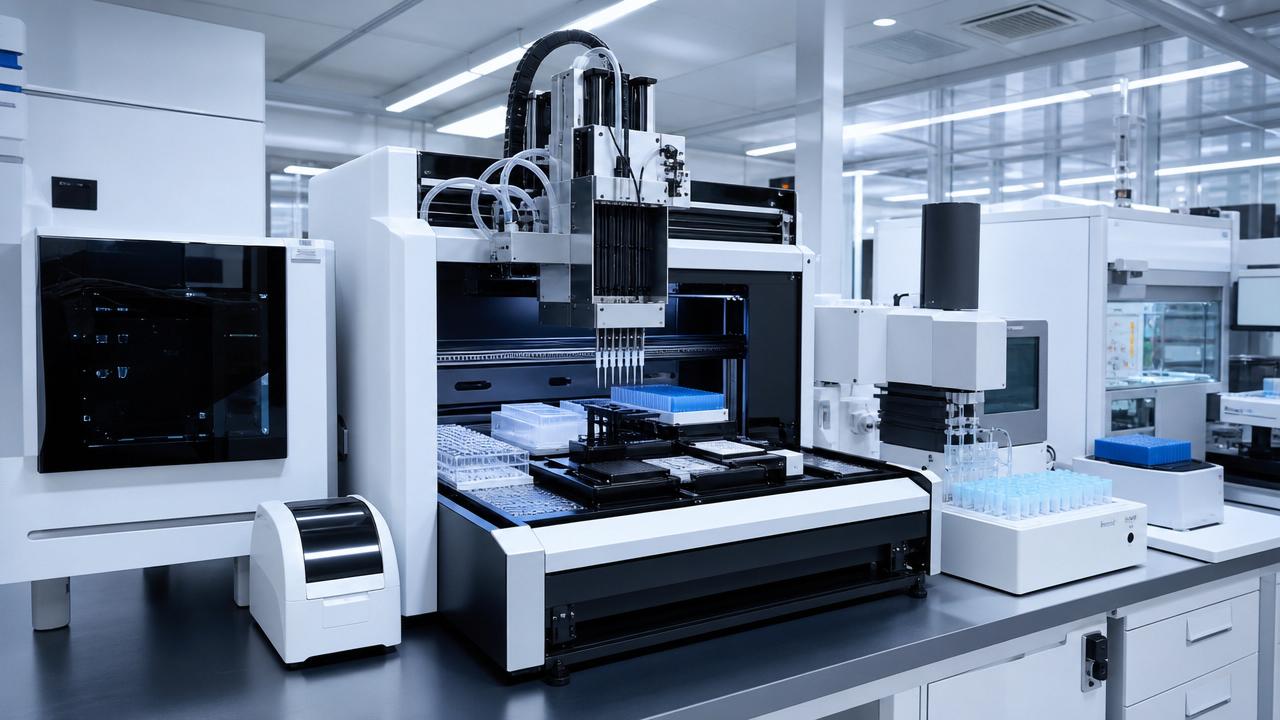
When liquid handling software OEM decisions stall integration, technical evaluators face rising validation risk, data inconsistency, and delayed deployment across lab workflows. For organizations balancing fluidic precision, compliance, and scale-up readiness, understanding where software architecture, device compatibility, and automation logic break down is essential to protecting performance and accelerating qualified implementation.
In high-control laboratory environments, a delayed software layer can affect far more than scheduling. It can slow method transfer, complicate audit readiness, and reduce confidence in every dispensed microliter. For technical assessment teams working across pilot synthesis, bioprocess development, microfluidics, and automated pipetting, the issue is rarely just whether a platform works. The real question is whether a liquid handling software OEM strategy can support integration across devices, data systems, and future scaling demands without creating avoidable bottlenecks.
This matters especially in organizations operating between benchtop R&D and regulated production. A software decision made during instrument selection can add 2 to 6 weeks to validation, increase scripting rework by 20% to 40%, and force manual intervention into workflows that were expected to run unattended. For evaluators responsible for qualification and procurement, software architecture deserves the same scrutiny as pump precision, deck layout, or dispense accuracy.
Why Integration Delays Start with the Software OEM Layer
In many liquid automation projects, the hardware arrives on time, the installation is completed within 3 to 5 days, yet the usable workflow is still not production-ready after 4 weeks. That gap is often caused by the liquid handling software OEM model. Some OEM arrangements are optimized for fast instrument commercialization, but not for cross-platform interoperability, regulated data handling, or multi-site deployment.
Technical evaluators should treat the software stack as a separate integration domain with its own risk profile. Device drivers, API availability, user permission design, audit trail behavior, and third-party middleware support all influence implementation speed. A visually polished interface does not guarantee that the platform will connect smoothly to LIMS, MES, ELN, barcode systems, or environmental monitoring tools.
The most common delay points
The first delay point is driver maturity. A liquid handler may support 8 to 12 peripheral categories on paper, but actual deployment depends on tested drivers for washers, shakers, sealers, readers, incubators, and robotic arms. If only half of those integrations are maintained actively, the software OEM dependency becomes a project constraint rather than an enabler.
The second delay point is workflow logic rigidity. In labs running variable batch sizes, assay changes, or personalized therapy development, software must support conditional branching, exception handling, and parameterized recipes. If the OEM package only supports linear scripting, each method revision can require revalidation and operator retraining.
The third issue is data structure mismatch. Even when the instrument runs correctly, exported files may not map cleanly into enterprise systems. Missing metadata fields, inconsistent timestamp formatting, and limited batch record traceability can block release processes, especially when GMP-aligned documentation is expected.
The table below highlights where a liquid handling software OEM model can create friction during technical evaluation and implementation.
For assessment teams, the key takeaway is simple: integration delays are rarely random. They often emerge from predictable software constraints that can be detected during technical due diligence. A strong liquid handling software OEM relationship should reduce complexity, not transfer hidden engineering work to the buyer’s automation or validation team.
Why this is especially critical in fluidic-precision environments
In micro-volume handling, software timing and command reliability directly affect experimental consistency. A 50 µL transfer with poor synchronization to tip detection, plate positioning, or liquid-class selection can introduce cumulative variability over 96 or 384 wells. When scaled into pilot workflows, that variability becomes a quality and comparability issue, not just a programming inconvenience.
For organizations focused on batch-to-continuous development or personalized therapeutic workflows, the software layer must support rapid recipe updates, clear data provenance, and reproducible execution. A delayed integration may hold back one workstation initially, but it can later affect multi-system standardization across 2, 3, or more sites.
What Technical Evaluators Should Check Before Approval
A sound evaluation framework should move beyond brochure claims. Technical reviewers should verify software architecture, support boundaries, configuration flexibility, and long-term maintainability. In most B2B procurement settings, at least 4 decision groups are involved: automation engineering, QA or validation, lab operations, and procurement. Each group sees different risk signals, so a structured review is necessary.
Core qualification criteria
Before selecting a liquid handling software OEM platform, evaluators should examine these six checkpoints:
- Whether the software supports native integration with existing laboratory systems
- Whether workflow logic includes conditional rules, loops, and exception handling
- Whether user roles, electronic records, and audit events are configurable
- Whether software updates are versioned with backward compatibility guidance
- Whether driver support is documented for current and planned peripherals
- Whether implementation assistance includes test scripts and validation support
If 2 or more of these checkpoints remain unclear after vendor review, the project typically enters a high-risk integration zone. That does not mean the platform is unusable, but it does mean extra internal resources may be required to bridge software gaps.
Questions to ask during supplier review
Ask how many device integrations are actively maintained each year. Ask whether APIs are documented for customer use or only exposed through paid service. Ask how the vendor manages software change notifications, rollback support, and test environment replication. A useful answer should include concrete timelines such as 24-hour support triage, quarterly release cycles, or a 5-step update validation process.
Also ask for a demonstration of a real workflow change, not only a standard run. A supplier should show how a new plate type, an extra sensor, or a revised dispense sequence is introduced. If a simple method change requires multiple coding layers or undocumented scripts, the software OEM arrangement may create recurring dependence on external support.
The following comparison matrix can help technical evaluators rank liquid handling software OEM options during pre-procurement review.
This matrix helps separate short-term usability from long-term deployability. Many systems meet a basic automation need, but fewer support fast method expansion, regulated traceability, and scalable integration. For technical assessment teams, the preferred state usually delivers lower total implementation friction even if the initial software review takes longer.
How to Reduce Integration Risk During Implementation
Even when a liquid handling software OEM environment is not ideal, disciplined implementation can reduce delay exposure. The most effective approach is to divide the project into 3 linked phases: architecture review, controlled pilot, and qualification transfer. This prevents unresolved software assumptions from surfacing only at the validation stage.
Phase 1: Architecture review
During the first 5 to 10 business days, map every system touchpoint. Include instruments, plate readers, incubation modules, barcode printers, LIMS, user directory, and file storage. Define which connections are native, which require middleware, and which remain manual. This step often reveals 1 to 3 hidden dependencies that affect timeline accuracy.
Phase 2: Controlled pilot
Run one representative workflow under constrained conditions. A good pilot covers at least 1 liquid class variation, 2 user roles, and 3 exception scenarios such as tip shortage, plate mismatch, or interrupted run recovery. If the software handles only the nominal path and fails during recovery testing, the integration risk is still unresolved.
Phase 3: Qualification transfer
Only after pilot evidence is stable should teams proceed into formal qualification mapping. For regulated or quasi-regulated labs, align software functions to IQ, OQ, and PQ expectations early. This helps avoid the common failure mode in which the liquid handling software OEM package is technically operational but not documentation-ready for internal quality review.
Practical implementation safeguards
- Freeze software version during validation-critical windows of 2 to 8 weeks
- Maintain a sandbox for workflow edits before live deployment
- Document every driver dependency and supported firmware range
- Use change-control templates for method revisions and user-role edits
- Define fallback manual procedures for high-value runs
These safeguards are especially useful when deployment spans multiple functional groups. In fluidic-precision operations, the cost of one failed integration is not limited to software time. It can affect consumable waste, sample availability, operator utilization, and milestone timing across development programs.
Common Misjudgments in Procurement and How to Avoid Them
Procurement teams often compare hardware precision in detail while underweighting software support boundaries. That creates an imbalance in decision quality. A platform with excellent dispensing performance but poor software extensibility may look efficient in a quotation round, then become expensive during deployment through custom scripting, service calls, or repeated validation work.
Misjudgment 1: Assuming OEM means seamless compatibility
An OEM relationship does not automatically ensure full compatibility across all modules or versions. Some software packages are rebranded, lightly customized, or maintained under separate release schedules. Technical evaluators should confirm ownership of support, issue escalation route, and update responsibility before contract finalization.
Misjudgment 2: Treating training as a substitute for usability
Two days of training cannot solve a weak workflow model. If expert users need repeated vendor intervention for ordinary assay changes, the platform is not operationally self-sufficient. In a busy lab, dependency on external edits can slow response to new protocols by 1 to 3 weeks.
Misjudgment 3: Leaving compliance review until late-stage implementation
By the time QA reviews audit trails, user permissions, and record integrity, the project may already be committed. Bringing compliance stakeholders into software assessment early reduces rework. It also helps determine whether the liquid handling software OEM environment is suitable for research-only use, development use, or broader controlled deployment.
For technical evaluators operating in complex lab-to-production transitions, software decisions should be treated as infrastructure decisions. The right liquid handling software OEM approach improves workflow continuity, documentation quality, and scale-up readiness. The wrong one extends validation, increases manual work, and limits future integration options across automated pipetting, bioprocess support, and precision fluidic systems.
G-LSP supports decision-makers who need a more rigorous view of instrument-software fit, implementation risk, and benchmark-driven selection criteria across sensitive R&D-to-production environments. If your team is assessing a new platform, planning a qualification pathway, or comparing integration readiness across vendors, now is the time to review the software layer with the same discipline applied to fluidic performance. Contact us to discuss your application context, request a tailored evaluation framework, or explore more solutions for automation-ready laboratory integration.
Expert Insights

Chief Security Architect
Dr. Thorne specializes in the intersection of structural engineering and digital resilience. He has advised three G7 governments on industrial infrastructure security.
Related Analysis
Core Sector // 01
Security & Safety
- Testing Dilution Factor Precision and Repeatability in Automated Liquid HandlingAuthor :Lina Cloud

- How to Assess a European Liquid Handling Software Supplier for Lab AutomationAuthor :Lina Cloud

- Pipette Tip Fit for Automation: Checking Deck, Gripper, and Seal CompatibilityAuthor :Lina Cloud

- How to Evaluate an Automated Sample Dilutor Factory for Traceable Lab WorkflowsAuthor :Lina Cloud

- What Drives Liquid Handling Software Costs in Automated Laboratory Workflows?Author :Lina Cloud

- What to Verify in Validated Liquid Handling Software for GxP WorkflowsAuthor :Lina Cloud

- Selecting Automated Liquid Handling Systems for High-Throughput AssaysAuthor :Lina Cloud

- How to Validate Lab Automation Standards for Reliable, Compliant WorkflowsAuthor :Lina Cloud