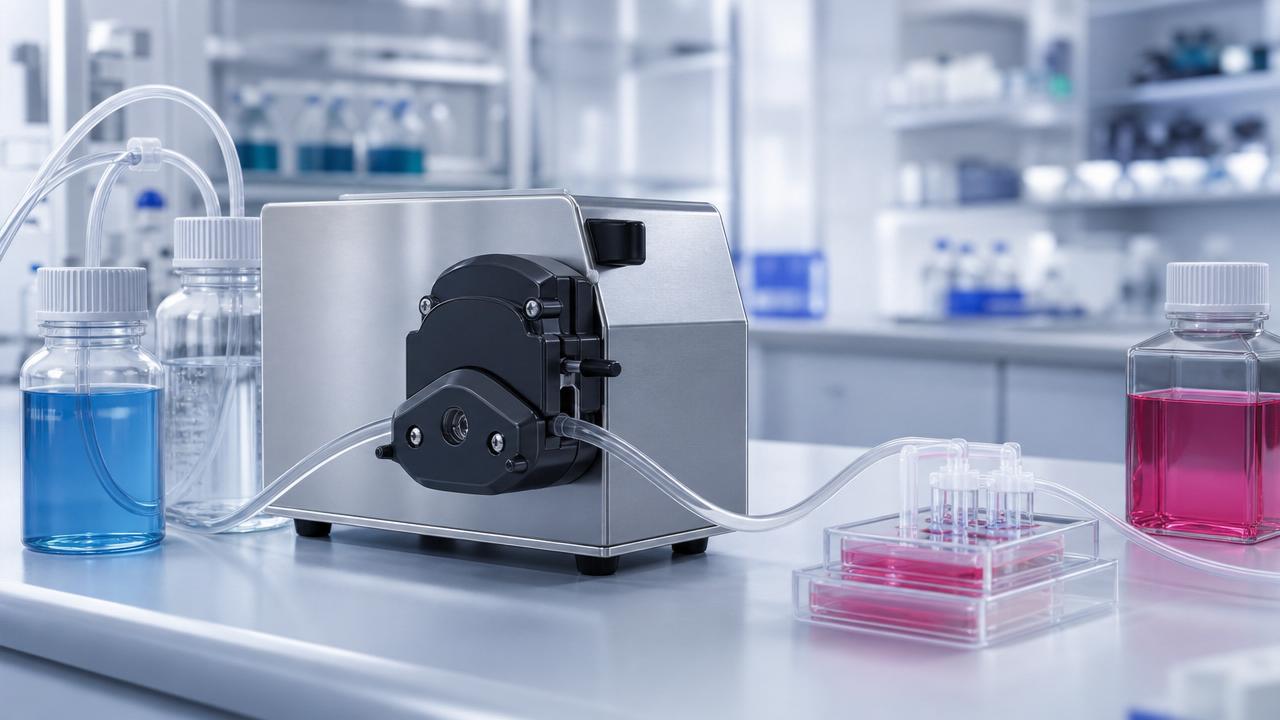
Buffer Preparation Throughput Metrics That Change Equipment Decisions
Author
Date Published
Reading Time
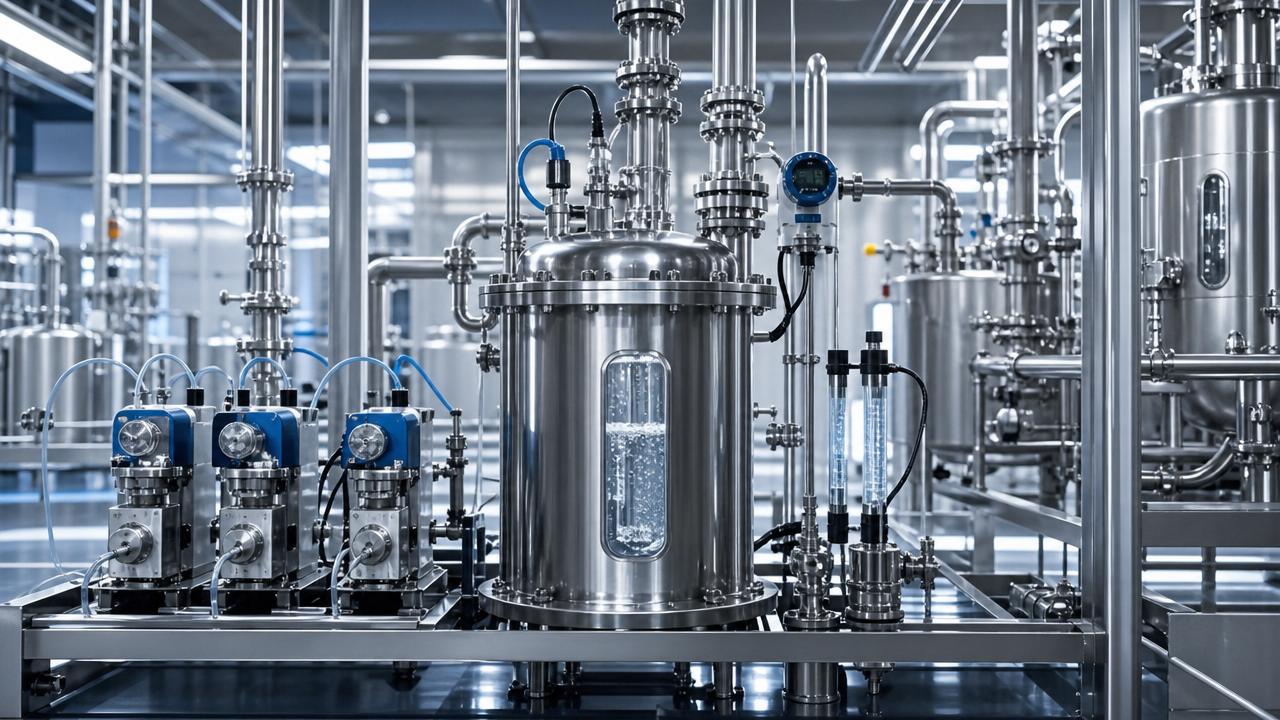
For enterprise decision-makers, buffer preparation throughput metrics are no longer secondary lab indicators—they directly shape equipment selection, process scalability, and cost control. As batch-to-continuous manufacturing accelerates across biopharma and chemical production, understanding how throughput, precision, and fluidic consistency interact is essential for choosing systems that reduce risk, support compliance, and sustain high-performance operations.
When buyers search for buffer preparation throughput metrics, they are rarely looking for a definition alone. They want to know which performance indicators genuinely predict production readiness, where vendor claims can mislead procurement, and how throughput data should change equipment decisions across lab, pilot, and early commercial environments.
For most enterprise teams, the practical conclusion is clear: the best system is not the one with the highest nominal liters-per-hour figure. The right choice is the platform that sustains required output while holding concentration accuracy, mixing uniformity, changeover speed, traceability, and operator dependence within acceptable limits. Throughput only creates value when it is stable, compliant, and scalable.
What decision-makers are actually trying to learn from buffer preparation throughput metrics
At the search-intent level, enterprise readers usually have four questions in mind. First, which metrics matter most when comparing systems? Second, how should those metrics be interpreted across batch and continuous workflows? Third, what are the operational and financial consequences of poor throughput performance? Fourth, how can procurement teams separate useful benchmark data from oversimplified marketing claims?
That intent is especially strong in regulated and precision-sensitive environments. In biopharma, for example, buffer preparation supports chromatography, filtration, cell culture, formulation, and cleaning workflows. A small mismatch between expected and actual throughput can trigger downstream bottlenecks, idle production assets, failed scheduling assumptions, and unnecessary inventory exposure.
In chemical and advanced materials operations, the same principle applies. Buffer or solution preparation equipment affects line balance, process transfer, labor planning, and the reproducibility of high-value formulations. Decision-makers are therefore not buying mixing hardware in isolation. They are buying process continuity, quality consistency, and operational resilience.
This is why buffer preparation throughput metrics should be treated as strategic selection criteria rather than secondary technical specifications. Properly interpreted, they reveal whether a system can support current demand, absorb future complexity, and operate within the site’s compliance and cost constraints.
Which throughput metrics matter most when selecting buffer preparation equipment
Many equipment comparisons still begin and end with theoretical output, often expressed as liters per hour or batches per shift. While this is a useful starting point, it is one of the least reliable standalone indicators. Enterprise buyers should focus instead on a layered metric set that reflects real production conditions.
1. Effective throughput under specification. This is the amount of buffer a system can produce per hour while maintaining required pH, conductivity, concentration, temperature, and homogeneity limits. A unit that produces more volume but drifts out of tolerance is not high-throughput in any meaningful business sense.
2. Time-to-ready and total cycle time. These metrics include filling, dosing, mixing, verification, sampling, documentation, and release readiness. In practice, total throughput is often constrained less by mixing speed than by setup, confirmation, and operator intervention.
3. Changeover time. For multi-product environments, equipment value is heavily influenced by how quickly teams can move between recipes, concentrations, or process campaigns. Fast nominal production becomes irrelevant if cleaning, validation, or reconfiguration takes too long.
4. First-pass right rate. Throughput should be measured against the percentage of batches that meet quality criteria without rework or adjustment. Systems that require repeated correction reduce true productive capacity and increase consumption of raw materials, water, and labor.
5. Throughput consistency across batch sizes. Some platforms perform well at one operating point but lose control at lower or higher volumes. Decision-makers should examine whether output remains predictable across the practical working range they expect during development, scale-up, and commercial transfer.
6. Labor-adjusted throughput. A machine that produces 400 liters per hour with constant operator attention may be less valuable than a system producing 300 liters per hour with high automation and digital traceability. Procurement teams should assess output per labor hour, not just output per equipment hour.
7. Utility efficiency at target output. Water-for-injection consumption, energy load, compressed gas demand, and clean-in-place requirements all affect operating economics. High throughput that arrives with disproportionate utility cost can erode ROI over time.
8. Data integrity and batch record integration. In GMP-governed operations, the ability to automatically capture throughput, process conditions, alarms, and adjustments is part of effective capacity. Manual documentation slows release, adds compliance risk, and reduces usable throughput from a planning perspective.
Why nominal output often leads to poor equipment decisions
One of the most common procurement mistakes is comparing systems using idealized vendor throughput figures generated under simple water-like conditions, narrow viscosity windows, limited recipe complexity, or highly controlled demonstrations. Those figures can be directionally helpful, but they rarely represent live manufacturing conditions.
Real buffer preparation includes variable powder behavior, concentration sensitivity, degassing effects, temperature influences, calibration drift, inline sensor response time, and operator variability. If throughput metrics do not account for these factors, purchasing teams may select equipment that appears cost-effective during tender review but underperforms after installation.
This gap becomes expensive in three ways. First, production planning becomes unreliable. Second, sites compensate with excess capacity or duplicated equipment. Third, deviations, rework, and overtime accumulate quietly until the original capital savings disappear.
In many facilities, the issue is not that the equipment fails completely. The issue is that it cannot sustain target throughput at target quality, especially during campaign changes, high-demand periods, or atypical formulations. This is precisely why enterprise buyers should insist on buffer preparation throughput metrics tied to acceptance criteria, not just to peak mechanical capability.
How throughput metrics change decisions across batch, hybrid, and continuous operations
The importance of each metric shifts depending on the production model. In traditional batch settings, total cycle time and batch release readiness often dominate because equipment utilization is shaped by preparation, hold time, and transfer scheduling. In these environments, a moderate increase in effective throughput can unlock substantial line efficiency if it reduces waiting between unit operations.
In hybrid facilities, where batch preparation feeds semi-continuous downstream processes, consistency becomes more critical than peak speed. Small fluctuations in buffer concentration or delivery timing can destabilize connected operations. Here, throughput metrics should emphasize steady-state control, automation, and alarm responsiveness rather than only maximum volume.
In continuous manufacturing, the decision framework changes again. Buffer preparation equipment must act as a stable utility-like process, not an isolated support task. Enterprise teams should evaluate residence time stability, inline monitoring reliability, redundancy options, and the ability to maintain output over extended runs without frequent manual correction.
For organizations moving from batch to continuous, this transition is exactly where better metric discipline influences capex decisions. A platform that looked sufficient for batch support may prove inadequate once sustained feeding, lower intervention tolerance, and tighter integration are required.
What enterprise buyers should ask vendors before shortlisting a system
Strong procurement outcomes depend less on asking for more brochures and more on asking better questions. Vendors should be able to explain how their buffer preparation throughput metrics were generated, what assumptions were used, and which variables reduce performance in real applications.
Useful questions include: What is the tested effective throughput at the target conductivity and concentration range? How does throughput change across minimum and maximum batch sizes? What is the average changeover duration for a validated cleaning protocol? What percentage of runs meet specification without manual correction? How much operator time is required per cycle?
Buyers should also ask whether the system supports inline dilution, gravimetric dosing, recipe management, digital audit trails, and integration with supervisory control or manufacturing execution systems. These are not peripheral software conveniences. They directly influence whether throughput can be achieved repeatedly at enterprise quality standards.
Another critical question concerns scale-up logic. If a vendor presents excellent lab-scale performance, can they demonstrate process transfer principles that preserve mixing behavior, dosing accuracy, and sensor reliability at pilot or production scale? Throughput metrics have little value if they collapse during expansion.
How to translate throughput data into financial and operational value
Enterprise decision-makers ultimately need to connect technical metrics with business outcomes. The most useful way to do this is to model throughput against bottleneck relief, labor deployment, deviation reduction, and asset utilization.
For example, if a new preparation system reduces cycle time by 25 percent but also lowers out-of-spec adjustment events, its value is larger than the speed improvement alone suggests. It may increase chromatography uptime, reduce buffer hold inventory, improve scheduling confidence, and limit night-shift labor needs.
Similarly, better throughput consistency can reduce the need for oversized equipment. Many organizations overbuy capacity because they do not trust real operating performance. A system with lower peak output but stronger predictability may support leaner capital planning and lower lifecycle cost.
Procurement and operations teams should therefore calculate at least five business variables: cost per usable liter produced, labor hours per released batch, deviation or rework rate, downstream idle time caused by buffer delays, and scalability cost for future volume expansion. This approach turns buffer preparation throughput metrics into board-relevant decision tools rather than isolated engineering data points.
Risk factors that should temper a high-throughput purchase decision
High throughput is attractive, but not every high-speed platform is a good fit. Several risk factors should moderate equipment selection. One is recipe complexity. Systems that excel with simple buffers may struggle with concentrated, temperature-sensitive, or multi-component formulations.
Another is compliance burden. Highly automated systems can create significant value, but they also require validation discipline, software governance, and maintenance capabilities. If the site lacks digital maturity, some throughput gains may be difficult to realize in practice.
There is also the risk of hidden fragility. Equipment that depends on frequent calibration, narrow operating windows, or specialist operators may deliver impressive benchmark results but inconsistent long-term plant performance. Enterprise buyers should assess maintainability, service support, spare part availability, and diagnostics as part of throughput reliability.
Finally, decision-makers should watch for the mismatch between current and future needs. Buying for today’s easiest use case can create a near-term fit but a medium-term constraint. The right system should not only meet present demand; it should also tolerate SKU growth, process intensification, and greater automation over time.
A practical framework for comparing buffer preparation systems
A useful evaluation framework is to score systems across five dimensions: output, quality retention, operational flexibility, compliance readiness, and lifecycle economics. This prevents procurement from overweighting a single headline figure and missing performance tradeoffs that matter after commissioning.
Under output, assess effective liters per hour, total cycle time, and throughput stability. Under quality retention, review pH and conductivity accuracy, mixing uniformity, and first-pass success. Under operational flexibility, evaluate batch range, recipe adaptability, changeover time, and operator burden.
Under compliance readiness, examine data capture, audit trails, validation documentation, and integration capability. Under lifecycle economics, compare utility consumption, consumables, maintenance intervals, service dependence, and cost per usable batch. This multidimensional method gives executive teams a more realistic basis for selection than nominal throughput alone.
Where possible, teams should request application-specific factory acceptance testing or benchmark trials using representative formulations. Realistic testing often exposes whether a system’s published throughput translates into operational value.
Why this matters more as precision manufacturing expands
Across biopharma, specialty chemicals, and advanced laboratory production, process architectures are becoming more sensitive to upstream variability. Personalized therapeutics, smaller lot sizes, accelerated development timelines, and continuous processing all increase the importance of reliable support functions.
Buffer preparation is one of those support functions that becomes strategically visible when it fails. Yet when it is measured correctly and equipped appropriately, it can improve line balance, reduce compliance friction, and create a stronger bridge between lab-scale development and scalable execution.
For organizations focused on micro-efficiency, the lesson is straightforward: throughput should be measured as controlled productive output, not just speed. The best equipment decisions come from understanding how fluidic precision, automation maturity, and repeatable release quality shape actual usable capacity.
Conclusion: the best throughput metric is the one tied to usable, scalable performance
Buffer preparation throughput metrics change equipment decisions because they reveal whether a system can support business goals, not just laboratory demonstrations. For enterprise buyers, the most important insight is that nominal output is insufficient. Effective throughput must be judged alongside specification adherence, changeover efficiency, labor demand, data integrity, and scale-transfer reliability.
If decision-makers focus on those combined indicators, they are far more likely to select equipment that strengthens production continuity, supports GMP expectations, and avoids expensive underperformance after installation. In modern process environments, the winning platform is not the fastest on paper. It is the one that delivers predictable, compliant, and economically sustainable throughput where it matters most.
Expert Insights

Chief Security Architect
Dr. Thorne specializes in the intersection of structural engineering and digital resilience. He has advised three G7 governments on industrial infrastructure security.
Related Analysis
Core Sector // 01
Security & Safety
- Ultra-Low-Volume Dispensing: Evaluating Accuracy and Precision at Nanoliter ScaleAuthor :Lina Cloud

- Dial Indicators in Bulk: Accuracy Grades, Mounting Styles, and Supplier ChecksAuthor :Lina Cloud

- Why hydraulic hoses bulk orders fail pressure checks?Author :Lina Cloud

- How to Vet a Titration System OEM Supplier Before Scale-UpAuthor :Lina Cloud

- Titration Accuracy and Sensitivity Data That Actually MatterAuthor :Lina Cloud

- Choosing a Peristaltic Pump for Lab Wholesale Without OverbuyingAuthor :Lina Cloud

- How Much Titration Accuracy Is Enough for Routine QC Work?Author :Lina Cloud

- Why automated buffer preparation factory output can vary by batchAuthor :Lina Cloud