ECHA Adds Five SVHCs Affecting Microfluidic Device Exports
Author
Date Published
Reading Time
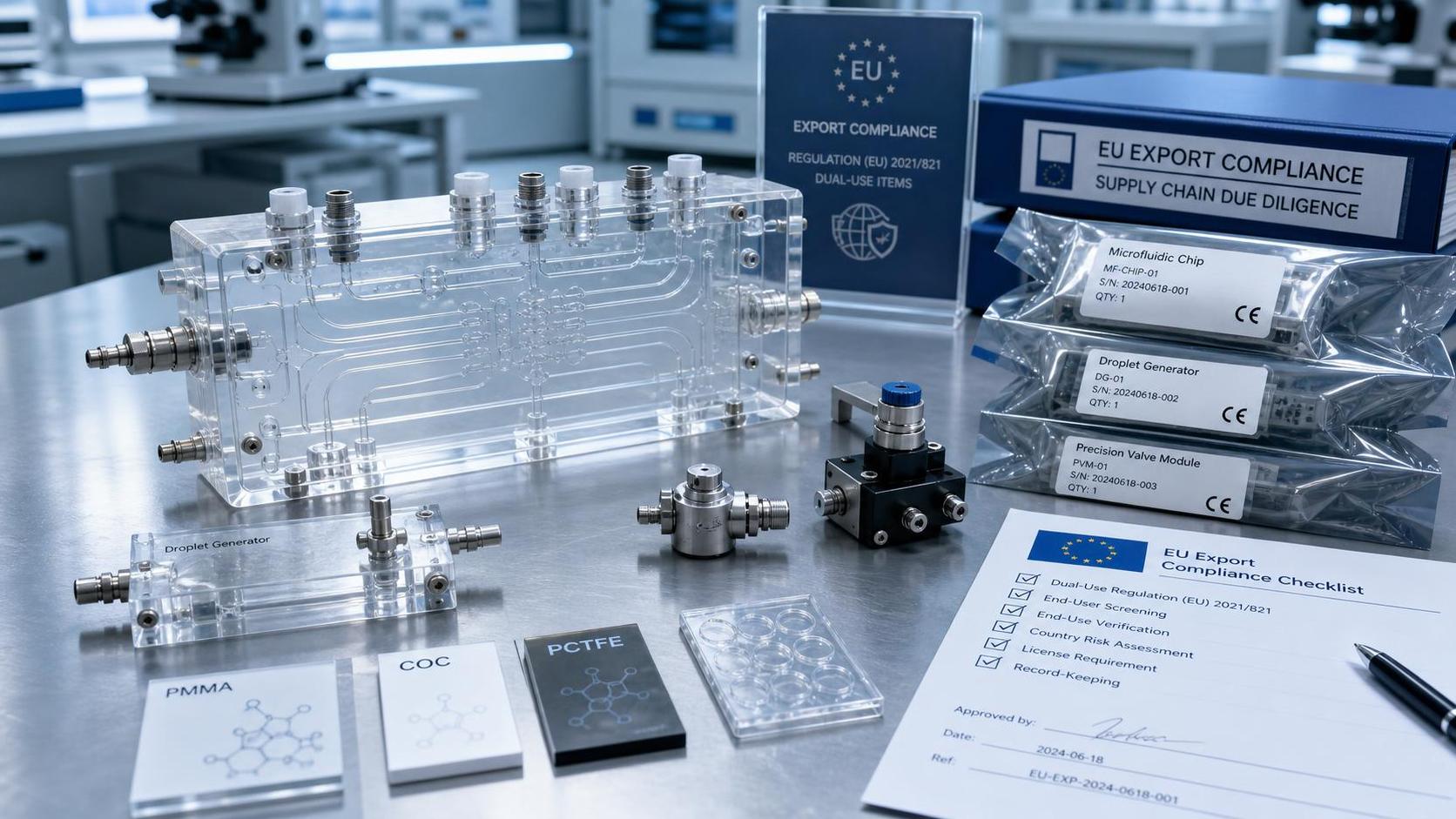
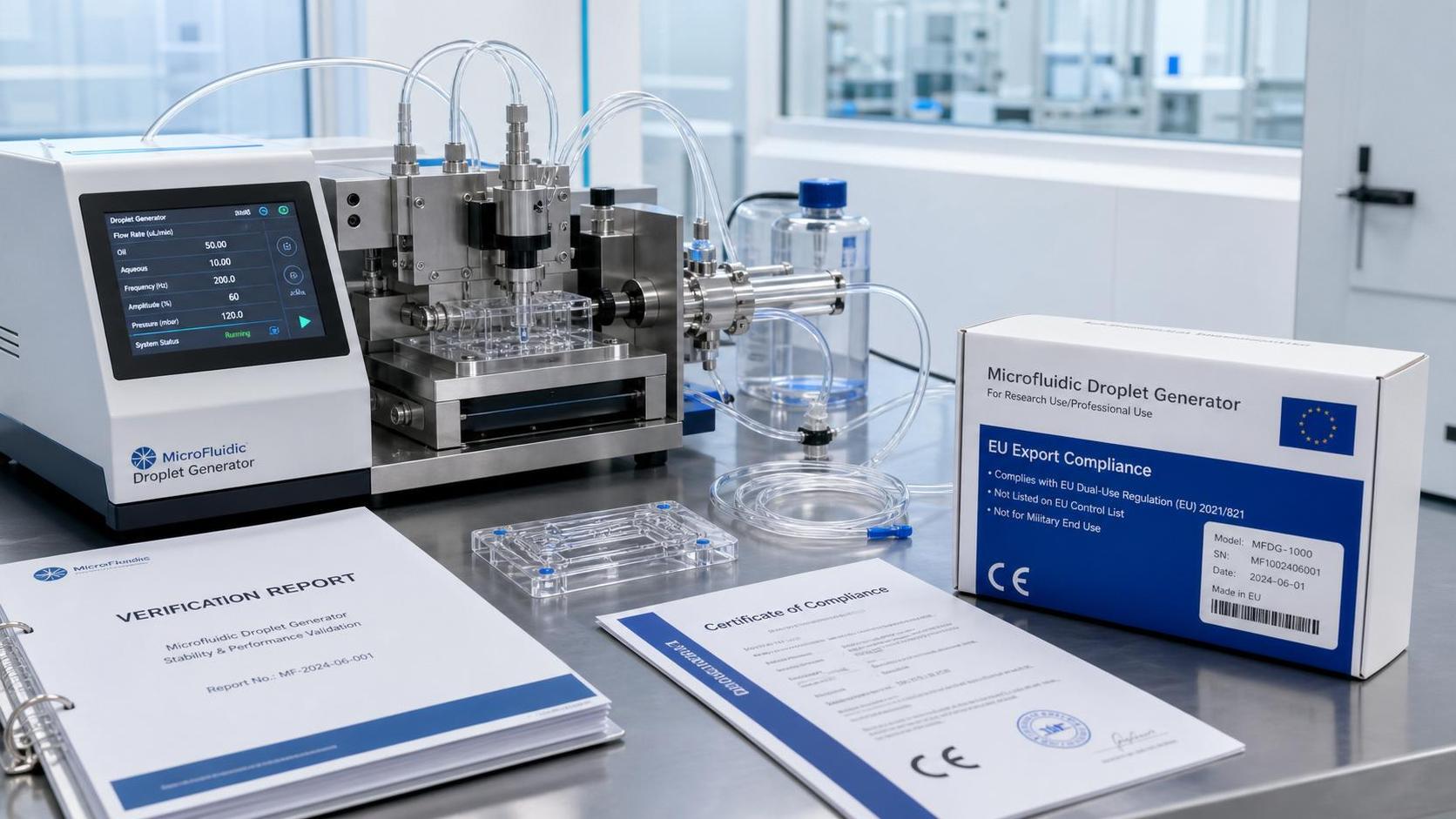
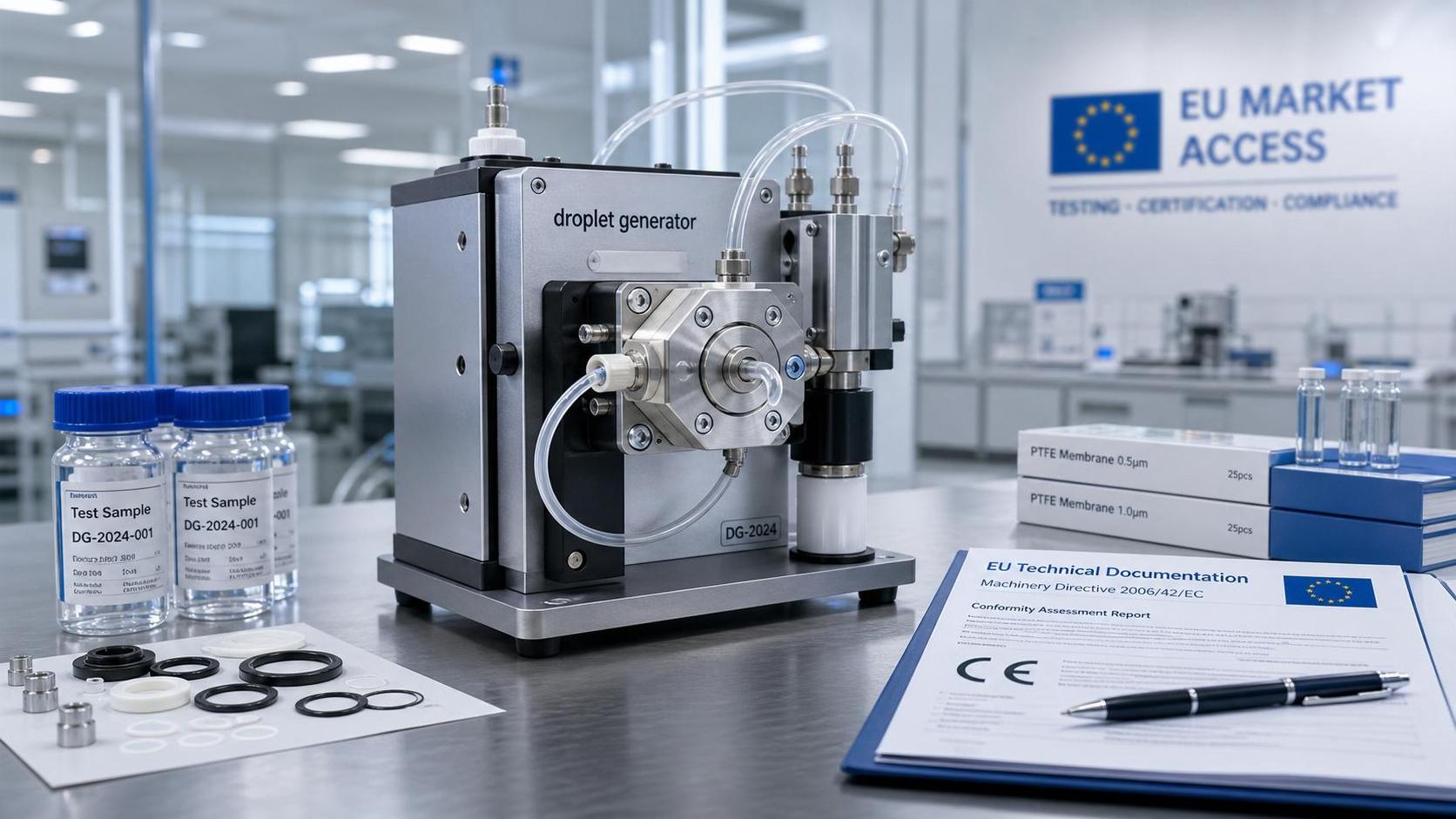
On July 28, 2026, the European Chemicals Agency (ECHA) updated the SVHC Candidate List by adding five substances used in Lab-on-a-Chip systems and droplet generators, specifically highly migratory organic plasticizers and nano-silver stabilizers. For companies involved in exporting droplet generators, microdroplet control modules, and related chip components to the EU, this update deserves close attention because mandatory supply chain communication will apply from October 1, 2026, and the change also touches conformity documentation under CE-IVDR and MDR for microfluidic devices.
What the Update Confirms
The confirmed facts are limited but commercially significant. ECHA updated the SVHC Candidate List on July 28, 2026. The update added five substances associated with microfluidic device applications, including materials used in Lab-on-a-Chip products and droplet generators. These substances are described as highly migratory organic plasticizers and nano-silver stabilizers. From October 1, 2026, mandatory supply chain notification will apply. The change also affects declarations of conformity for microfluidic-related devices under CE-IVDR and MDR. The adjustment is directly relevant to the compliance route and technical documentation preparation for exports to the EU involving droplet generators, microdroplet control modules, and supporting chip components.
Where the Immediate Pressure May Appear
Export-facing device suppliers
From an industry perspective, manufacturers and exporters of droplet generators and related microfluidic assemblies may face the earliest pressure because their EU market access depends not only on the physical product but also on whether substance-related information is properly communicated through the supply chain. The practical impact is likely to center on product review, dossier preparation, and customer-facing compliance statements.
Component and chip manufacturers
For suppliers of supporting chip components and module-level parts, the issue is likely to arise in material composition visibility. If listed substances are present in relevant parts or materials, the business impact may appear in upstream declarations, document requests from customers, and the timing of compliance confirmation for shipments intended for the EU.
Procurement and supply chain coordination teams
What deserves closer attention is the operational role of procurement and supply chain teams. Even where the finished product exporter is the party facing the EU customer, internal and external purchasing teams may need to confirm whether relevant plasticizers or nano-silver stabilizers are present in sourced materials or subassemblies. The effect is therefore not limited to regulatory staff; it can extend to supplier communication, document collection, and delivery planning.
EU-facing customers and service partners
Buyers, distributors, and compliance service partners connected to the EU market may also be affected because conformity-related statements under CE-IVDR and MDR can depend on timely and consistent technical documentation. In practice, this may increase requests for updated declarations, material disclosures, or clarification on whether specific product configurations are implicated.
What Companies Should Watch Now
Check substance exposure at product and component level
Analysis shows that the first practical question is not abstract policy interpretation but whether the newly added substances are present in the relevant device, module, or chip component. Companies selling into the EU should review product structures and material inputs in the categories directly mentioned by the update.
Separate notification duties from broader conformity work
It is important to distinguish between the October 1, 2026 supply chain communication requirement and the wider conformity implications under CE-IVDR and MDR. These are related, but they are not the same task. Businesses should pay attention to how substance communication obligations connect with declarations of conformity and technical documentation, rather than treating the update as a single paperwork item.
Prepare supplier documentation before customer requests intensify
Observably, one of the near-term pressure points may be timing. Once the requirement becomes mandatory, downstream customers may ask for confirmation quickly. Companies should therefore focus on supplier declarations, material statements, and supporting technical records early enough to avoid disruption in quotations, order confirmation, or shipment readiness.
Monitor whether official wording leads to further compliance clarification
The current update already matters for business execution, but companies should continue following how official language, guidance, or related compliance interpretations develop around microfluidic devices under CE-IVDR and MDR. The key issue is whether implementation expectations become more specific for this product category.
How This Development Is Best Understood
As an editorial observation, this development is better understood as both an immediate compliance trigger and a longer-term regulatory signal. The immediate element is clear: mandatory supply chain notification begins on October 1, 2026. The longer-term signal is that material scrutiny in microfluidic device exports is becoming more consequential for technical documentation and market-facing conformity work. At the same time, it would be premature to treat this update alone as a complete redefinition of the market. The more accurate reading is that the rule change raises the compliance threshold for affected products and makes documentation discipline more important across the supply chain.
Why the Industry Should Keep It in View
For the microfluidics segment, the significance of this update lies less in headline value and more in execution risk. It directly links substance listing changes to export compliance, supply chain notification, and conformity documentation for products moving into the EU. The most balanced conclusion at this stage is that the development should be treated as a concrete near-term compliance change with broader implications still worth monitoring, especially for businesses shipping droplet generators, microdroplet control modules, and chip-related assemblies into the European market.
Basis of This Article
This article is based on the user-provided news title, event date, and event summary. For this type of development, commonly relevant source categories may include official notices, company disclosures, industry association updates, authoritative media coverage, and standards or regulatory documents. No specific official source link was provided in the input, so the exact official reference still needs ongoing verification. Further follow-up should focus on any additional official clarification related to supply chain notification practice, CE-IVDR/MDR documentation treatment, and product-level application in microfluidic export workflows.
Expert Insights

Chief Security Architect
Dr. Thorne specializes in the intersection of structural engineering and digital resilience. He has advised three G7 governments on industrial infrastructure security.
Related Analysis
Core Sector // 01
Security & Safety
- ECHA Adds Five SVHCs Affecting Microfluidic Device ExportsAuthor :Dr. Aris Nano

- FDA GMP Update Reshapes Droplet Generator ExportsAuthor :Dr. Aris Nano

- ECHA Draft Restriction Adds Compliance Pressure for Droplet GeneratorsAuthor :Dr. Aris Nano

- ECHA Adds 3 Nanomaterials to SVHC List, Affecting Droplet Generator ExportsAuthor :Dr. Aris Nano

- EU updates transition guidance for Droplet GeneratorsAuthor :Dr. Aris Nano

- EU REACH Annex XVII Tightens PFAS Elastomer Limit for Droplet GeneratorsAuthor :Dr. Aris Nano

- EU REACH Tightens PFOA Limit for Droplet GeneratorsAuthor :Dr. Aris Nano

- EU Sets Immediate PFAS Limit for Droplet Generator FluoroelastomersAuthor :Dr. Aris Nano