How Microfluidic Precision Engineering cuts sample waste
Author
Date Published
Reading Time

For technical evaluators under pressure to improve yield, compliance, and scale-up readiness, Microfluidic Precision Engineering offers a measurable path to reducing sample waste without compromising data quality. By enabling tighter flow control, lower dead volume, and more reproducible microscale processing, it helps bridge early-stage experimentation with production-grade decision-making in pharmaceutical and chemical environments.
Why a checklist matters when sample waste becomes a systems problem
Sample loss rarely comes from one obvious failure. It usually accumulates through dead volume, unstable flow, over-priming, adsorption, and inconsistent operator setup across instruments.
That is why Microfluidic Precision Engineering should be evaluated as a process architecture, not as a single device feature or a narrow laboratory upgrade.
A checklist-based approach helps compare platforms against reproducibility, cleaning burden, material compatibility, and scale-up relevance before hidden waste becomes normalized.
Core checklist: how Microfluidic Precision Engineering cuts sample waste
- Map total dead volume across chips, connectors, valves, tubing, and detectors before comparing instruments, because nominal channel efficiency can be erased by poorly designed peripheral fluid paths.
- Measure priming volume under real operating conditions, including viscosity shifts, temperature changes, and solvent transitions, since startup losses often exceed the sample consumed during actual analysis.
- Verify flow stability at the lowest intended throughput, because many systems perform well at demonstration settings but drift when handling scarce, high-value, or shear-sensitive samples.
- Check material compatibility with proteins, reactive intermediates, nanoparticles, and aggressive solvents to reduce adsorption, swelling, leaching, and carryover that silently distort mass balance.
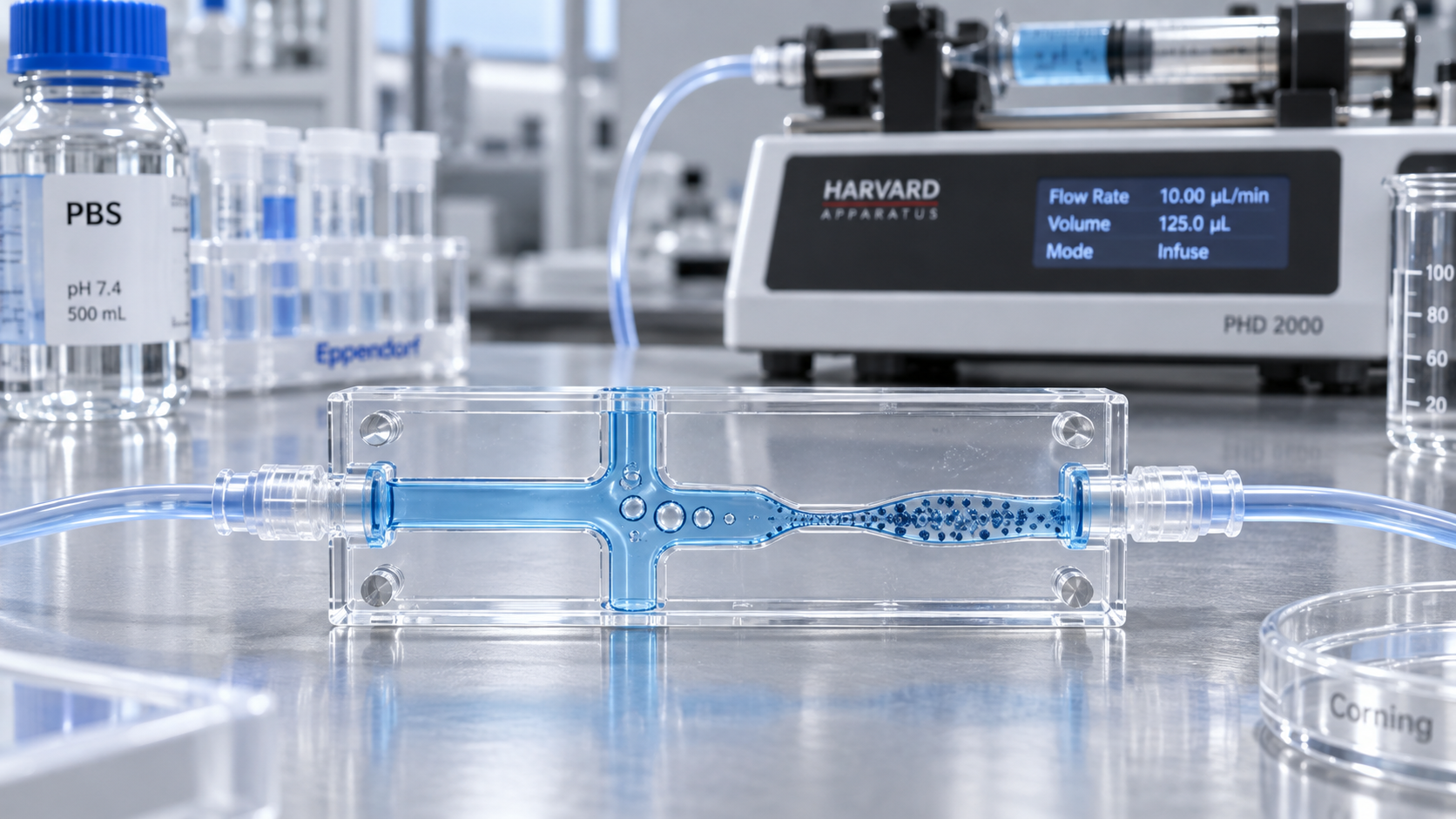
- Quantify droplet or stream uniformity using coefficient of variation data, since reproducible partitioning is central to Microfluidic Precision Engineering and directly affects usable output from limited input.
- Compare recovery rates at inlet and outlet, not just nominal dispense accuracy, because real waste is defined by what can be retrieved, analyzed, transferred, or advanced downstream.
- Assess cleaning validation and changeover loss, especially in regulated workflows, because flushing requirements can consume more reagents and samples than the experimental protocol itself.
- Review sensor integration for pressure, temperature, and flow feedback, since closed-loop control is what turns Microfluidic Precision Engineering into a repeatable waste-reduction strategy.
- Test operator variability with standard work instructions, because precision hardware still loses value if setup, cartridge loading, or calibration introduces unpredictable sample consumption.
- Link microscale results to scale-up models and batch-to-continuous decisions, ensuring reduced sample use today also improves development confidence for later manufacturing transitions.
What to evaluate in platform design
Flow-path architecture
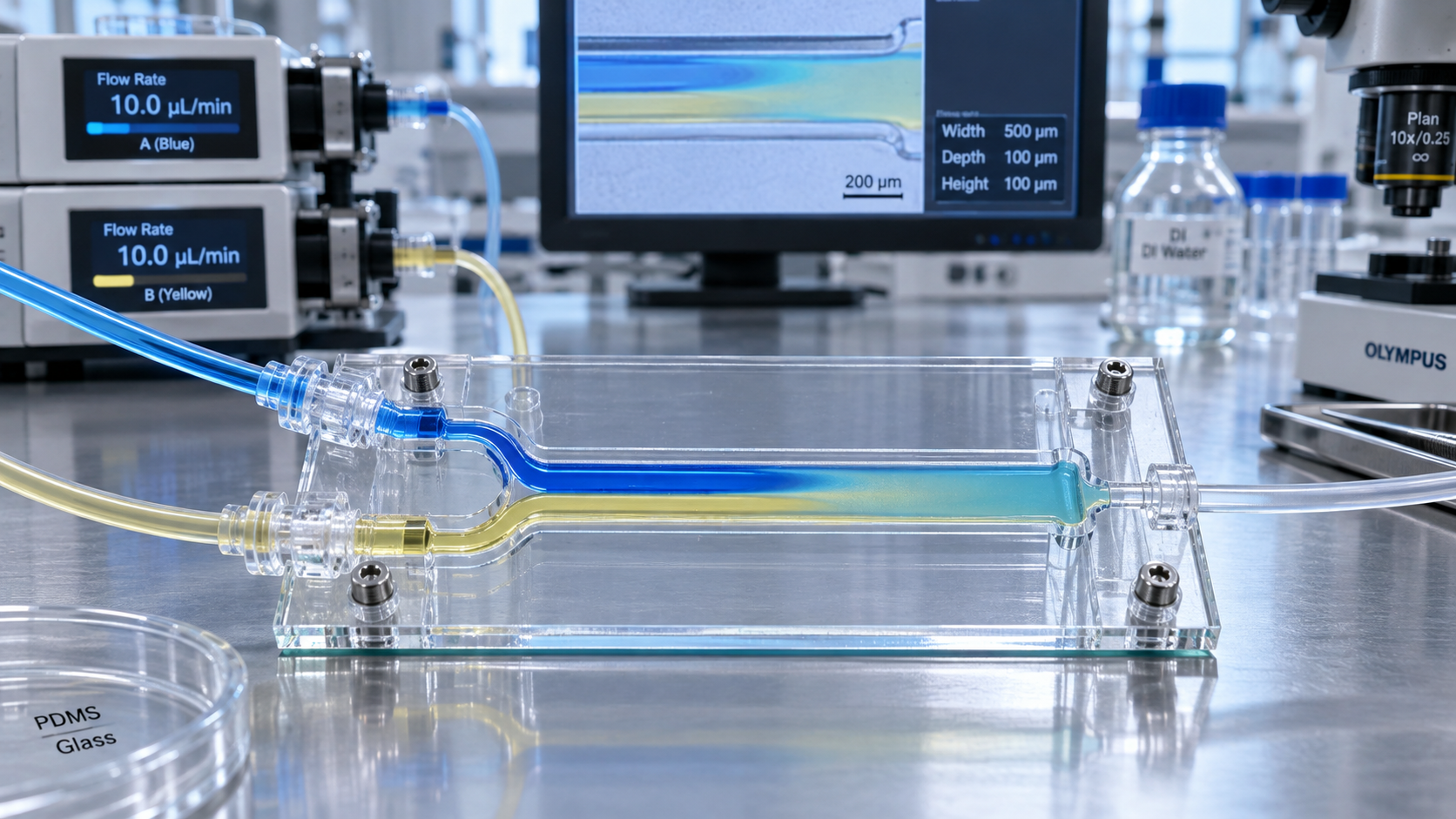
The best Microfluidic Precision Engineering platforms minimize unnecessary interfaces. Every union, gasket, and tubing transition adds retention risk and expands the volume needed for stabilization.
Integrated manifolds, short wetted paths, and application-matched channel geometry usually outperform systems that rely on general-purpose external plumbing.
Control resolution
Sample savings depend on how precisely the system starts, stops, splits, and recirculates flow. Resolution matters more than headline throughput when the input material is scarce.
Pressure ripple, pulsation, and valve lag can widen distributions and force repeat runs. That directly increases total material consumption despite apparently efficient nominal settings.
Bioconsistency and chemical robustness
In pharmaceutical and chemical workflows, fluid behavior changes with formulation, pH, excipients, and solvent composition. Microfluidic Precision Engineering works best when wetted materials are selected for real chemistry, not generic compatibility charts.
Application scenarios where waste reduction becomes measurable
Early formulation screening
Formulation studies often rely on small batches of expensive actives or biologically sensitive materials. Microfluidic Precision Engineering allows many condition sets to be tested using tightly metered sub-milliliter volumes.
Because channel-to-channel consistency is higher, fewer repeats are needed. The result is not only lower sample waste but also cleaner comparative datasets for go or no-go decisions.
Reaction development and process intensification
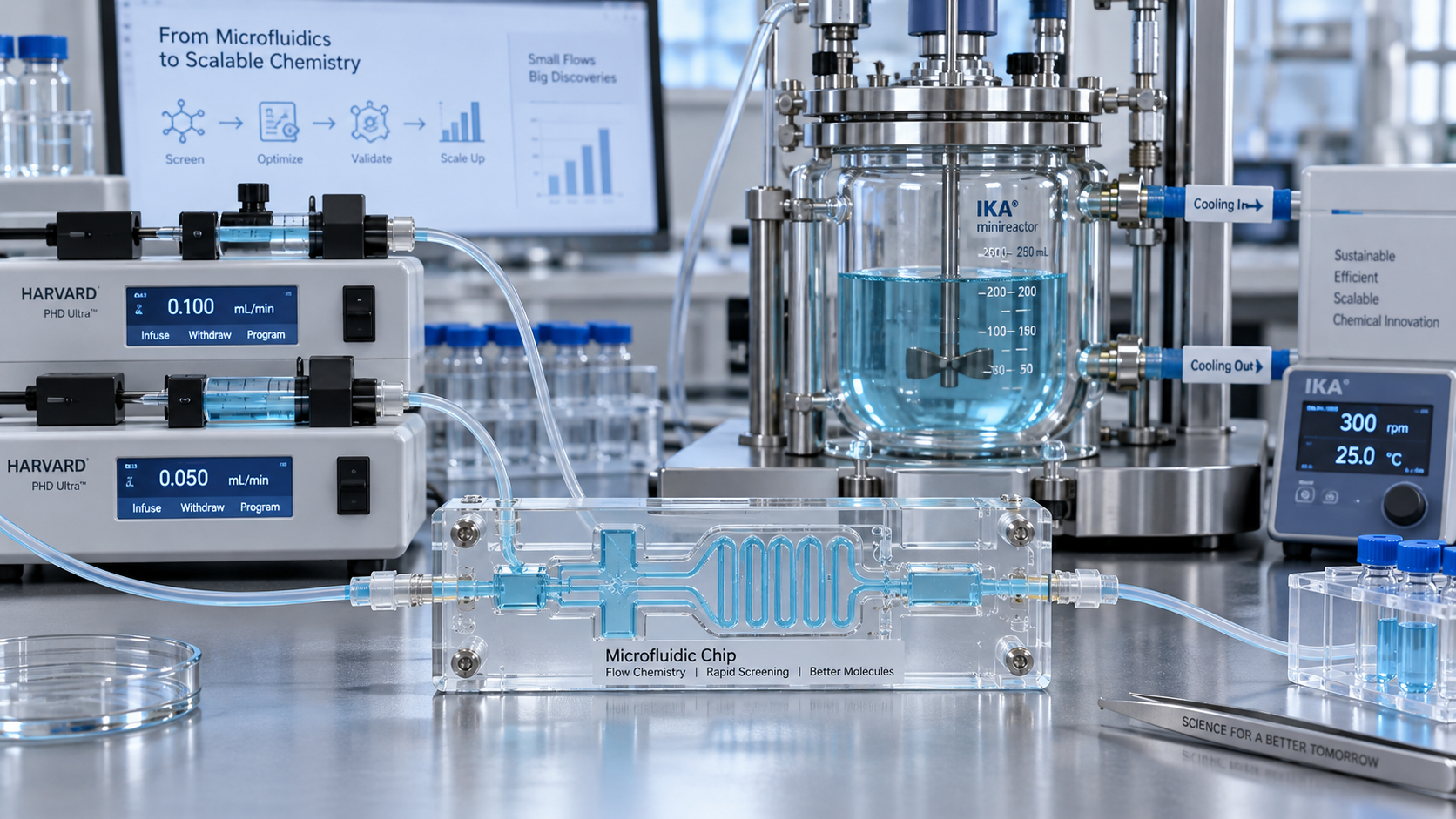
For fine chemical synthesis and catalytic studies, microscale continuous flow platforms reduce the hold-up volume associated with conventional vessels and transfer steps.
This is where Microfluidic Precision Engineering supports safer screening, faster thermal equilibration, and lower losses during parameter sweeps involving hazardous or unstable intermediates.
Cell and biomolecule handling
When handling cells, enzymes, antibodies, or nucleic acids, waste is not only volumetric. Loss of viability or structural integrity also counts as sample loss.
Microfluidic Precision Engineering can reduce exposure to shear spikes and uncontrolled residence times, improving functional recovery from limited biological inputs.
Analytical preparation and transfer
In analytical chains, the transfer between preparation, dilution, separation, and detection stages often causes silent losses. Smaller, more controlled fluidic paths help preserve mass balance through the full workflow.
Commonly overlooked risks
Ignoring connector dead zones
A highly refined chip does not compensate for oversized connectors. Dead zones trap sample, create mixing artifacts, and increase flushing requirements between runs.
Overlooking adsorption during low-concentration work
At low analyte levels, surface interactions can dominate apparent recovery. The platform may seem precise while still losing the fraction that matters most for decision quality.
Assuming small scale automatically predicts larger scale
Microfluidic Precision Engineering adds value when microscale data connect to reactor, bioreactor, centrifugation, or automated liquid handling decisions. Without that link, sample savings stay isolated.
Underestimating cleaning and validation loads
Single-use and reusable architectures have different waste profiles. One may save sample during operation but increase loss during qualification, rinsing, or lot changeover.
Practical execution guidance
- Run a mass-balance study using representative fluids, then compare input, recovered output, purge volume, and retained volume across at least three operating conditions.
- Create a waste dashboard that includes startup loss, steady-state loss, changeover loss, and repeat-test loss rather than reporting only nominal sample consumption.
- Standardize connectors, tubing lengths, and cartridge preparation steps so Microfluidic Precision Engineering gains are not diluted by inconsistent peripheral setup.
- Validate with challenging materials, including viscous, adsorptive, unstable, or shear-sensitive samples, because idealized water tests rarely predict real process behavior.
- Tie selection criteria to ISO, USP, and GMP expectations where relevant, especially when data generated at microscale will support regulated development decisions.
Summary and next step
Microfluidic Precision Engineering cuts sample waste by controlling what traditional setups often leave unmanaged: dead volume, flow instability, material interaction, and inconsistent recovery.
The strongest results appear when evaluation extends beyond the chip and includes sensors, connectors, cleaning strategy, and scale-up relevance across the broader laboratory and production workflow.
Start with a structured comparison of current sample loss points, then benchmark one workflow using recovery rate, repeatability, and changeover consumption. That is the fastest way to confirm whether Microfluidic Precision Engineering will deliver measurable operational value.
Expert Insights

Chief Security Architect
Dr. Thorne specializes in the intersection of structural engineering and digital resilience. He has advised three G7 governments on industrial infrastructure security.
Related Analysis
Core Sector // 01
Security & Safety
- Can Lab-on-a-Chip Systems Replace Early-Stage Reactor Experiments?Author :Dr. Aris Nano

- What Are the Main Failure Modes of Lab-on-a-Chip Devices?Author :Dr. Aris Nano

- Microfluidic Design Basics: Channels, Flow Regimes, and Material ChoicesAuthor :Dr. Aris Nano

- Microfluidic Devices Market: How Cartridge Manufacturing Shapes CompetitionAuthor :Dr. Aris Nano

- Microfluidics Market Outlook: Adoption Barriers in Drug DiscoveryAuthor :Dr. Aris Nano

- Microfluidic Market Opportunities: Where Point-of-Care Testing Drives DemandAuthor :Dr. Aris Nano

- How to Select a Microfluidic Cell Sorter for Viability, Purity, and ThroughputAuthor :Dr. Aris Nano

- Polymer Selection for Precision Microfluidics: Key Performance CriteriaAuthor :Dr. Aris Nano