Vietnam Proposes 12% Special Duty on Nano Flow Microfluidic Modules
Author
Date Published
Reading Time
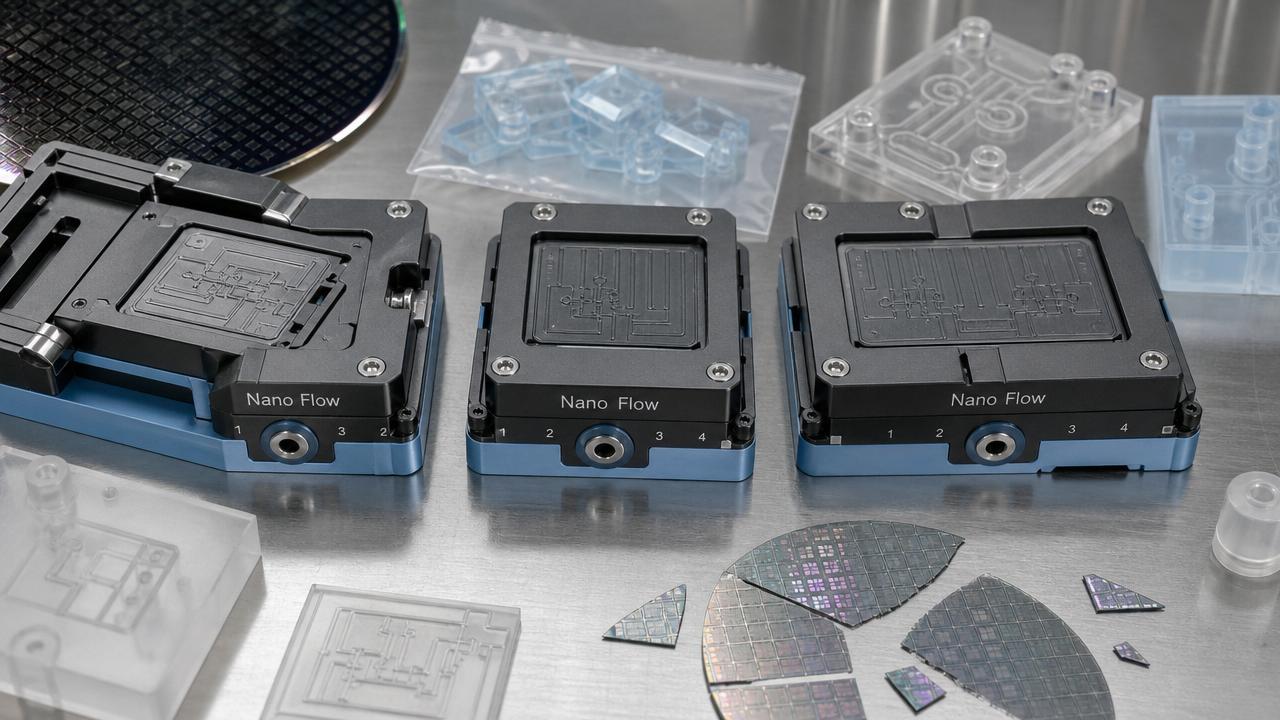
Vietnam’s proposed 12% special regulatory duty on Nano Flow microfluidic modules—announced by the Ministry of Industry and Trade on May 17, 2026—marks a significant shift in tariff policy toward precision diagnostic components. The move directly affects China-based exporters supplying into Vietnam’s growing in vitro diagnostics (IVD) and point-of-care testing markets, where regulatory classification increasingly determines market access and cost competitiveness.
Event Overview
On May 17, 2026, Vietnam’s Ministry of Industry and Trade published Draft Decree No. 18/2026 on Import Regulation, proposing a 12% special regulatory duty on Nano Flow–type microfluidic modules containing silicon-based chip structures. The measure is scheduled to take effect from August 2026. In response, several leading Chinese suppliers have jointly engaged third-party laboratories to pursue concurrent GMP and ISO 13485 certification—aiming to qualify their products as ‘medical-grade fluidic components’ and thereby secure tariff exemption under Vietnam’s medical device import framework.
Industries Affected
Direct Exporters
Chinese manufacturers exporting Nano Flow modules to Vietnam face immediate margin pressure: the 12% duty applies at customs clearance unless reclassified. Since these modules are often shipped as standalone components—not yet assembled into final IVD devices—they currently fall outside Vietnam’s medical device tariff schedule. Exporters must now substantiate medical-grade design, manufacturing controls, and traceability to meet exemption criteria—a process requiring documentation upgrades, audit readiness, and potential redesign for conformity.
Raw Material Procurement Firms
Firms sourcing silicon wafers, PDMS precursors, or functionalized surface coatings for Nano Flow production may see downstream demand volatility. If export timelines slip due to certification delays, procurement cycles could tighten—or shift toward pre-qualified, ISO 13485–aligned material vendors. Notably, raw material traceability (e.g., lot-level biocompatibility data) is now becoming a prerequisite for finished-device certification, raising qualification thresholds for upstream suppliers.
Contract Manufacturing Organizations (CMOs)
CMOs producing Nano Flow modules under OEM arrangements face dual compliance obligations: they must align with client-specific GMP protocols while also meeting ISO 13485 requirements for device component manufacturing. This includes enhanced change control, nonconformance handling, and supplier management systems—capabilities many mid-tier CMOs lack. Capacity constraints in certified cleanroom facilities are already emerging in Guangdong and Jiangsu provinces.
Supply Chain Service Providers
Freight forwarders, customs brokers, and regulatory consultants specializing in ASEAN medical device entry are revising service offerings. Demand is rising for ‘tariff classification advisory’—particularly around HS code 9018.90 (other medical instruments) versus 8543.90 (electrical machines)—as misclassification risks trigger both duty liabilities and shipment holds. Real-time tracking of Vietnam’s Medical Device Authority (MDA) guidance updates has become a core service differentiator.
Key Considerations and Response Measures
Verify Product Classification Against Vietnam’s Medical Device Definition
Under Vietnam’s Circular 30/2023/TT-BYT, ‘medical device components’ must demonstrate direct functional contribution to diagnostic accuracy or patient safety. Suppliers should conduct technical file gap analyses—not just against ISO 13485, but specifically against Annex A of QCVN 22:2023/BYT—to confirm eligibility for exemption.
Prioritize Concurrent GMP + ISO 13485 Certification Pathways
Single-standard certification is insufficient. Vietnam’s draft regulation explicitly references both GMP for medical devices (aligned with ASEAN GMP Guide) and ISO 13485:2016. Firms should select notified bodies accredited for both scopes—and ensure audit planning accounts for integrated process validation, including microfluidic channel integrity testing and reagent compatibility verification.
Engage Early with Vietnam’s Drug Administration (DAV) and MDA
While the draft is still under public consultation (until July 15, 2026), formal pre-submission dialogue with DAV’s Technical Assessment Division can clarify interpretation of ‘silicon-based chip structure’—especially for hybrid polymer-silicon or glass-silicon laminates. Early engagement may influence final scope language or transitional provisions.
Editorial Perspective / Industry Observation
Observably, Vietnam’s move reflects a broader ASEAN trend: shifting from tariff-based trade policy to regulatory gatekeeping as a tool for domestic industry development and quality assurance. Unlike blanket import duties, this measure targets a high-value, low-volume niche—suggesting deliberate calibration rather than protectionism per se. Analysis shows that similar regulatory triggers have preceded national IVD manufacturing incentives in Thailand and Malaysia. From an industry perspective, this is better understood not as a barrier, but as an acceleration of convergence between component-level quality expectations and finished-device regulatory frameworks. Current evidence does not support claims of ‘de-risking’ from Vietnam; rather, it signals intensified due diligence for market participants.
Conclusion
This regulatory proposal underscores how micro-level technical specifications—such as silicon integration in microfluidics—are now decisive factors in macro-level trade outcomes. For global IVD supply chains, it reinforces that compliance is no longer a post-manufacturing checkpoint, but a design-phase requirement. A rational reading suggests that firms treating regulatory strategy as integral to R&D—not just logistics—will retain competitive positioning amid tightening regional standards.
Source Attribution
Official source: Vietnam Ministry of Industry and Trade, Draft Decree No. 18/2026 on Import Regulation (published May 17, 2026; open for consultation until July 15, 2026). Supplementary reference: Vietnam Drug Administration (DAV) Circular 30/2023/TT-BYT and QCVN 22:2023/BYT. Note: Final text, effective date, and exemption criteria remain subject to revision pending stakeholder feedback and inter-ministerial review.
Expert Insights

Chief Security Architect
Dr. Thorne specializes in the intersection of structural engineering and digital resilience. He has advised three G7 governments on industrial infrastructure security.
Related Analysis
Core Sector // 01
Security & Safety
- Nano Flow Technology for LC-MS: Improving Sensitivity in Low-Volume SamplesAuthor :Dr. Aris Nano

- Selecting a Micro-Volume Dispensing System for Accurate Low-Volume AssaysAuthor :Dr. Aris Nano

- How to Specify Fluidic Precision Components for Reliable Low-Volume DosingAuthor :Dr. Aris Nano

- FDA Extends GMP Traceability to Nano Flow DevicesAuthor :Dr. Aris Nano

- EU Tightens CE File Rules for Nano Flow DevicesAuthor :Dr. Aris Nano

- ECHA Revisits REACH Exemption for Nano Flow DevicesAuthor :Dr. Aris Nano

- ECHA Update Puts Nano Flow Components Under New SVHC Disclosure RuleAuthor :Dr. Aris Nano

- ISO Issues ISO/TS 23572:2026 for Nano-Flow TestingAuthor :Dr. Aris Nano