Buffer Preparation Throughput Metrics That Actually Predict Output
Author
Date Published
Reading Time
Buffer Preparation Throughput Metrics That Actually Predict Output
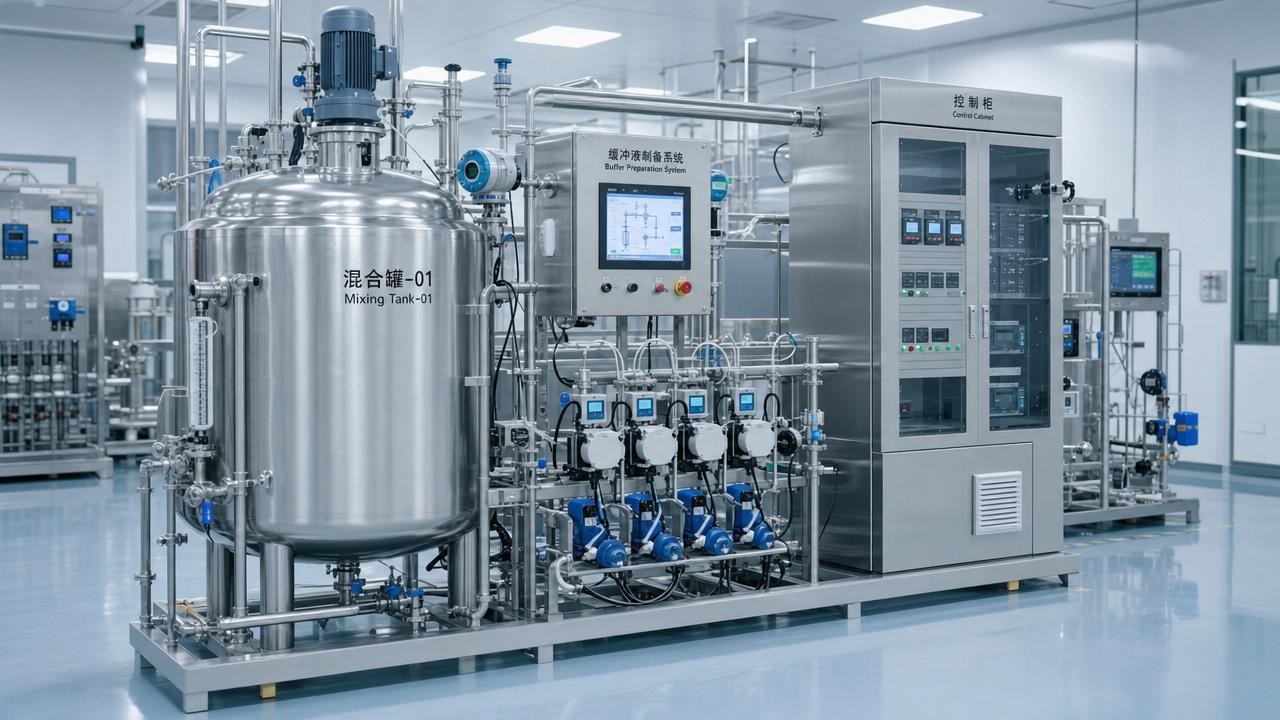
For enterprise buyers and lab leaders, buffer preparation throughput metrics often look impressive on spec sheets yet fail to predict real production output.
The gap appears when controlled lab conditions meet shift changes, cleaning cycles, batch records, and fluidic variability in regulated environments.
This guide explains which buffer preparation throughput metrics better reflect usable output, process consistency, and system-level efficiency across pharmaceutical, chemical, and advanced laboratory operations.
Why a structured evaluation matters
Many systems are rated by nominal liters per hour, maximum pump speed, or mixing vessel size.
Those numbers matter, but they rarely capture what happens during formulation changes, viscosity variation, calibration drift, or hold-time constraints.
A more reliable view combines speed, precision, uptime, changeover loss, and release readiness.
That is why the most useful buffer preparation throughput metrics are operational rather than promotional.
The core metrics that actually predict output
Use the following points to compare systems, methods, or suppliers with greater technical discipline.
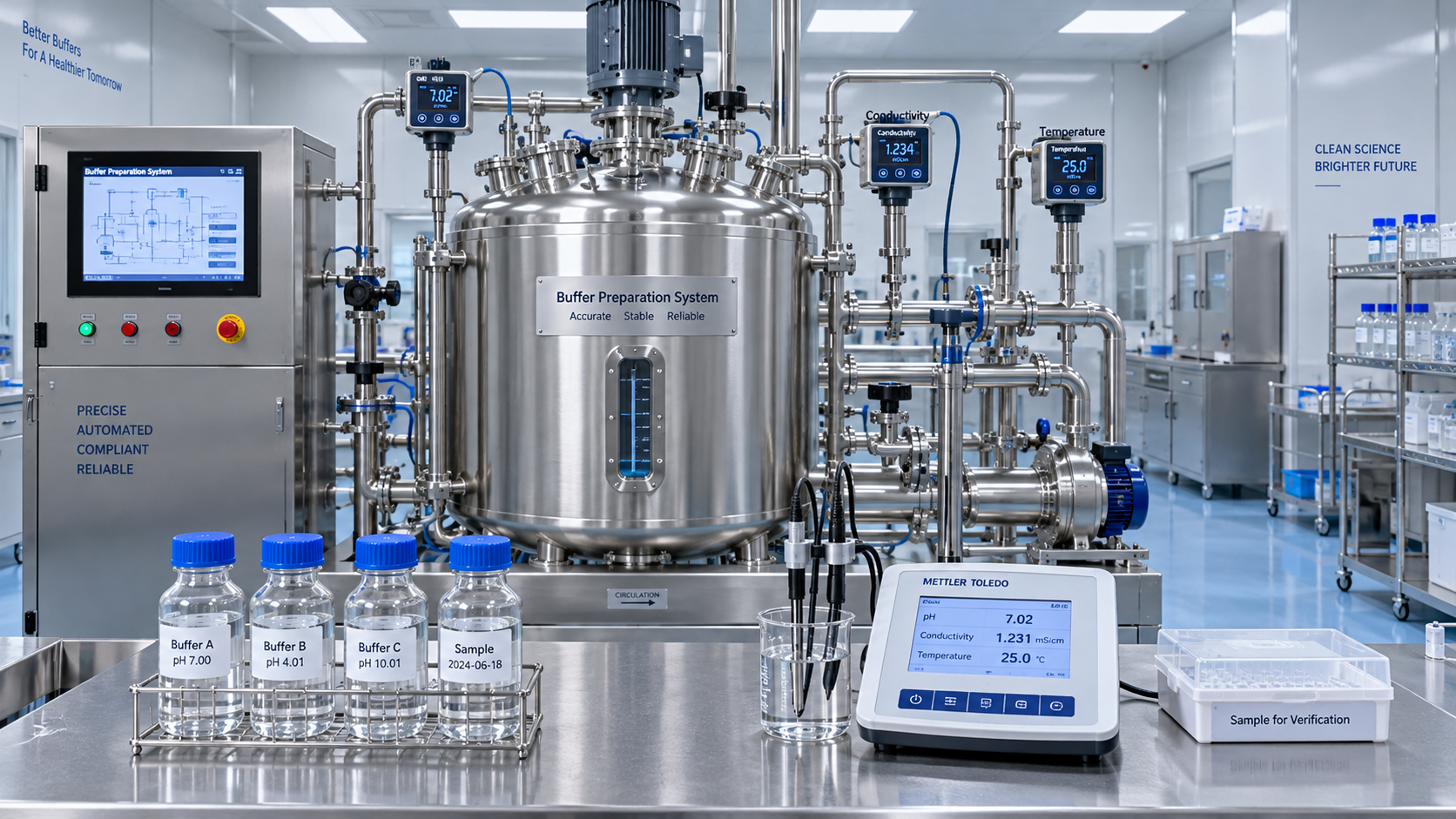
- Measure qualified liters per hour, not peak liters per hour, and count only buffer volume that meets concentration, pH, conductivity, and documentation release criteria.
- Track first-pass right rate for every batch, because rework, pH correction, or off-spec dilution directly lowers real throughput even when pump speed stays unchanged.
- Compare setup-to-release cycle time, including staging, weighing, mixing, inline verification, sampling, cleaning, and electronic record completion.
- Quantify changeover loss between recipes, container formats, and concentration ranges, since frequent product switches often define output more than nominal flow capacity.
- Evaluate dosing accuracy under dynamic conditions, especially at low flow, because fluidic precision determines whether speed can be increased without creating batch deviation risk.
- Monitor mixing homogeneity time to specification, not just agitation power, since incomplete blending delays sampling clearance and can distort conductivity readings.
- Include equipment availability after CIP, SIP, or sanitation steps, because downtime between campaigns often erases the advantage of larger tanks or faster pumps.
- Assess operator interventions per batch, as manual adjustments, alarms, and handoffs reduce repeatability and limit scale-up from lab routines to manufacturing execution.
- Review material yield loss from line hold-up volume, dead legs, sampling, and discard, since effective output depends on delivered usable buffer, not prepared volume alone.
- Examine control system response time for pH and conductivity correction loops, because delayed feedback can prolong batch completion and increase out-of-spec events.
A practical comparison table
How to interpret buffer preparation throughput metrics by application
Pilot-scale process development
At pilot scale, recipe changes are frequent, and concentration windows may shift as formulation work evolves.
Here, the best buffer preparation throughput metrics emphasize changeover speed, data capture quality, and low-volume dosing precision rather than raw vessel capacity.
GMP buffer manufacturing
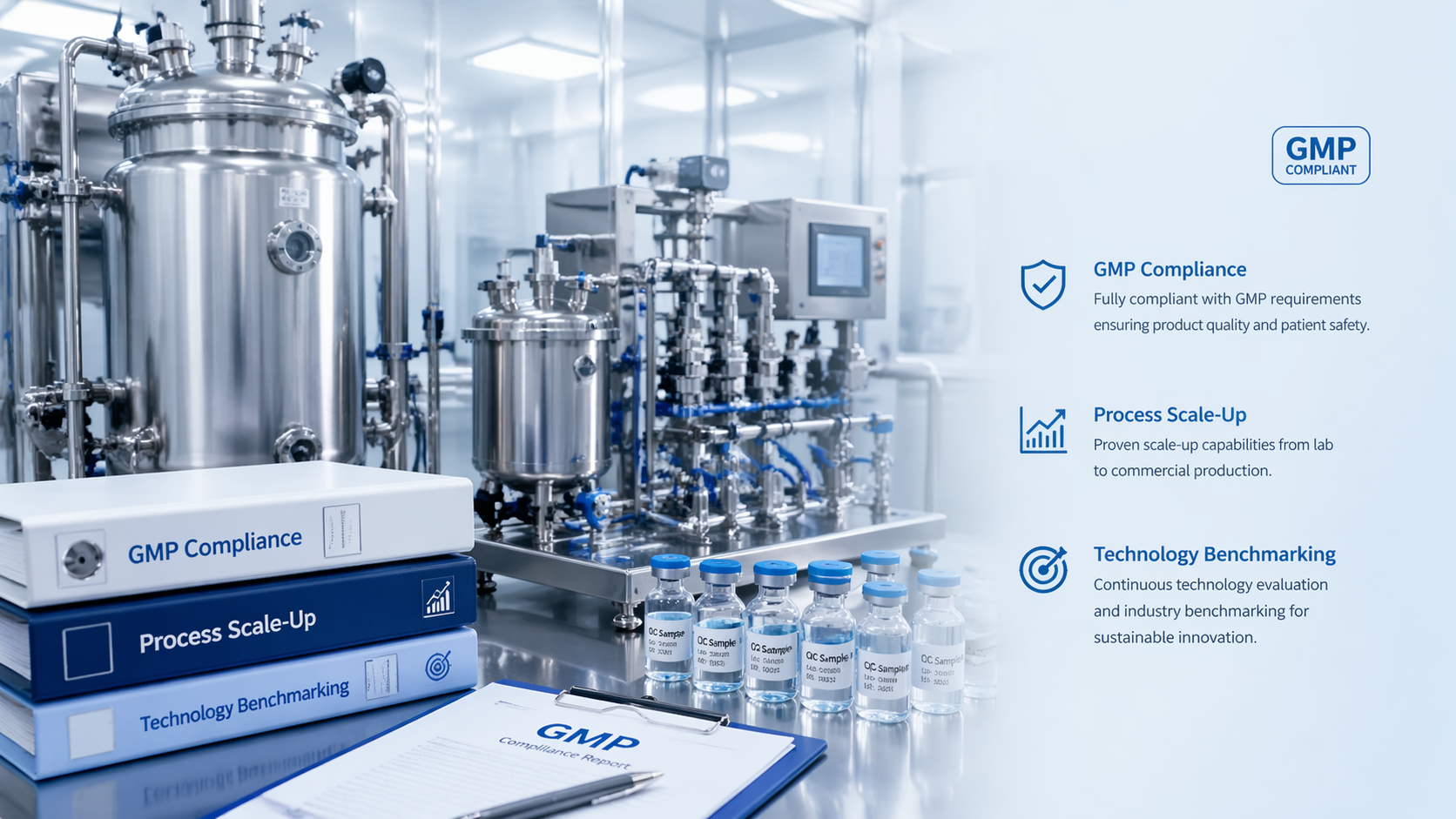
In GMP environments, output depends heavily on documentation closure, cleaning validation alignment, and batch release confidence.
Qualified liters per hour and first-pass right rate become stronger predictors than peak flow because rework creates both compliance and scheduling penalties.
Continuous or semi-continuous production support
For continuous workflows, short interruptions create disproportionate downstream disruption.
In this case, buffer preparation throughput metrics should prioritize availability, control loop stability, and refill synchronization with upstream and downstream unit operations.
Multi-product chemical and specialty process lines
Where recipes vary in density, corrosiveness, or solvent compatibility, hardware robustness affects throughput as much as software automation.
Useful metrics include wetted-material compatibility uptime, flush efficiency, and deviation frequency after line reconfiguration.
Commonly ignored factors that distort output forecasts
Sampling and verification delays
A fast buffer skid can still become a slow process if samples wait for approval or require repeated verification.
Utility instability
Water quality shifts, compressed air fluctuations, and temperature changes can alter mixing behavior and correction time.
Scale-dependent dead volume
As systems scale, tubing runs, manifolds, and sensors may increase hold-up volume enough to weaken expected buffer preparation throughput metrics.
Manual exception handling
Unexpected pH drift, powder dissolution problems, or operator overrides often remain invisible in vendor performance claims.
Sensor maintenance burden
Frequent calibration or probe replacement reduces practical uptime and weakens confidence in automated correction loops.
Execution steps for a more accurate evaluation
- Define output as released, in-spec buffer delivered to the point of use.
- Test three recipe types, including easy, moderate, and difficult formulations.
- Run each recipe across startup, steady state, and changeover conditions.
- Record qualified liters per hour, first-pass right rate, and total cycle time.
- Capture intervention counts, alarm events, and deviation causes.
- Include cleaning, sanitation, and documentation closure in throughput calculations.
- Normalize results by usable yield and labor minutes per released batch.
This method produces buffer preparation throughput metrics that are harder to inflate and easier to benchmark across sites or vendors.
FAQ about buffer preparation throughput metrics
Is liters per hour still useful?
Yes, but only as a secondary indicator.
On its own, it does not describe whether the buffer is accurate, compliant, or delivered without rework.
Which single metric is most predictive?
Qualified liters per hour is usually the best starting point.
It links speed to actual specification compliance and therefore better reflects productive capacity.
Why does fluidic precision matter so much?
Small dosing errors compound quickly during concentration adjustment, pH correction, and low-volume additions.
Better fluidic precision supports faster operation without sacrificing consistency.
Final takeaways and next actions
The most useful buffer preparation throughput metrics are not the loudest ones on a datasheet.
They are the metrics that connect fluidic precision, qualified output, changeover efficiency, and release reliability.
When comparing systems, focus on qualified liters per hour, first-pass right rate, setup-to-release cycle time, intervention frequency, and yield loss.
That combination provides a more realistic prediction of manufacturing output across lab-scale, pilot, and regulated production environments.
A disciplined review of buffer preparation throughput metrics reduces selection risk and supports more scalable, bioconsistent process decisions.
Expert Insights

Chief Security Architect
Dr. Thorne specializes in the intersection of structural engineering and digital resilience. He has advised three G7 governments on industrial infrastructure security.
Related Analysis
Core Sector // 01
Security & Safety
- Regulatory Compliance gaps that delay pharma launchesAuthor :Dr. Elena Carbon

- Lab-to-Pilot Reactor Scale-Up: Managing Mixing and Heat TransferAuthor :Dr. Elena Carbon

- Biomanufacturing Equipment in Southeast Asia: Evaluating Suppliers and Local SupportAuthor :Dr. Elena Carbon

- Choosing Microplate Washers for Assay Labs: Residual Volume and Plate CompatibilityAuthor :Dr. Elena Carbon

- Automated Buffer Preparation: Troubleshooting pH and Conductivity DriftAuthor :Dr. Elena Carbon

- How to Select an Overhead Crane Pendant Control for Safe, Reliable OperationAuthor :Dr. Elena Carbon

- What Drives Ingredient Processing Equipment Prices Beyond Initial Purchase Cost?Author :Dr. Elena Carbon

- Selecting Modular Chemical Synthesis Equipment for Scalable Process DevelopmentAuthor :Dr. Elena Carbon