What automated liquid handling case studies really prove
Author
Date Published
Reading Time
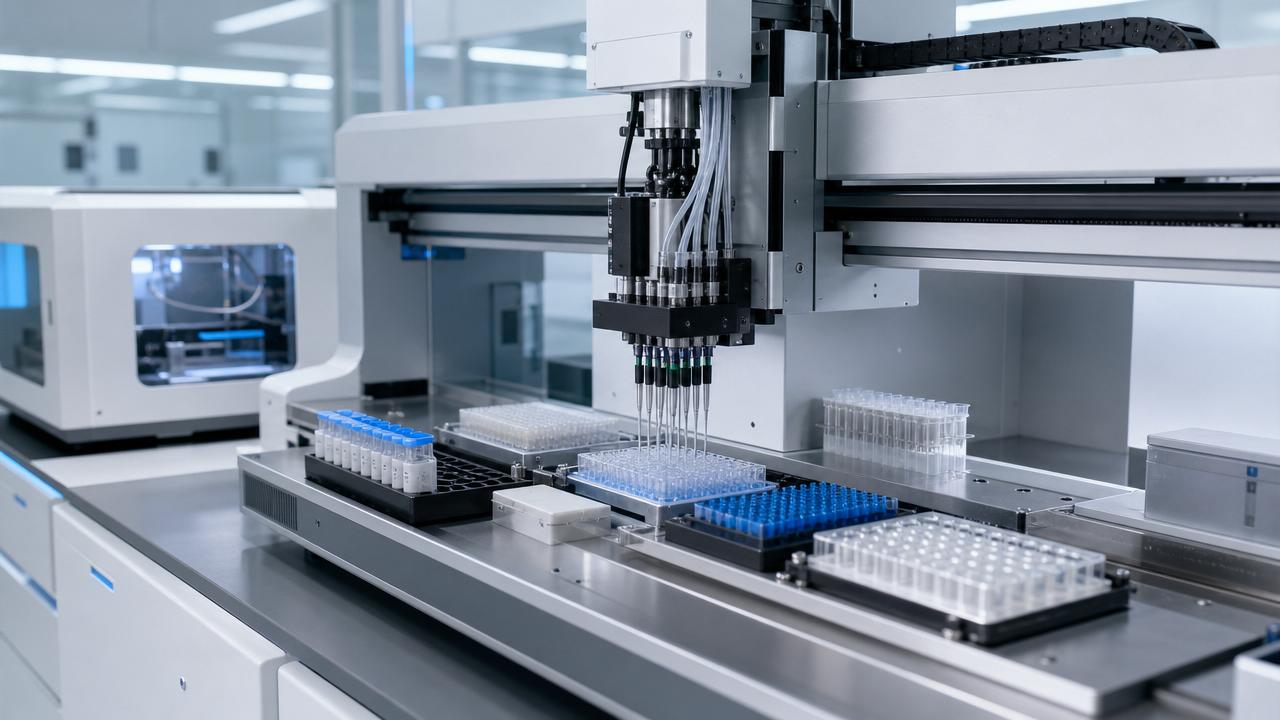
Automated liquid handling case studies reveal more than time savings. They show whether a platform can protect assay quality, scale reliably, and support compliant laboratory execution.
That matters across modern research, pharma, chemicals, diagnostics, and process development. In these settings, precision at small volumes can influence batch decisions, validation paths, and downstream reproducibility.
The strongest automated liquid handling case studies do not rely on marketing language. They present measurable evidence on accuracy, carryover, throughput, integration, and operational stability under realistic laboratory conditions.
For organizations comparing systems through technical benchmarking, case evidence should answer one question clearly: what has actually been proven, under which constraints, and with what transferability to your workflow?
What do automated liquid handling case studies really prove?
At their best, automated liquid handling case studies prove performance in context. They connect hardware specifications with practical outcomes in sample prep, compound dispensing, PCR setup, cell assays, or formulation workflows.
A useful case study proves five things. First, target volume transfer is accurate. Second, repeated runs remain consistent. Third, contamination is controlled. Fourth, software and hardware fit the workflow. Fifth, the process is supportable.
Those proofs are more valuable than simple claims about automation. A robot can move liquid quickly, yet still fail on evaporation control, tip wetting, dead volume, or plate compatibility.
In multidisciplinary environments like G-LSP benchmark domains, evidence must also connect upstream and downstream operations. A liquid handling result means more when it aligns with reactor sampling, bioprocess analytics, or separation preparation.
- Transfer accuracy at intended volumes
- Precision across operators, days, and plates
- Contamination and carryover behavior
- Workflow compatibility with consumables and software
- Readiness for validation, audit, and scale-up
Which metrics in automated liquid handling case studies matter most?
Not all metrics deserve equal weight. The most decision-relevant automated liquid handling case studies report data that predicts laboratory performance, not just ideal bench demonstrations.
Accuracy and precision
Accuracy shows closeness to the target volume. Precision shows repeatability across dispenses. Both matter, especially in sub-microliter handling, serial dilution, and low-abundance assay preparation.
Look for bias, coefficient of variation, and performance at minimum and maximum working volumes. Good case studies report edge conditions, not only central settings.
Carryover and contamination control
Cross-contamination can invalidate biological and chemical data. Strong automated liquid handling case studies quantify carryover using sensitive tracers, dye methods, or molecular detection approaches.
They should also describe tip strategy, wash steps, aerosol management, deck layout, and enclosure conditions. Without those details, contamination results are hard to trust.
Throughput with quality retention
Speed alone proves little. Throughput matters only when quality remains stable over longer runs, larger plate counts, and mixed protocols.
Case studies should show cycle time, intervention frequency, recovery after pauses, and effect on assay drift. That is especially important in continuous or semi-continuous lab operations.
Integration and data traceability
Automated liquid handling case studies become stronger when systems connect with LIMS, plate readers, balances, incubators, and barcode tracking. Integration reduces hidden manual risks.
Traceable logs, user permissions, audit trails, and method version control are especially relevant in regulated or quality-sensitive environments.
How can you tell if a case study reflects real-world workflow conditions?
Many automated liquid handling case studies look impressive because the test design is narrow. Real decision value appears when the setup resembles operational complexity.
Check whether the study used actual liquid classes. Water-like fluids are easy. Viscous buffers, solvents, serum-containing media, and foaming reagents expose the real capability of a platform.
Also examine consumables and labware. Plate geometry, well depth, tube tolerances, and seal behavior all affect aspiration and dispense performance.
Environmental factors matter too. Temperature variation, evaporation windows, vibration, and run length can alter performance beyond what brochure data suggests.
The best automated liquid handling case studies include failure points, method adjustments, and boundary conditions. That honesty improves transferability across laboratories.
- Confirm the liquid types used in testing.
- Match the tested volumes to your real protocol.
- Review labware, tips, and deck accessories.
- Check for multiday or multibatch repeatability.
- Look for deviations, not only successes.
What common mistakes make automated liquid handling case studies misleading?
A case study can be technically correct and still be misleading. The issue often lies in selective reporting, weak comparisons, or missing operational details.
Overreliance on ideal fluids
Results based only on water-like liquids rarely predict performance with biologics, solvents, suspensions, or surfactant-rich mixtures. Real laboratories seldom run ideal liquids exclusively.
Single-run success presented as stable performance
One strong run is not enough. Automated liquid handling case studies should report repeatability across time, operators, maintenance states, and consumable lots.
No manual benchmark or poor comparator design
If manual handling is the baseline, method parity must be fair. Differences in operator training, sample age, or plate setup can distort the automation advantage.
Ignoring total process cost
Some studies emphasize labor savings while ignoring tip consumption, maintenance downtime, validation effort, and software training. Those factors shape total value far more than headline speed.
How should automated liquid handling case studies be used in selection and benchmarking?
Automated liquid handling case studies are most useful when treated as evidence inputs, not final proof. They should support structured benchmarking alongside internal testing and workflow mapping.
Start with the protocol that matters most. That may be qPCR setup, enzyme assay prep, media exchange, reagent addition, or formulation screening. Then filter case studies by direct relevance.
Next, compare case conditions with your environment. If your work involves GMP-adjacent controls, solvent resistance, or tight traceability, those criteria should dominate evaluation.
For organizations operating across pilot-scale synthesis, bioreactors, microfluidics, and separation workflows, interoperability deserves special attention. A good dispenser in isolation may still create system-level inefficiency.
A practical evaluation framework
- Map the exact assay or process step being automated.
- Collect automated liquid handling case studies with similar fluids and volumes.
- Request raw metrics, not summary statements.
- Test contamination, edge wells, and long-run stability.
- Assess software usability and traceability features.
- Estimate consumables, service, and validation burden.
When do automated liquid handling case studies support regulatory and scale-up confidence?
They support confidence when documentation goes beyond outcome claims. Method definitions, calibration approach, acceptance criteria, and exception handling must be visible.
In regulated or quality-controlled settings, automated liquid handling case studies should indicate whether the platform supports audit trails, role management, electronic records, and repeatable qualification workflows.
Scale-up confidence also depends on process continuity. If a case study shows consistent sample preparation feeding bioreactors, analytics, or synthesis steps, that evidence is stronger than isolated pipetting performance.
This is where technical repositories and benchmarking frameworks add value. Cross-system evidence can reveal whether liquid handling precision remains meaningful across broader lab-to-production transitions.
FAQ: How should key findings from automated liquid handling case studies be interpreted?
Ultimately, automated liquid handling case studies are valuable because they convert abstract capability into operational evidence. Yet their value depends on transparency, relevance, and technical completeness.
The most credible automated liquid handling case studies prove precision under real constraints, not just under ideal demonstrations. They help separate scalable performance from attractive but incomplete claims.
A sound next step is to create a benchmark checklist using your actual fluids, plates, data requirements, and compliance needs. Then use published evidence to narrow options before live verification testing.
That approach turns automated liquid handling case studies into practical decision tools, especially where fluidic precision, bioconsistency, and lab-to-production reliability define competitive performance.
Expert Insights

Chief Security Architect
Dr. Thorne specializes in the intersection of structural engineering and digital resilience. He has advised three G7 governments on industrial infrastructure security.
Related Analysis
Core Sector // 01
Security & Safety
- Regulatory Compliance gaps that delay pharma launchesAuthor :Dr. Elena Carbon

- Lab-to-Pilot Reactor Scale-Up: Managing Mixing and Heat TransferAuthor :Dr. Elena Carbon

- Biomanufacturing Equipment in Southeast Asia: Evaluating Suppliers and Local SupportAuthor :Dr. Elena Carbon

- Choosing Microplate Washers for Assay Labs: Residual Volume and Plate CompatibilityAuthor :Dr. Elena Carbon

- Automated Buffer Preparation: Troubleshooting pH and Conductivity DriftAuthor :Dr. Elena Carbon

- How to Select an Overhead Crane Pendant Control for Safe, Reliable OperationAuthor :Dr. Elena Carbon

- What Drives Ingredient Processing Equipment Prices Beyond Initial Purchase Cost?Author :Dr. Elena Carbon

- Selecting Modular Chemical Synthesis Equipment for Scalable Process DevelopmentAuthor :Dr. Elena Carbon