Where should carbon monoxide alarms be installed?
Author
Date Published
Reading Time
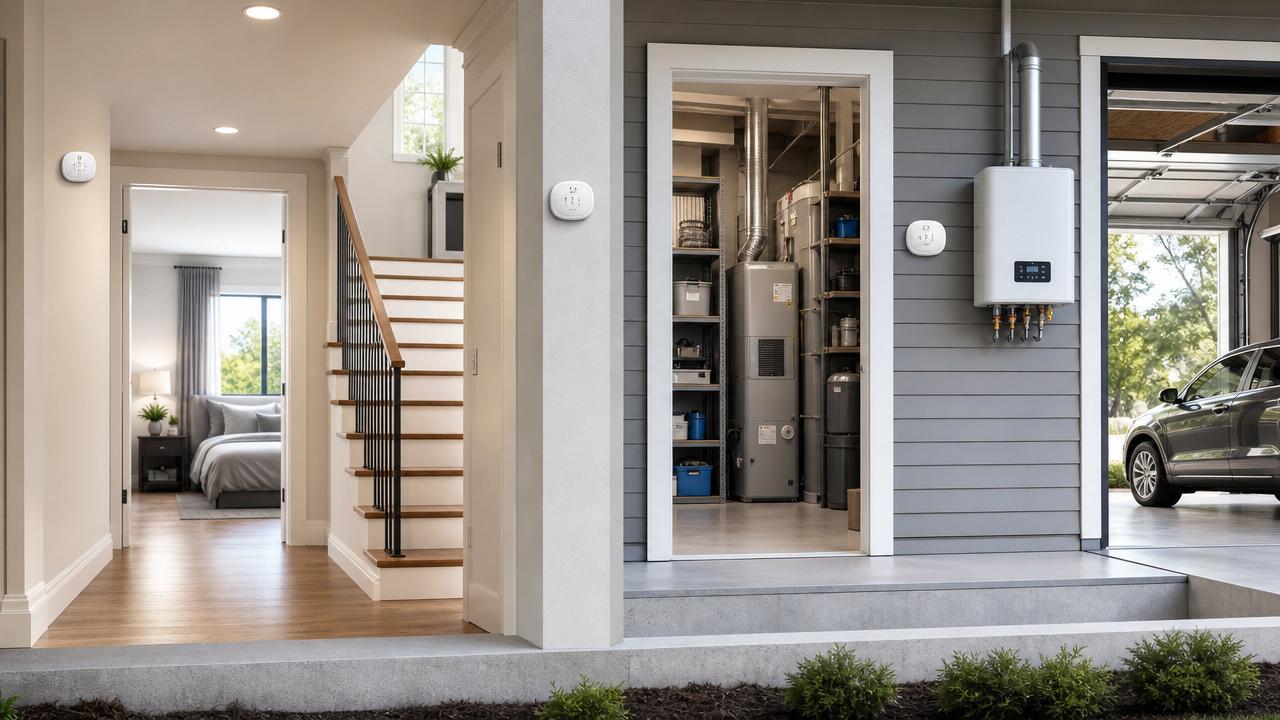
Where should carbon monoxide alarms be installed for reliable early warning?
Knowing where to install carbon monoxide alarms can make the difference between early warning and dangerous exposure.
Because carbon monoxide is invisible, odorless, and potentially deadly, placement matters as much as the alarm itself.
Every property with fuel-burning equipment, fireplaces, attached garages, or backup generators needs a clear installation plan.
Well-positioned carbon monoxide alarms support safer homes, rental units, laboratories, workshops, clinics, and mixed-use buildings.
The goal is simple: detect carbon monoxide before exposure becomes hazardous, especially while people are sleeping.
Scenario background: why alarm placement changes by building layout
Carbon monoxide spreads through air movement, doors, ducts, stairwells, and pressure differences between rooms.
That means one alarm near a furnace may not protect sleeping areas or remote rooms.
Carbon monoxide alarms should be planned around exposure risk, occupancy patterns, and possible migration paths.
A compact apartment needs a different approach than a multi-level house, industrial lab, or detached guest suite.
Codes and manufacturer instructions may vary, but core placement principles remain consistent across most scenarios.
- Prioritize sleeping areas first.
- Cover every occupied level.
- Address fuel-burning appliances and garages.
- Avoid locations that cause false alarms or delayed detection.
Sleeping areas: the highest-priority location
Install carbon monoxide alarms outside each sleeping area, close enough to wake occupants at night.
Hallways near bedrooms are often the best location because sound can reach multiple rooms.
If bedrooms are separated across the building, use carbon monoxide alarms near each bedroom cluster.
For a bedroom with a fuel-burning fireplace, wall heater, or adjoining garage, add an alarm inside the room.
This scenario is critical because sleeping occupants may not notice early symptoms such as headache or dizziness.
Bedroom placement checklist
- Place alarms within audible range of pillows.
- Use interconnected alarms where doors stay closed.
- Do not rely on a basement alarm for upper-floor bedrooms.
- Test alarm volume with bedroom doors closed.
Every level: coverage for vertical movement of carbon monoxide
Carbon monoxide alarms should be installed on every level of a home or occupied building.
This includes basements, main floors, upper floors, finished attics, and occupied mezzanines.
Stairwells can move contaminated air quickly, especially when heating systems or exhaust fans create pressure changes.
Multi-level coverage reduces the chance that carbon monoxide reaches people before detection occurs.
For open-plan spaces, place carbon monoxide alarms where air circulation represents the occupied zone.
Avoid assuming that one central device can cover an entire complex layout.
Fuel-burning appliances: monitor nearby, but not too close
Homes and facilities with furnaces, boilers, water heaters, stoves, or gas dryers need targeted protection.
Install carbon monoxide alarms near appliance areas, while following the minimum distance in the manufacturer’s instructions.
Too close to an appliance, an alarm may trigger from brief startup emissions.
Too far away, detection may be delayed when a vent, flue, or heat exchanger fails.
A common practical approach is to place alarms outside utility rooms, not directly beside combustion equipment.
This helps detect leakage into occupied areas while reducing nuisance alarms.
Typical appliance-risk locations
- Near furnace rooms or boiler rooms.
- Outside rooms with gas water heaters.
- Near indoor fireplaces or wood stoves.
- Near areas using propane or natural gas equipment.
Attached garages: protect against vehicle exhaust migration
Attached garages are a major carbon monoxide risk because vehicle exhaust can enter living or working areas.
Do not install carbon monoxide alarms inside the garage unless the model is rated for that environment.
Temperature swings, humidity, and exhaust spikes can reduce reliability or cause nuisance alarms.
Instead, place carbon monoxide alarms inside the building, near the door connecting the garage and interior space.
If a bedroom sits above the garage, install an alarm near or inside that bedroom.
This placement detects seepage through floors, wall penetrations, ductwork, and unsealed doors.
Generator and workshop scenarios: temporary equipment still needs planning
Portable generators, pressure washers, grills, and fuel-powered tools create serious carbon monoxide hazards.
These devices must never operate indoors, in garages, or near windows and doors.
Carbon monoxide alarms should be placed inside nearby occupied areas that could receive drifting exhaust.
During outages, confirm alarms have battery backup before fuel-powered equipment is used outside.
In workshops, makerspaces, or small production rooms, match alarm placement to combustion sources and occupancy zones.
Where precision processes, laboratory equipment, or pilot-scale systems operate, ventilation patterns deserve extra attention.
Apartments, rentals, and mixed-use buildings: coverage by occupancy pattern
In apartments, carbon monoxide alarms should be installed near sleeping areas and on each occupied level.
Shared mechanical rooms, central boilers, and parking structures can create exposure pathways across units.
Units above restaurants, garages, laboratories, or fuel-using commercial spaces need careful risk review.
Interconnected carbon monoxide alarms may improve response when multiple rooms or levels are involved.
Where local code requires specific locations, follow code first, then add protection for unique layout risks.
Where carbon monoxide alarms should not be installed
Bad placement can cause false alarms, missed alarms, sensor contamination, or delayed detection.
Avoid locations with extreme temperatures, heavy moisture, direct airflow, dust, grease, or chemical vapors.
Do not place carbon monoxide alarms directly beside windows, vents, ceiling fans, or supply registers.
Moving air may prevent the sensor from measuring the room’s actual carbon monoxide level.
Kitchens and bathrooms require caution because humidity and cooking vapors can affect alarm performance.
- Avoid direct placement above fuel-burning appliances.
- Avoid garages unless the unit is specifically rated.
- Avoid dusty storage rooms without maintenance access.
- Avoid sealed corners with poor air movement.
Different scenarios and placement priorities
Height and mounting: follow the sensor instructions
Carbon monoxide mixes with air, so many alarms can work on walls, ceilings, or plug-in locations.
However, installation height depends on the alarm design and certification guidance.
Always follow the manufacturer’s instructions for mounting height, spacing, orientation, and environmental limits.
For plug-in carbon monoxide alarms, avoid outlets blocked by furniture, curtains, or closed doors.
For hardwired units, use battery backup so protection continues during power failures.
Scenario adaptation tips for stronger protection
- Map bedrooms, fuel-burning equipment, garages, and occupied remote rooms.
- Install carbon monoxide alarms near sleeping zones before adding secondary locations.
- Add alarms on every level, including basements with combustion appliances.
- Use interconnected alarms where distance, noise, or closed doors reduce audibility.
- Choose listed alarms that meet recognized safety standards.
- Document installation dates, battery changes, tests, and replacement deadlines.
A layered plan is usually better than relying on one device in a central hallway.
The safest layout considers both source detection and occupant notification.
Common placement mistakes that weaken protection
One common mistake is installing carbon monoxide alarms only near the furnace.
That may miss exposure in bedrooms, upstairs rooms, or spaces connected through ventilation ducts.
Another mistake is placing alarms where fresh air dilutes readings before the sensor responds.
Open windows, vents, and fans can change readings enough to delay alerts.
Expired sensors are also a major problem because carbon monoxide alarms have limited service lives.
Replace units according to the date printed on the alarm or manufacturer’s guidance.
Never silence repeated alarms without investigating the source and moving people to fresh air.
Action plan: decide locations before an emergency occurs
Start with a room-by-room review of sleeping areas, fuel-burning appliances, garages, and occupied levels.
Then compare the layout with local code requirements and the alarm manufacturer’s instructions.
Install carbon monoxide alarms where they can detect risk early and wake people quickly.
Test each device monthly, keep batteries fresh, and replace expired units without delay.
For complex buildings, laboratories, or mixed-use spaces, evaluate airflow, equipment, and occupancy patterns together.
The right carbon monoxide alarms, placed in the right scenarios, provide practical protection every hour of the day.
Expert Insights

Chief Security Architect
Dr. Thorne specializes in the intersection of structural engineering and digital resilience. He has advised three G7 governments on industrial infrastructure security.
Related Analysis
Core Sector // 01
Security & Safety
- Regulatory Compliance gaps that delay pharma launchesAuthor :Dr. Elena Carbon

- Lab-to-Pilot Reactor Scale-Up: Managing Mixing and Heat TransferAuthor :Dr. Elena Carbon

- Biomanufacturing Equipment in Southeast Asia: Evaluating Suppliers and Local SupportAuthor :Dr. Elena Carbon

- Choosing Microplate Washers for Assay Labs: Residual Volume and Plate CompatibilityAuthor :Dr. Elena Carbon

- Automated Buffer Preparation: Troubleshooting pH and Conductivity DriftAuthor :Dr. Elena Carbon

- How to Select an Overhead Crane Pendant Control for Safe, Reliable OperationAuthor :Dr. Elena Carbon

- What Drives Ingredient Processing Equipment Prices Beyond Initial Purchase Cost?Author :Dr. Elena Carbon

- Selecting Modular Chemical Synthesis Equipment for Scalable Process DevelopmentAuthor :Dr. Elena Carbon