When separation technology becomes a bioprocess bottleneck
Author
Date Published
Reading Time
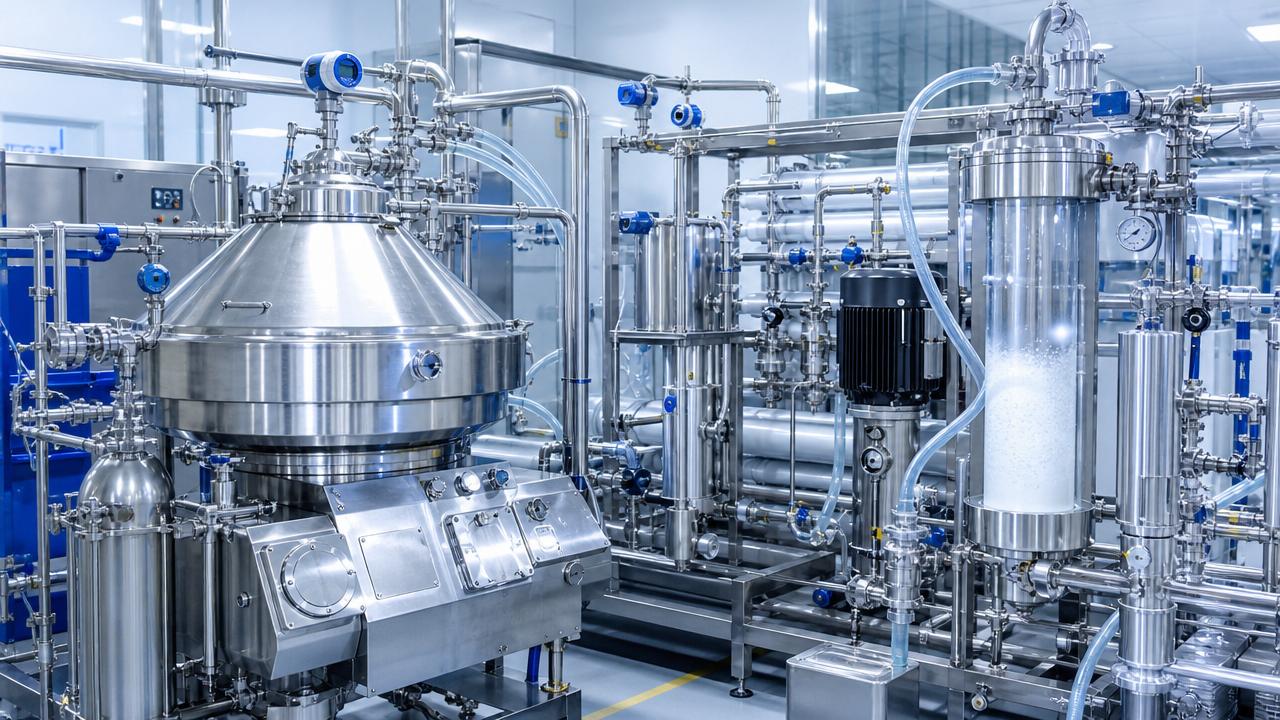
In modern biomanufacturing, throughput is often limited not by reaction yield but by downstream separation. Separation technology for industrial bioprocessing has become a critical factor in maintaining product integrity, process consistency, and scale-up efficiency. For operators and technical users, understanding where separation creates bottlenecks is essential to improving workflow reliability, reducing contamination risk, and supporting smoother transitions from lab-scale development to continuous production.
Why a checklist approach matters in separation-intensive bioprocesses
Separation failures rarely begin as dramatic breakdowns. They usually start as small mismatches between feed properties, equipment geometry, residence time, and cleaning strategy.
That is why separation technology for industrial bioprocessing should be reviewed with a structured checklist, not only by output targets or nominal capacity.
Across biopharma, specialty chemicals, food biotech, and cell-based production, bottlenecks appear when upstream variability reaches a downstream platform that was never tuned for solids load, shear sensitivity, or sterility demands.
A checklist prevents hidden constraints from being ignored during process development, pilot transfer, and continuous manufacturing design.
Core checklist for identifying a separation bottleneck
Use the following checks to evaluate whether separation technology for industrial bioprocessing is limiting performance, economics, or compliance.
- Measure actual feed variability across batches, including viscosity, cell density, particle size, and foam tendency, before setting centrifugation, filtration, or clarification parameters.
- Compare separation capacity against upstream peak flow, not average flow, because short surges often create hold-time delays and product exposure risks.
- Verify shear tolerance of cells, proteins, vesicles, or precipitates, since aggressive acceleration or pump selection may reduce recovery despite acceptable throughput.
- Check whether solids accumulation changes rotor balance, membrane flux, or channel pressure during long runs, especially in semi-continuous or continuous production modes.
- Review cleanability and changeover time, because a fast separator can still become the bottleneck if CIP, SIP, or manual teardown consumes shift capacity.
- Confirm material compatibility with buffers, solvents, and biological fluids to avoid swelling, corrosion, extractables, or adsorption-related product losses.
- Map every transfer step before and after separation, since dead legs, hold vessels, and tubing transitions often create more delay than the separator itself.
- Assess sensor coverage for pressure, turbidity, vibration, conductivity, and temperature so operators can detect fouling or drift before batch deviation occurs.
- Test scalability using representative feedstock, because water-based commissioning rarely predicts real performance in biological slurries or high-value suspensions.
- Document recovery, purity, residence time, and contamination events together, rather than optimizing one metric while silently sacrificing another critical attribute.
Where separation technology for industrial bioprocessing becomes the bottleneck
Cell harvest and biomass clarification
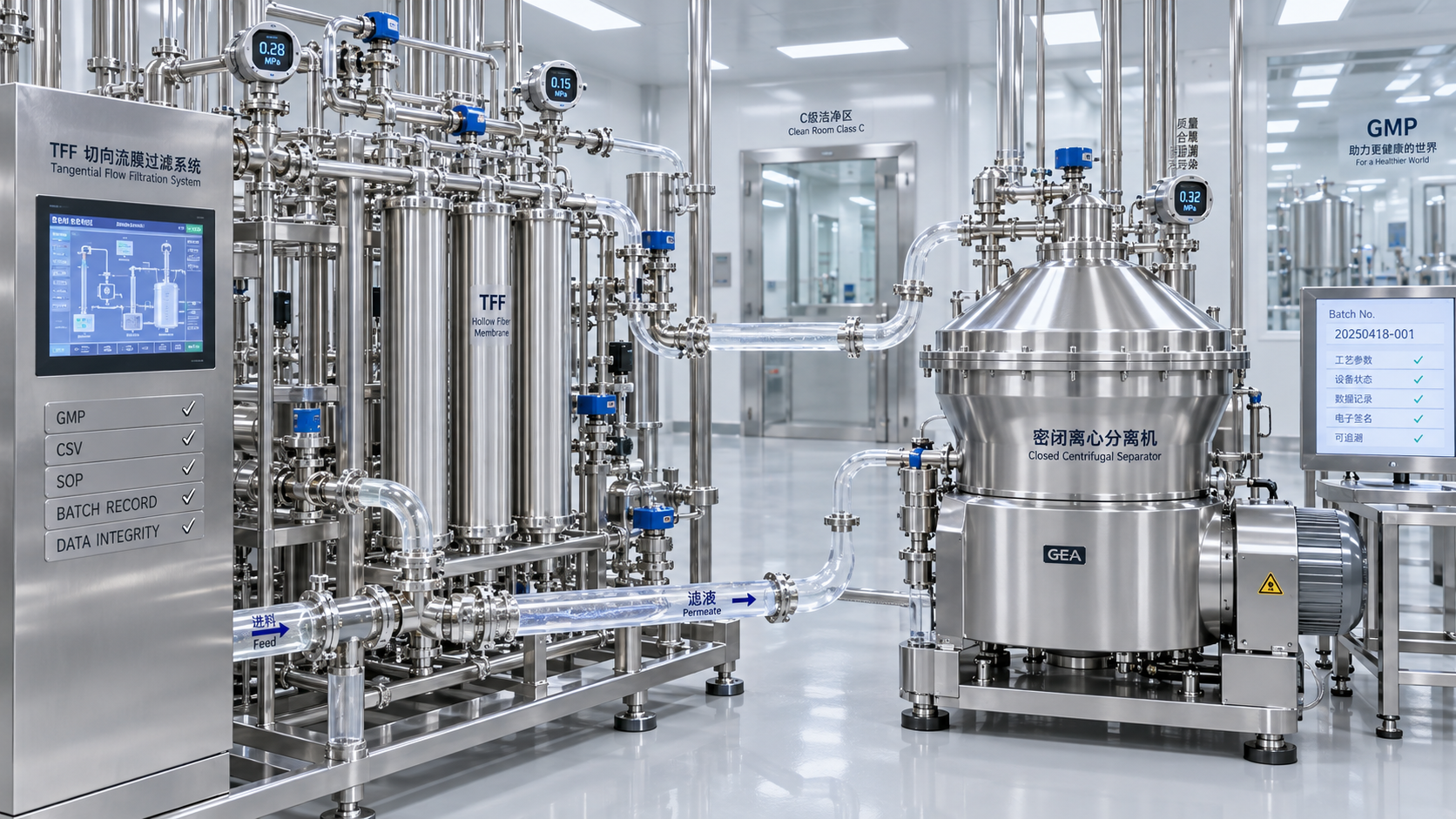
In microbial fermentation, cell harvest often appears straightforward until biomass rises faster than expected. Centrifuges, depth filters, or tangential flow units then face unstable solids loading.
When clarification lags, harvest tanks fill, fermentation schedules slip, and product residence time increases. Separation technology for industrial bioprocessing must therefore match biological growth variability, not only design-point volume.
Protein, enzyme, and biologic purification
For proteins and enzymes, the bottleneck is often not capture chemistry but pre-purification stability. Poor clarification raises turbidity, shortens resin life, and causes pressure excursions upstream of chromatography.
In this context, separation technology for industrial bioprocessing directly influences impurity burden, aggregate formation, and cleaning frequency across the entire downstream train.
Cell and gene therapy workflows
Cell therapy and viral vector production demand especially gentle handling. A system that works for bulk fermentation may be unusable when viability and potency depend on narrow mechanical stress limits.
Here, separation technology for industrial bioprocessing must support closed handling, low hold-up volume, sterile connections, and reproducible recovery at small but high-value batch scales.
Continuous and hybrid manufacturing lines
Continuous production exposes weaknesses that batch mode can hide. Even minor fluctuations in separation efficiency propagate downstream and destabilize steady-state operation.
A separator with inconsistent discharge timing, manual intervention, or poor inline monitoring becomes the critical choke point in an otherwise automated process architecture.
Commonly overlooked risks
- Ignoring feed aging effects. Product quality may decline during queue time, making the apparent separator issue actually a scheduling and buffer management problem.
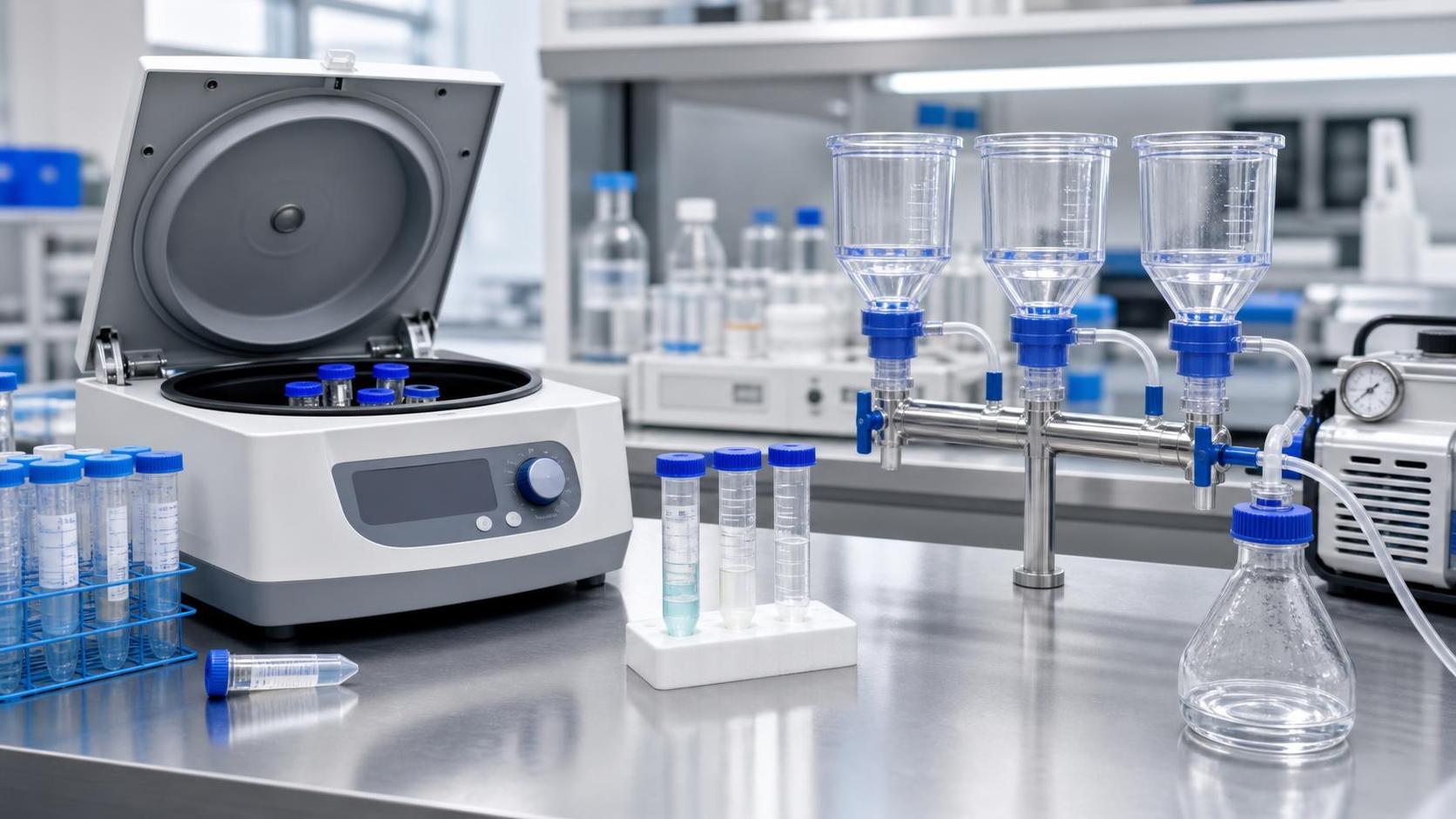
- Assuming laboratory spin data will scale linearly. Bench centrifugation often overestimates clarification performance compared with industrial flow-through systems.
- Underestimating cleaning validation burden. Separation technology for industrial bioprocessing can become impractical if wetted paths are hard to inspect or residue traps remain inaccessible.
- Missing utility constraints. Air supply, cooling, drain handling, and vibration control may limit usable capacity long before the equipment rating is reached.
- Treating contamination as only a sterility issue. Cross-batch carryover, lubricant exposure, and aerosol generation can also compromise product release.
Practical execution guidance for better separation performance
Start by building a feed characterization file for each process family. Include rheology, solids fraction, fragility, temperature sensitivity, and expected upset conditions.
Then run comparative trials with realistic material, not idealized surrogates. At pilot scale, collect data on recovery, fouling rate, cleanability, and operator intervention time.
For organizations managing scale-up transitions, benchmark equipment against GMP, ISO, and application-specific validation needs early. Mechanical performance alone is not enough.
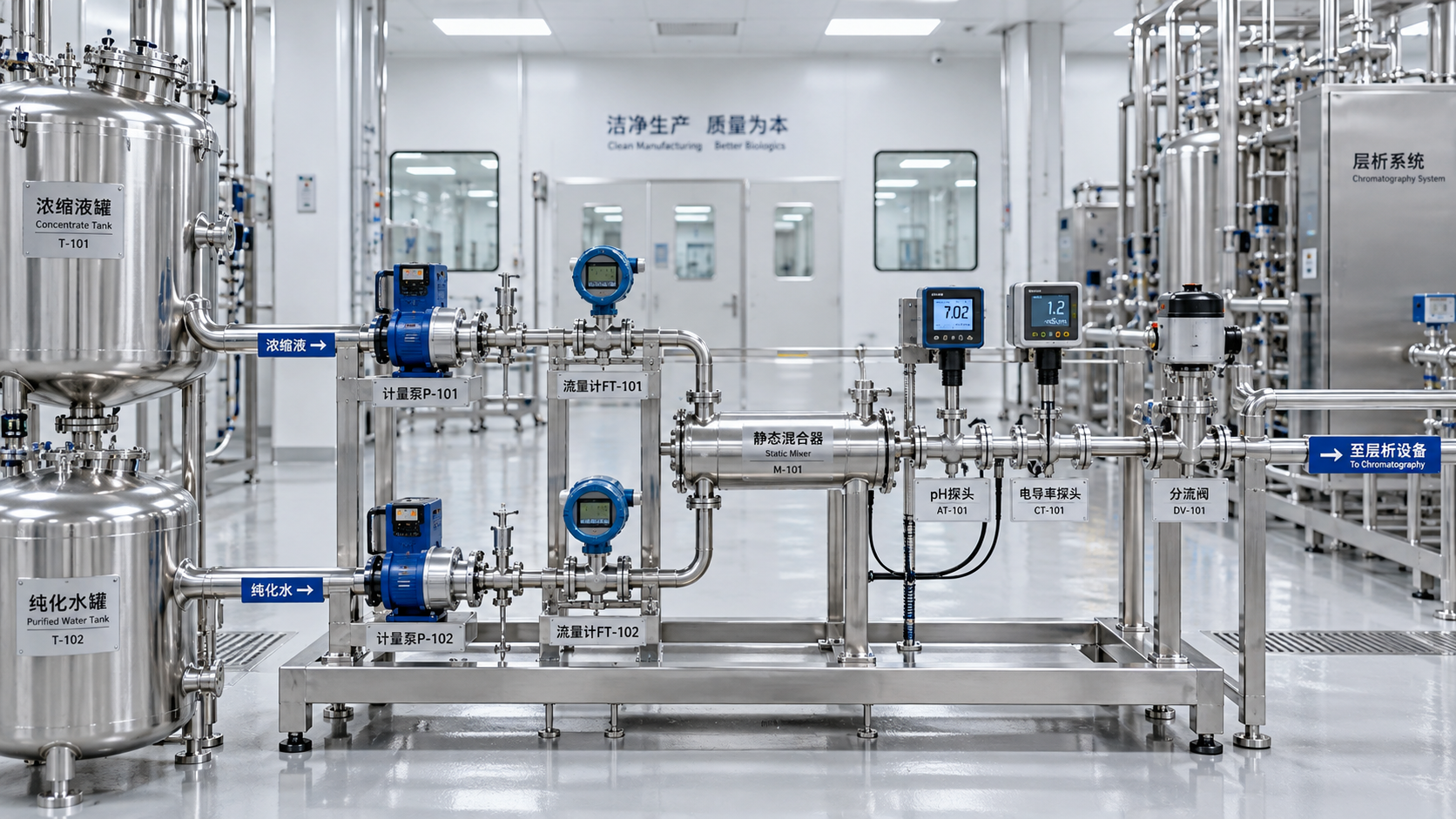
It is also useful to align separation hardware with fluidic precision standards across the wider process. This is where technical benchmarking platforms such as G-LSP add value.
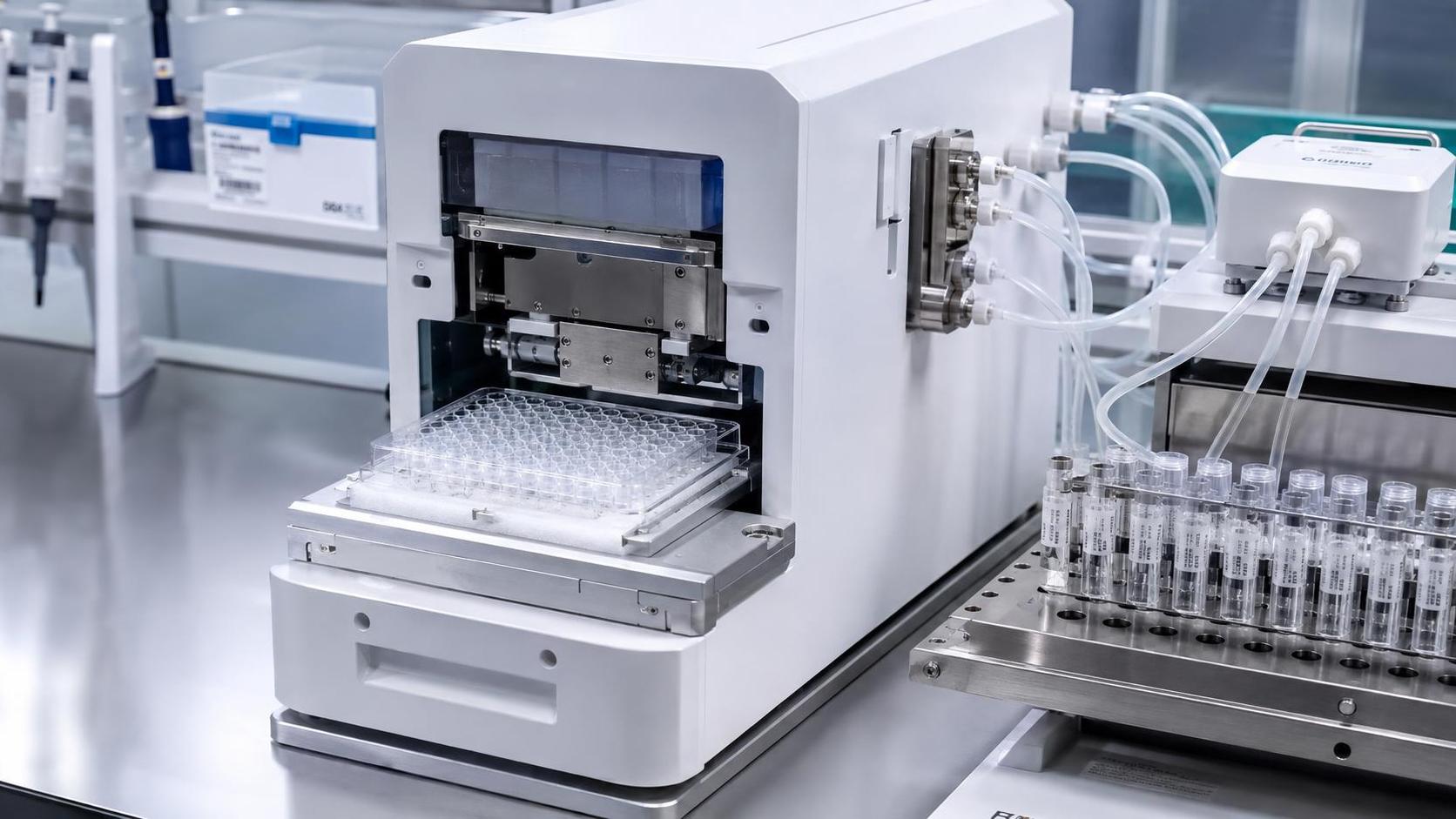
By comparing lab centrifugation systems, microfluidic interfaces, single-use flow paths, and pilot-scale handling architectures within one framework, bottlenecks become easier to isolate before commercial transfer.
A simple implementation sequence
- Define the true bottleneck metric: time, yield loss, contamination exposure, labor, or changeover delay.
- Characterize feed and operating windows using real campaign data.
- Screen separation technology for industrial bioprocessing against peak load and sterility requirements.
- Pilot under worst-case conditions, including long-run fouling and cleaning cycles.
- Integrate sensors and procedural controls before full production rollout.
Conclusion and next-step action
When downstream flow slows, the root cause is often hidden inside separation design choices that looked acceptable during early development. Separation technology for industrial bioprocessing deserves the same rigor as reaction optimization.
The most effective next step is to audit one active process using the checklist above. Focus on feed variability, peak load, cleanability, and instrumentation gaps first.
That targeted review can reveal whether the constraint lies in equipment sizing, operating strategy, fluidic integration, or validation burden. Once identified, the bottleneck becomes far more manageable to remove.
Expert Insights

Chief Security Architect
Dr. Thorne specializes in the intersection of structural engineering and digital resilience. He has advised three G7 governments on industrial infrastructure security.
Related Analysis
Core Sector // 01
Security & Safety
- Automating Buffer Delivery for Bioprocess Purification: Flow and Mixing ControlsAuthor :Dr. Victor Gear

- Seawater Desalination Plant Design: Key Factors for Reliable Freshwater OutputAuthor :Dr. Victor Gear

- GMP-Compliant Separation Technology: Validation Requirements for Pharma ProductionAuthor :Dr. Victor Gear

- Selecting Compact Sample Separation Equipment for Low-Volume, High-Throughput LabsAuthor :Dr. Victor Gear

- Selecting Vacuum Manifolds for SPE Plates: Flow Control, Compatibility, and ThroughputAuthor :Dr. Victor Gear

- How to Evaluate a Separation Technology Manufacturer for Lab and Pilot-Scale NeedsAuthor :Dr. Victor Gear

- How to Choose Benchtop Sample Separation Equipment for Accuracy and Workflow FitAuthor :Dr. Victor Gear

- PSA Makes ASTM F3234-26 Mandatory for Filtration UnitsAuthor :Dr. Victor Gear