Where micro-efficiency changes separation results first
Author
Date Published
Reading Time
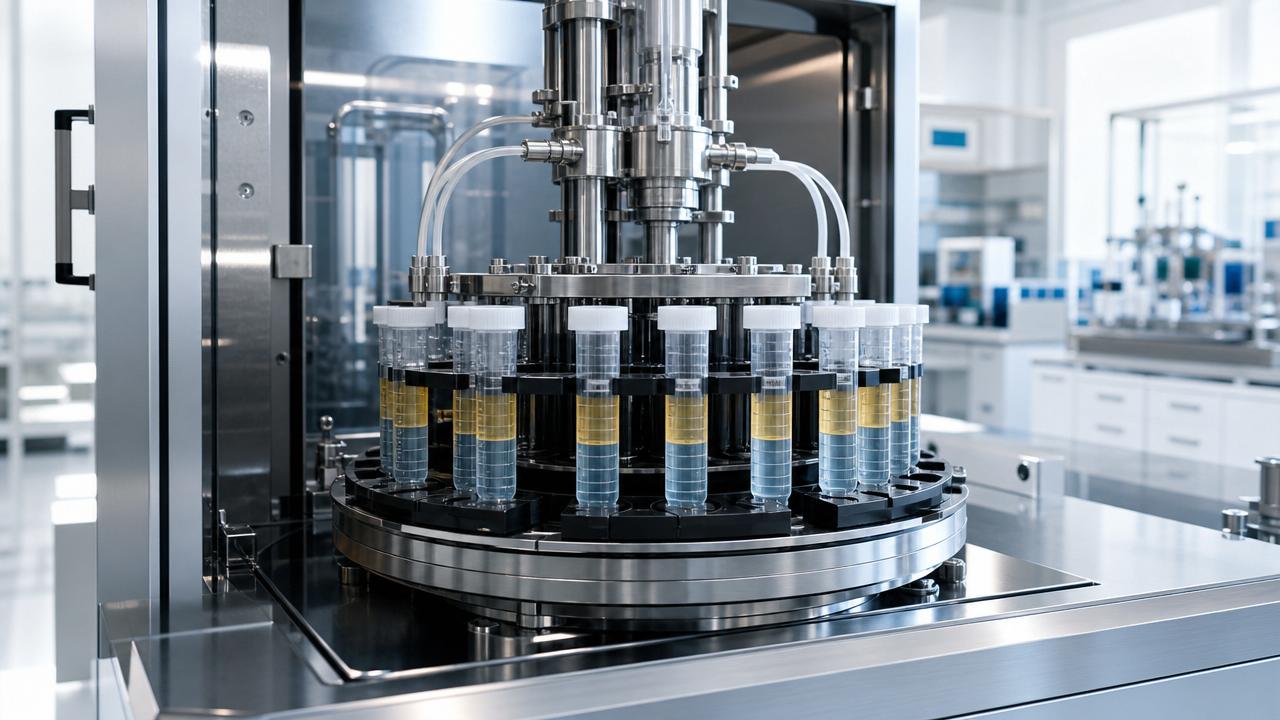
Where micro-efficiency changes separation results first, every parameter matters. In modern laboratories, Micro-efficiency in separation technology shapes purity, recovery, throughput, and confidence during scale-up.
Small deviations in rotor balance, flow stability, tube geometry, or temperature control can alter data quality. These shifts often appear early, long before larger process problems become visible.
For multidisciplinary R&D and pilot environments, Micro-efficiency in separation technology links bench precision with production realism. It helps teams reduce variability, protect sensitive materials, and improve decision quality.
This article explains the concept, current industry attention, operational value, common use cases, and practical steps for building more reliable separation performance across complex workflows.
Defining Micro-efficiency in Separation Technology
Micro-efficiency in separation technology refers to the measurable impact of fine process control on separation outcomes. It focuses on precision at the equipment, fluidic, material, and method levels.
It is not limited to faster spinning or higher force. Instead, it concerns how consistently a system delivers the intended separation window under repeatable operating conditions.
In centrifugation and related workflows, micro-efficiency often appears through tighter pellet formation, cleaner phase boundaries, reduced sample stress, and lower rework rates.
This idea also includes hardware bioconsistency. Surfaces, seals, tubing interfaces, sensor stability, and chamber design all influence whether small settings translate into stable results.
Core elements behind the concept
- Precise control of speed, time, temperature, and acceleration curves
- Stable fluid paths that minimize disturbance and carryover
- Consistent consumables and vessel geometry across runs
- Reliable sensing, calibration, and data capture for traceability
- Predictable scale-up behavior from lab to pilot equipment
Because many advanced processes now handle fragile biologics, complex suspensions, or narrow purity targets, Micro-efficiency in separation technology has become operationally significant rather than optional.
Industry Context and Current Points of Attention
Across pharmaceutical, chemical, biotech, and specialty materials sectors, separation is no longer treated as a simple downstream step. It now influences development speed and process credibility.
Batch-to-continuous strategies, personalized therapeutics, and tighter regulatory expectations are pushing laboratories to quantify hidden variation earlier in development.
As a result, Micro-efficiency in separation technology is receiving attention in technical benchmarking, equipment qualification, and method transfer planning.
These signals explain why laboratories are comparing not only maximum specifications, but also consistency under realistic operating loads, variable sample types, and repeated daily use.
Operational Value Across Bench, Pilot, and Production Interfaces
Micro-efficiency in separation technology creates value when minor improvements prevent larger losses. The most visible gains appear in reproducibility, product protection, and development speed.
1. Better purity and yield stability
Fine control reduces incomplete separation, cross-phase contamination, and inconsistent pellet recovery. This improves confidence in purity measurements and reduces the need for corrective reprocessing.
2. Lower process variation
When acceleration ramps, chamber temperature, and rotor conditions remain stable, run-to-run spread decreases. That stability supports more credible comparisons between formulations, strains, or process settings.
3. Improved sample integrity
Sensitive biological samples can lose viability or functionality under excess shear or heat. Micro-efficiency in separation technology helps preserve the material being measured or transferred downstream.
4. Stronger scale-up confidence
High-quality small-scale data supports better engineering judgments. When separation behavior is well characterized, transitions into larger platforms involve fewer assumptions and fewer costly repeats.
5. More useful benchmarking
Comparing systems through ISO, USP, and GMP-aligned criteria becomes more meaningful when micro-level performance indicators are included, not only top-line throughput numbers.
Typical Separation Scenarios Where Small Controls Matter Most
Not every workflow needs the same degree of refinement. However, some scenarios show immediate sensitivity to micro-level changes in equipment behavior and method execution.
In these settings, Micro-efficiency in separation technology often determines whether a method remains robust once sample diversity, operator changes, or larger run volumes are introduced.
Practical Evaluation Criteria for Equipment and Methods
A useful evaluation framework should go beyond brochure specifications. It should test whether a system performs consistently under actual laboratory demands.
Key criteria to review
- Speed accuracy and repeatability across the working range
- Temperature uniformity during short and extended runs
- Rotor balance sensitivity and vibration behavior
- Consumable fit, sealing quality, and chemical compatibility
- Cleaning access and contamination control features
- Digital records, calibration support, and audit readiness
- Alignment with upstream liquid handling and downstream analytics
Testing should include representative samples, not only water-like media. Viscosity, particulate load, foaming tendency, and biological fragility can reveal hidden weaknesses.
This is where technical benchmarking repositories such as G-LSP become useful. Comparative evidence helps translate individual test results into broader equipment selection logic.
Implementation Guidance and Risk Controls
Improving Micro-efficiency in separation technology does not always require new hardware first. Many gains come from disciplined method design and tighter operating control.
- Map the variables that most affect separation quality in the current workflow.
- Define acceptable windows for speed, time, temperature, and loading balance.
- Standardize vessels, adapters, and fluid-contact materials across comparable runs.
- Verify calibration and maintenance intervals against actual usage intensity.
- Capture deviations with enough detail to identify recurring micro-failures.
- Reconfirm method behavior before transfer into pilot or automated settings.
Common risks include treating centrifugation as a fixed utility, ignoring consumable variability, and assuming that scale-up preserves the same stress profile automatically.
Another frequent issue is data fragmentation. If operating settings, sample attributes, and outcomes are not linked, optimization becomes slow and uncertain.
Next-Step Actions for More Reliable Separation Performance
Micro-efficiency in separation technology delivers the most value when it becomes part of routine technical review. Small controls should be measured, not assumed.
Start with one high-impact workflow. Compare current variation, sample integrity, and recovery quality against tighter operational windows and better hardware consistency.
Then benchmark results against recognized standards and cross-functional process needs. This creates a practical bridge between benchtop evidence and industrial execution.
Where separation results change first, micro-efficiency often reveals the true condition of a process. Better control at that level leads to better decisions everywhere else.
Expert Insights

Chief Security Architect
Dr. Thorne specializes in the intersection of structural engineering and digital resilience. He has advised three G7 governments on industrial infrastructure security.
Related Analysis
Core Sector // 01
Security & Safety
- Automating Buffer Delivery for Bioprocess Purification: Flow and Mixing ControlsAuthor :Dr. Victor Gear

- Seawater Desalination Plant Design: Key Factors for Reliable Freshwater OutputAuthor :Dr. Victor Gear

- GMP-Compliant Separation Technology: Validation Requirements for Pharma ProductionAuthor :Dr. Victor Gear

- Selecting Compact Sample Separation Equipment for Low-Volume, High-Throughput LabsAuthor :Dr. Victor Gear

- Selecting Vacuum Manifolds for SPE Plates: Flow Control, Compatibility, and ThroughputAuthor :Dr. Victor Gear

- How to Evaluate a Separation Technology Manufacturer for Lab and Pilot-Scale NeedsAuthor :Dr. Victor Gear

- How to Choose Benchtop Sample Separation Equipment for Accuracy and Workflow FitAuthor :Dr. Victor Gear

- PSA Makes ASTM F3234-26 Mandatory for Filtration UnitsAuthor :Dr. Victor Gear