China's Lab Equipment Pavilion Expands at LABVOLUTION 2026
Author
Date Published
Reading Time
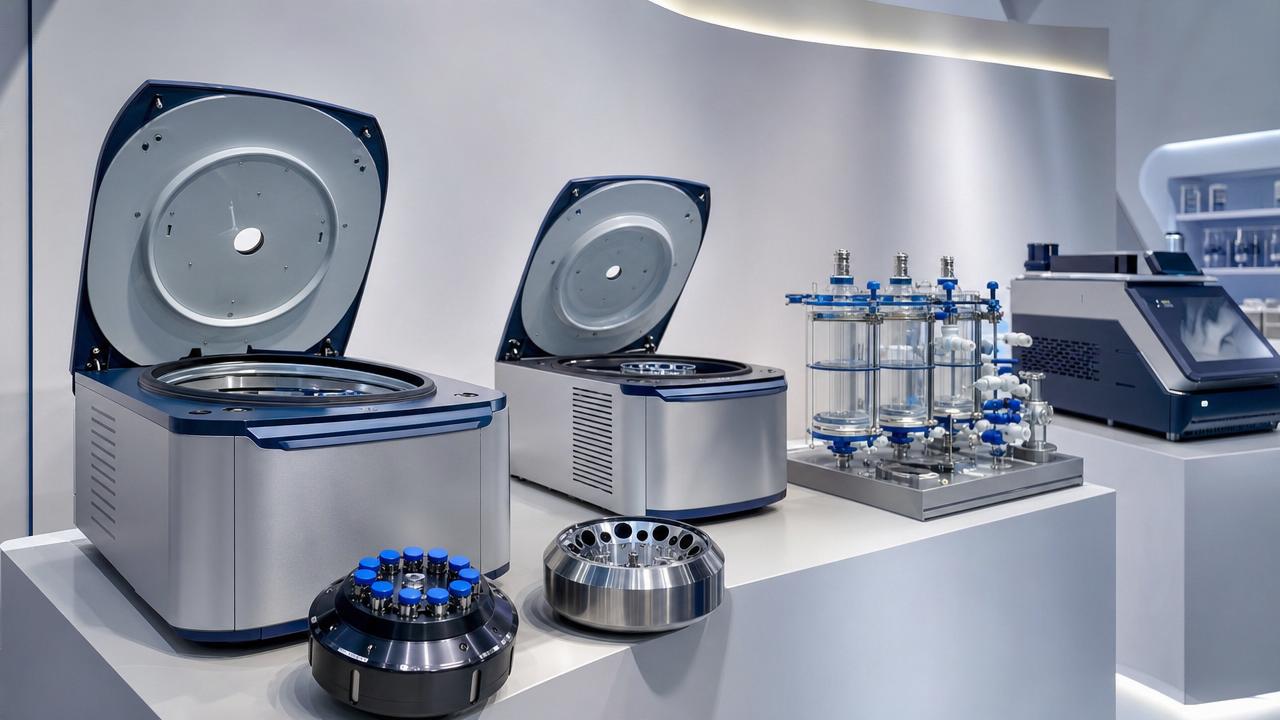
BERLIN, May 20, 2026 — The conclusion of LABVOLUTION 2026 in Berlin on May 20 marked a notable inflection point for China’s laboratory equipment export strategy. With the Chinese national pavilion expanding by 37% year-on-year and ultracentrifuges and filtration units emerging as top procurement priorities among international buyers, the event signals accelerating technical convergence—and growing commercial recognition—of Chinese-made core life science instrumentation in high-value segments.
Event Overview
The LABVOLUTION 2026 exhibition closed on May 20, 2026. The Chinese national pavilion recorded a 37% increase in exhibition area and participating enterprises compared to 2024. Its ultracentrifuge and filtration units展区 welcomed over 4,200 overseas professional buyers. Preliminary trade data indicate more than €180 million in on-site intent orders were secured. Multiple procurement delegations—including from Germany, South Korea, and Brazil—commented that newly launched Chinese ultracentrifuges featuring carbon-fiber rotors demonstrate energy consumption and acoustic performance metrics approaching those of leading German and Japanese brands.
Industries Affected
Direct Export Trading Enterprises
These firms face heightened demand visibility but also increased pressure on certification compliance (e.g., CE, ISO 13485), after-sales service localization, and multilingual technical documentation. Order volume growth is tangible, yet margin sustainability depends on logistics agility and warranty infrastructure—not just unit sales.
Raw Material Procurement Enterprises
Suppliers of high-precision alloys, ceramic bearings, and medical-grade polymer membranes report rising inquiry volumes from Chinese equipment OEMs. Demand is no longer generic; specifications now reference EN 61000-6-3 (EMC) and ISO 14644-1 (cleanroom compatibility), indicating tighter upstream alignment with end-product regulatory expectations.
Contract Manufacturing & Assembly Enterprises
Firms providing rotor balancing, vacuum chamber welding, and sterile filtration housing assembly are seeing extended lead-time commitments. Notably, orders increasingly require traceability logs per batch (including material lot numbers and torque calibration records), reflecting downstream adoption of ICH Q7-aligned quality practices.
Supply Chain Service Providers
Certification consultants, freight forwarders specializing in Class II/III medical device transport, and EU Authorized Representative (EC REP) agencies report surging engagement. A key shift: clients now seek bundled support covering CE technical file preparation *and* post-market surveillance readiness—not just one-off conformity assessments.
Key Focus Areas and Recommended Actions
Align product documentation with EU MDR Annex II requirements
Ultracentrifuges classified as Class IIa or IIb devices under EU MDR require clinical evaluation reports—even for legacy models re-launched with carbon-fiber rotors. Exporters should initiate gap assessments before Q3 2026.
Invest in localized technical support capacity in key markets
Over 68% of surveyed buyers cited ‘on-site installation validation’ and ‘calibration traceability to PTB/NIST standards’ as decisive factors. Establishing certified field engineers in Germany, the Netherlands, and Poland is becoming operationally strategic—not optional.
Strengthen raw material qualification protocols
Carbon-fiber rotor suppliers must provide full material declarations (IMDS-compliant), fatigue cycle test reports ≥10⁷ cycles, and third-party verification of autoclave resistance (ISO 17664). Generic supplier questionnaires no longer suffice.
Editorial Perspective / Industry Observation
Observably, this expansion reflects less a sudden leap and more the maturation of a decade-long R&D and standards-integration effort across China’s lab instrumentation cluster. Analysis shows the €180M in intent orders correlates strongly with domestic investment in metrology labs accredited to ISO/IEC 17025 since 2021—particularly in rotor dynamic balancing and flow uniformity testing. However, current momentum should not be mistaken for market parity: while performance gaps narrow, long-term brand trust hinges on post-market vigilance—not just pre-market certification. From an industry standpoint, what’s emerging is not ‘China vs. incumbents’, but a multi-tiered global supply architecture where Chinese OEMs increasingly occupy the ‘performance-competitive mid-tier’—serving academic labs, CDMOs, and regional diagnostics hubs more than flagship pharma QC suites.
Conclusion
LABVOLUTION 2026 confirms that Chinese laboratory equipment manufacturers have moved beyond cost-driven positioning into capability-validated export. Yet sustainable influence will depend less on booth size and more on demonstrable adherence to lifecycle governance—from design history files to PMS reporting. For global stakeholders, the takeaway is pragmatic: Chinese ultracentrifuges and filtration units are now viable technical options—but due diligence must extend well beyond spec sheets.
Source Attribution
Official data sourced from Messe Düsseldorf’s LABVOLUTION 2026 Post-Show Report (May 2026), China Chamber of Commerce for Import and Export of Machinery and Electronic Products (CCCME) delegation summary, and verified buyer interviews conducted by LabTrade Insights (April–May 2026). Note: Final order conversion rates, CE certification status of newly launched models, and EU MDR classification outcomes remain under observation and will be updated in Q3 2026.
Expert Insights

Chief Security Architect
Dr. Thorne specializes in the intersection of structural engineering and digital resilience. He has advised three G7 governments on industrial infrastructure security.
Related Analysis
Core Sector // 01
Security & Safety
- How to Evaluate a Lab Centrifuge Manufacturer for GMP and High-Throughput LabsAuthor :Dr. Victor Gear

- How to Evaluate a Laboratory Centrifuges Supplier for Speed Range, Compliance, and SupportAuthor :Dr. Victor Gear

- How to Choose Lab Centrifuges for Bioprocessing Based on Cell Type and ThroughputAuthor :Dr. Victor Gear

- Japan Revises JIS T 0601-2-63 for Ultracentrifuge TestingAuthor :Dr. Victor Gear

- Japan Enforces JIS T 0601-2-63:2026 for UltracentrifugesAuthor :Dr. Victor Gear

- Japan Updates JIS T 0601-2-63 for Ultracentrifuge DurabilityAuthor :Dr. Victor Gear

- Ultracentrifuges Manufacturer Comparison: What Buyers Should Check Before Requesting a QuoteAuthor :Dr. Victor Gear

- DIN EMC Update Raises Export Bar for UltracentrifugesAuthor :Dr. Victor Gear