Why Cross-Contamination Metrics Change Tip Selection
Author
Date Published
Reading Time

For quality control and safety teams, tip selection is no longer a routine purchasing decision. In regulated liquid handling workflows, the rise of stricter liquid handling cross-contamination metrics has changed what counts as an acceptable tip. Selection now has direct implications for carryover control, aerosol management, sample traceability, operator protection, and deviation risk. The practical conclusion is clear: if your contamination thresholds are tightening, your tip specification process must become more performance-based, data-driven, and workflow-specific.
For many laboratories, this shift is happening quietly but decisively. Legacy tip choices that once seemed “good enough” may fail under today’s expectations for low carryover, reproducibility across automated platforms, and defensible validation records. Quality and safety leaders increasingly need to ask not only whether a tip fits a pipette, but whether it supports contamination control targets across assay sensitivity, sample type, cleaning strategy, and regulatory exposure.
This article examines why cross-contamination metrics are changing tip selection, what quality and safety teams should evaluate first, and how to translate contamination concerns into practical procurement and process decisions.
Why contamination metrics now matter more than basic compatibility
Historically, many labs selected tips based on compatibility, cost, volume range, and general precision claims. That approach is no longer sufficient in environments where molecular assays detect trace residues, biologics workflows involve high-value materials, and audit scrutiny extends to consumable performance. The issue is not simply whether a tip dispenses accurately, but whether it minimizes all meaningful pathways of contamination.
Modern liquid handling cross-contamination metrics are more demanding because workflows are more sensitive. PCR, cell therapy support operations, analytical chemistry, and high-throughput screening can all be affected by carryover at levels that were once operationally invisible. A tiny residual film inside a tip, droplet retention on the outer wall, or aerosol generation during aspiration and dispensing may materially alter results, trigger false positives, or compromise batch segregation.
For quality control teams, this means tip performance must be evaluated against the contamination tolerance of the method, not against generic catalog claims. For safety managers, it means considering whether the tip design also reduces operator exposure, splash risk, and contaminated waste transfer. A tip that performs acceptably in one workflow may be a hidden risk in another.
What quality and safety teams are really trying to prevent
When readers search for guidance on this topic, they are usually not looking for a basic definition of contamination. They want to know which risks are most likely to create deviations, unreliable data, or safety incidents. In practice, cross-contamination in liquid handling usually appears through a few recurring mechanisms.
Sample carryover is the most obvious. Residual liquid can remain inside the tip after dispense, especially with viscous, protein-rich, volatile, or low-surface-tension fluids. That residue may transfer into the next sample and distort quantitative or qualitative outcomes.
Aerosol contamination is another major concern. Fast aspiration, aggressive blow-out, poor tip geometry, and unsuitable air-displacement conditions can generate aerosols that contaminate pipette shafts, adjacent wells, work surfaces, or downstream samples. In highly sensitive assays, aerosolized trace material can create widespread integrity problems.
External droplet retention is often underestimated. Even if the internal bore performs well, droplets on the outside of the tip can contact vessel rims, deck surfaces, racks, or neighboring wells. This matters especially in automation, where repetitive movement can spread contamination patterns rapidly.
Material shedding, extractables, and manufacturing residues can also affect sample purity. For QC teams, contamination does not only mean transferred analyte from a previous sample. It can also mean tip-derived interference that affects method performance, especially in trace analytics or biologically sensitive systems.
Operator-mediated transfer remains relevant as well. Poor fit, inconsistent ejection, and awkward manual handling increase touchpoints and surface contact. Safety incidents often emerge not from one catastrophic event, but from repeated small failures in consumable design and use.
Which cross-contamination metrics actually change tip selection decisions
Not all metrics carry equal weight, and not every lab measures them with the same rigor. However, once a laboratory begins tracking contamination through meaningful performance indicators, tip selection criteria become much narrower. Several metrics are especially influential.
Carryover percentage or residual transfer rate is often the first decision-driving metric. This measures how much material from one transfer event remains and enters the next sample. A low carryover threshold usually favors low-retention tip designs, optimized internal surface characteristics, and tighter manufacturing consistency.
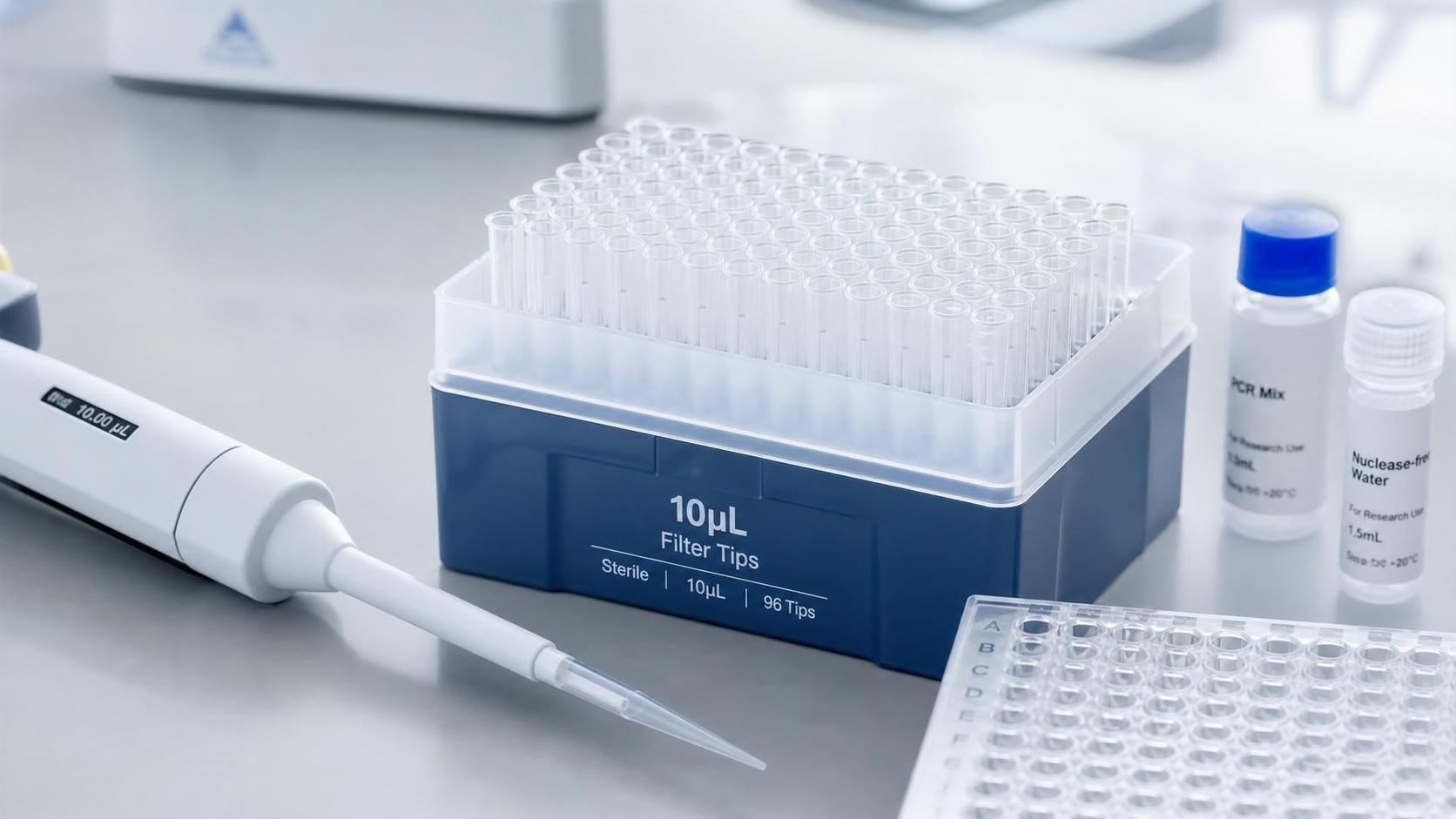
Aerosol barrier effectiveness becomes critical when biological material, nucleic acids, infectious agents, or corrosive reagents are involved. If contamination control plans include protection of both sample and instrument, filter tips or barrier tips often move from optional to mandatory. The decision is no longer about premium convenience, but about measurable risk reduction.
Droplet control during aspiration and dispense influences tip geometry choice. Fine-point designs, surface treatments, and controlled outlet dimensions can reduce hanging droplets and improve clean breakoff. This matters in workflows where even a small external droplet creates a contamination event.
Seal integrity and fit consistency are essential but sometimes overlooked. A poor seal can alter aspiration dynamics, increase aerosol generation, reduce volume accuracy, and contaminate pipette internals. In automated systems, fit inconsistency may also cause intermittent failures that are difficult to investigate during deviation review.
Sterility, DNase/RNase-free status, endotoxin profile, and particulate cleanliness may also become deciding metrics depending on the application. These are not marketing extras in regulated settings. They are evidence points that support risk assessments and determine whether a tip is acceptable for a given process step.
How assay sensitivity changes what counts as an acceptable tip
One of the biggest reasons tip selection changes over time is that assay sensitivity changes. A tip that was perfectly acceptable for routine buffer transfer may become unacceptable when the same platform is used for qPCR setup, low-abundance biomarker analysis, potency testing, or contamination-sensitive biologics workflows.
As detection limits get lower, the cost of minor contamination rises sharply. This changes procurement logic. The lowest-cost tip may still be suitable for noncritical bulk preparation, but not for high-sensitivity sample preparation, reference standard handling, or release-related QC testing.
Quality teams should therefore avoid “one tip for everything” policies unless validation clearly supports that approach. Segmenting tip selection by risk category often delivers better control. For example, standard tips may be sufficient for general reagent preparation, while low-retention or filter tips may be justified for assay-critical steps with strict contamination thresholds.
This is where liquid handling cross-contamination metrics become operationally useful. They help convert vague concerns into tiered selection standards. Instead of asking whether a tip is “high quality,” teams can ask whether it achieves acceptable carryover performance for a specific method class.
Why fluid type often matters more than teams expect
Cross-contamination behavior depends heavily on what the tip is handling. Water-like solutions are not enough to characterize real performance. Many contamination events emerge when actual process fluids behave differently from validation assumptions.
Viscous liquids such as glycerol mixes, serum-containing media, and concentrated protein solutions tend to cling to internal surfaces and form persistent residual films. Volatile solvents may alter aspiration stability and droplet formation. Surfactant-containing solutions can change wetting behavior. Suspensions and cell-containing materials may create retention patterns that differ from homogeneous liquids.
For quality and safety teams, this means tip qualification should reflect real fluid classes whenever possible. A tip that performs well with deionized water may still produce unacceptable carryover with sticky, foaming, corrosive, or bioactive materials. If your workflow includes multiple fluid types, your risk assessment should not assume uniform contamination behavior across them.
Material selection and surface treatment therefore matter. Low-retention tips can reduce fluid adherence, but they should be evaluated in context. In some workflows, the best option is not simply the lowest advertised retention, but the design that performs most consistently with your fluid matrix and transfer pattern.
When filter tips are necessary—and when they are not enough
Filter tips are often treated as the automatic answer to contamination risk, but quality-focused selection requires more nuance. Filter tips are extremely valuable for reducing aerosol entry into the pipette body and limiting upward migration of liquids. In many regulated or contamination-sensitive workflows, they are the correct default choice.
However, filter tips do not eliminate all cross-contamination pathways. They do not solve poor external droplet control, inadequate low-retention properties, or weak fit on the pipette cone. They also do not compensate for bad technique, unsuitable aspiration speed, or deck-level contamination in automated systems.
Safety managers should also verify that filter performance is matched to the hazard profile. The mere presence of a filter does not guarantee equivalent protection across solvents, infectious materials, or aerosol-generating protocols. Procurement decisions should therefore review barrier design, validation evidence, compatibility, and workflow-specific limitations rather than relying on generic category labels.
In short, filter tips are often necessary, but they are not a substitute for a full contamination control strategy.
What to ask suppliers before approving a tip for controlled workflows
If contamination metrics are driving selection, supplier evaluation must go deeper than price sheets and fit claims. QC and safety teams need evidence that the tip can support their risk profile and documentation standards.
Start with performance data. Ask whether carryover, retention, aerosol protection, and fit consistency have been tested, under what conditions, and on which instruments. Request data relevant to your volume range and automation platform where applicable.
Then review manufacturing controls. Batch consistency matters because contamination performance is only as reliable as production variation allows. Ask about cleanroom conditions, contamination controls during molding and packaging, lot traceability, and quality release criteria.
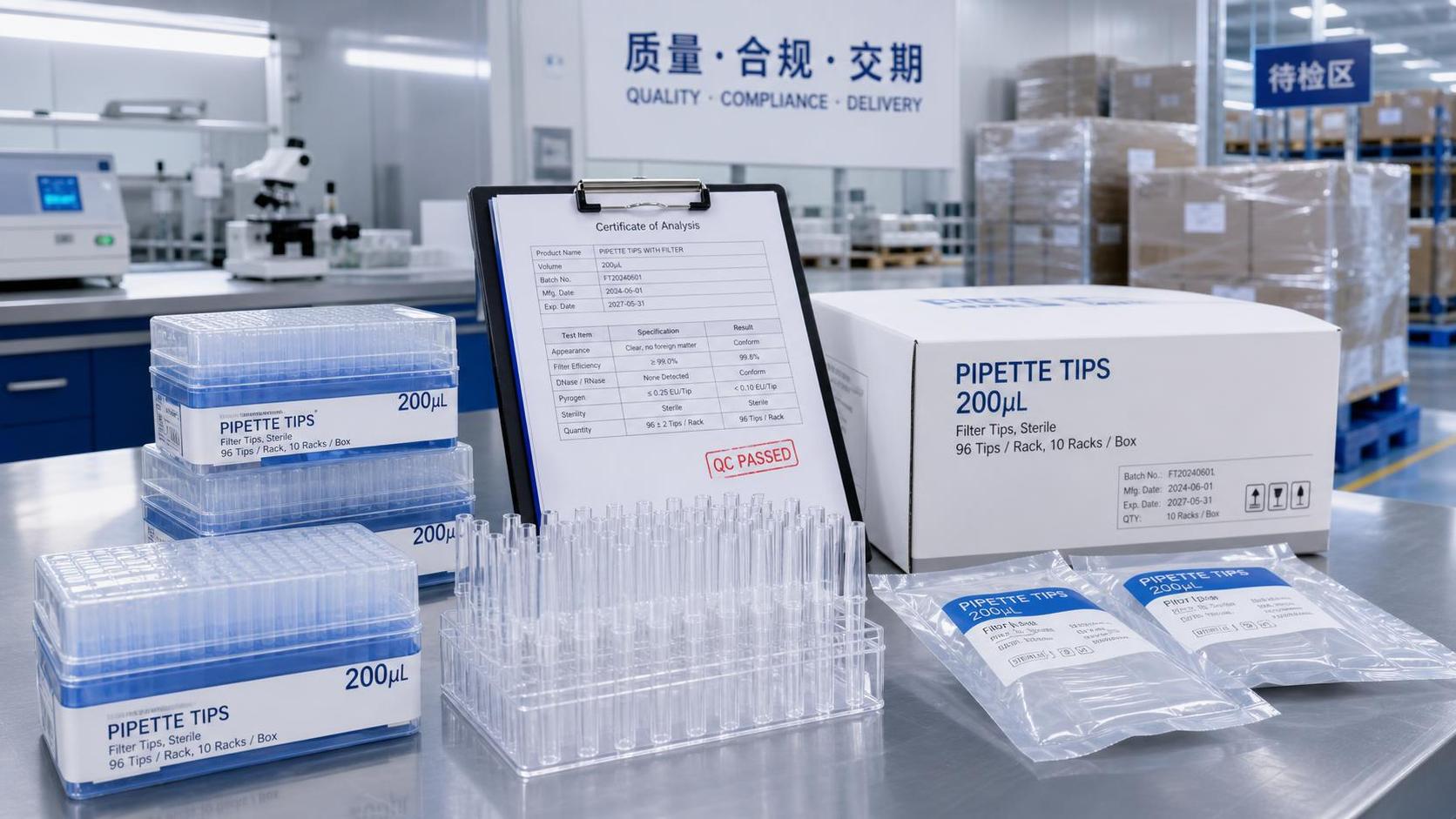
Next, confirm certification and contaminant status. Depending on the workflow, that may include sterile assurance, DNase/RNase-free claims, endotoxin limits, non-pyrogenic status, or particulate controls. These attributes should be documented clearly enough to support internal qualification and audit review.
Finally, assess change control discipline. A technically strong tip can still become a compliance problem if resin source, mold geometry, packaging process, or filter material changes without transparent notification. For regulated labs, consumable stability over time is a serious selection factor.
How to build a practical tip selection framework for QC and safety teams
The most effective approach is to move from ad hoc tip purchasing to a structured selection matrix. This does not have to be complicated, but it should be consistent and risk-based.
Begin by classifying workflows into contamination-risk tiers. For each tier, define acceptable limits for carryover, aerosol exposure, cleanliness, and operator protection. Link these limits to assay sensitivity, sample criticality, and regulatory impact.
Then map tip categories to those tiers. General-purpose tips may cover low-risk preparation tasks. Low-retention tips may be assigned to sticky or valuable fluids. Filter tips may be mandatory for sensitive biological or hazardous materials. Automation-compatible tips may require separate qualification where robotic precision and deck contamination risk are involved.
After that, establish a verification plan. This can include fit checks, gravimetric or dye-based transfer evaluation, carryover challenge tests, and observations of droplet behavior under real operating conditions. The goal is not to create excessive burden, but to ensure the tip’s contamination profile is understood before widespread deployment.
Finally, embed the result into SOPs, training, and approved vendor lists. Tip selection only improves contamination control if the decision is operationalized consistently at the bench and on automated platforms.
Common mistakes that lead to poor tip decisions
Several avoidable mistakes repeatedly undermine good contamination control. One is choosing a tip solely on unit cost. A lower purchase price can quickly become more expensive when rework, failed runs, investigations, or contaminated batches are considered.
Another is relying only on nominal compatibility. A tip may attach to the pipette but still produce poor sealing, inconsistent ejection, or aerosol behavior that increases contamination risk. Functional fit is more important than physical fit alone.
A third mistake is validating with ideal fluids and then using the tip with difficult matrices. This creates a false sense of security and often explains why contamination events appear “unexpectedly” in routine work.
Teams also sometimes assume contamination is purely a technique issue. Technique matters, but consumable design shapes what technique can realistically control. If cross-contamination metrics remain poor despite training, the tip itself may be part of the root cause.
Conclusion: contamination metrics are now a consumables governance issue
Tip selection has changed because laboratory expectations have changed. As liquid handling cross-contamination metrics become more prominent in quality systems, the decision moves beyond convenience and into the domain of risk control, data integrity, and operator safety.
For QC and safety professionals, the key insight is simple: the right tip is the one that demonstrably supports the contamination limits of the workflow, not merely the one that fits the instrument or lowers per-box spend. That means evaluating carryover, aerosol control, droplet behavior, material cleanliness, and supplier consistency in a structured way.
Labs that treat tip choice as a validated process variable are better positioned to protect sample integrity, reduce deviations, and maintain audit readiness. In today’s environment, contamination metrics do not just influence tip selection—they define it.
Expert Insights

Chief Security Architect
Dr. Thorne specializes in the intersection of structural engineering and digital resilience. He has advised three G7 governments on industrial infrastructure security.
Related Analysis
Core Sector // 01
Security & Safety
- What Drives Polypropylene Pipette Tip Costs in High-Volume Lab Purchasing?Author :Lina Cloud

- Do Universal Pipette Tips Fit Every Pipette? Compatibility Factors to CheckAuthor :Lina Cloud

- How to Evaluate a Liquid Handling Contamination Supplier for Clean Lab WorkflowsAuthor :Lina Cloud

- How to Choose Precision Dispensers for Pharmaceutical Labs: Accuracy, Compatibility, and Contamination ControlAuthor :Lina Cloud

- How to Evaluate a Disposable Pipette Tips Exporter for Quality, Compliance, and Lead TimeAuthor :Lina Cloud

- How to Evaluate a Micro-Volume Dispensing Supplier for Precision, Lead Time, and Validation SupportAuthor :Lina Cloud

- 10uL Disposable Pipette Tips: How to Choose Accuracy, Fit, and Sterility for Lab WorkAuthor :Lina Cloud

- High Speed Dispensing Accuracy: Key Factors That Affect Output and Reject RatesAuthor :Lina Cloud