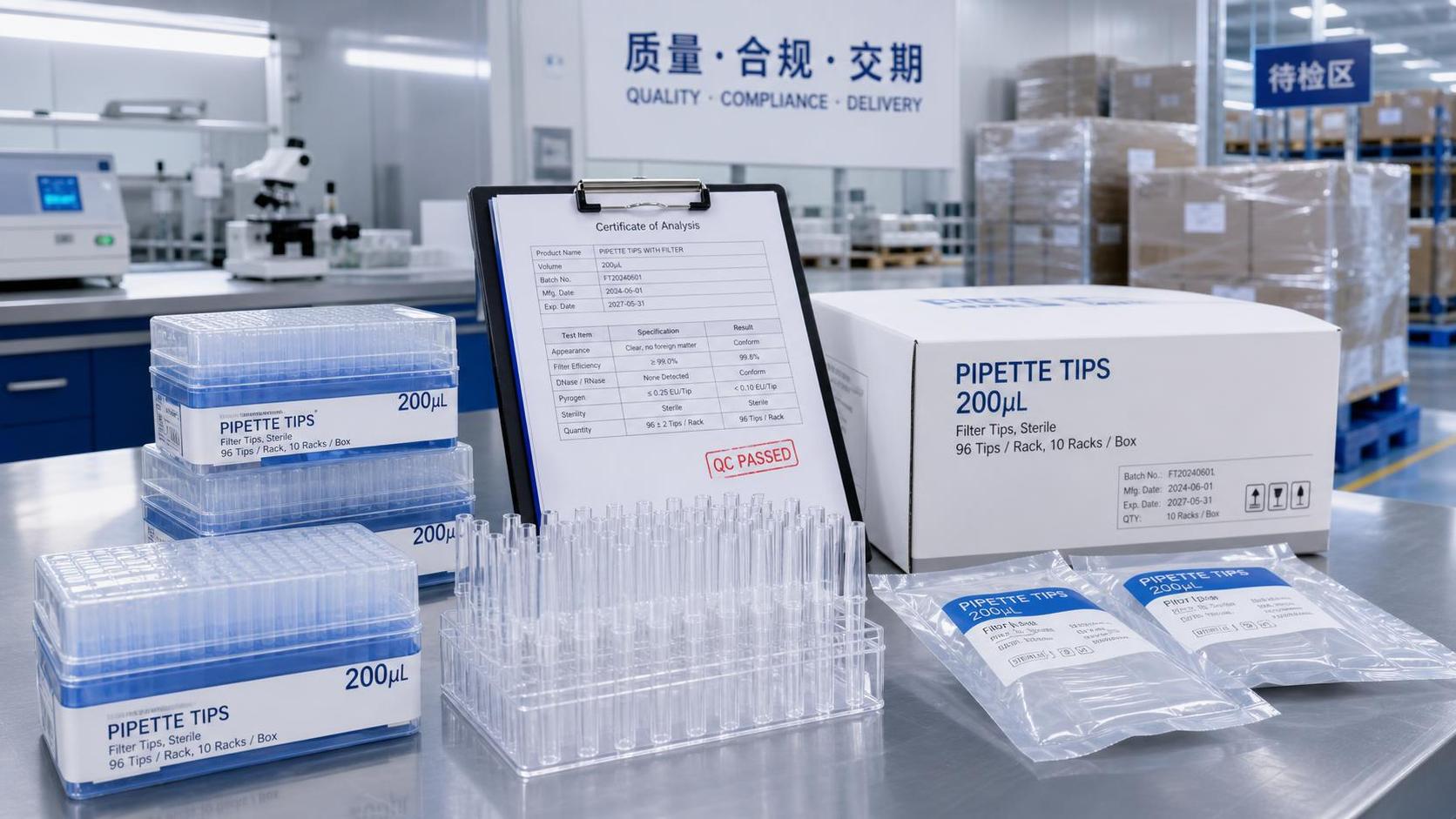
Why Tip Racking Efficiency Affects Daily Throughput
Author
Date Published
Reading Time

In high-throughput lab workflows, tip racking and loading efficiency directly influences daily output, operator consistency, and error control. For users working with automated pipetting and liquid handling systems, even small delays in tip handling can compound into measurable productivity loss. Understanding why this efficiency matters is essential for improving routine performance, reducing interruptions, and supporting more reliable results across demanding laboratory operations.
Why use a checklist to evaluate tip racking and loading efficiency first
For operators, the biggest mistake is treating tip handling as a minor setup task rather than a throughput driver. In practice, tip racking and loading efficiency affects cycle time, instrument uptime, contamination risk, and the number of samples completed per shift. A checklist approach works better than a general discussion because it helps users identify where time is actually lost: in loading new racks, aligning consumables, resolving pickup errors, or recovering from interruptions.
This matters across integrated lab environments, including pharmaceutical development, analytical testing, chemical process labs, bioprocess support, and precision microfluidic workflows. In these settings, automated pipetting systems are expected to deliver repeatable performance under ISO-, USP-, and GMP-aware operating conditions. If tip racking and loading efficiency is inconsistent, the downstream impact extends beyond speed. It can affect liquid transfer accuracy, operator confidence, and batch documentation quality.
First-pass checklist: the key items operators should confirm
Before looking at advanced automation settings, operators should verify the practical basics that most often determine whether tip racking and loading efficiency supports or slows daily throughput.
- Confirm whether tip racks load smoothly into the deck or carrier without force, rocking, or repeated reseating. Poor physical fit creates avoidable delays and increases pickup failures.
- Check if rack orientation is easy to identify at a glance. Ambiguous orientation markings lead to operator hesitation and setup mistakes during busy runs.
- Observe how many seconds are required to replace an empty rack during routine operation. If reload time is longer than expected, the issue may be packaging design, rack locking method, or workspace layout.
- Verify pickup consistency across all positions, not just the first few rows. Uneven tip engagement often appears only after repeated cycles or near the end of the rack.
- Assess whether the system supports partial rack use without confusion. In many labs, leftover tips create tracking problems that reduce tip racking and loading efficiency over time.
- Review how often operators must pause runs for tip-related intervention. Frequent manual recovery is a direct warning sign that throughput losses are being underestimated.
Core judgment standards: what actually determines throughput impact
Not every inconvenience affects output equally. Users should prioritize the factors that have the strongest link to completed runs per day, not just convenience during setup.
1. Reload time per interruption
A short delay repeated many times can become a major daily loss. If an operator reloads tips ten to twenty times per day, even a one-minute delay per event can remove a significant portion of productive runtime. Efficient systems reduce hand motions, simplify placement, and minimize confirmation steps before restarting.
2. Pickup reliability under continuous use
Tip racking and loading efficiency is not only about speed. If a rack loads quickly but generates mis-picks, bent tips, or seal inconsistencies, the apparent gain disappears. Operators should monitor whether performance remains stable over multiple shifts, different tip lots, and mixed applications such as assay prep, reagent distribution, or sample normalization.
3. Ease of operator handling
In real laboratories, gloves, narrow benches, and adjacent instruments make ergonomics important. A tip rack that is difficult to grip, unwrap, or align will slow experienced users and frustrate new ones. Good tip racking and loading efficiency should reduce cognitive load as well as physical handling time.
4. Compatibility with scheduling and batching
Throughput depends on how consumables support the workflow plan. If the rack format does not match batch size, deck configuration, or unattended runtime goals, users will face extra interventions. Efficient loading means the tip supply aligns with the number of plates, channels, and protocol stages being executed.
Quick comparison table: how to judge whether efficiency is helping or hurting operations
Use the following practical guide when evaluating current consumables or comparing alternative systems.
Scenario-based checks: what to prioritize in different lab routines
High-throughput screening and repetitive plate work
In screening-heavy environments, tip racking and loading efficiency should be judged by uninterrupted runtime. Operators should focus on deck capacity, reload frequency, and how easily racks can be swapped between repeated plate sequences. Small delays become large throughput losses when workflows run for many hours.
Bioprocess and cell culture support
For cell culture and bioreactor support tasks, contamination control is just as important as speed. Here, tip handling must remain clean, predictable, and easy to document. Users should verify packaging integrity, glove-friendly handling, and whether rack replacement introduces unnecessary exposure or touch points.
Analytical and regulated environments
Labs operating with strict documentation requirements should assess traceability and deviation risk. If inefficient loading causes repeated pauses, reruns, or undocumented corrections, the compliance burden rises. In these settings, tip racking and loading efficiency supports both throughput and cleaner operational records.
R&D labs with changing protocols
Flexible research teams often switch tip volumes, assay formats, and instrument programs. They should prioritize rack systems that are intuitive to change over, easy to identify, and resilient to human variation. A system that works only under fixed, ideal conditions rarely delivers strong daily output in exploratory labs.
Commonly overlooked issues that reduce tip racking and loading efficiency
Many throughput problems are blamed on the instrument, while the real cause sits in consumable handling or routine setup habits. The following points are often missed during troubleshooting:
- Mixed lot behavior: a system may appear stable until a new tip lot introduces subtle fit variation.
- Storage conditions: warped racks, damaged packaging, or dust exposure can lower pickup reliability.
- Partial rack tracking: manually reusing incomplete racks often causes row mismatch and operator hesitation.
- Workflow congestion: if racks are staged too far from the instrument, reload speed drops even when the rack design is acceptable.
- Training gaps: experienced users compensate for poor design, but new operators reveal the true weakness of the setup.
- Protocol mismatch: a liquid handling program optimized for one rack type may perform badly after consumable substitution.
Execution guide: how operators can improve daily throughput without major system changes
If daily output is lower than expected, operators do not always need a new platform immediately. A structured improvement sequence can reveal whether the issue is procedural, consumable-related, or hardware-related.
- Time the full reload event from empty rack detection to run restart. Use real shift data rather than assumptions.
- Record pickup failures by rack position, tip lot, operator, and protocol type. Patterns usually appear quickly.
- Standardize staging so replacement racks are always placed in the same orientation and within easy reach.
- Review whether deck layout can reduce the number of reload interruptions during the highest-volume protocols.
- Train all users to follow the same loading confirmation steps, especially after pauses, maintenance, or software resets.
- Escalate to supplier or engineering review if consistent failures remain after procedural controls are tightened.
Practical decision points before changing racks, tips, or liquid handling setups
When a lab plans to improve tip racking and loading efficiency, users should gather a few essential inputs first. This avoids buying based on catalog claims rather than operational fit.
Priority information includes actual daily run count, average reload frequency, tip volume mix, channel configuration, contamination sensitivity, current intervention rate, and any GMP or validation constraints. It is also useful to document whether the main problem is loading speed, pickup reliability, deck utilization, or operator fatigue. These distinctions matter because the right solution for one lab may be the wrong one for another.
FAQ: fast answers users often need
Does tip racking and loading efficiency really change daily throughput that much?
Yes. In repetitive workflows, small loading delays accumulate across every run, every rack replacement, and every operator intervention. The result is fewer completed samples and more workflow variability.
Is faster loading more important than pickup quality?
No. True tip racking and loading efficiency combines speed with consistent pickup, clean sealing, and smooth recovery. Fast loading without reliability increases reruns and wastes time.
What is the easiest metric to start tracking?
Start with reload time per event and the number of tip-related pauses per shift. Those two measurements often reveal whether the issue is minor or a major throughput bottleneck.
Final checklist and next-step action guide
For operators, the most useful way to think about tip racking and loading efficiency is simple: if tip handling slows setup, increases interventions, or creates uncertainty, it is already affecting daily throughput. Start by checking reload speed, rack fit, orientation clarity, pickup consistency, and workflow match. Then compare results across users, protocols, and tip lots.
If your team needs to improve performance further, the best next conversation should focus on parameters and fit rather than broad claims. Prepare to discuss instrument model, deck layout, tip format, sample volume range, contamination requirements, current error patterns, target throughput, validation expectations, lead time, and budget range. With those details ready, it becomes much easier to evaluate the right consumable strategy, automation adjustment, or supply partnership for more reliable high-throughput operation.
Expert Insights

Chief Security Architect
Dr. Thorne specializes in the intersection of structural engineering and digital resilience. He has advised three G7 governments on industrial infrastructure security.
Related Analysis
Core Sector // 01
Security & Safety
- What Drives Polypropylene Pipette Tip Costs in High-Volume Lab Purchasing?Author :Lina Cloud

- Do Universal Pipette Tips Fit Every Pipette? Compatibility Factors to CheckAuthor :Lina Cloud

- How to Evaluate a Liquid Handling Contamination Supplier for Clean Lab WorkflowsAuthor :Lina Cloud

- How to Choose Precision Dispensers for Pharmaceutical Labs: Accuracy, Compatibility, and Contamination ControlAuthor :Lina Cloud

- How to Evaluate a Disposable Pipette Tips Exporter for Quality, Compliance, and Lead TimeAuthor :Lina Cloud

- How to Evaluate a Micro-Volume Dispensing Supplier for Precision, Lead Time, and Validation SupportAuthor :Lina Cloud

- 10uL Disposable Pipette Tips: How to Choose Accuracy, Fit, and Sterility for Lab WorkAuthor :Lina Cloud

- High Speed Dispensing Accuracy: Key Factors That Affect Output and Reject RatesAuthor :Lina Cloud