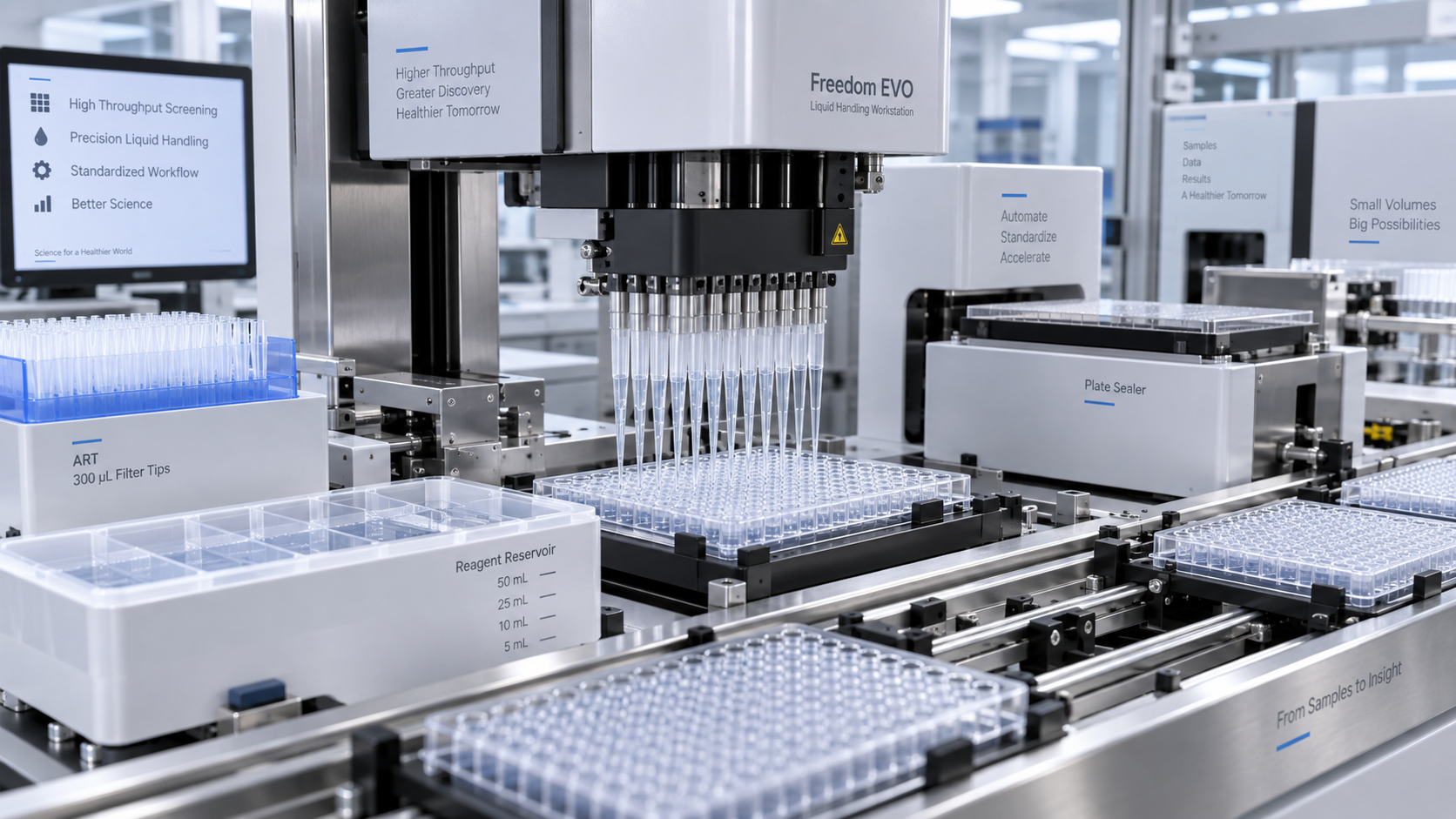
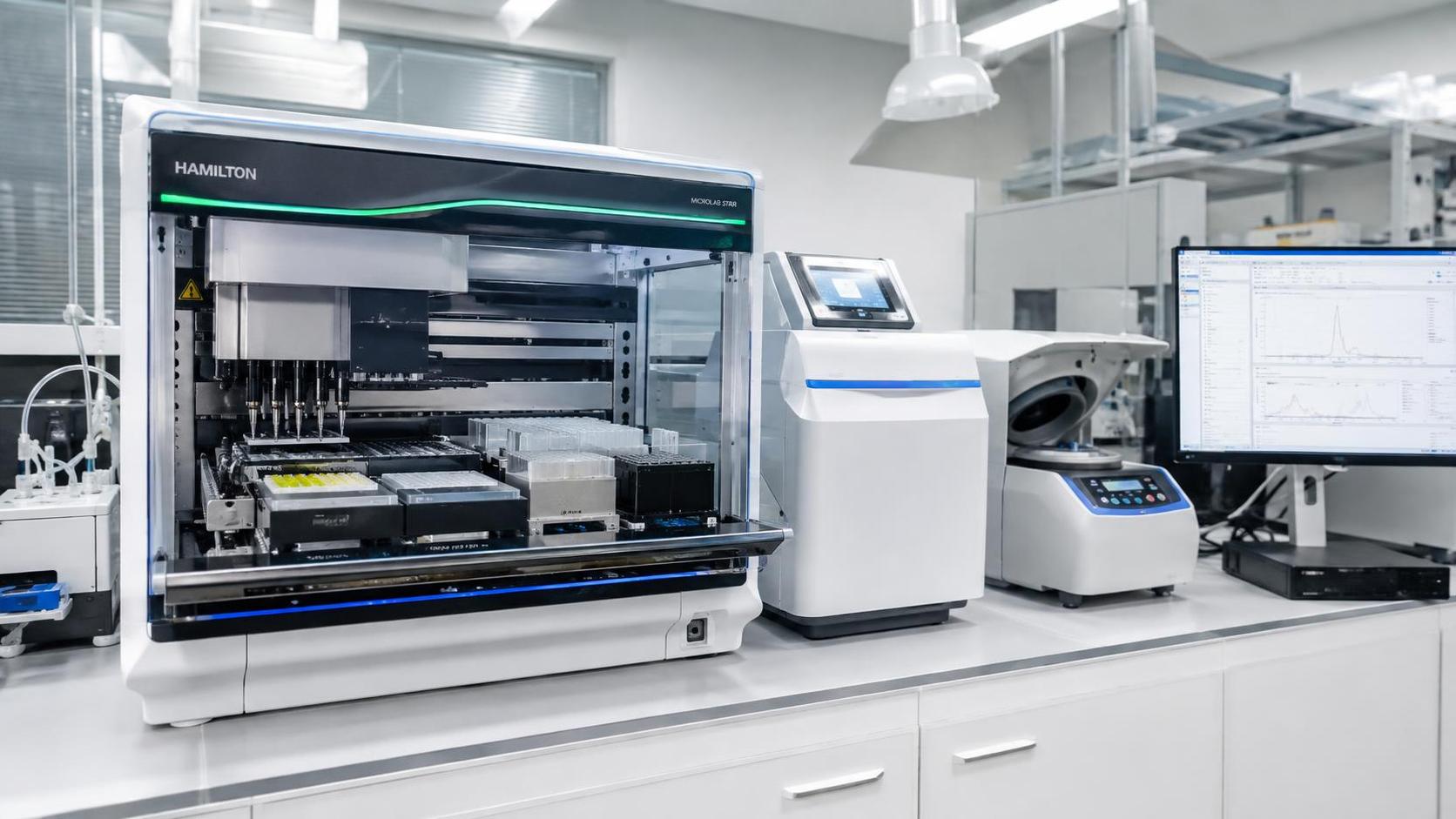
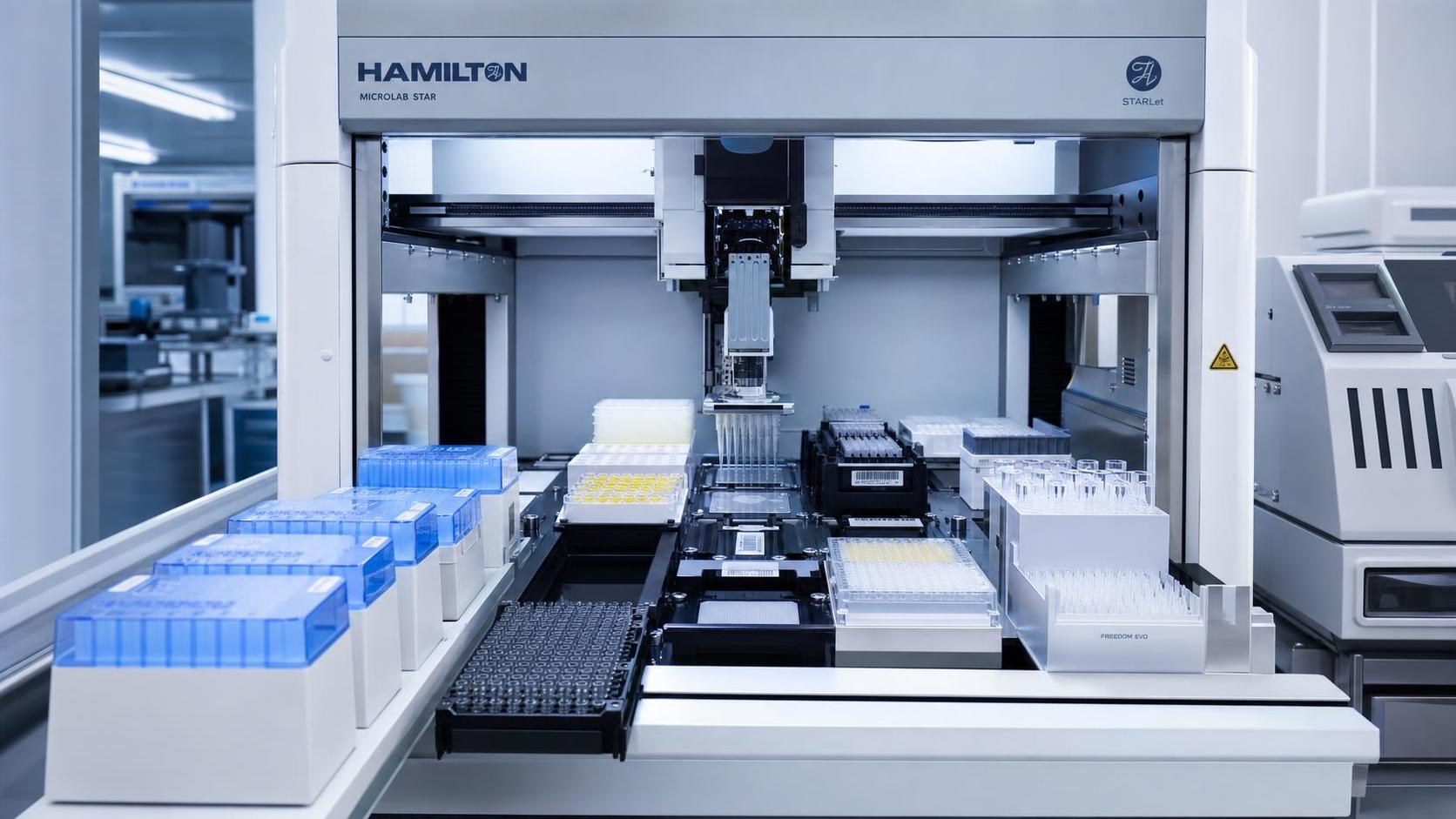
Liquid handling workstation wholesale without overbuying capacity
Author
Date Published
Reading Time

For finance approvers, choosing liquid handling workstation wholesale is not about buying the biggest system—it is about matching throughput, compliance, and upgrade potential to real demand. This guide helps you avoid overinvesting in unused capacity while still securing precision, reliability, and long-term value for regulated lab and production environments.
What does liquid handling workstation wholesale really mean for finance-led purchasing?
In practical B2B procurement, liquid handling workstation wholesale usually refers to multi-unit sourcing, project-based bundling, framework purchasing, or negotiated supply for laboratory networks, pilot facilities, and regulated production support teams. For finance approvers, the issue is not simply volume discount. The real question is whether the purchased platform aligns with 12- to 36-month workload forecasts, operator utilization, maintenance capacity, and validation expectations.
A workstation that handles 96, 384, or even 1,536-well workflows may look attractive on paper, yet many labs operate below 60% of installed throughput for most of the year. That gap turns technical ambition into idle capital. In pharmaceutical, chemical, and advanced life science environments, every extra deck position, channel count, or integrated module should be justified by actual assay volume, sample variability, contamination risk, and change-control burden.
This is why liquid handling workstation wholesale should be evaluated as a capacity-rightsizing exercise. Finance teams need visibility into cost per run, labor savings per shift, expected preventive maintenance intervals, and the upgrade path from basic pipetting automation to enclosed, traceable, GMP-aligned workflows. A smaller system with stable precision and expansion options often delivers better 3-year value than a large platform with low utilization.
Which cost layers should be included beyond the purchase price?
Wholesale quotations can appear favorable when only instrument price is compared, but the total cost picture is broader. For many buyers, the difference between a financially sound purchase and an overbuilt one emerges after installation. Qualification support, software licensing, training, spare parts, disposable compatibility, and service response windows can alter total ownership cost by 15% to 40% over the first 24 months.
Core budget categories to verify
- Base workstation configuration, including channels, deck capacity, and liquid class support.
- Software functions such as method editing, audit trails, user control, and integration interfaces.
- Installation qualification, operational checks, and support for documented validation activities.
- Annual service, preventive maintenance frequency, and critical spare part lead times.
- Consumables and accessories, including tips, reservoirs, grippers, carriers, and enclosure options.
For a finance approver, liquid handling workstation wholesale becomes easier to assess when these layers are separated into capital expense, recurring operational expense, and compliance-linked support cost. That structure makes it possible to compare a high-capacity instrument with a modular mid-range alternative on a like-for-like basis rather than on headline specification alone.
How can buyers avoid overbuying capacity when evaluating liquid handling workstation wholesale?
The most common mistake is purchasing against peak demand rather than typical demand. If a lab has 2 high-volume months and 10 moderate-volume months, sizing the workstation only for the peak can create long periods of underuse. A more disciplined method is to map daily sample loads, batch sizes, turnaround expectations, and failure tolerance across at least 3 workflow categories: routine work, growth work, and surge work.
A finance-led review should ask whether the application mix truly needs high deck density, robotic grippers, integrated incubation, barcode handling, or HEPA enclosure from day one. In many settings, a scalable base unit with 4 to 8 channels and flexible software can support 70% to 85% of near-term demand. Additional modules can then be added when throughput, assay complexity, or traceability requirements increase.
Another useful filter is labor substitution realism. If one workstation only replaces 0.5 to 1.0 operator equivalents because the upstream and downstream steps remain manual, the business case differs sharply from a line where automation removes repetitive transfer steps across 2 shifts. Liquid handling workstation wholesale should therefore be tied to end-to-end process redesign, not just instrument acquisition.
A simple rightsizing framework for approval teams
The table below helps finance approvers compare actual workload against the level of automation being proposed. It is especially useful when procurement requests include multiple options and the technical team prefers the highest specification by default.
The key takeaway is that liquid handling workstation wholesale should not start with the largest available deck or maximum automation stack. It should start with repeatable daily demand, acceptable turnaround time, and the cost of expansion. If growth is uncertain, modular architecture is often more finance-friendly than oversized initial deployment.
What questions should finance ask before approving a larger model?
- What percentage of current workflows will use the additional capacity within the next 12 months?
- Can the same output be reached by adding a module later instead of paying full cost now?
- Will the proposed configuration reduce labor, error rate, or rework enough to justify the premium?
- Does the software and validation burden increase substantially with the larger system?
- Are service parts and technical support available within a realistic response window, such as 48 to 72 hours?
These questions shift the discussion from feature enthusiasm to financial discipline. They also help technical and procurement teams align around measurable business value rather than aspirational capacity.
Which technical specifications matter most when comparing options?
For non-technical approvers, not every specification deserves equal weight. The most relevant metrics are usually volume range, dispensing accuracy and precision at intended volumes, channel format, deck flexibility, cross-contamination control, and software traceability. For example, a system optimized for 0.5 µL to 50 µL transfers may not suit workflows dominated by 200 µL to 1,000 µL buffer additions. Capacity only matters when it matches the actual liquid class profile.
In regulated environments, specification review also needs to include data integrity and controlled access. Whether the workstation supports user permissions, method version control, and exportable run records can matter as much as pipetting speed. This is especially relevant where workflows feed into GMP manufacturing support, QC release testing, or traceable sample preparation.
Liquid handling workstation wholesale decisions should therefore balance fluidic performance with operational governance. A technically advanced unit without maintainable documentation or validated workflow support may create downstream friction in audits, change control, and internal quality reviews.
Which specification checklist is most useful for approval?
Before signing off on a proposal, finance teams often benefit from a simple technical-to-business conversion table. It turns engineering language into approval language and highlights where hidden cost or value may sit.
This checklist helps keep the liquid handling workstation wholesale process grounded in measurable impact. It also reduces the chance that a finance decision is driven by one standout feature while more practical issues such as supportability, integration, and fit-for-purpose accuracy remain underexamined.
Common specification traps
- Approving high channel counts for workflows that rarely run full plates.
- Assuming faster cycle time automatically means lower cost per sample.
- Ignoring viscous, volatile, or foaming liquids that need different handling behavior.
- Underestimating the cost of software validation and method transfer.
A disciplined specification review protects both technical performance and budget integrity. In many organizations, that is the difference between a smooth rollout and a difficult post-purchase justification process.
What are the most common risks and misconceptions in wholesale procurement?
One widespread misconception is that more automation automatically means less risk. In reality, complexity can introduce its own failure points. Robotic movement, accessory synchronization, software dependencies, and consumable compatibility all add variables. If the workflow is stable and repetitive, added complexity may be worthwhile. If the workflow changes every few weeks, a simpler liquid handling workstation wholesale package can be more robust and financially safer.
Another risk is treating all applications as equivalent. Sample prep for analytical chemistry, cell-based assay setup, PCR preparation, and formulation screening each impose different demands on sterility, dead volume, carryover control, and environmental management. Buying one universal system to do everything can result in acceptable performance nowhere, especially when transfer volumes range from sub-microliter dosing to milliliter-scale reagent dispensing.
Finance approvers should also watch for under-scoped implementation planning. A workstation may arrive in 8 to 16 weeks, but method optimization, user training, SOP alignment, and internal qualification can add another 4 to 12 weeks depending on process complexity. The real economic start date is when productive, validated use begins, not when the crate is delivered.
FAQ risk summary for quick review
The following table summarizes common concerns raised during liquid handling workstation wholesale decisions and how finance teams can frame practical responses.
By using a structured risk view, liquid handling workstation wholesale becomes more transparent. Finance teams can compare proposals not only by price and specification, but also by implementation realism, utilization risk, and support burden over the first 1 to 3 years.
How should finance approvers evaluate implementation, compliance, and supplier support?
In regulated or semi-regulated environments, the value of a workstation depends heavily on how smoothly it enters controlled use. A low-priced instrument may become expensive if documentation is weak, support is slow, or integration with existing SOPs is difficult. For labs operating under ISO-aligned quality systems, USP-relevant methods, or GMP-adjacent controls, documentation discipline is not optional.
Finance approvers should ask for a phased implementation plan. A realistic roadmap often includes pre-installation review, delivery and setup, initial functional checks, user training, method transfer, and internal approval for routine use. Depending on complexity, this can span 6 to 20 weeks. That timeline should be reflected in budget release timing and expected productivity assumptions.
Supplier support quality also matters more in wholesale scenarios. If multiple units are being deployed across teams or sites, consistency in spare parts, software versions, service coverage, and operator training becomes a financial control issue. Standardized support reduces hidden variability and simplifies lifecycle budgeting.
What should be confirmed before issuing a purchase order?
- Expected delivery window, including whether the quoted lead time covers accessories and software licenses.
- Scope of installation, training hours, and whether on-site or remote support is included.
- Documentation package available for qualification, maintenance, calibration, and user control.
- Recommended preventive maintenance cycle, such as every 6 or 12 months, based on workload.
- Critical consumables and spare part availability for the next 24 months.
Why this matters in multi-site or large-account sourcing
When liquid handling workstation wholesale supports networked labs, harmonization becomes a measurable benefit. Shared methods, common consumables, and aligned service contracts can reduce training fragmentation and simplify qualification. Even a 10% to 15% reduction in support complexity can be meaningful when several departments or regions are involved.
For organizations moving from benchtop experimentation toward pilot-scale or production-linked workflows, support quality is especially important. The transition from exploratory use to controlled, repeatable execution demands fluidic consistency, documentation, and upgrade continuity. Those are areas where a technical benchmarking perspective adds value beyond price comparison alone.
What should you ask before requesting a quote or shortlisting a supplier?
A good quote request for liquid handling workstation wholesale should be structured enough to produce comparable offers. If one supplier quotes a basic deck and another includes software, training, and qualification support, the numbers will be misleading. Finance approvers can improve decision quality by standardizing the request format before commercial discussions begin.
Start with workflow facts rather than product assumptions. State target volumes, sample counts per day or per batch, plate or tube formats, liquid characteristics, required traceability level, and expected implementation date. This reduces the chance of receiving an oversized proposal built around generic “future-proofing” language.
It is also useful to request at least 3 commercial views: a minimum viable configuration, a recommended configuration, and an expandable configuration. That format creates a better basis for capex approval and makes trade-offs visible. In many cases, the middle option provides the best balance of performance, compliance, and budget stability.
Recommended pre-quote question set
- What transfer volume range and liquid types will the workstation handle most often?
- How many samples, plates, or batches must be processed per day, week, or month?
- Is the use case research, QC, pilot production support, or another controlled environment?
- Which software, audit, or data integrity features are required from day one?
- What is the acceptable downtime threshold and expected service response time?
- Will future expansion require more channels, enclosure options, or additional modules?
These questions help convert a broad search for liquid handling workstation wholesale into a disciplined sourcing process. They also improve cross-functional alignment between lab operations, engineering, procurement, quality, and finance.
Why choose us when you need technical clarity before financial approval?
G-LSP is built for decision-makers who need more than catalog comparisons. Our focus on the Architecture of Micro-Efficiency supports finance approvers, lab directors, bioprocess engineers, and procurement officers who must connect benchtop workflow logic with scalable, compliant execution. That is particularly relevant when liquid handling workstation wholesale decisions affect both current lab productivity and future production-readiness.
Because our scope spans automated pipetting and liquid handling systems alongside pilot-scale reactors, microfluidic devices, bioreactors, and separation technologies, we understand how a workstation fits into the wider process chain. This multidisciplinary view helps buyers avoid isolated equipment decisions that look efficient individually but create bottlenecks across sampling, formulation, assay prep, or documentation flow.
If you are reviewing liquid handling workstation wholesale options, contact us to discuss the points that most affect approval quality: parameter confirmation, right-sized configuration selection, expected delivery cycle, modular expansion paths, documentation and certification expectations, sample or method compatibility, and quotation structure. A focused technical-commercial discussion early in the process can prevent overspending, shorten evaluation time, and improve long-term asset utilization.
You can reach out to compare baseline and expandable configurations, clarify whether your workflow needs high-throughput automation or a more efficient mid-capacity platform, and review what support should be included before purchase order release. For finance-led teams, that is often the fastest route to a defensible, cost-aware, and operationally credible decision.
Expert Insights

Chief Security Architect
Dr. Thorne specializes in the intersection of structural engineering and digital resilience. He has advised three G7 governments on industrial infrastructure security.
Related Analysis
Core Sector // 01
Security & Safety
- Selecting Automated Liquid Handling Systems for High-Throughput AssaysAuthor :Lina Cloud

- How to Validate Lab Automation Standards for Reliable, Compliant WorkflowsAuthor :Lina Cloud

- How to Evaluate an Automated Liquid Handling Robot Manufacturer for Reliable Lab Scale-UpAuthor :Lina Cloud

- What Drives Precision Dispensing Technology Cost in Automated Labs?Author :Lina Cloud

- How Liquid Handling Software for Scheduling Improves Throughput in Automated LabsAuthor :Lina Cloud

- How to Choose a Robotic Liquid Handling System for Throughput, Accuracy, and Workflow FitAuthor :Lina Cloud

- Pharmaceutical Liquid Handling for QC: Key Accuracy, Traceability, and Compliance FactorsAuthor :Lina Cloud

- Diagnostic Liquid Handling in Southeast Asia: How to Choose Systems for Throughput and ComplianceAuthor :Lina Cloud