NMPA Issues Robotic Arm Liquid Registration Guidance
Author
Date Published
Reading Time

On April 29, 2026, China’s National Medical Products Administration (NMPA) released the Supplementary Guidance for Registration Review of Robotic Arm Liquid Handling Systems (Trial). This update introduces a mandatory functional safety requirement—PLd or higher under ISO/IEC 13849-1—for all Class III registered robotic arm liquid handling systems intended for clinical or diagnostic use in China. Medical device manufacturers, laboratory automation suppliers, and regulatory affairs professionals in in vitro diagnostics (IVD), precision medicine, and biomedical research equipment sectors should take note: this requirement directly affects market access, compliance pathways, and international alignment assessments.
Event Overview
The NMPA published the Supplementary Guidance for Registration Review of Robotic Arm Liquid Handling Systems (Trial) on April 29, 2026. The guidance specifies that any robotic arm liquid handling system seeking Class III medical device registration in China must demonstrate human–machine collaborative safety performance meeting at least Performance Level d (PLd) per ISO/IEC 13849-1. Applicants are required to submit a third-party functional safety validation report as part of the registration dossier. No further implementation timeline, transitional provisions, or exemption clauses have been publicly disclosed.
Industries Affected by This Guidance
Robotic Laboratory Automation Manufacturers
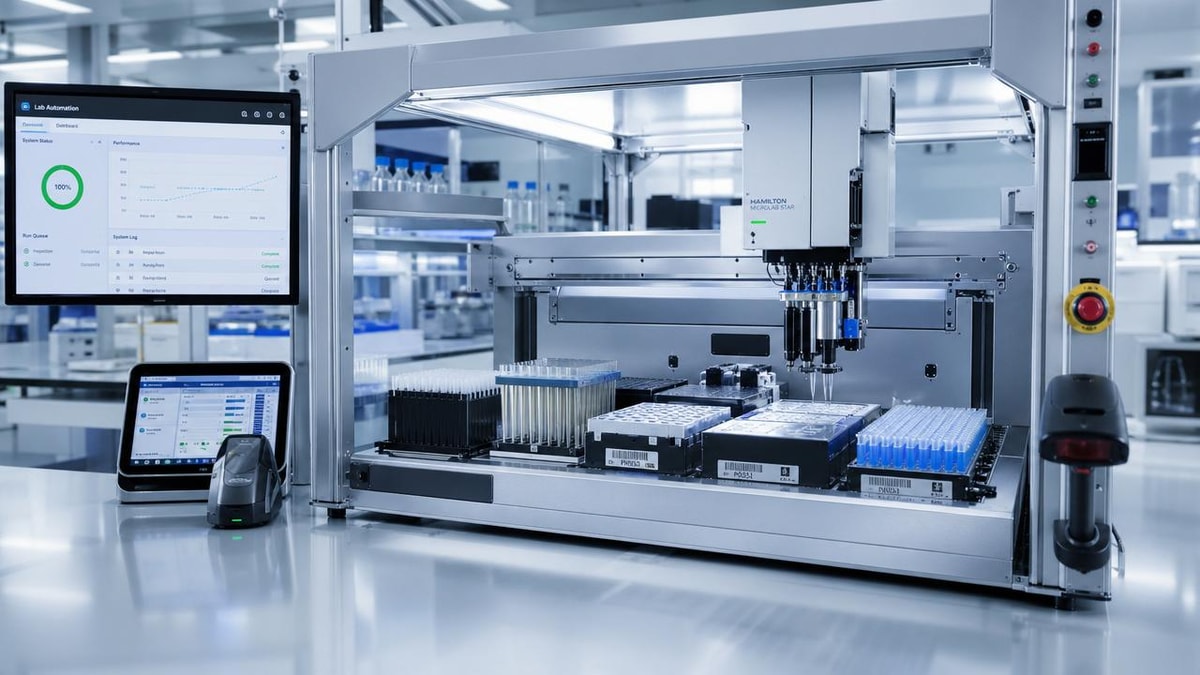
These companies develop and supply liquid handling platforms used in clinical labs, genomics, and high-throughput screening. They are directly affected because PLd compliance involves hardware architecture design (e.g., dual-channel safety controllers), software safety routines (e.g., emergency stop monitoring), and full-system validation—not just component-level certification. Impact includes extended development cycles, revised bill-of-materials (BOM) selection, and added costs for accredited third-party assessment.
Global Distributors and Importers of Lab Automation Equipment
Distributors placing non-Chinese–origin robotic arm systems into the Chinese market must now verify whether their portfolio meets the PLd requirement prior to submission. Impact manifests in delayed registration timelines, potential re-engineering requests from OEMs, and increased due diligence burden during distributor–OEM contract negotiations.
Contract Development and Manufacturing Organizations (CDMOs) Serving IVD and Biotech Clients
CDMOs integrating robotic liquid handlers into assay workflows or automated test kits may face upstream compliance dependencies. If their clients’ final devices incorporate such systems, CDMOs must ensure traceability of PLd validation data and maintain updated technical documentation—impacting quality management system (QMS) scope and audit readiness.
Regulatory Affairs and Compliance Service Providers
Firms offering NMPA registration support must now integrate functional safety assessment planning into early-stage strategy sessions. This includes identifying appropriate Notified Bodies or accredited laboratories capable of ISO/IEC 13849-1 PLd evaluation for robotics—a capability not uniformly available across global testing service providers.
What Relevant Companies or Practitioners Should Focus On Now
Monitor official clarifications on scope and applicability
Analysis shows the guidance applies only to Class III registrations; it does not explicitly cover Class II systems or non-medical research-use-only (RUO) instruments. However, observably, some provincial NMPA review centers have begun requesting preliminary PLd evidence even for Class II submissions. Stakeholders should track updates via NMPA’s official announcements and provincial center bulletins—not assume scope boundaries are fixed.
Review current product architectures against PLd requirements
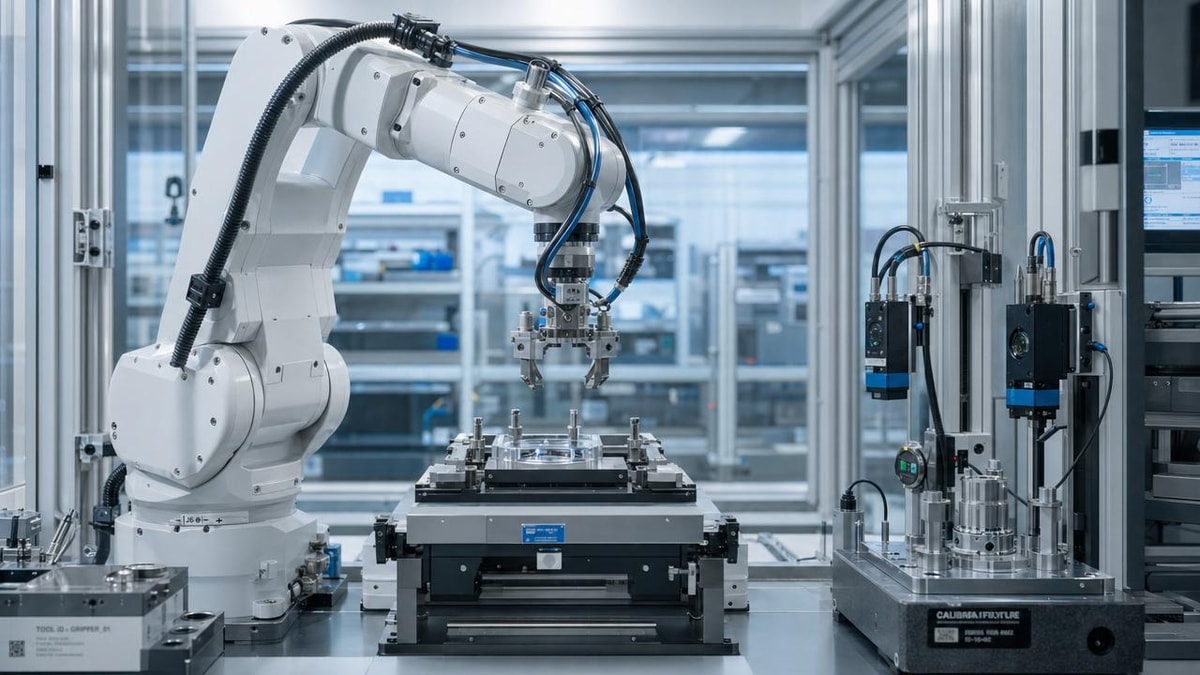
Current more relevant is verifying whether existing robotic arm control systems include redundant safety-related parts of control systems (SRP/CS), validated stop categories (e.g., Cat 3 per ISO 13849-1), and documented mean time to dangerous failure (MTTFD) values. PLd requires ≥99% probability of avoiding dangerous failure per demand cycle—this cannot be retrofitted without architectural review.
Distinguish between policy signal and operational impact
This guidance is issued as a trial version, indicating NMPA is still calibrating expectations. From industry perspective, it functions primarily as a forward-looking signal—not yet an enforced deadline. That said, registration applications submitted after April 29, 2026, are already subject to the new requirement if they fall under Class III. There is no grandfathering clause stated.
Prepare documentation and supplier coordination now
Third-party functional safety reports require lead times of 12–20 weeks depending on system complexity. Companies with pending or planned submissions should immediately identify qualified testing labs, initiate pre-assessment audits, and align with component suppliers (e.g., safety PLC vendors, encoder manufacturers) to obtain necessary safety data sheets and FMEDA reports.
Editorial Perspective / Industry Observation
Observably, this guidance reflects NMPA’s broader shift toward harmonizing critical safety expectations with international functional safety standards—particularly those embedded in IEC 62304 (software), ISO 14971 (risk management), and now ISO/IEC 13849-1 (control system performance). It is better understood as a calibration step than a sudden regulatory pivot: PLd has long been referenced in EU MDR Annex I for collaborative robotics, and FDA’s recent AI/ML-enabled device guidance also emphasizes human–machine interaction safety. However, unlike EU or US frameworks, NMPA’s mandate is prescriptive and tied directly to registration eligibility—making it operationally binding upon application, not post-market surveillance. Continued attention is warranted because subsequent revisions may extend PL requirements to other robotic modalities (e.g., surgical assistance, sample transport).
This is not merely a domestic compliance update—it serves as a de facto benchmark for global customers evaluating whether Chinese-made robotic liquid handlers meet internationally recognized safety thresholds. As such, its influence extends beyond China’s borders into procurement decisions, technology transfer agreements, and joint venture feasibility studies.
For stakeholders, the current significance lies less in immediate enforcement shock and more in its role as an inflection point: it formalizes functional safety as a non-negotiable layer of regulatory scrutiny for lab robotics in China—and signals that future guidance may follow similar precedent for adjacent automation categories.
Conclusion
This guidance marks a structural tightening of safety expectations for robotic arm liquid handling systems entering China’s regulated healthcare ecosystem. It does not introduce novel safety concepts, but rather codifies PLd-level human–machine collaboration as a mandatory gate for Class III registration. For industry, it is best interpreted not as a one-time compliance hurdle, but as confirmation that functional safety validation is now a foundational element—not an optional add-on—in the regulatory pathway for intelligent lab automation in China.
Information Source
Main source: National Medical Products Administration (NMPA), Supplementary Guidance for Registration Review of Robotic Arm Liquid Handling Systems (Trial), issued April 29, 2026.
Note: Implementation details—including acceptance criteria for third-party reports, list of approved testing institutions, and potential phase-in periods—remain under observation and are not yet publicly specified.
Expert Insights

Chief Security Architect
Dr. Thorne specializes in the intersection of structural engineering and digital resilience. He has advised three G7 governments on industrial infrastructure security.
Related Analysis
Core Sector // 01
Security & Safety
- NMPA Issues Robotic Arm Liquid Registration GuidanceAuthor :Lina Cloud
![]()
- Robotic arm for lab wholesale: what causes support costs to riseAuthor :Lina Cloud

- Liquid handling workstation wholesale without overbuying capacityAuthor :Lina Cloud

- Liquid handling software OEM choices that affect scale-up laterAuthor :Lina Cloud

- When robotic arm repeatability metrics stop matching real outputAuthor :Lina Cloud

- How to compare automated liquid handling robot OEM optionsAuthor :Lina Cloud

- NMPA Issues Robotic Arm Liquid Registration GuidanceAuthor :Lina Cloud
![]()
- NMPA Issues Robotic Arm Liquid Registration Guidance with PLd RequirementAuthor :Lina Cloud
![]()