Payload and Reach Benchmarks That Change Robot Selection
Author
Date Published
Reading Time

For technical evaluators comparing automation platforms, robotic arm payload and reach benchmarks often determine whether a system will truly fit process, safety, and throughput requirements. In regulated lab and pilot environments, these benchmarks influence everything from fixture compatibility to motion stability and future scalability. This article examines the performance thresholds that most directly change robot selection decisions.
Why robotic arm payload and reach benchmarks matter more in lab-scale and pilot automation
In technical evaluation, payload and reach are rarely isolated specifications. They interact with end-of-arm tooling, vial racks, tubing management, enclosure boundaries, and process handoff points. A robot that looks adequate on paper may lose usable payload once grippers, cable dress, force sensors, or sterile covers are added. Likewise, a robot with long nominal reach may still fail in a real cell if access angles, guard spacing, or benchtop obstructions reduce effective motion.
This is especially important for organizations moving from benchtop experimentation toward batch-to-continuous workflows. In these environments, the wrong robot can compromise dispense repeatability, sample integrity, loading cycle time, or safe operation near analytical instruments. That is why robotic arm payload and reach benchmarks are a decision gate, not a brochure feature.
G-LSP approaches these benchmarks from the perspective of micro-efficiency. For lab directors, bioprocess engineers, and procurement teams, the question is not simply how much a robot can carry or how far it can extend. The question is whether the robot can sustain precision, compliance, and integration quality when handling fluidic devices, pilot reactors, bioreactor peripherals, centrifugation interfaces, and automated pipetting tasks under real operating constraints.
- Payload affects not only lifting capability but also acceleration, vibration, stop accuracy, and allowable tooling complexity.
- Reach affects station layout, operator access, safety zoning, and the number of devices one robot can serve.
- The combination of both determines whether an automation platform can scale from single-step handling to multi-instrument orchestration.
What technical evaluators often miss
A common error is to benchmark based on catalog payload only. In practice, the effective load includes gripper mass, adapter plate, tubing strain relief, sensor package, product carrier, and worst-case dynamic moments. Another frequent oversight is to treat reach as a simple radius. Real reach depends on joint limits, wrist orientation, ceiling or cabinet clearance, and whether the robot can enter and exit a device safely without singularity or collision risk.
Which payload thresholds usually change robot selection?
The following table summarizes practical robotic arm payload and reach benchmarks used during technical screening in regulated lab and pilot settings. These are not brand-specific limits. They are evaluation ranges that help teams separate underbuilt systems from right-sized platforms.
For many G-LSP-relevant applications, the selection inflection point appears when actual payload approaches the upper limit of a robot’s nominal rating. Once a system operates close to its limit, motion tuning becomes less forgiving, cycle times may need to be reduced, and path repeatability under dynamic load can degrade. That matters when handling microfluidic cartridges, bioprocess vessels, or sample trays that cannot tolerate shock, tilt, or vibration.
Why nominal payload is not enough
Technical evaluators should calculate effective payload at the wrist, then add a margin for tooling growth and worst-case operational conditions. A practical review should include:
- Mass of the gripper, adapter, sensors, cable routing hardware, and contamination control accessories.
- Mass of the heaviest product state, including filled containers rather than empty containers.
- Moment load from offset gripping, because center-of-gravity distance can be more limiting than total mass.
- Acceleration demand, especially if throughput targets require quick starts and stops.
How far is far enough? Reach benchmarks by workstation layout
Reach selection changes when one robot must serve multiple process points. In compact laboratory islands, short reach can preserve stiffness and reduce footprint. In pilot systems, however, additional reach can remove the need for repositioning tables, conveyors, or a second arm. The right benchmark is tied to station geometry, not to a generic preference for longer arms.
The table below translates robotic arm payload and reach benchmarks into practical layout decisions for evaluators comparing automation platforms across liquid handling, analytical handoff, and pilot-scale support scenarios.
A longer reach is not automatically better. In highly precise workflows, increased arm length can amplify deflection at the tool center point, especially when payload rises or motion speed increases. That is why G-LSP-style benchmarking treats reach as part of a system-level performance envelope that includes accuracy, dwell stability, and instrument interface conditions.
Reach questions evaluators should ask before shortlist approval
- Can the arm access deep instrument chambers without wrist over-rotation or collision risk?
- Will the robot still reach all positions after guards, cable trays, laminar flow panels, or biosafety barriers are installed?
- Does the required reach force the robot to operate near singularities that reduce smoothness or repeatability?
- Could a slightly shorter arm with a better station layout outperform a longer arm with poorer stability?
Application scenarios where payload and reach benchmarks directly change the buying decision
Automated pipetting and liquid handling systems
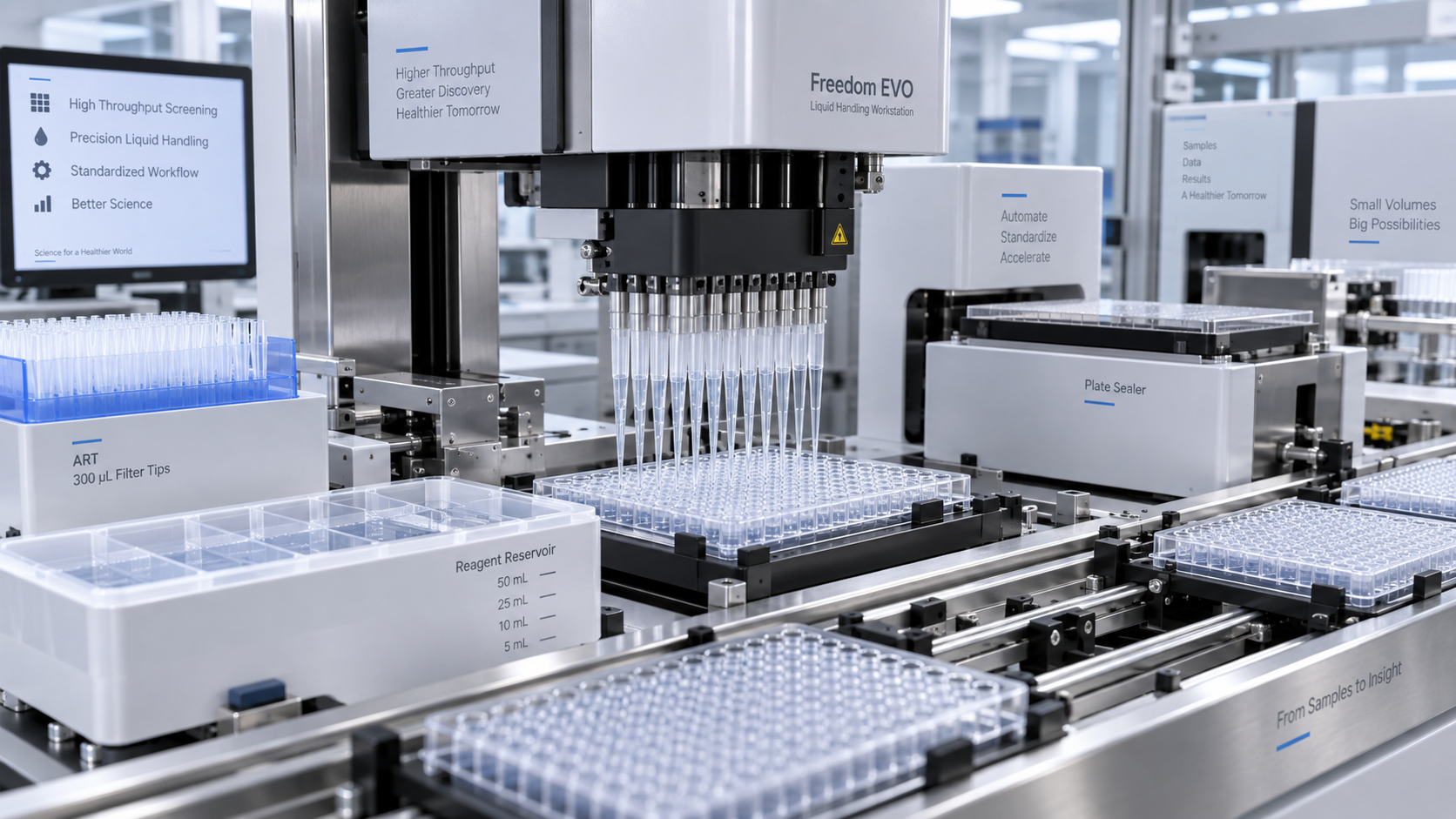
In pipetting environments, the core load is often light, but the motion quality requirement is high. Even when effective payload remains below 2 kg, reach still determines whether one arm can feed plates, tips, reservoirs, sealing stations, and readers without adding handoff modules. Here, robotic arm payload and reach benchmarks should be reviewed alongside vibration behavior, vertical approach control, and contamination-aware cable routing.
Bioreactor and cell culture support
Bioreactor-adjacent tasks often involve bottle handling, sensor placement assistance, sample collection transfer, or interaction with single-use assemblies. Payload becomes more variable because filled media containers and ancillary tools can quickly exceed assumptions made during early concept design. Reach matters as operators often need open access around vessels, so the robot must work within a constrained zone without blocking manual interventions.
Centrifugation and separation workflows
Centrifuge loading often creates a selection break point. Buckets, carriers, shields, and balancing fixtures may push the required effective payload well above that of light collaborative platforms. In addition, reach must support safe insertion and extraction paths inside a chamber with limited access. Underestimating either benchmark can result in slow cycle tuning, unreliable placement, or the need for a larger robot after cell commissioning.
Pilot-scale reactors and synthesis systems
In pilot-scale contexts, a robot may need to serve valves, sample points, small vessels, weigh stations, and staging surfaces across a broader footprint. Reach often becomes the main driver for layout optimization, while payload margin protects against future tooling upgrades. G-LSP’s benchmarking perspective is valuable here because pilot transitions must consider both current R&D flexibility and eventual process hardening under GMP-aligned practices.
How to evaluate robotic arm payload and reach benchmarks without overspending
Oversizing is common. Teams sometimes select a high-payload, long-reach robot to avoid future regret, then discover that the cell becomes harder to validate, occupies more floor space, and requires more extensive guarding. The result is higher total system cost without proportional process value.
A disciplined procurement review should tie performance benchmarks to measurable task needs. The checklist below helps technical evaluators avoid both underspecification and unnecessary escalation.
- Define the heaviest handled object in its real operating state, including fluid fill level, carrier, and contamination cover.
- Map all pick and place points in three dimensions rather than using top-view distance only.
- Add margin for future tooling changes, but keep it rational. Excess margin can introduce avoidable footprint and safety costs.
- Review payload and reach together with repeatability, cycle time, ingress needs, cleanability, and controller integration.
- Test worst-case access paths, not just nominal transfer motions between open stations.
Cost-related decision points
Bigger robots can increase hidden costs through reinforced mounting, wider exclusion zones, higher energy use, and more complex end-of-arm design. On the other hand, selecting too small a robot can trigger redesign of racks, fixtures, or instrument placement. The most economical path is usually the robot that meets benchmark needs with enough margin for validated expansion, not the largest platform available.
Standards, compliance, and validation implications
In regulated environments, robotic arm payload and reach benchmarks influence more than mechanics. They affect risk assessment, documentation scope, and validation strategy. When a robot operates close to physical limits, repeatability under process conditions can become harder to justify during qualification. This is relevant for environments guided by ISO-aligned safety practices, USP-linked laboratory controls, and GMP-oriented change management expectations.
For G-LSP users, the benchmark question is therefore linked to process consistency. A robot that meets load and reach requirements while maintaining smooth motion, accessible cleaning zones, and stable device interfaces reduces downstream qualification friction. That is particularly important when automation must bridge experimental flexibility and production-minded control discipline.
Compliance-focused review areas
- Documented operating envelope under actual payload and tool configuration.
- Risk assessment for collisions, pinch points, and human-machine interaction in mixed lab spaces.
- Impact of reach on enclosure design, cleanability access, and maintenance procedures.
- Change control implications if future tooling raises payload or shifts center of gravity.
Common mistakes and FAQ for technical evaluators
How should I calculate payload for a robot handling labware?
Use the total effective load at the wrist, not the product mass alone. Include gripper, adapter, sensors, tubing support, container, contents, and any shielding or covers. Then review the center-of-gravity offset and the motion profile. A light but long fixture can stress the arm more than a compact heavier object.
What reach benchmark is suitable for multi-instrument lab automation?
Many multi-instrument cells fall into the 700 mm to 1000 mm range, but the correct answer depends on station depth, access angle, and operator clearance. If the robot must serve enclosed devices or pilot equipment with uneven heights, evaluators should model the full path instead of relying on radial reach values.
Are collaborative robots always enough for regulated lab workflows?
Not always. Collaborative platforms can work very well for light handling, compact cells, and flexible development settings. But higher payload, deep access, fast cycle demands, or heavy fixtures may push selection toward other architectures. The right decision comes from comparing robotic arm payload and reach benchmarks with safety design, repeatability expectations, and future process scale.
What is the biggest benchmarking mistake during procurement?
The biggest mistake is evaluating payload and reach independently from the process layout. A robot may satisfy both numbers separately and still fail in the cell because of awkward wrist orientation, poor ingress into devices, or excessive deflection at full extension. Always validate the combined motion envelope against real tooling and real stations.
Why choose us for benchmark-driven robot selection support
G-LSP supports technical evaluators who cannot afford guesswork between lab-scale innovation and industrial execution. Our value lies in translating robotic arm payload and reach benchmarks into decision-ready comparisons that fit fluidic precision, bioconsistent hardware, and regulated workflow realities. Instead of treating the robot as a standalone machine, we assess it within the broader architecture of micro-efficiency.
If your team is comparing automation platforms for pilot reactors, microfluidic devices, bioreactor support, centrifugation workflows, or automated pipetting systems, we can help clarify the benchmark thresholds that actually change robot selection. Typical consultation topics include payload margin confirmation, reach and layout review, tooling compatibility, compliance-sensitive integration points, delivery timeline considerations, and shortlist refinement for RFQ preparation.
Contact us when you need structured support for parameter confirmation, platform selection, custom workflow mapping, certification-related questions, sample handling constraints, or quotation-stage technical alignment. A benchmark-led review early in the project can prevent expensive redesign later and improve confidence in both procurement and validation planning.
Expert Insights

Chief Security Architect
Dr. Thorne specializes in the intersection of structural engineering and digital resilience. He has advised three G7 governments on industrial infrastructure security.
Related Analysis
Core Sector // 01
Security & Safety
- Testing Dilution Factor Precision and Repeatability in Automated Liquid HandlingAuthor :Lina Cloud

- How to Assess a European Liquid Handling Software Supplier for Lab AutomationAuthor :Lina Cloud

- Pipette Tip Fit for Automation: Checking Deck, Gripper, and Seal CompatibilityAuthor :Lina Cloud

- How to Evaluate an Automated Sample Dilutor Factory for Traceable Lab WorkflowsAuthor :Lina Cloud

- What Drives Liquid Handling Software Costs in Automated Laboratory Workflows?Author :Lina Cloud

- What to Verify in Validated Liquid Handling Software for GxP WorkflowsAuthor :Lina Cloud

- Selecting Automated Liquid Handling Systems for High-Throughput AssaysAuthor :Lina Cloud

- How to Validate Lab Automation Standards for Reliable, Compliant WorkflowsAuthor :Lina Cloud