Why Payload Ratings Alone Mislead Lab Robot Comparisons
Author
Date Published
Reading Time
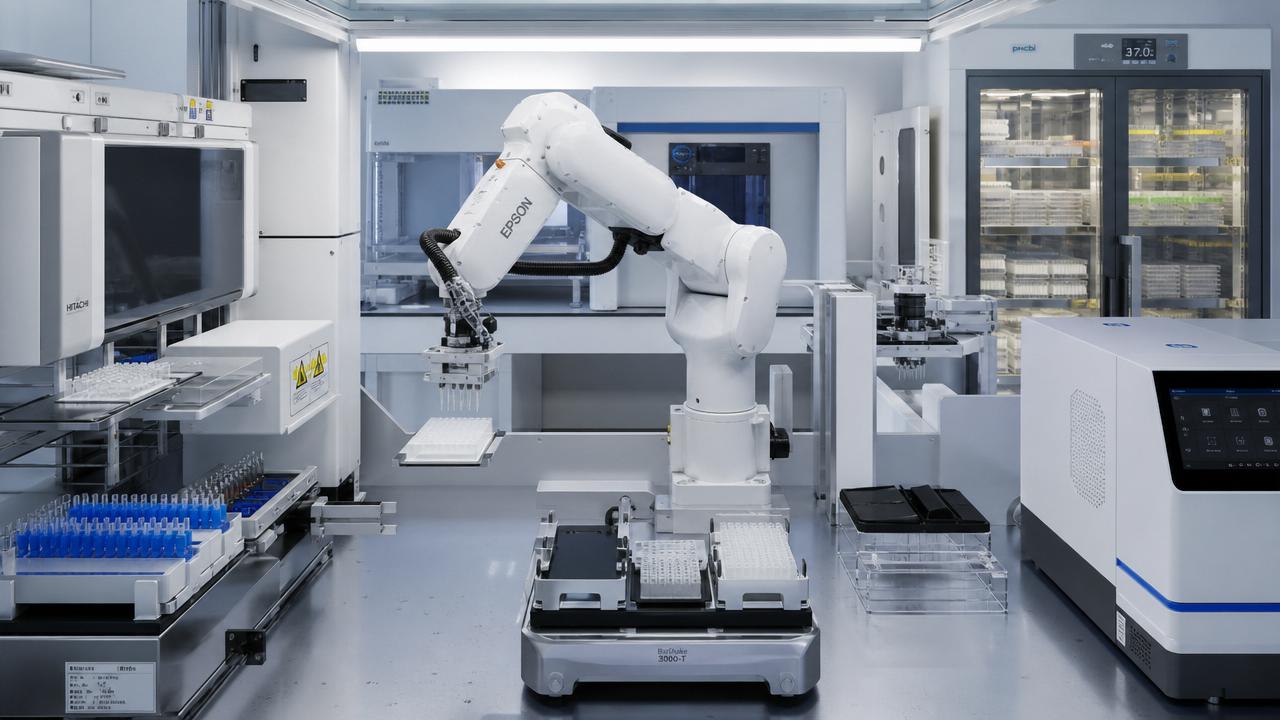
In lab automation procurement, payload figures often look decisive—but they can obscure the real limits of speed, stability, and usable workspace. For business evaluators comparing platforms, robotic arm payload and reach benchmarks provide a more meaningful lens, revealing how a system performs under actual liquid handling, microfluidic, and bioprocess workflows rather than in simplified vendor specifications.
For commercial evaluation teams, the key answer is straightforward: payload alone is not a reliable proxy for robotic suitability in laboratory environments. A robot that advertises a higher payload may still underperform in precision dispensing, deck access, vibration control, contamination-sensitive handling, and integration with safety enclosures or analytical modules. In most lab use cases, the better purchasing decision comes from comparing dynamic performance under realistic tooling, reach envelope efficiency, repeatability under offset loads, and workflow-specific throughput.
What searchers really want to know when comparing lab robots
Users searching for terms like robotic arm payload and reach benchmarks are rarely looking for a textbook definition of payload. They are usually trying to make or support a buying decision. Their real question is: “Which robot will actually perform better in our workflow, with lower risk and better return, once grippers, pipetting heads, carriers, tubing, safety constraints, and software integration are included?”
That intent matters. A business evaluator does not need a generic explanation of robotics. They need a framework for separating impressive brochure numbers from practical capability. In laboratory automation, especially in regulated or precision-driven settings, the useful comparison is not maximum lift in an ideal pose. It is whether the robot can move the required tools and samples across the required workspace, at the required accuracy and cycle time, without causing drift, vibration, missed transfers, or maintenance overhead.
This is why payload ratings alone mislead lab robot comparisons. The specification may be technically correct, but operationally incomplete. It often describes a best-case ceiling rather than a sustainable working condition.
Why payload is an incomplete benchmark in laboratory automation
Payload is typically defined as the maximum mass a robot can carry under specified conditions. That sounds objective, and in a narrow engineering sense it is. But for lab environments, the number becomes misleading when buyers interpret it as a summary of overall capability.
First, payload says little about how the robot behaves when the load is not centered. In real lab workflows, loads are often offset. A pipetting module, tube rack gripper, vial handler, plate shuttle, or probe assembly may create torque rather than a simple vertical weight. Two robots with the same nominal payload can behave very differently once center-of-gravity shifts are introduced.
Second, payload does not tell you how speed changes under load. Many robots can technically carry a tool or sample carrier at their rated limit, but only with reduced acceleration, slower cycle times, or compromised path smoothness. In liquid handling and microfluidic workflows, motion quality matters as much as lift capacity. Sudden acceleration can affect droplet consistency, meniscus stability, bubble formation, and sample integrity.
Third, payload does not capture stiffness or vibration behavior. In a general industrial context, small oscillations may be acceptable. In a lab environment, they may degrade pipetting accuracy, destabilize sensitive vessels, or increase error rates in loading analytical equipment. This is especially important in workflows involving sub-microliter dispensing, cell-based materials, or fragile consumables.
Finally, payload ignores usable reach. A robot may carry the required end effector and sample load, but still fail to access all deck positions, instruments, incubators, centrifuges, or biosafety enclosures efficiently. This is where robotic arm payload and reach benchmarks become more useful than payload alone.
Why reach is often more valuable than headline payload for buyers
In many laboratory cells, the limiting factor is not whether the robot can lift an object. It is whether the robot can reach every required location with the right orientation, without singularities, collisions, awkward wrist angles, or loss of precision near the edge of its envelope.
Reach should not be interpreted only as arm length. Business evaluators should focus on usable reach within the actual installation environment. Benchtop instruments, safety shields, HEPA enclosures, cable routing, tubing constraints, and operator access zones can significantly reduce the practical workspace. A robot with impressive nominal reach may lose value if its footprint, joint articulation, or mounting arrangement makes the effective working area inefficient.
This is especially relevant in space-constrained labs. A compact robot with well-optimized kinematics may outperform a larger robot because it can approach microplate stacks, reagent reservoirs, incubator doors, and analytical ports more cleanly. In such cases, a balanced payload-reach profile is more valuable than a high payload figure that is never used.
For procurement teams, this shifts the comparison question from “Which arm lifts more?” to “Which arm covers our process map with acceptable precision, speed, and integration effort?” That question leads to better purchasing outcomes.
How robotic arm payload and reach benchmarks should be evaluated in real workflows
The most useful benchmarks are scenario-based. Instead of comparing robots in isolation, compare them against the actual workflow demands of the target lab cell. That means defining not just load mass, but total task conditions.
Start with the full carried mass. This includes the end effector, adapters, tubing, cable dress packs, sample carrier, and the heaviest expected payload. In liquid handling systems, even modest add-ons can meaningfully change dynamics. A pipetting head with mounted accessories may remain below the rated payload but still create motion penalties if the load is extended outward.
Next, map required reach points. Include every pick, place, load, unload, and service position. Then identify orientation constraints: top access, side access, angled insertion, or precise vertical approach. A robot that can reach a target in theory may still fail in practice if the wrist cannot maintain the required orientation or if adjacent equipment blocks the approach path.
Then assess dynamic requirements. What cycle time is needed? How often will the robot accelerate and decelerate? Are there stop-start moves over open vessels? Is smooth transport essential for unstable liquids, cell culture media, or reaction-sensitive materials? Dynamic performance under realistic load is often the hidden differentiator between platforms.
Finally, compare repeatability in context. Published repeatability figures are often measured under favorable test conditions. Ask how repeatability changes when the robot operates near maximum horizontal extension, when carrying offset tools, or when running long duty cycles. For business evaluators, this is where technical benchmarking connects directly to quality risk and productivity.
The hidden variables that make one payload rating look better than another
Vendor payload figures may differ because the underlying test assumptions differ. This makes direct comparison risky unless the evaluation team normalizes conditions. A higher payload number does not necessarily indicate a stronger or more suitable robot.
One variable is wrist torque allowance. Some robots can manage higher centered mass but tolerate lower moment loads. In lab automation, moment loads are common because tools and carriers extend outward from the flange. If wrist torque limits are reached before mass limits, the headline payload becomes irrelevant.
Another variable is the duty cycle associated with the rating. A robot may support its payload at low speed or for limited motion patterns but not for the continuous, repetitive cycles of a production-oriented lab workflow. Evaluators should ask whether the rating reflects sustained use, not just peak capability.
Mounting configuration also matters. Floor, benchtop, wall, or inverted mounting can affect accessibility and cable management. The same robot may deliver very different practical value depending on how it is installed around instruments, isolators, or process skids.
Environmental compatibility is another overlooked factor. Payload does not indicate whether the robot is suitable for clean environments, chemically exposed zones, washdown requirements, or enclosed biosafety setups. For regulated industries, this can outweigh nominal mechanical advantages.
What business evaluators should ask vendors instead of relying on payload alone
Commercial evaluation teams can significantly improve decision quality by reframing vendor discussions. Instead of asking only for payload and list price, request data that reflects real operational performance.
Ask vendors to demonstrate task-specific cycle times with the intended end effector and representative consumables. This reveals whether the robot maintains performance once the application tooling is attached. A robot with lower nominal payload may still deliver faster and more stable execution in the relevant workflow.
Ask for reach validation against your cell layout. Provide a simplified equipment map and request confirmation of all critical points, orientations, and clearance zones. This helps uncover inaccessible positions early, before integration costs escalate.
Ask how repeatability is affected by extension, offset loading, and continuous operation. Request information on vibration damping, path smoothness, and settling time after motion. These factors are directly relevant to pipetting precision, tube placement reliability, and sample transfer consistency.
Ask for application references in comparable sectors such as bioprocessing, analytical sample prep, microfluidics, or aseptic handling. Real deployment evidence often reveals more than generic specifications. Business buyers need confidence that the platform can perform in environments where precision and uptime matter.
Finally, ask for total integration implications. A robot with a more attractive payload number may require larger guards, more floor space, more complex tooling, or more software customization. These hidden costs can erode any perceived value advantage.
How payload-reach benchmarking affects ROI, risk, and total cost of ownership
For business evaluators, the purpose of benchmarking is not technical curiosity. It is risk-adjusted capital allocation. The wrong robot can introduce slower cycle times, unstable dispensing, inaccessible stations, or repeated reconfiguration work. These problems rarely appear in the initial payload specification, but they show up later as delayed deployment, added engineering cost, and lower throughput.
When robotic arm payload and reach benchmarks are applied properly, they improve ROI modeling in three ways. First, they produce a more realistic estimate of throughput. Second, they reduce integration surprises tied to workspace and motion constraints. Third, they improve quality forecasting by highlighting whether the robot can maintain stable, repeatable movement under application conditions.
This is particularly important in high-value laboratory settings where the cost of an automation failure is not just downtime. It may involve lost batches, compromised samples, delayed analytical release, or operator workarounds that undermine standardization. In these contexts, a robot that is slightly more expensive upfront but better matched in reach, dynamics, and precision may be the lower-cost asset over its lifecycle.
Total cost of ownership should therefore include not only the robot price, but also tooling complexity, floor or bench space impact, safety enclosure design, validation burden, preventive maintenance, retraining needs, and future process expansion. Payload alone contributes very little to that full picture.
A practical comparison framework for procurement teams
A useful internal scoring model should combine payload and reach with application-relevant factors. For example, teams can assign weighted criteria across five areas: usable workspace coverage, dynamic stability under load, precision and repeatability in process conditions, integration complexity, and lifecycle support.
Usable workspace coverage measures whether the robot can access every required station with correct approach angles and sufficient clearance. Dynamic stability evaluates motion quality with realistic tools and sample loads. Precision and repeatability should be assessed not only from datasheets but from demonstrated performance in representative tasks.
Integration complexity covers software compatibility, I/O requirements, safety design, mounting flexibility, and ease of connecting to incubators, dispensers, centrifuges, or reactor peripherals. Lifecycle support includes service response, spare parts availability, validation documentation, and vendor experience in regulated environments.
Payload should still be included, but as one sub-metric rather than the leading decision factor. In many lab projects, a robot with moderate payload and superior reach efficiency will outscore a higher-payload alternative because it better supports the actual business objective: reliable, scalable automation.
Where payload still matters—and where it does not
None of this means payload is irrelevant. It remains important when applications involve heavier grippers, stacked carriers, multi-plate transport, reactor vessel handling, or combined tooling that materially increases mass and moment load. In these cases, inadequate payload margin can limit future flexibility and shorten component life.
However, in many precision lab workflows, payload is not the primary bottleneck. Automated pipetting, microfluidic routing, sample presentation, plate handling, and analytical loading often depend more on reach geometry, path control, repeatability, and stable motion than on high lifting capacity. A large payload reserve may offer little commercial value if the robot never uses it.
The more specialized the workflow, the less useful generic industrial comparison metrics become. That is why evaluators in pharmaceutical, chemical, and advanced laboratory environments should benchmark robots against process architecture, not just catalog specifications.
Conclusion: better lab robot decisions start with better comparison criteria
If your team is evaluating robotic platforms for laboratory automation, the headline payload number should be treated as a screening input, not a decision shortcut. By itself, it does not reveal whether the robot will succeed in liquid handling, microfluidic, analytical, or bioprocess workflows.
A stronger approach is to compare robotic arm payload and reach benchmarks in the context of actual tasks, tools, spatial constraints, and quality requirements. That perspective exposes the real trade-offs between lift capacity, usable workspace, motion stability, and integration effort.
For business evaluators, the takeaway is clear: the best lab robot is rarely the one with the biggest payload. It is the one that delivers reliable throughput, precision, accessibility, and lifecycle value in the workflow you actually need to run. When procurement teams benchmark robots that way, they make decisions with fewer surprises, lower deployment risk, and stronger long-term returns.
Expert Insights

Chief Security Architect
Dr. Thorne specializes in the intersection of structural engineering and digital resilience. He has advised three G7 governments on industrial infrastructure security.
Related Analysis
Core Sector // 01
Security & Safety
- Testing Dilution Factor Precision and Repeatability in Automated Liquid HandlingAuthor :Lina Cloud

- How to Assess a European Liquid Handling Software Supplier for Lab AutomationAuthor :Lina Cloud

- Pipette Tip Fit for Automation: Checking Deck, Gripper, and Seal CompatibilityAuthor :Lina Cloud

- How to Evaluate an Automated Sample Dilutor Factory for Traceable Lab WorkflowsAuthor :Lina Cloud

- What Drives Liquid Handling Software Costs in Automated Laboratory Workflows?Author :Lina Cloud

- What to Verify in Validated Liquid Handling Software for GxP WorkflowsAuthor :Lina Cloud

- Selecting Automated Liquid Handling Systems for High-Throughput AssaysAuthor :Lina Cloud

- How to Validate Lab Automation Standards for Reliable, Compliant WorkflowsAuthor :Lina Cloud