Robotic arm payload and reach benchmarks explained simply
Author
Date Published
Reading Time
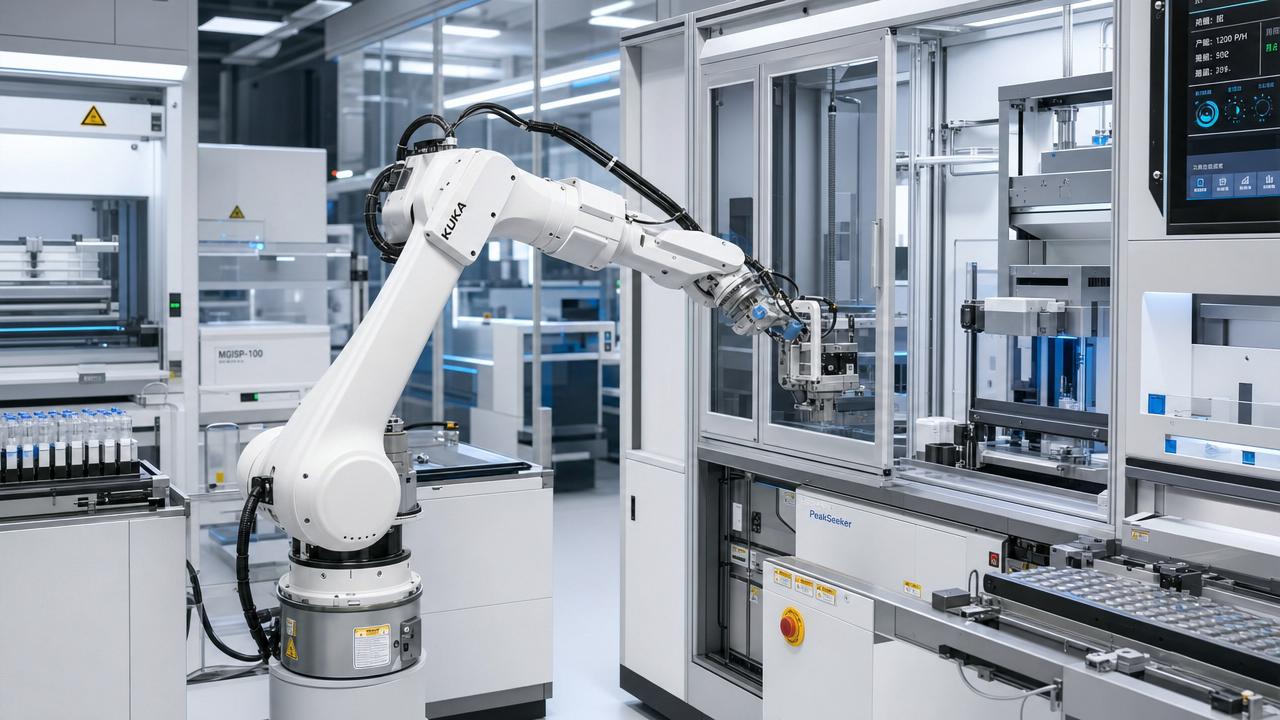
For technical evaluators comparing automation options, robotic arm payload and reach benchmarks are often the fastest way to separate marketing claims from real deployment value. This guide explains these benchmarks simply, showing how they affect precision, workspace coverage, tool compatibility, and integration risk in laboratory and industrial environments where performance, repeatability, and compliance matter most.
In mixed laboratory and production settings, specifications rarely act alone. Payload, reach, repeatability, mounting style, and end-of-arm tooling all influence whether a robot fits the process. Clear robotic arm payload and reach benchmarks help compare systems on practical terms rather than headline numbers.
What robotic arm payload and reach benchmarks actually mean
Payload is the maximum mass a robotic arm can move under defined conditions. It includes the gripper, adapters, sensors, tubing, and the product itself. Many selection errors happen when only the carried object is counted.
Reach is the maximum distance from the robot base to the tool center point. It indicates how far the arm can access stations, racks, conveyors, reactors, or safety transfer zones.
Robotic arm payload and reach benchmarks are useful because they standardize comparison. Two robots may look similar, yet differ greatly in usable load at full extension, motion stability, and cycle-time efficiency.
A simple rule helps. Higher payload supports heavier tools and denser products. Longer reach expands workspace coverage. But both usually affect speed, stiffness, footprint, and cost.
The benchmark terms often seen on technical sheets
- Maximum payload: highest allowed load under specified motion conditions.
- Maximum reach: farthest radial distance the arm can access.
- Repeatability: ability to return to the same point consistently.
- Moment of inertia limits: control of stability for offset or uneven loads.
- Cycle time: speed of moving between programmed positions.
- Mounting options: floor, wall, ceiling, or benchtop configurations.
Why these benchmarks matter more in current automation projects
Across the broader industry, automation systems are now expected to do more than repetitive transfer. They must handle traceability, flexible batch sizes, closed processing, and tighter quality controls.
That shift makes robotic arm payload and reach benchmarks central to planning. A robot chosen only for speed can fail when a larger gripper, shielded enclosure, or compliance accessory increases the real load.
In fluidic-precision environments, this issue is sharper. Tubing drag, dispensing heads, vision modules, and isolation barriers can alter dynamic performance long before nominal payload is reached.
How to interpret robotic arm payload and reach benchmarks correctly
The most common mistake is reading benchmark numbers as independent maxima. In practice, payload and reach interact. A robot may support its highest load only within part of its working envelope.
Another mistake is ignoring dynamic conditions. Fast acceleration, abrupt stops, and extended arm positions increase torque and vibration. Usable capacity can therefore be lower than the brochure suggests.
A practical interpretation framework
- Calculate total end-of-arm mass, not just product mass.
- Map the farthest real pick and place coordinates.
- Check whether full payload is available at full reach.
- Review repeatability under the intended motion profile.
- Include cables, hoses, guards, and future tooling changes.
- Confirm performance inside the planned enclosure or cell.
These steps turn robotic arm payload and reach benchmarks into decision tools. They reduce the gap between nominal specification and validated operating reality.
Business value of benchmarking for precision workflows
For organizations balancing research agility with industrial discipline, benchmark-driven selection lowers hidden integration costs. It also improves line uptime by avoiding mismatched tooling or inaccessible process zones.
In environments aligned with ISO, USP, and GMP expectations, technical justification matters. Robotic arm payload and reach benchmarks provide documented rationale for equipment choice, change control, and performance qualification planning.
Benchmarking also supports cross-functional clarity. Mechanical teams, automation engineers, and quality stakeholders can use the same specification language when reviewing layout, safety, and repeatability targets.
- Lower risk of overbuying oversized robotic systems.
- Lower risk of under-specifying load and workspace.
- Better fit for liquid handling and micro-transfer tools.
- Stronger basis for validation and audit documentation.
- Faster integration across modular workcells and stations.
Typical scenarios where payload and reach define success
Not every application needs the same benchmark balance. Some processes need long reach across multiple instruments. Others need moderate reach but excellent stability with sensitive end effectors.
These examples show why robotic arm payload and reach benchmarks should be tied to the workflow, not treated as abstract specification scores.
Practical selection guidance and common caution points
A practical benchmark review starts with the process map. Identify stations, elevations, safety clearances, tool mass, container weights, and the required throughput before shortlisting any robot.
Selection checkpoints
- Keep a payload safety margin for future tooling additions.
- Verify reach with real fixtures, not only CAD assumptions.
- Review cleanability and material compatibility needs.
- Check cable routing impact on motion and contamination control.
- Confirm repeatability at the exact target locations.
- Assess guarding, door swing, and service access around the robot.
Common caution points
Do not compare robotic arm payload and reach benchmarks without reviewing test conditions. Vendor figures may assume different speeds, wrist orientations, or mounting positions, which can distort side-by-side judgment.
Do not ignore the tool center point. A compact payload close to the wrist behaves differently from a long dispensing tool carrying the same mass. Distance from the wrist changes inertia and precision.
Do not forget upgrade paths. If the process may later add vision inspection, barcode scanning, or heavier fixtures, benchmark headroom becomes strategically important.
A clear next step for benchmark-led automation planning
Robotic arm payload and reach benchmarks are simple on paper, yet highly influential in real deployment. They shape layout feasibility, motion quality, tool choice, compliance readiness, and total integration effort.
The strongest evaluation method is to align benchmark data with the full operating context. That means real loads, real distances, real enclosures, and real precision requirements.
For benchmark-driven programs involving fluidic precision, lab-scale production, and scale-up planning, structured comparison across reactors, dispensing tools, bioprocess hardware, separation systems, and automation platforms creates more reliable decisions.
Use robotic arm payload and reach benchmarks as a filter first, then validate with application geometry, motion testing, and compliance expectations. That sequence improves fit, lowers redesign risk, and supports more confident automation investment.
Expert Insights

Chief Security Architect
Dr. Thorne specializes in the intersection of structural engineering and digital resilience. He has advised three G7 governments on industrial infrastructure security.
Related Analysis
Core Sector // 01
Security & Safety
- Testing Dilution Factor Precision and Repeatability in Automated Liquid HandlingAuthor :Lina Cloud

- How to Assess a European Liquid Handling Software Supplier for Lab AutomationAuthor :Lina Cloud

- Pipette Tip Fit for Automation: Checking Deck, Gripper, and Seal CompatibilityAuthor :Lina Cloud

- How to Evaluate an Automated Sample Dilutor Factory for Traceable Lab WorkflowsAuthor :Lina Cloud

- What Drives Liquid Handling Software Costs in Automated Laboratory Workflows?Author :Lina Cloud

- What to Verify in Validated Liquid Handling Software for GxP WorkflowsAuthor :Lina Cloud

- Selecting Automated Liquid Handling Systems for High-Throughput AssaysAuthor :Lina Cloud

- How to Validate Lab Automation Standards for Reliable, Compliant WorkflowsAuthor :Lina Cloud