2026柯桥纺博会首设 Microfluidic Coating Zone
Author
Date Published
Reading Time
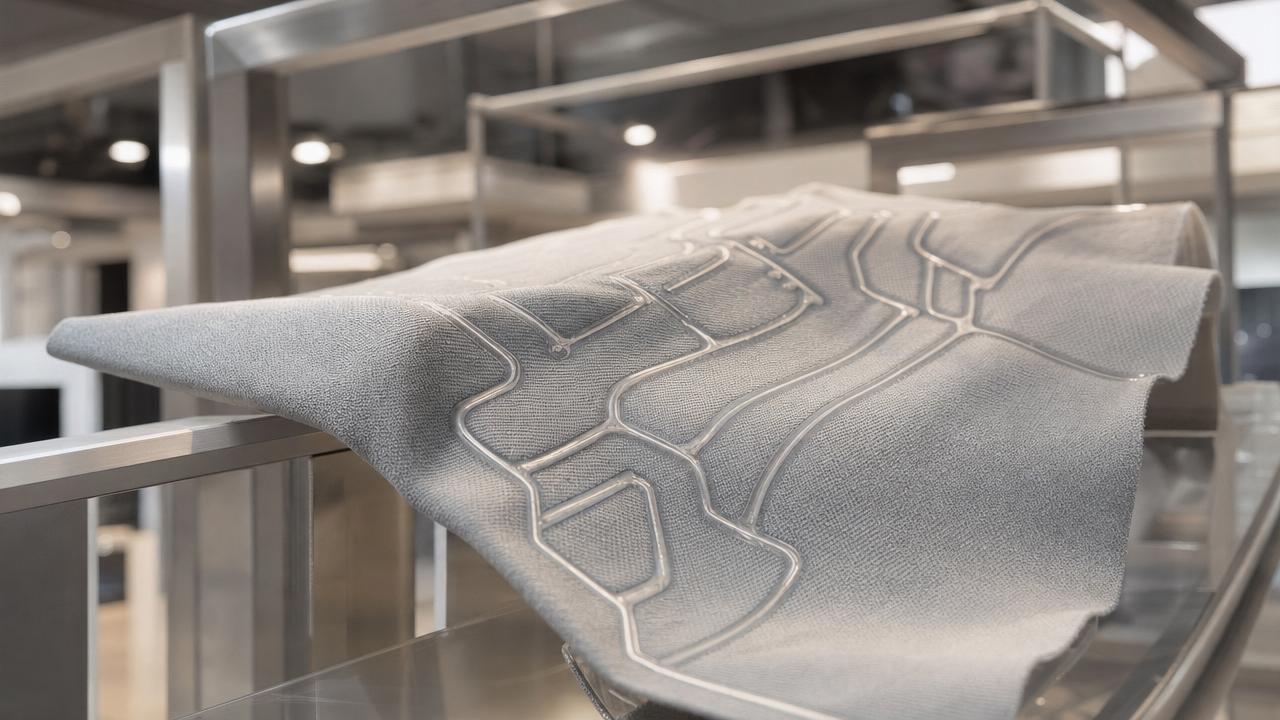
On May 6, 2026, the 32nd China Keqiao International Textile Expo launched its first dedicated ‘Microfluidic Functional Coating’ zone — marking a pivotal institutional signal that microfluidics is transitioning from academic research and biomedical applications toward scalable integration in light industrial manufacturing, particularly in functional textiles.
Event Overview
The 32nd China Keqiao International Textile Expo (May 6–8, 2026) introduced, for the first time, a ‘Microfluidic Functional Coating’ exhibition zone. A total of 37 Chinese enterprises specializing in nano-scale fluidic systems (Nano Flow) and lab-on-a-chip (LoC) technologies participated, showcasing integrated coating solutions for smart thermal regulation, controlled antimicrobial release, and real-time humidity sensing on textile substrates. Multiple European and North American functional fabric buying delegations conducted on-site technical matchmaking, with preliminary agreements reported across technology licensing and co-development pathways.
Industries Impacted
Direct Trade Enterprises: Export-oriented textile traders face new product categorization and compliance expectations. The emergence of microfluidic coatings introduces novel performance claims (e.g., ‘on-demand biocide release’) that may trigger updated labeling requirements, export documentation protocols, and buyer-specific technical validation standards — especially under EU Eco-Design or U.S. FTC Green Guides frameworks.
Raw Material Procurement Enterprises: Suppliers of polymer binders, responsive hydrogels, and microencapsulated actives must now engage earlier in R&D cycles to align with microfluidic architecture constraints (e.g., channel compatibility, shear stability during coating). Procurement timelines are likely to shorten as formulation development shifts toward platform-based modularity rather than batch-specific tuning.
Processing & Manufacturing Enterprises: Textile coaters and finishers require upgrades in precision dispensing, low-shear deposition, and inline process monitoring to maintain microchannel integrity during drying/curing. Current conventional pad-dry-cure lines may lack resolution and thermal uniformity needed — prompting evaluation of digital inkjet, gravure micro-coating, or roll-to-roll microfluidic lamination systems.
Supply Chain Service Enterprises: Third-party testing labs, certification bodies, and IP advisory firms are seeing rising demand for microstructure characterization (e.g., SEM/EDS of embedded channels), release kinetics profiling, and functional durability assessment under dynamic wear conditions. Standardized test methods for microfluidic textile performance remain absent — creating both service gaps and differentiation opportunities.
Key Focus Areas & Recommended Actions
Evaluate coating-process compatibility early
Manufacturers should audit existing finishing infrastructure against minimum feature-resolution (≤50 µm), solvent tolerance, and thermal ramp-rate requirements before committing to pilot-scale microfluidic coating adoption.
Engage cross-sector technical partners
Trade and procurement firms are advised to initiate joint workshops with LoC device developers and textile chemists — not only to clarify interface specifications but also to co-define performance benchmarks acceptable to global buyers.
Prepare for evolving regulatory signaling
Given the novelty of active, programmable textile surfaces, companies should monitor upcoming revisions to ISO 105-X12 (colorfastness), ISO 20743 (antimicrobial activity), and emerging guidance from the OECD Working Party on Manufactured Nanomaterials — particularly regarding release behavior of micro-encapsulated agents.
Track pilot commercialization beyond exhibitions
While the Keqiao zone signals intent, actual supply-chain readiness hinges on verifiable pilot deployments — such as limited-run smart workwear or medical textile trials scheduled for Q3 2026. Stakeholders should prioritize visibility into those downstream use cases over booth-level demonstrations.
Editorial Perspective / Industry Observation
Observably, the Keqiao initiative reflects a broader inflection: microfluidics is no longer defined solely by diagnostics or drug delivery. Its migration into textiles signals a shift from ‘passive function’ (e.g., static water repellency) to ‘adaptive response’ (e.g., sweat-triggered cooling). However, this transition remains highly fragmented — with no dominant architecture (microcapsule vs. embedded channel vs. capillary network), no shared material library, and minimal interoperability standards. Analysis shows that near-term impact will be strongest not in mass-market apparel, but in high-value verticals where ROI justifies complexity: occupational safety gear, therapeutic compression wear, and military logistics textiles. Current more relevant interpretation is that Keqiao serves as a coordination mechanism — less a market launchpad, more a technical alignment forum.
Conclusion
The introduction of the Microfluidic Functional Coating zone at Keqiao 2026 does not signify immediate commercial readiness, but rather formal recognition of a structural convergence: between microscale fluid control engineering and traditional textile finishing. For the industry, this represents less a disruption and more a layer of functional granularity — one that demands new interfaces across chemistry, mechanics, and digital control. Rational observation suggests adoption will proceed incrementally, anchored in traceable performance gains rather than technological novelty alone.
Source Attribution & Ongoing Monitoring
Official announcement: China Keqiao International Textile Expo Organizing Committee (May 2026);参展企业名录及技术白皮书 via Keqiao Expo Digital Platform (v2.1, accessed May 6, 2026). To be monitored: First commercial shipments linked to Keqiao 2026 partnerships (expected Q3 2026); Draft ISO/TC 38/WG 22 proposal on ‘Functional Textiles with Dynamic Response Mechanisms’ (anticipated July 2026); EU Commission’s preliminary assessment of nanomaterial release from coated textiles under REACH Annex XVII revision cycle.
Expert Insights

Chief Security Architect
Dr. Thorne specializes in the intersection of structural engineering and digital resilience. He has advised three G7 governments on industrial infrastructure security.
Related Analysis
Core Sector // 01
Security & Safety
- Nano Flow Technology for LC-MS: Improving Sensitivity in Low-Volume SamplesAuthor :Dr. Aris Nano

- Selecting a Micro-Volume Dispensing System for Accurate Low-Volume AssaysAuthor :Dr. Aris Nano

- How to Specify Fluidic Precision Components for Reliable Low-Volume DosingAuthor :Dr. Aris Nano

- FDA Extends GMP Traceability to Nano Flow DevicesAuthor :Dr. Aris Nano

- EU Tightens CE File Rules for Nano Flow DevicesAuthor :Dr. Aris Nano

- ECHA Revisits REACH Exemption for Nano Flow DevicesAuthor :Dr. Aris Nano

- ECHA Update Puts Nano Flow Components Under New SVHC Disclosure RuleAuthor :Dr. Aris Nano

- ISO Issues ISO/TS 23572:2026 for Nano-Flow TestingAuthor :Dr. Aris Nano