Microfluidic pump OEM supplier: the maintenance issue often missed
Author
Date Published
Reading Time
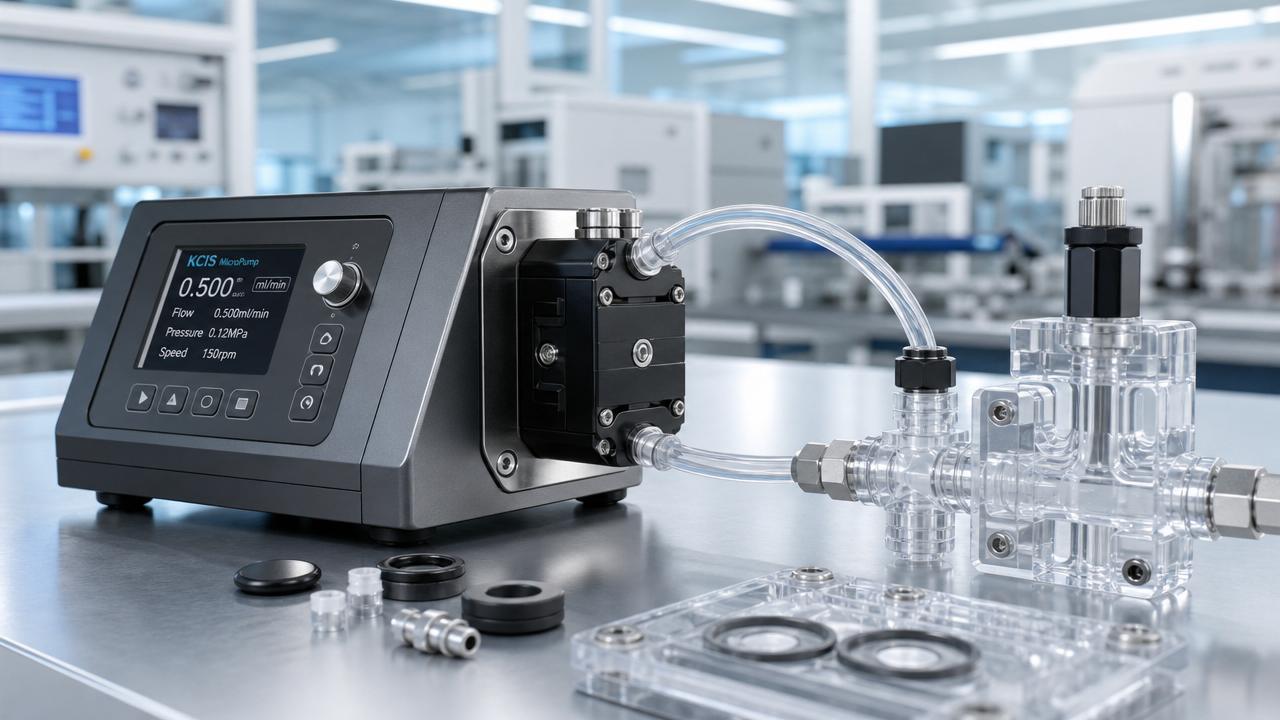
Choosing a reliable microfluidic pump OEM supplier is only part of long-term performance. For after-sales maintenance teams, the issue most often missed is not dramatic failure. It is gradual loss of flow accuracy, early seal wear, and contamination buildup that slowly destabilize the system.
For maintenance personnel, the practical question is straightforward: how do you detect these hidden issues before they become downtime, quality deviation, or repeated service calls? The answer lies in routine verification, component-level wear tracking, fluid-specific cleaning discipline, and better communication with the OEM supplier.
In most microfluidic systems, performance problems appear long before the pump stops running. A unit may still start, stop, and respond normally, yet deliver unstable flow, pulsation drift, bubble sensitivity, or incompatible cleaning results. These are the maintenance signals that matter most.
The most commonly missed maintenance issue is not failure, but precision drift
Many teams focus their maintenance plans on visible breakdowns: motor faults, controller alarms, leakage, or blocked channels. Those issues are important, but they are often not the first threat to process stability in microfluidic pumping applications.
The more common hidden risk is precision drift. Over time, the pump may deviate from its original flow specification because of seal aging, internal friction changes, tubing fatigue, check valve wear, or residue accumulation inside wetted paths.
In low-flow and high-precision applications, even a small deviation can affect dosing consistency, reagent ratios, droplet formation, cell handling, or analytical repeatability. Maintenance teams often miss this because the pump still appears operational.
That is why after-sales support should not define pump health only by “working” versus “not working.” A better standard is whether the pump still delivers the validated flow behavior required by the process.
What after-sales maintenance teams care about most in real operating conditions
For maintenance personnel, the key concern is not abstract design quality. It is whether the pump can remain stable under daily use, cleaning cycles, fluid changes, and operator variation without creating hidden process risk.
The first concern is repeatability. Teams want to know whether the same setpoint today will produce the same real output next week, next month, and after repeated production or lab cycles.
The second concern is service predictability. If wear parts fail too suddenly or calibration intervals are unclear, maintenance becomes reactive. That increases emergency interventions, spare-part costs, and pressure on support staff.
The third concern is contamination control. In microfluidic environments, residue from biologics, solvents, buffers, particles, or crystallizing compounds can degrade pump performance long before obvious fouling is visible.
The fourth concern is supportability. Even a well-designed pump becomes difficult to maintain if spare parts are slow to obtain, maintenance documents are generic, or the OEM supplier does not provide fluid-specific guidance.
Why the choice of microfluidic pump OEM supplier still matters after installation
Many buyers evaluate a microfluidic pump OEM supplier mainly on technical specifications, price, and delivery time. For maintenance teams, however, the real value of the supplier often becomes clear only after the pump enters routine service.
A strong OEM supplier does more than provide a pump module. It should define wear parts clearly, specify expected service intervals, explain compatibility limits, and provide calibration or verification procedures that match actual operating conditions.
Good suppliers also distinguish between theoretical performance and field performance. They help users understand how viscosity, back pressure, pulsation sensitivity, gas entrainment, temperature, and cleaning chemistry affect long-term precision.
This matters because many maintenance errors come from assumption. Teams may use a cleaning protocol suited for water-based buffers on solvent service, or treat a high-cycling pump the same as a low-duty unit.
When the supplier provides application-aware support, maintenance becomes preventive and evidence-based. When support is vague, teams tend to rely on trial and error, which usually increases component wear and troubleshooting time.
Hidden maintenance points that are often underestimated
Several maintenance points are repeatedly overlooked because they do not always trigger immediate alarms. Yet these are the same factors that most often reduce precision and shorten the useful life of a microfluidic pump.
Flow verification drift is one of the most overlooked areas. Teams may calibrate at commissioning and then assume the pump remains accurate. In reality, verification should be tied to usage intensity, fluid type, and criticality of the application.
Seal and diaphragm aging is another common blind spot. These parts may not fail suddenly, but they gradually lose elasticity, increase friction, or allow minor leakage paths that change delivered volume.
Check valve degradation can create subtle backflow, unstable priming, or reduced consistency at low flow rates. Because the effect may be intermittent, the issue is often misdiagnosed as control instability or fluid variability.
Tubing memory and fatigue also deserve attention, especially in peristaltic or flexible-path designs. Repeated compression cycles can alter flow characteristics before visible cracking or rupture appears.
Entrained air and microbubble sensitivity are especially damaging in precision systems. Small bubbles may not stop operation, but they can compress under pressure and produce erratic flow behavior that looks like mechanical inconsistency.
Residue accumulation inside wetted surfaces is equally important. Protein films, salt crystals, polymer traces, and solvent deposits can slowly change internal resistance, contamination risk, and response accuracy.
How to detect early degradation before the process is affected
The best maintenance teams do not wait for failure. They build simple detection routines that reveal performance drift while the pump is still serviceable and before product quality or experimental reliability is compromised.
Start with trend-based flow verification. Instead of occasional pass-fail checks, record measured output against the setpoint over time. A small but steady deviation is often more informative than a single alarm event.
Track priming behavior as well. If a pump takes longer to prime, requires repeated attempts, or becomes increasingly sensitive to mounting orientation or inlet conditions, wear or valve issues may already be developing.
Monitor pressure behavior and pulsation pattern where possible. A changing pressure profile at constant conditions may indicate obstruction, component wear, or gas handling issues inside the pump head or fluid path.
Inspect wetted-path cleanliness after cleaning validation intervals, not only after visible performance loss. Residue can be present even when external surfaces look clean and the pump still reaches nominal speed.
Listen for changes in sound and vibration. Maintenance technicians often identify degradation early through acoustic and tactile changes, especially in pumps used in repetitive duty cycles.
Finally, compare actual service life of consumables against the OEM expectation. If seals, tubing, or valves are wearing out earlier than expected, the root cause is often fluid incompatibility, cleaning chemistry, or operating profile mismatch.
A practical maintenance checklist for after-sales teams
For execution-level teams, a usable maintenance framework is more valuable than broad theory. The following checklist helps convert hidden risks into routine inspection and service actions.
Daily: check for abnormal sound, unstable priming, visible leakage, air ingress, unexpected pressure fluctuation, and any change in operator feedback about flow consistency.
Weekly: inspect tubing condition, fitting tightness, bubble presence, and cleanliness of inlet filters or fluid interfaces. Review whether recent fluid changes require a different flushing method.
Monthly: verify flow accuracy against a reference method under normal operating conditions rather than only under ideal bench conditions. Record deviation trends and compare them with past results.
At scheduled service intervals: replace seals, diaphragms, tubing, or valve components according to both OEM guidance and actual field wear. Do not rely only on calendar-based replacement if usage varies significantly.
After fluid changeover: confirm compatibility of cleaning chemistry, flush sequence, drying method, and restart procedure. Many hidden maintenance issues begin after changeover, not during steady-state production.
After shutdown or storage: verify whether residues may have dried or crystallized in the pump head. Restarting without proper reconditioning can accelerate wear and distort early flow readings.
How to evaluate whether your OEM supplier is helping or creating maintenance risk
Not every microfluidic pump OEM supplier supports maintenance equally well. For after-sales teams, supplier quality should be judged by how easily the pump can be kept within performance limits over time.
Ask whether the supplier provides a clear list of wear parts, replacement intervals, and fluid compatibility notes. If this information is generic or difficult to obtain, maintenance planning will remain uncertain.
Check whether service documentation includes real troubleshooting paths for drift, pulsation, priming failure, bubble sensitivity, and contamination. A manual focused only on installation is not enough for lifecycle support.
Evaluate spare-part lead time and interchangeability. If critical seals, heads, or valves take too long to source, even minor maintenance can turn into operational downtime.
Look at calibration support as well. A useful supplier should explain how to verify performance in the field, what tolerance matters for the application, and when recalibration is meaningful versus when replacement is more efficient.
Also assess responsiveness to application details. Suppliers that ask about viscosity, cleaning solvent, temperature range, duty cycle, and compliance requirements are usually more reliable partners than those offering only catalog-level advice.
Common maintenance mistakes that shorten pump life
Several avoidable mistakes repeatedly reduce pump lifespan and precision. Most are not caused by poor intention, but by treating microfluidic pumps like general-purpose fluid equipment.
One common mistake is using a single maintenance interval for all applications. A pump handling aqueous buffer at low duty does not age in the same way as one exposed to aggressive solvents or continuous cycling.
Another mistake is over-cleaning with incompatible chemicals. Stronger cleaning does not always mean better cleaning. It may damage seals, tubing, valve seats, or surface finishes that are critical to precise performance.
Some teams also ignore low-level drift because production has not yet stopped. This is risky. By the time the drift becomes obvious, it may already have affected batches, experimental data, or downstream troubleshooting effort.
Improper storage is another issue. Leaving residues to dry inside the fluid path can create deposits that alter startup performance and increase mechanical load during restart.
Finally, maintenance records are often too vague. Notes such as “pump checked” or “cleaned” do not help identify recurring wear patterns. Good records should capture fluid type, measured deviation, replaced parts, and observed symptoms.
Building a maintenance strategy around process risk, not only equipment uptime
The strongest maintenance approach connects pump care to process sensitivity. In microfluidic systems, the true cost of neglect is often not the pump itself. It is failed experiments, unstable dosing, contamination risk, and lost confidence in data.
That means service intervals should be prioritized according to process impact. Pumps used for critical metering, biologically sensitive fluids, or regulated workflows deserve tighter verification and more disciplined part replacement.
It also means maintenance teams should work closely with engineering, quality, and procurement. Engineering understands process tolerances, quality defines acceptable deviation, and procurement can negotiate stronger support terms with the OEM supplier.
When those functions are aligned, maintenance becomes more strategic. Teams can justify preventive replacement, hold the right spare inventory, and avoid false economies that save small amounts on parts while risking major losses elsewhere.
Conclusion: the overlooked issue is small drift with big consequences
If you work in after-sales maintenance, the most important lesson is this: the biggest threat in a microfluidic pump is often not sudden failure. It is slow, hard-to-see degradation in accuracy, sealing, cleanliness, and fluid-path stability.
Choosing a capable microfluidic pump OEM supplier still matters, but long-term success depends on how well the supplier supports verification, wear management, cleaning compatibility, and field troubleshooting.
For maintenance teams, the practical priority should be early detection of drift, disciplined replacement of wear parts, fluid-aware cleaning procedures, and recordkeeping that turns recurring issues into actionable patterns.
When these hidden maintenance points are managed well, pumps last longer, downtime falls, and system precision remains trustworthy. That is the standard that truly defines reliable microfluidic performance.
Expert Insights

Chief Security Architect
Dr. Thorne specializes in the intersection of structural engineering and digital resilience. He has advised three G7 governments on industrial infrastructure security.
Related Analysis
Core Sector // 01
Security & Safety
- Nano Flow Technology for LC-MS: Improving Sensitivity in Low-Volume SamplesAuthor :Dr. Aris Nano

- Selecting a Micro-Volume Dispensing System for Accurate Low-Volume AssaysAuthor :Dr. Aris Nano

- How to Specify Fluidic Precision Components for Reliable Low-Volume DosingAuthor :Dr. Aris Nano

- FDA Extends GMP Traceability to Nano Flow DevicesAuthor :Dr. Aris Nano

- EU Tightens CE File Rules for Nano Flow DevicesAuthor :Dr. Aris Nano

- ECHA Revisits REACH Exemption for Nano Flow DevicesAuthor :Dr. Aris Nano

- ECHA Update Puts Nano Flow Components Under New SVHC Disclosure RuleAuthor :Dr. Aris Nano

- ISO Issues ISO/TS 23572:2026 for Nano-Flow TestingAuthor :Dr. Aris Nano