How to Vet a Microfluidic Pump OEM Supplier
Author
Date Published
Reading Time
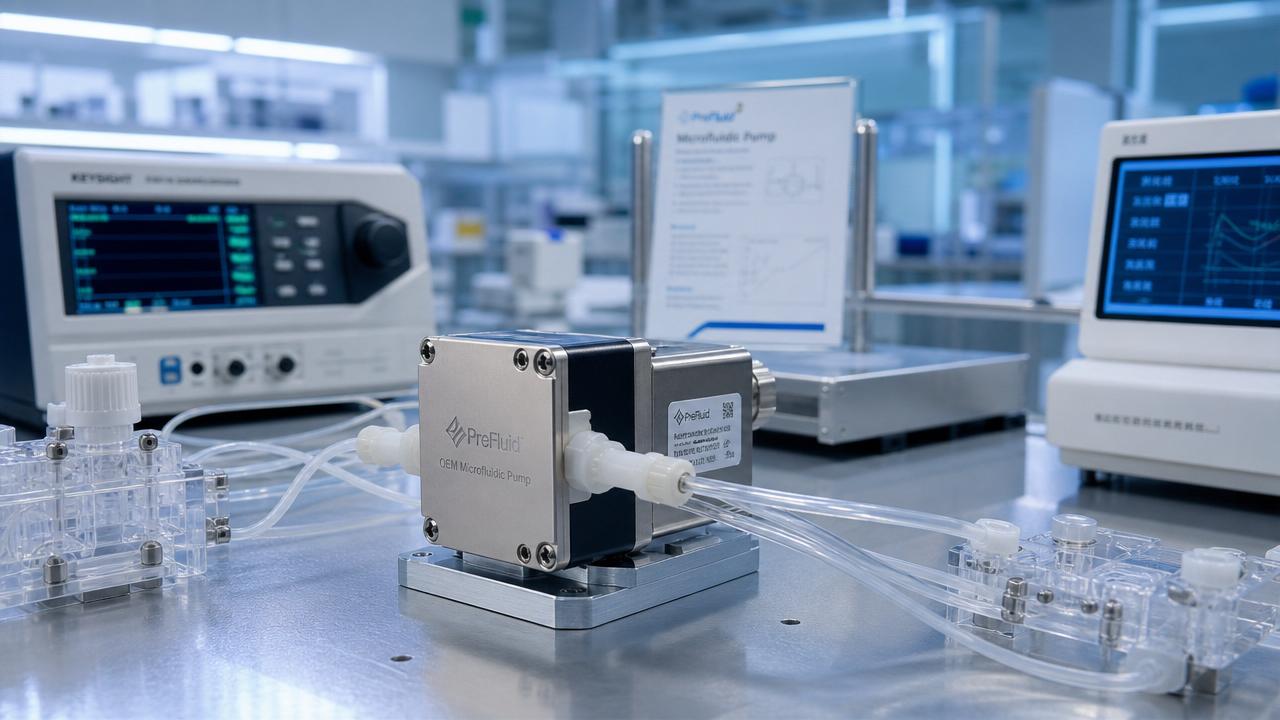
Choosing the right microfluidic pump OEM supplier can determine whether your lab-to-production workflow achieves repeatable precision, regulatory readiness, and long-term cost control. For procurement teams evaluating mission-critical fluidic systems, a structured vetting process helps reduce technical risk, verify manufacturing capability, and ensure the supplier can support both current applications and future scale-up demands.
Why does choosing a microfluidic pump OEM supplier matter so much?
For procurement professionals, a microfluidic pump is not just a catalog item. It is a precision-critical component that can affect dosing accuracy, flow stability, contamination risk, device integration, and validation workload. In pharmaceutical, chemical, diagnostic, and advanced lab automation environments, small deviations in flow behavior often translate into larger process problems later, especially when moving from feasibility studies to pilot or regulated production.
A qualified microfluidic pump OEM supplier should therefore be assessed as a strategic manufacturing and engineering partner, not merely a vendor. The best suppliers can align with your system architecture, fluid compatibility requirements, regulatory expectations, and supply continuity objectives. They also understand how precision fluidics influence the broader goals of continuous processing, personalized therapeutics, and reproducible lab-scale production.
This is particularly important for buyers serving high-stakes R&D-to-production transitions. If the supplier cannot maintain tolerances, document materials properly, or replicate performance from prototype to batch supply, procurement may inherit hidden costs through redesigns, qualification delays, field failures, or unstable lead times.
What exactly should procurement teams expect from a microfluidic pump OEM supplier?
A capable microfluidic pump OEM supplier should offer more than fabrication. Procurement teams should expect a combination of product engineering, manufacturability support, quality assurance, traceability, and commercial reliability. In practical terms, the supplier should be able to explain how its pumps perform across different viscosities, pressures, pulsation tolerances, wetted materials, sterilization conditions, and duty cycles.
Beyond technical fit, the supplier should demonstrate whether it can support custom manifolds, embedded control systems, low-volume prototyping, and later-stage scale-up. This matters because many sourcing projects begin with niche flow requirements and evolve into broader equipment platforms. A supplier that only supports bench prototypes may become a bottleneck once your application enters formal verification or volume purchasing.
In OEM relationships, buyers should also expect structured documentation. That may include dimensional drawings, performance curves, material declarations, lot traceability, calibration records, test reports, and change-notification procedures. If a microfluidic pump OEM supplier cannot provide consistent documentation, the risk does not stay at the component level; it extends into your own compliance and supplier management systems.
Which technical criteria are most important when vetting a microfluidic pump OEM supplier?
The most effective procurement reviews start with application-specific performance criteria rather than generic product claims. A microfluidic pump that works well for solvent metering may be unsuitable for cell-sensitive media, aggressive reagents, or highly repeatable low-volume dispensing. Buyers should translate process needs into measurable evaluation points before comparing suppliers.
Key technical areas to assess include:
- Flow rate range and minimum controllable flow with verified repeatability
- Pressure capability and response stability under varying backpressure
- Pulsation characteristics, especially for analytical and biofluidic use
- Chemical compatibility of all wetted materials
- Dead volume, priming behavior, and cleanability
- Control interface options such as analog, digital, or software integration
- Calibration method, drift behavior, and maintenance intervals
- Suitability for sterilization, single-use, or aseptic workflows when applicable
A good microfluidic pump OEM supplier should be able to back each claim with test methodology, not just marketing language. Ask whether flow data were generated with water only or across realistic fluids. Clarify whether accuracy figures refer to steady-state operation, short dispensing cycles, or the full duty window. Procurement teams often avoid future disputes by ensuring every performance claim is tied to a specific test condition.
Quick supplier vetting table
Use the following checklist to compare each microfluidic pump OEM supplier on both technical and sourcing readiness.
How can you verify manufacturing capability and quality systems?
A microfluidic pump OEM supplier may have strong engineering talent but still fall short in repeatable production. Procurement should verify whether the supplier can consistently manufacture to the same tolerances that made the prototype successful. This is where supplier audits, sample inspections, and process documentation become essential.
Start by examining the supplier’s quality system maturity. ISO alignment, calibration discipline, incoming material controls, in-process inspection, and final functional testing are all relevant. In regulated or semi-regulated environments, change control is especially important. If diaphragm materials, seals, firmware, or machining subcontractors change without notice, your internal validation status may be affected.
It is also wise to confirm the production model. Does the microfluidic pump OEM supplier own critical manufacturing steps, or does it outsource key assemblies? Outsourcing is not automatically a problem, but procurement should know where risks sit. If the supplier depends heavily on external machine shops, membrane providers, or PCB assemblers, ask how those sub-suppliers are qualified and monitored.
Where possible, request pilot-lot evidence. A supplier that can show consistency across multiple batches, not just one engineering sample, gives stronger proof of readiness for OEM collaboration. This is especially relevant when procurement supports organizations that benchmark equipment against ISO, USP, or GMP-aligned expectations.
What commercial and supply chain questions should buyers ask early?
Technical capability alone does not make a dependable microfluidic pump OEM supplier. Procurement teams should also assess commercial resilience and supply reliability from the start. A supplier may offer excellent flow precision but become difficult to scale due to long lead times, poor forecast response, or unstable pricing structures.
Early-stage commercial questions should include minimum order quantities, sample-to-production pricing logic, tooling ownership, spare parts availability, warranty coverage, and expected service life. If the supplier offers custom modifications, clarify whether those changes create single-source dependency or lock you into nonstandard components with longer replenishment cycles.
Lead time visibility is another major filter. Ask for standard lead time, expedited lead time, and recovery time after demand spikes. For global procurement teams, it is also useful to understand export compliance, packaging controls, transportation sensitivity, and whether the supplier can support regional stocking or framework agreements.
When evaluating total cost, avoid focusing only on unit price. The more accurate measure is total ownership cost: validation effort, maintenance intervals, replacement frequency, support responsiveness, integration labor, and the cost of downtime if a component fails. In many fluidic systems, a cheaper pump can become the more expensive choice once operational risk is included.
What are the most common mistakes when selecting a microfluidic pump OEM supplier?
One common mistake is treating all precision pumps as interchangeable. Microfluidic applications vary widely, and differences in pulsation, material compatibility, and low-flow behavior can be decisive. Procurement should resist selecting a supplier purely from generic flow range overlap.
Another frequent mistake is overvaluing prototype performance while underchecking production repeatability. A single well-performing sample does not prove that the microfluidic pump OEM supplier can hold tolerances over time, across batches, and through engineering changes. Always ask how the supplier controls consistency after design freeze.
Buyers also sometimes overlook documentation depth. In fluidic systems used in diagnostics, bioprocessing, chemical handling, or high-value automation, missing documents can slow approval and increase internal workload. Documentation quality is often a direct indicator of supplier maturity.
Finally, some teams underestimate future scale-up needs. A supplier that fits today’s bench experiment may not support tomorrow’s pilot assembly, multi-region deployment, or regulated production controls. The strongest sourcing decisions usually come from choosing a microfluidic pump OEM supplier with a roadmap, not just a product.
How should procurement compare suppliers during a real sourcing process?
A practical sourcing process should combine technical scoring, risk review, and commercial comparison. Start with a written specification that includes flow profile, fluid chemistry, pressure range, interface needs, environmental conditions, and compliance expectations. This helps ensure each microfluidic pump OEM supplier is responding to the same target.
Then use a structured evaluation matrix. Procurement can assign weighted scores to flow accuracy, material transparency, customization support, quality documentation, lead time, and total cost of ownership. Internal stakeholders from engineering, quality, and operations should review the same matrix to reduce decision bias.
If the application is high impact, request samples for comparative testing under realistic conditions. Use your own fluid, your own control environment, and your own duty cycle where possible. Bench validation should test startup behavior, repeatability over time, noise or pulsation, and any performance drift under continuous operation.
For strategic programs, a final supplier review should include business continuity questions: What happens if demand doubles? How are obsolescence risks managed? What notice period applies to design changes? Can the supplier support corrective action response and root-cause reporting? These questions often distinguish a standard vendor from a true OEM partner.
What should you confirm before moving forward with a supplier shortlist?
Before final selection, procurement should confirm that the shortlisted microfluidic pump OEM supplier can meet current technical specifications, document quality expectations, and future supply requirements without hidden dependency risks. This means checking not only what the supplier can build today, but how it manages change, supports validation, and scales production responsibly.
At this stage, it is useful to summarize the decision around five questions: Does the pump truly fit the application? Can the supplier produce it repeatedly? Are materials and documentation transparent? Is the commercial model sustainable? Can the relationship support future expansion? If any answer remains unclear, procurement should resolve it before approval rather than after onboarding.
For organizations working across lab-scale synthesis, precision microfluidics, bioprocess support, centrifugation-linked workflows, or automated liquid handling, this level of discipline helps protect both technical integrity and procurement performance. A carefully vetted microfluidic pump OEM supplier supports not only immediate sourcing success, but also long-term reliability across sensitive fluidic operations.
What questions should you ask in the next supplier conversation?
If you need to confirm a concrete sourcing path, begin the discussion with focused questions: What flow and pressure data can you provide for my exact use case? Which wetted materials and seals are included, and how are they controlled? What quality records and change-notification procedures are standard? What is the realistic lead time from sample to recurring production? How do you support customization, validation, and long-term supply continuity?
Those answers will reveal whether a microfluidic pump OEM supplier is prepared for a transactional sale or a dependable OEM partnership. For procurement teams, that distinction is often the difference between a smooth integration and a costly sourcing revision later.
Expert Insights

Chief Security Architect
Dr. Thorne specializes in the intersection of structural engineering and digital resilience. He has advised three G7 governments on industrial infrastructure security.
Related Analysis
Core Sector // 01
Security & Safety
- How to Specify Fluidic Precision Components for Reliable Low-Volume DosingAuthor :Dr. Aris Nano

- FDA Extends GMP Traceability to Nano Flow DevicesAuthor :Dr. Aris Nano

- EU Tightens CE File Rules for Nano Flow DevicesAuthor :Dr. Aris Nano

- ECHA Revisits REACH Exemption for Nano Flow DevicesAuthor :Dr. Aris Nano

- ECHA Update Puts Nano Flow Components Under New SVHC Disclosure RuleAuthor :Dr. Aris Nano

- ISO Issues ISO/TS 23572:2026 for Nano-Flow TestingAuthor :Dr. Aris Nano

- ISO Issues Nano Flow Test Spec for CE ComplianceAuthor :Dr. Aris Nano
![]()
- EU REACH Adds Nano Flow SCIP Filing RuleAuthor :Dr. Aris Nano