Microfluidic pump OEM supplier issues that affect flow stability
Author
Date Published
Reading Time
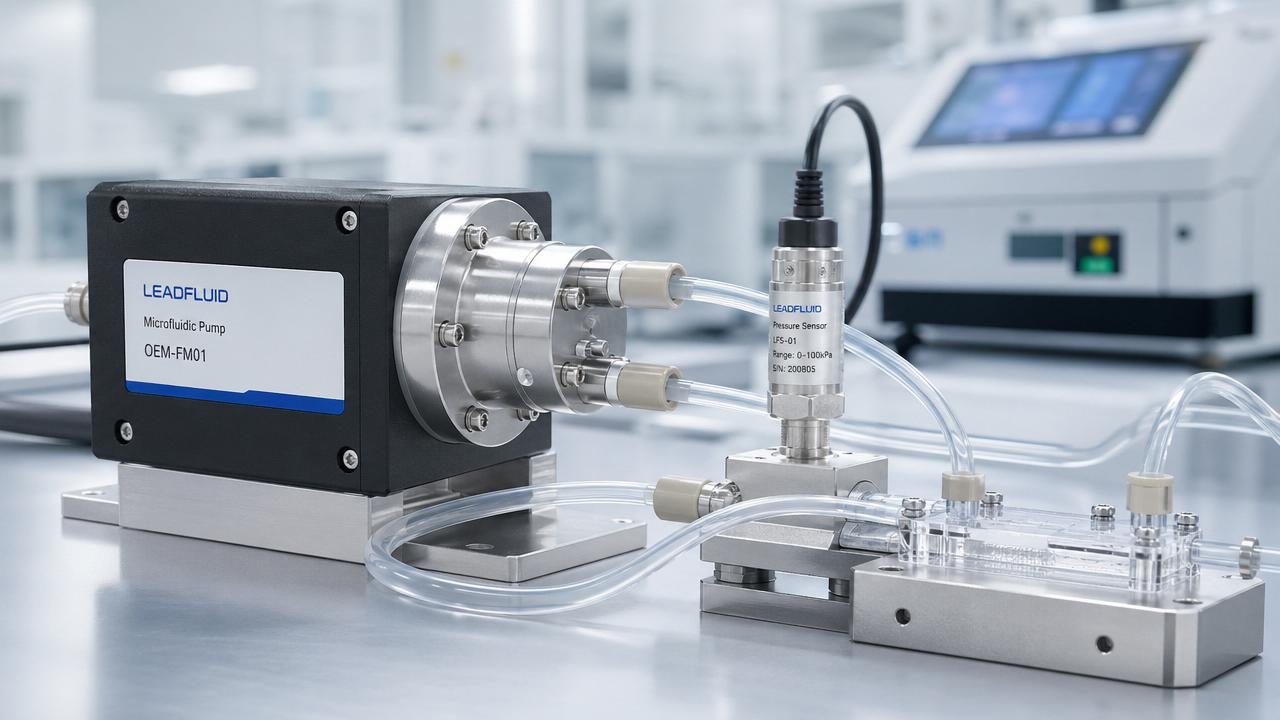
Selecting a microfluidic pump OEM supplier is not just a sourcing decision—it directly shapes flow stability, dosing accuracy, and process repeatability in precision fluidic applications. For technical evaluators, understanding how supplier capabilities influence pulsation control, material consistency, and integration reliability is essential to reducing validation risk and ensuring scalable performance from lab development to regulated production.
Understanding why supplier quality affects microfluidic flow behavior
In precision fluid handling, flow stability is rarely determined by the pump mechanism alone. The microfluidic pump OEM supplier influences the machining tolerance of wetted parts, the consistency of diaphragm or valve materials, firmware control logic, and the quality of pressure-feedback integration. In many lab-scale and pilot-scale systems, even a flow variation of ±1% to ±3% can affect droplet size distribution, reagent residence time, or cell exposure conditions.
For technical assessment teams in pharmaceutical, diagnostic, specialty chemical, and advanced research environments, the supplier is therefore part of the performance architecture. A pump may meet nominal flow requirements on paper, such as 5 µL/min to 500 mL/min, yet still produce pulsation peaks, drift over 8 to 24 hours, or unstable startup behavior when integrated into real process loops. These differences often emerge from manufacturing discipline rather than catalog specifications.
This is especially relevant in environments aligned with ISO-oriented quality systems, USP-sensitive fluid contact expectations, or GMP-controlled production transfers. A microfluidic pump OEM supplier that lacks repeatable component control can introduce hidden variables into validation, method transfer, and scale-up. That makes supplier assessment a technical risk-management exercise, not just a commercial comparison.
What “flow stability” means in practical evaluation
Flow stability typically includes several linked dimensions: short-term pulsation, long-duration drift, pressure response, restart repeatability, and flow accuracy under changing backpressure. In microreactors, organ-on-chip setups, and precision dosing platforms, these variables influence concentration control and mass transfer efficiency. A 10-minute stable test is often insufficient when the actual process runs for 6, 12, or 48 hours.
Technical evaluators should also distinguish between open-loop and closed-loop performance. Some pumps appear stable under water-like fluids at ambient conditions, but become inconsistent with 20 cP to 200 cP media, gas-liquid interfaces, or temperature shifts from 20°C to 37°C. A capable microfluidic pump OEM supplier should be able to explain how control architecture changes under these conditions rather than relying on ideal-bench data.
In multidisciplinary benchmarking environments such as G-LSP, the most useful evaluation method is to treat the pump as a subsystem within a precision fluidic chain. Stable flow depends on the supplier’s contribution to hardware tolerances, assembly cleanliness, calibration logic, and compatibility with downstream tubing, sensors, manifolds, and analytical modules.
Core technical indicators often reviewed first
- Flow range resolution, especially below 100 µL/min where pulsation and mechanical backlash become more visible.
- Accuracy and repeatability across at least 3 operating points, such as low, nominal, and high backpressure conditions.
- Pressure stability window, including transient response after valve switching or load changes.
- Material lot consistency for wetted components exposed to solvents, biologics, or buffered media.
- Control interface reliability over common protocols used in integrated lab or pilot systems.
Key supplier issues that commonly disrupt flow stability
When technical teams review a microfluidic pump OEM supplier, the most consequential issues are often not obvious in a standard quotation. Flow instability frequently originates from upstream design control, inconsistent assembly, or weak process discipline at the supplier level. These problems may remain invisible until factory acceptance testing, method qualification, or production ramp-up, where the cost of correction rises sharply.
A robust assessment should cover not only nominal pump output but also how the supplier manages variation over component batches, calibration intervals, and customization requests. In practical terms, a system that performs within tolerance in prototype phase can still fail repeatability targets once 20, 50, or 100 units are ordered for broader deployment. Supplier maturity matters most when consistency at scale is required.
The following table summarizes recurring supplier-side issues and their likely impact on flow behavior in precision applications. It can serve as a screening tool for engineering, quality, and procurement stakeholders during early evaluation.
Each of these issues can appear minor in isolation, but together they shape total system repeatability. For example, a microfluidic pump OEM supplier with acceptable component tolerances but poor lot traceability may still introduce unacceptable variability between pilot and production orders. That is why technical evaluators should request process documentation, not just performance brochures.
Mechanical design and pulsation control
Pump architecture strongly affects pressure ripple. Syringe, peristaltic, diaphragm, piezoelectric, and gear-driven microfluidic pumps all have different pulsation signatures. However, the microfluidic pump OEM supplier determines how well the design is executed, damped, and tested. In low-volume analytical channels, pulsation amplitudes that seem small at the pump outlet can become highly visible at the chip inlet.
A technically mature supplier usually provides more than nominal flow data. Useful evidence includes pulsation behavior at multiple backpressures, response curves at different viscosities, and information on damping strategies. If a supplier cannot discuss waveform smoothing, valve timing, or resonance behavior in tubing volumes below a few milliliters, integration risk increases.
For evaluators supporting continuous or semi-continuous processes, it is also worth checking whether the supplier has experience with long-duration duty cycles. A pump that performs well for 2-hour R&D experiments may not maintain stable delivery over a 7-day run. Material fatigue, thermal drift, and controller correction limits become more relevant as runtime increases.
Materials, wetted paths, and chemical-biological consistency
Flow stability is often linked to material behavior rather than motor behavior. Changes in tubing hardness, valve seat finish, diaphragm elasticity, or surface energy can alter priming, bubble release, and slip characteristics. In bioprocess, assay preparation, and specialty chemistry, these effects may accumulate gradually and only appear after repeated sterilization, solvent exposure, or prolonged buffered operation.
A capable microfluidic pump OEM supplier should define available wetted materials, expected compatibility ranges, and any known performance shifts under typical process conditions. For technical evaluators, this is not only a chemical compatibility question; it is a consistency question. If one production lot absorbs more moisture or softens faster, the same control setting may deliver measurably different flow after several hundred cycles.
This becomes critical when systems move from benchtop testing to regulated or semi-regulated production environments. Lot traceability for critical components, cleaning guidance, and replacement intervals such as 3 months, 6 months, or a defined cycle count can directly improve process predictability.
Why the industry is paying closer attention to OEM supplier capability
The market focus on the microfluidic pump OEM supplier has intensified because fluidic systems are now expected to bridge lab development, pilot verification, and production transfer with less redesign. In batch-to-continuous manufacturing, personalized therapeutics, and compact analytical automation, the margin for flow inconsistency is narrower than it was in conventional bulk-liquid handling.
Technical teams are also evaluating pumps as part of a broader fluidic ecosystem. A pump must work reliably with reactors, chip devices, single-use flow paths, sensors, and software controls. This aligns closely with the G-LSP perspective of benchmarking hardware not in isolation, but as an architecture of micro-efficiency where subcomponent variation can affect the whole platform.
As a result, supplier due diligence now often includes response time for engineering changes, documentation depth, long-term part availability, and customization discipline. Lead times of 6 to 12 weeks may be acceptable for standard modules, but highly integrated OEM builds often need earlier design freeze points and more controlled revision management.
Where stability matters most across applications
Different applications tolerate different levels of flow disturbance. In reagent transfer to a bulk vessel, minor pulsation may be acceptable. In contrast, organ-on-chip perfusion, nanoparticle formulation, and microreaction residence-time control can be sensitive to very small deviations. Evaluators should therefore match supplier capability to use case, not assume all microfluidic applications require the same control envelope.
The table below outlines common application categories and the supplier capabilities most relevant to stable performance. This helps technical assessment teams identify whether a microfluidic pump OEM supplier is aligned with the actual operating context.
This application view is useful because it prevents overbuying in one project and under-specifying in another. A microfluidic pump OEM supplier may be strong in assay automation but less prepared for chemically aggressive continuous synthesis. Matching evidence to use case is more effective than relying on general claims about precision.
Industry signals evaluators should not ignore
- Requests for integrated sensor feedback are increasing because open-loop flow assumptions are often insufficient in compact systems.
- Single-use and hybrid flow paths are expanding, which raises the importance of material traceability and replacement consistency.
- Engineering teams expect faster design cycles, yet stable OEM supply still depends on controlled revision management over 2 to 4 product generations.
Practical evaluation criteria for technical assessment teams
A technical evaluator should assess a microfluidic pump OEM supplier using a combination of component, subsystem, and lifecycle criteria. Looking only at upfront flow specifications may miss the issues that later cause requalification, redesign, or field instability. The strongest assessments combine engineering review, quality review, and operational fit.
In most cases, the evaluation should include at least three stages: document screening, bench validation, and integration review. Document screening confirms material sets, control interfaces, and available test evidence. Bench validation then checks actual performance under relevant fluids and pressures. Integration review examines how the pump behaves inside the intended architecture, including tubing length, sensor placement, and control software timing.
A structured assessment also protects procurement teams. If technical expectations are written clearly before quotation comparison, commercial decisions are less likely to favor a lower-cost option that later generates hidden qualification and maintenance expenses.
Questions to raise during supplier review
- What is the demonstrated flow accuracy and repeatability across at least 3 pressure points and 2 fluid viscosities?
- How are critical wetted components controlled across production lots, and what traceability is available?
- What factory tests are performed on each unit, and how closely do those tests match the final application conditions?
- What is the expected maintenance or replacement interval for valves, tubing, diaphragms, or seals under normal duty?
- How are firmware revisions, hardware changes, and OEM customizations documented over time?
A practical scoring framework
The following evaluation matrix can help standardize internal review. It is especially useful for organizations managing multiple pilot systems, outsourced builds, or regulated transfer pathways where supplier variability must be controlled early.
This framework helps separate a technically prepared microfluidic pump OEM supplier from one that offers only basic product availability. For evaluators in high-sensitivity environments, the difference often becomes visible not in day-one installation, but in month-three reproducibility and year-one service continuity.
Common warning signs during assessment
- Only nominal flow data is provided, with no reference to backpressure or viscosity.
- Material recommendations are broad, but no component-level consistency guidance is available.
- Customization is offered quickly, yet revision control and validation support are unclear.
- Service parts are available, but replacement impact on calibration is not defined.
From concept review to scalable implementation
A successful supplier decision should support the entire path from concept verification to stable deployment. That means the microfluidic pump OEM supplier must fit not only today’s
Expert Insights

Chief Security Architect
Dr. Thorne specializes in the intersection of structural engineering and digital resilience. He has advised three G7 governments on industrial infrastructure security.
Related Analysis
Core Sector // 01
Security & Safety
- How to Specify Fluidic Precision Components for Reliable Low-Volume DosingAuthor :Dr. Aris Nano

- FDA Extends GMP Traceability to Nano Flow DevicesAuthor :Dr. Aris Nano

- EU Tightens CE File Rules for Nano Flow DevicesAuthor :Dr. Aris Nano

- ECHA Revisits REACH Exemption for Nano Flow DevicesAuthor :Dr. Aris Nano

- ECHA Update Puts Nano Flow Components Under New SVHC Disclosure RuleAuthor :Dr. Aris Nano

- ISO Issues ISO/TS 23572:2026 for Nano-Flow TestingAuthor :Dr. Aris Nano

- ISO Issues Nano Flow Test Spec for CE ComplianceAuthor :Dr. Aris Nano
![]()
- EU REACH Adds Nano Flow SCIP Filing RuleAuthor :Dr. Aris Nano