FDA Draft Opens Remote Calibration Path for Syringe Pumps
Author
Date Published
Reading Time

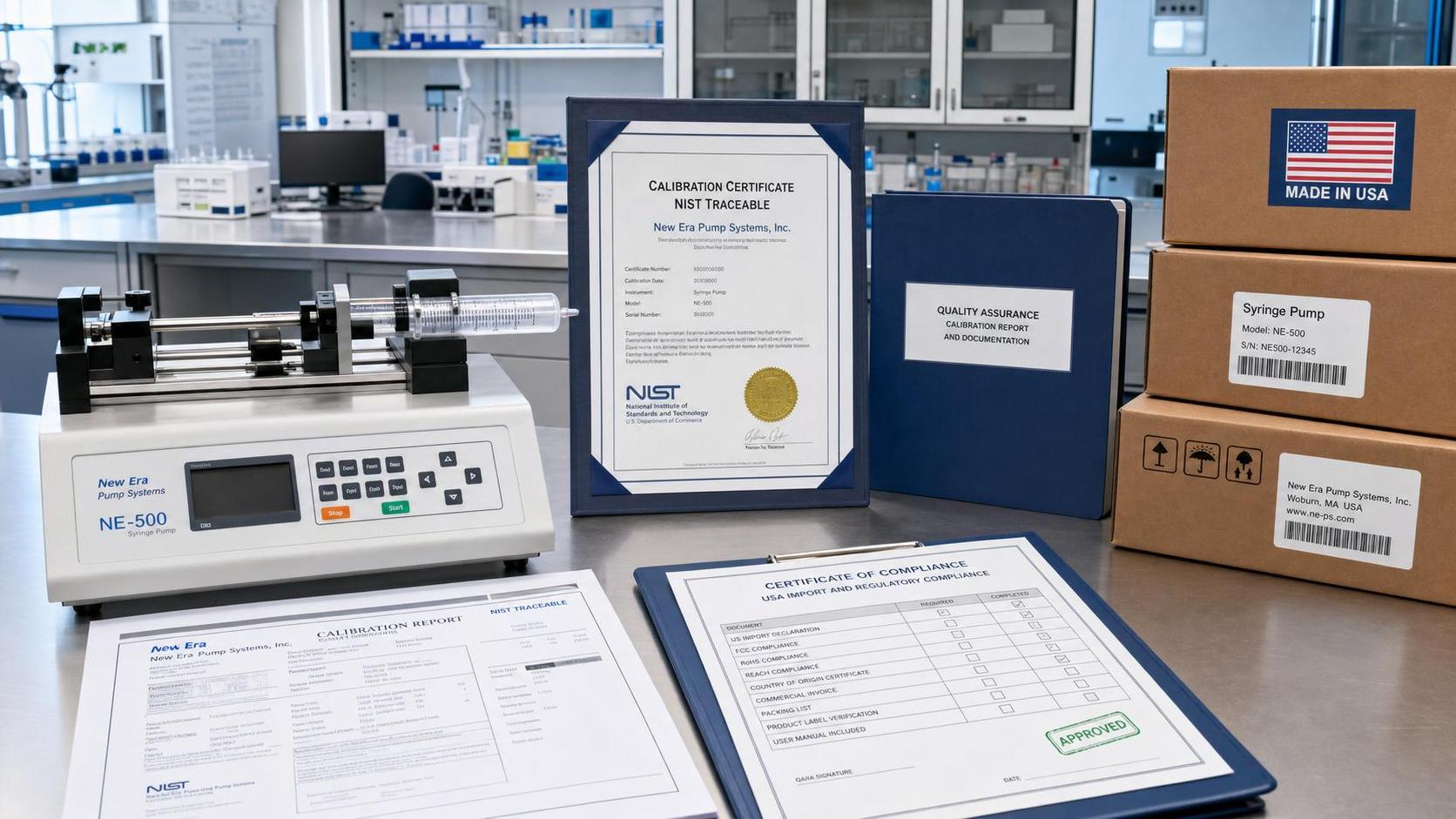
On June 6, 2026, the U.S. FDA published a draft guide addressing remote performance verification for syringe pumps used in GMP environments. The key point for the market is not only the publication of a draft, but the regulatory signal that a NIST-traceable digital calibration system may substitute for on-site metrology in specific cases. For syringe pump manufacturers, GMP users, calibration-related service providers, procurement teams, and compliance functions, this raises immediate questions around technical readiness, audit workflows, documentation standards, and how purchasing and after-sales requirements may shift if the draft is finalized in the third quarter.
What the draft guide explicitly changes
According to the information provided, the FDA draft guide was released on June 6, 2026 and concerns remote performance verification of syringe pumps in GMP environments. The draft, for the first time, allows a NIST-traceable digital calibration system to replace on-site calibration inspection. It further states that intelligent syringe pumps equipped with encrypted timestamps, blockchain-based record preservation, and real-time dual-modal feedback covering both pressure and flow rate may be exempted from annual on-site calibration. At the same time, those pumps would still need to complete quarterly cloud-based audits through an FDA-recognized third-party platform. The public comment period runs until August 31, 2026, and the final version is expected in Q3.
Where the practical pressure points may emerge
Device makers may face a higher documentation threshold
From an industry perspective, syringe pump manufacturers are likely to be affected first because the draft ties regulatory flexibility to specific technical capabilities. The impact is not limited to product design. It may also extend to technical files, validation records, software-related evidence, calibration traceability records, and the way product claims are presented in sales and tender documentation. What deserves closer attention is whether existing models can demonstrate the required encrypted timestamps, blockchain-based evidence retention, and real-time pressure and flow-rate feedback in a form that aligns with future compliance review.
GMP users may need to rethink maintenance and audit routines
For operators using syringe pumps in GMP settings, the draft suggests a possible change in how calibration compliance is maintained. If some devices can move away from annual on-site calibration, the operational burden may shift toward quarterly cloud audits and continuous digital record integrity. This could affect equipment qualification files, internal SOP updates, vendor management, and inspection preparedness. Analysis shows that the question is not simply whether calibration becomes easier, but whether compliance responsibility moves from a site visit model to an evidence and platform management model.
Third-party service and platform participants may see a compliance role expand
The draft also points to a more formal role for FDA-recognized third-party platforms in quarterly cloud audits. For calibration-related service providers, digital compliance platforms, and after-sales support teams, the likely impact is on service scope, audit coordination, record retention, and response timelines when clients undergo review. Observably, companies involved in verification services may need to pay closer attention to how audit outputs, traceability chains, and platform recognition requirements are described once the final text is issued.
Procurement and delivery terms may become more specification-driven
For procurement teams, distributors, and export-facing sellers, this draft may influence how syringe pumps are compared and sourced. If remote verification becomes an accepted route under defined conditions, buyers may begin asking for evidence of NIST-traceable digital calibration capability, cloud audit compatibility, and the required data integrity functions before award or delivery. That could affect specification alignment, supplier qualification, acceptance documents, and post-delivery service commitments, especially where GMP compliance language is written into purchasing terms.
What companies should monitor before the final text arrives
Check whether current models meet the stated technical conditions
Analysis shows that companies should first separate general digital features from the specific conditions named in the draft. The current text provided refers to encrypted timestamps, blockchain-based record preservation, and real-time dual-modal pressure and flow-rate feedback. Businesses should review whether their existing products and supporting records can substantiate those elements in a way suitable for future compliance review, rather than assuming any connected device would qualify.
Review audit evidence, not only calibration capability
What deserves closer attention is that the draft pairs exemption from annual on-site calibration with a requirement for quarterly cloud audits through an FDA-recognized third-party platform. That means compliance preparation may depend as much on audit evidence, platform workflows, and record accessibility as on the pump itself. Companies involved in manufacturing, procurement, and after-sales support should therefore examine how service agreements, quality documents, and data retention practices would need to support that audit path.
Track how tenders, purchase terms, and service clauses evolve
Observably, even before a final rule takes effect, market documents can start changing. Companies should watch for updates in technical bid language, purchaser qualification questionnaires, delivery acceptance requirements, maintenance clauses, and after-sales obligations related to remote verification and quarterly cloud audits. The current information does not confirm how those changes will be applied in practice, so this remains an area for monitoring rather than a settled requirement.
Use the comment period as a risk review window
Because the draft remains open for comment until August 31, 2026, this stage is better understood as a window for compliance assessment and contract review rather than as a completed regulatory transition. Manufacturers, users, and service providers may need to identify where their documentation, supplier arrangements, or customer-facing claims could be exposed if the final text keeps the same structure.
Why this reads more as a regulatory signal than a finished operating rule
From an industry perspective, this development is best read as a strong execution signal, but not yet as a fully settled operating rule. The draft indicates that the FDA is prepared to recognize a digital and remotely auditable compliance route for certain syringe pumps in GMP environments, which is a meaningful shift in regulatory thinking. At the same time, the market still lacks the final wording and any fuller execution details beyond the information provided here. Analysis shows that the most important near-term issue is not to overstate immediate implementation, but to watch how final compliance language, third-party platform expectations, and buyer requirements take shape.
How the market may reasonably interpret this stage
In practical terms, this event suggests that remote verification, digital traceability, and cloud-based auditability are moving closer to the center of compliance expectations for certain syringe pumps used in GMP settings. That does not yet confirm a completed market shift, and it does not guarantee uniform adoption across procurement, service, and audit practices. It is more appropriate to understand this as a draft-stage regulatory development with clear commercial and compliance implications, one that merits close monitoring through the comment period and into the expected Q3 finalization.
Basis of this article and what still needs verification
This article is based on the user-provided news title, event date, and event summary. For events of this type, commonly relevant source categories may include official regulatory announcements, notices issued by competent authorities, industry association updates, standard-setting documents, trade administration information, and reporting by authoritative industry media. A specific official source link was not provided in the input, so the exact publication entry should be continuously verified. Further observation is still needed on the final text, the detailed compliance interpretation, recognition criteria for third-party platforms, changes in tender and procurement documents, market feedback, and how companies implement the requirements in practice.
Expert Insights

Chief Security Architect
Dr. Thorne specializes in the intersection of structural engineering and digital resilience. He has advised three G7 governments on industrial infrastructure security.
Related Analysis
Core Sector // 01
Security & Safety
- China Tightens Export Compliance Checks on Lab Fluid-Control DevicesAuthor :Dr. Aris Nano

- China Tightens Export Checks on Lab Fluid DevicesAuthor :Dr. Aris Nano

- China Customs Tightens Export Checks for Lab Liquid-Handling EquipmentAuthor :Dr. Aris Nano

- ECHA SVHC Update Reaches Precision Fluid DevicesAuthor :Dr. Aris Nano

- FDA Tightens Accuracy Rule for Lab Fluid DevicesAuthor :Dr. Aris Nano

- ECHA Adds 12 SVHCs Affecting Lab Fluid DevicesAuthor :Dr. Aris Nano

- How to Choose a Variable Speed Peristaltic Pump for Accurate Lab Fluid TransferAuthor :Dr. Aris Nano

- FDA Tightens Import Rules for Syringe PumpsAuthor :Dr. Aris Nano