FDA Tightens Import Rules for Syringe Pumps
Author
Date Published
Reading Time
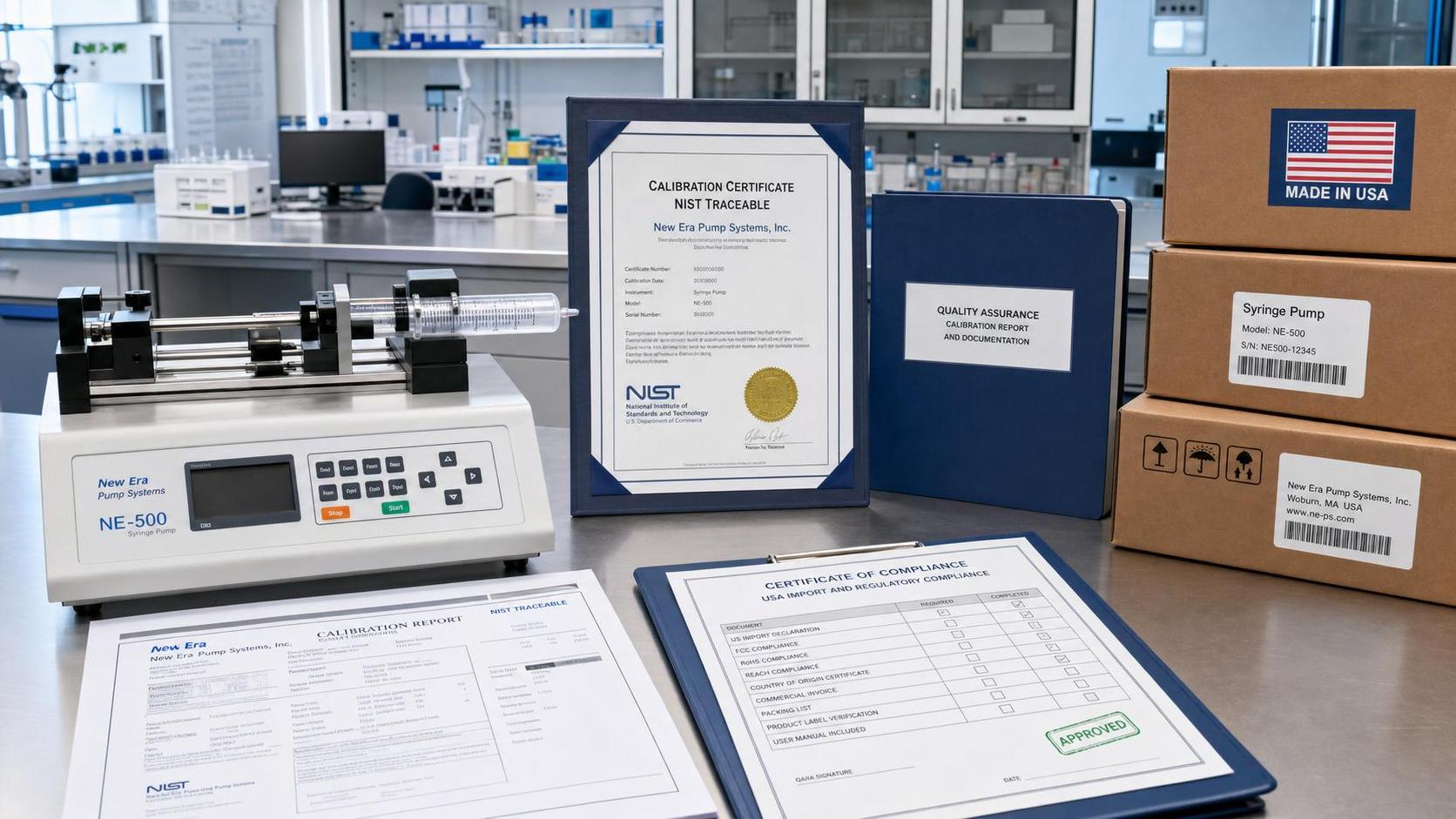
On July 19, 2026, the U.S. Food and Drug Administration updated its import guidance for laboratory fluid handling devices, setting a new documentation requirement for syringe pumps imported into the United States for GMP or GLP use. Starting October 1, 2026, these products must be accompanied by a full-range calibration certificate issued by a NIST-recognized laboratory, including a NIST traceability chain number and an uncertainty statement. For exporters, importers, and supply chain teams serving the U.S. laboratory and regulated-use market, the change is worth close attention because it directly affects customs compliance and delivery timing.
What the updated FDA guidance now requires
According to the information provided, the FDA released Laboratory Fluid Handling Devices Import Alert Guidance v3.1 on July 19, 2026. The guidance states that, from October 1, 2026, all syringe pumps imported into the United States for GMP or GLP use must include a calibration certificate issued by a NIST-recognized laboratory.
The certificate must cover the full measurement range of the device. It must also include both a NIST traceability chain number and an uncertainty statement. The information provided further indicates that products failing to meet this requirement may face automatic detention at the port of entry.
Where the operational pressure is likely to appear
Export compliance moves closer to the shipping stage
From an industry perspective, direct trading companies and exporters shipping syringe pumps to the U.S. market may be affected first because the new requirement is tied to import clearance. The pressure is likely to appear in pre-shipment document preparation, product file review, and coordination with laboratories able to issue compliant calibration certificates.
Manufacturers may need tighter document coordination
For manufacturers supplying syringe pumps for GMP or GLP applications, the impact may extend beyond product production itself. Analysis shows that factory-side teams may need to pay closer attention to whether each shipment is matched with calibration documents that cover the full range and include the required traceability and uncertainty details, since the import requirement is document-specific rather than only product-specific.
Logistics and delivery planning may become more sensitive
Supply chain service providers and distributors may also need to reassess lead-time assumptions. Observably, if the required certificate is missing or incomplete, the issue does not remain a paperwork matter alone; it can directly affect port clearance and handover schedules. That makes document completeness a practical delivery risk, especially for shipments tied to regulated laboratory use.
Buyers and end users may place more weight on pre-delivery readiness
Procurement teams and end users purchasing syringe pumps for GMP or GLP use may also need to follow the change more closely. What deserves closer attention is whether suppliers can provide the required calibration documentation at the time of shipment, because customs detention risk could affect delivery commitments and internal validation schedules.
What companies should review before October 1
Check whether current calibration documents meet the new wording
Companies involved in U.S.-bound shipments should review whether existing calibration certificates already meet the FDA guidance as described in the provided information. The key point is not simply having a certificate, but having one issued by a NIST-recognized laboratory, covering the full range, and containing both the traceability chain number and the uncertainty statement.
Separate regulated-use shipments from general-use assumptions
Analysis shows that businesses should pay attention to the stated scope of the rule: syringe pumps imported for GMP or GLP use. In practical terms, commercial, compliance, and documentation teams may need to distinguish regulated-use orders more clearly in internal workflows so that the correct document package is prepared before shipment.
Revisit lead times with suppliers and customers
Because the requirement takes effect on October 1, 2026, companies may need to reassess timing for production release, calibration arrangement, document review, and export scheduling. What deserves closer attention is the communication chain among manufacturer, exporter, freight handler, importer, and end customer, since missing documents at any point could translate into delivery delays.
Keep watching for further official clarification
Observably, the current information establishes a clear compliance requirement and an enforcement consequence at import. At the same time, companies should continue monitoring any follow-up official wording, implementation interpretation, or practical customs handling signals that may further shape how the rule is applied in day-to-day shipments.
How this change may be read by the market
Analysis shows that this is more than a routine wording update for product paperwork. It signals that calibration traceability and certificate completeness are being treated as import-level compliance issues for syringe pumps used in regulated laboratory contexts. That matters because the requirement is tied directly to border enforcement rather than remaining a downstream quality discussion.
At the same time, it is more appropriate to understand this as a specific and actionable compliance change rather than a broad conclusion about all laboratory devices. The confirmed facts in the provided information focus on syringe pumps imported for GMP or GLP use, so the market still needs to watch how implementation develops in practice and whether related categories receive similar scrutiny later.
Why this update deserves sustained attention
The immediate significance of the FDA update is clear: from October 1, 2026, qualifying syringe pumps entering the U.S. market need a NIST-traceable calibration certificate meeting specific content requirements, or they risk automatic detention at the port. For companies active in export, import, distribution, and regulated laboratory procurement, the issue is not abstract policy language but shipment readiness.
From an editorial perspective, this is best understood as a near-term operational compliance change with possible longer-term signaling value. The immediate task for the industry is document readiness and delivery planning; the broader meaning will depend on whether similar documentation expectations appear in future regulatory or import guidance.
Basis of this report
This article is based on the user-provided news title, event date, and event summary concerning the FDA update on syringe pump import documentation requirements. No specific official source link was provided in the input, so the precise official link remains to be verified on an ongoing basis.
For this type of industry development, commonly relevant source categories may include official regulatory notices, company compliance updates, industry association information, authoritative media coverage, and standards-related documentation. Further follow-up should focus on any additional official clarification, implementation details, and practical customs enforcement signals related to shipments after October 1, 2026.
Expert Insights

Chief Security Architect
Dr. Thorne specializes in the intersection of structural engineering and digital resilience. He has advised three G7 governments on industrial infrastructure security.
Related Analysis
Core Sector // 01
Security & Safety
- Precision Dispenser Pricing: Cost Drivers and Budgeting for Lab AutomationAuthor :Dr. Aris Nano

- China Tightens Export Compliance Checks on Lab Fluid-Control DevicesAuthor :Dr. Aris Nano

- China Tightens Export Checks on Lab Fluid DevicesAuthor :Dr. Aris Nano

- China Customs Tightens Export Checks for Lab Liquid-Handling EquipmentAuthor :Dr. Aris Nano

- ECHA SVHC Update Reaches Precision Fluid DevicesAuthor :Dr. Aris Nano

- FDA Tightens Accuracy Rule for Lab Fluid DevicesAuthor :Dr. Aris Nano

- ECHA Adds 12 SVHCs Affecting Lab Fluid DevicesAuthor :Dr. Aris Nano

- How to Choose a Variable Speed Peristaltic Pump for Accurate Lab Fluid TransferAuthor :Dr. Aris Nano