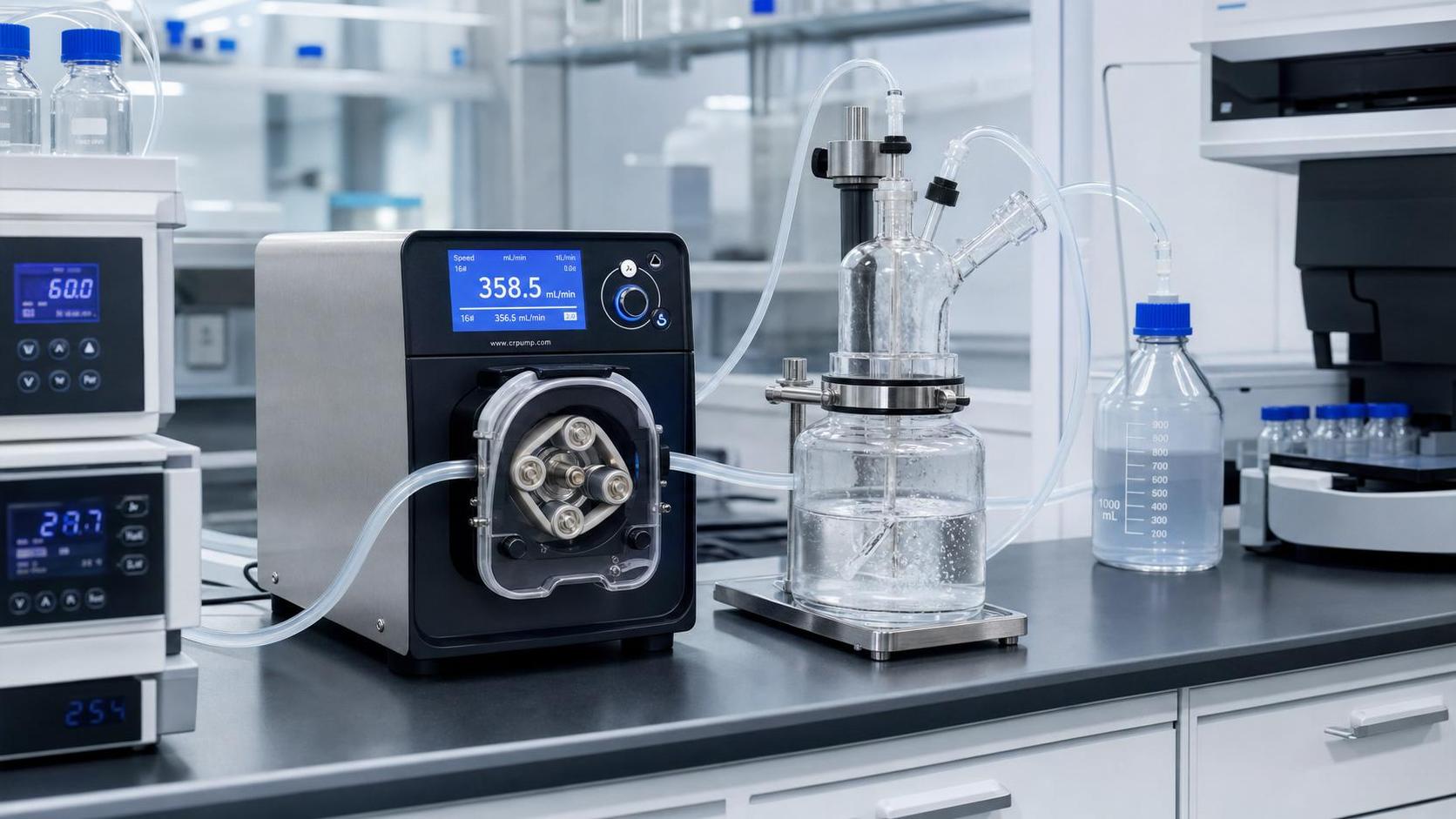
How precision dispensing technology cuts batch errors
Author
Date Published
Reading Time
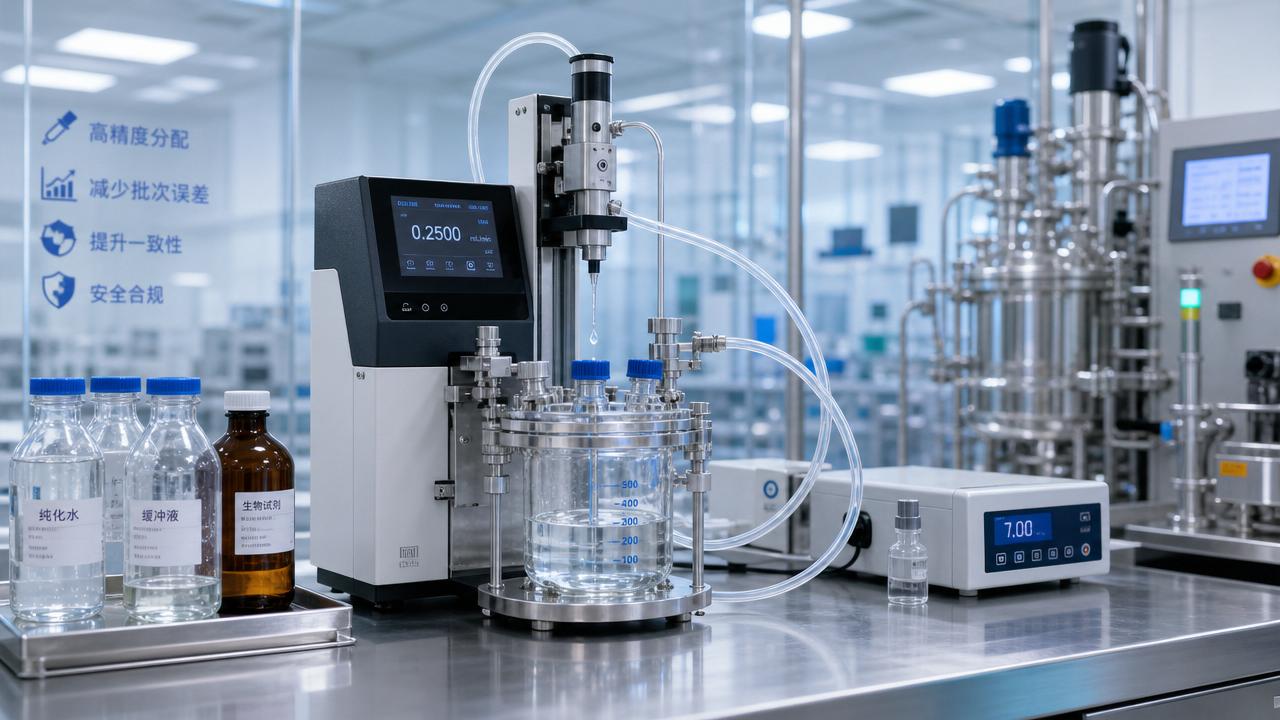
In quality-critical production environments, even minor dosing deviations can trigger costly batch failures, compliance risks, and safety concerns. Precision Dispensing Technology helps quality control and safety managers reduce variability at the source by delivering accurate, repeatable fluid handling across lab and pilot-scale workflows. This article explores how tighter dispensing control supports batch consistency, process integrity, and more confident scale-up decisions.
Why do small dispensing errors create large batch risks?
For quality control teams, the issue is rarely one dramatic failure. More often, batch loss starts with tiny, repeated dosing variation that escapes notice until assays drift, reaction yields drop, or cleaning validation becomes harder to defend.
For safety managers, imprecise fluid handling can increase exposure risk, cross-contamination probability, and process instability. This is especially serious when handling potent compounds, reactive solvents, biologics, or low-volume additives with narrow operating tolerances.
Precision Dispensing Technology matters because it controls one of the earliest and most influential variables in production quality: the actual delivered volume. If the dose is wrong, downstream mixing, reaction kinetics, cell growth, and analytical consistency can all be affected.
- A 1% to 2% liquid handling deviation may appear minor on paper, yet it can alter concentration, pH adjustment, catalyst loading, or excipient ratio enough to push a batch toward rework.
- In pilot-scale transfer, a dispensing error introduced at bench level often becomes harder to trace because operators focus on reactor, agitation, or thermal conditions rather than the original fluid addition step.
- Manual correction steps added after a missed target can create new safety events, documentation burdens, and deviation investigations.
Where the risk usually hides
Batch errors linked to dispensing are common in formulation work, reagent charging, buffer preparation, sample aliquoting, seeding operations, and micro-volume analytical prep. These workflows often look routine, which is why their variability is underestimated.
Across pharmaceutical, chemical, and advanced laboratory environments, G-LSP emphasizes fluidic precision not as a niche feature, but as a control architecture. That perspective helps decision-makers identify root causes before scale-up magnifies them.
How Precision Dispensing Technology reduces batch errors at the source
The value of Precision Dispensing Technology is not limited to better pipetting. It reduces batch errors by stabilizing the relationship between target volume, actual delivered volume, fluid properties, operator behavior, and process timing.
In practical terms, this means fewer hidden deviations during dose preparation, more repeatable additions in development and pilot settings, and cleaner evidence for quality review when batch records are audited.
Core control mechanisms
- High-resolution metering improves accuracy for sub-milliliter to low-milliliter transfers where manual methods often show high relative error.
- Repeatable dispensing cycles reduce lot-to-lot variation caused by inconsistent operator technique, aspiration speed, or incomplete dispense behavior.
- Closed or semi-closed fluid paths support contamination control and reduce contact risk for hazardous or sensitive materials.
- Programmable settings help align fluid delivery with viscosity, shear sensitivity, foaming tendency, and target dispense cadence.
- Data traceability improves deviation review by recording method parameters rather than relying only on handwritten entries.
Why this matters in batch-to-continuous transition
When organizations move from lab batches toward continuous or semi-continuous processes, control tolerance becomes less forgiving. A poor dispense event is no longer an isolated manual step. It can distort feed consistency, residence time assumptions, and process analytical interpretation.
G-LSP’s benchmarking focus is useful here because quality and safety teams do not just need a device. They need evidence that a dispensing approach remains bioconsistent, scalable, and aligned with adjacent systems such as reactors, bioreactors, and automated liquid handling infrastructure.
Which production scenarios benefit most from Precision Dispensing Technology?
The strongest return appears in workflows where dose accuracy has a direct effect on release criteria, intermediate quality, operator safety, or process reproducibility. The table below highlights common scenarios relevant to quality and safety oversight.
The pattern is clear: the more sensitive the material, the tighter the specification, or the higher the compliance burden, the more Precision Dispensing Technology contributes to risk reduction. It is especially valuable where one small fluid error can compromise an entire run.
Manual dosing vs automated precision dispensing: what should QC and safety teams compare?
Many facilities still rely on manual or semi-manual dosing for legacy reasons. That may seem acceptable in low-risk workflows, but comparison becomes necessary when deviation costs, operator training demands, and audit pressure increase.
The comparison should not be framed as automation for its own sake. The real question is whether current dosing practice still matches present-day process risk, regulatory expectation, and scale-up complexity. In many cases, the answer changes once batch deviation cost is calculated honestly.
What technical performance indicators matter most before purchase?
Quality and safety managers should ask for application-relevant performance information, not generic marketing claims. Precision Dispensing Technology should be assessed according to the actual fluids, the target volume range, the cleaning strategy, and the recordkeeping requirements of the site.
Priority parameters to review
- Dispense accuracy across the intended working range, especially at the lowest routine volumes where error impact is largest.
- Precision and repeatability under realistic operating conditions, including viscous fluids, volatile solvents, or shear-sensitive biological materials.
- Chemical compatibility of wetted materials with acids, bases, solvents, buffers, and product-contact media.
- Cleaning, sterilization, or single-use pathway options depending on cross-contamination risk and turnaround expectations.
- Integration readiness with existing liquid handling systems, reactors, microfluidic platforms, or digital batch documentation processes.
- Alarm logic, maintenance intervals, and calibration practices that affect long-term control confidence.
A practical selection lens for mixed-industry environments
Because G-LSP operates across five industrial pillars, it is well positioned to evaluate dispensing systems in the wider context of lab-scale production. That matters because a dispenser that performs well in isolation may still be a weak fit if it does not align with reactor feed behavior, bioprocess sterility demands, or downstream sample preparation routines.
How should procurement evaluate Precision Dispensing Technology without overbuying?
Over-specification is common. Teams sometimes purchase highly advanced systems when the true requirement is narrower, or they select low-cost units that fail once audit scrutiny or process complexity increases. A structured procurement checklist helps avoid both outcomes.
The table below can guide cross-functional review between QC, EHS, engineering, and procurement when comparing Precision Dispensing Technology options.
A disciplined review process protects budget while improving fit. It also reduces the chance of selecting equipment that appears precise in specification sheets but creates operational bottlenecks once implemented.
What standards and compliance points should quality and safety managers review?
Precision Dispensing Technology is often purchased for performance, but retained for compliance. In regulated or audit-sensitive settings, a technically capable unit must also support defensible operation and documentation.
- Review alignment with internal quality systems for calibration, preventive maintenance, and change control.
- Confirm whether wetted materials and fluid paths are suitable for the chemicals or biologics in use, especially where extractables, corrosion, or adsorption may matter.
- For GMP-adjacent environments, assess whether the equipment can support documented procedures, operator control, and records that stand up to investigation.
- Where relevant, compare equipment design and documentation practices against commonly referenced frameworks such as ISO, USP, and GMP expectations.
G-LSP’s value is not simply in listing standards. It is in interpreting how benchmarked systems behave in real R&D-to-production transitions, where compliance gaps often emerge at interfaces between equipment types rather than inside one device alone.
Common mistakes that weaken dispensing control
Many batch issues persist because teams focus on nominal equipment capability instead of actual operating conditions. Precision Dispensing Technology can reduce errors significantly, but only if it is configured around the process rather than treated as a plug-in upgrade.
- Choosing by headline accuracy alone and ignoring viscosity, surface tension, evaporation, or foaming behavior.
- Assuming manual rechecks can compensate for poor repeatability without increasing contamination and documentation risk.
- Underestimating calibration frequency and maintenance needs in high-use QC support workflows.
- Separating dispensing procurement from reactor, bioreactor, or automated liquid handling planning, which can create integration friction later.
- Treating pilot-scale workflows like enlarged lab routines, even though process risk and documentation exposure rise sharply during scale-up.
FAQ: what do teams ask before adopting Precision Dispensing Technology?
How do we know whether our batch errors are really linked to dispensing?
Look for repeat deviations tied to concentration drift, inconsistent yields, assay recalibration, operator correction steps, or unexplained differences between nominal recipe input and observed process behavior. If these appear around low-volume additions, dispense control should be investigated early.
Which workflows are the best candidates for an upgrade first?
Start with steps where small fluid errors have high batch impact: critical reagent addition, standards and controls prep, potent compound aliquoting, cell culture supplements, or pilot-scale dosing that influences reaction or growth consistency. These usually show the fastest quality return.
Is Precision Dispensing Technology only relevant for pharmaceutical production?
No. It is equally relevant in chemical development, specialty materials, advanced laboratory operations, and other mixed-industry environments where fluid consistency affects safety, process integrity, or analytical reliability. The required configuration changes by application, but the control principle remains the same.
What should we request from a supplier before final selection?
Request application-specific performance data, fluid compatibility guidance, calibration and maintenance expectations, integration considerations, documentation support, and realistic delivery information. If your process is compliance-sensitive, also ask how the system supports audit-ready operation and controlled change practices.
Why choose us for precision dispensing evaluation and scale-up support?
G-LSP supports quality-focused procurement and technical decision-making by connecting Precision Dispensing Technology to the broader architecture of lab-scale production. That means decisions are not made in isolation. They are evaluated against process transfer, fluid behavior, bioconsistency, and compliance expectations across interconnected systems.
Because our benchmarking scope spans pilot-scale reactors, precision microfluidic devices, bioreactors, centrifugation platforms, and automated liquid handling systems, we help teams assess whether a dispensing solution truly fits the workflow it is meant to protect.
- Confirm target parameters such as volume range, repeatability expectations, fluid compatibility, and cleaning pathway requirements.
- Compare suitable Precision Dispensing Technology options for QC, safety-sensitive, pilot, or bioprocess applications.
- Discuss delivery timelines, implementation constraints, and how dispensing hardware may integrate with existing lab or pilot infrastructure.
- Review documentation and certification expectations relevant to ISO, USP, GMP, or internal quality management practices.
- Explore sample support, configuration guidance, and quotation discussions based on actual process risk rather than generic catalog selection.
If your team is trying to reduce batch deviations, tighten fluid control, or make safer scale-up decisions, contact us to review your dispensing parameters, application scenario, compliance priorities, and procurement timeline in a more technical and decision-ready way.
Expert Insights

Chief Security Architect
Dr. Thorne specializes in the intersection of structural engineering and digital resilience. He has advised three G7 governments on industrial infrastructure security.
Related Analysis
Core Sector // 01
Security & Safety
- Precision Dispenser Pricing: Cost Drivers and Budgeting for Lab AutomationAuthor :Dr. Aris Nano

- China Tightens Export Compliance Checks on Lab Fluid-Control DevicesAuthor :Dr. Aris Nano

- China Tightens Export Checks on Lab Fluid DevicesAuthor :Dr. Aris Nano

- China Customs Tightens Export Checks for Lab Liquid-Handling EquipmentAuthor :Dr. Aris Nano

- ECHA SVHC Update Reaches Precision Fluid DevicesAuthor :Dr. Aris Nano

- FDA Tightens Accuracy Rule for Lab Fluid DevicesAuthor :Dr. Aris Nano

- ECHA Adds 12 SVHCs Affecting Lab Fluid DevicesAuthor :Dr. Aris Nano

- How to Choose a Variable Speed Peristaltic Pump for Accurate Lab Fluid TransferAuthor :Dr. Aris Nano