US ITC Issues 337 Final Determination on Semiconductor Devices
Author
Date Published
Reading Time
Lead
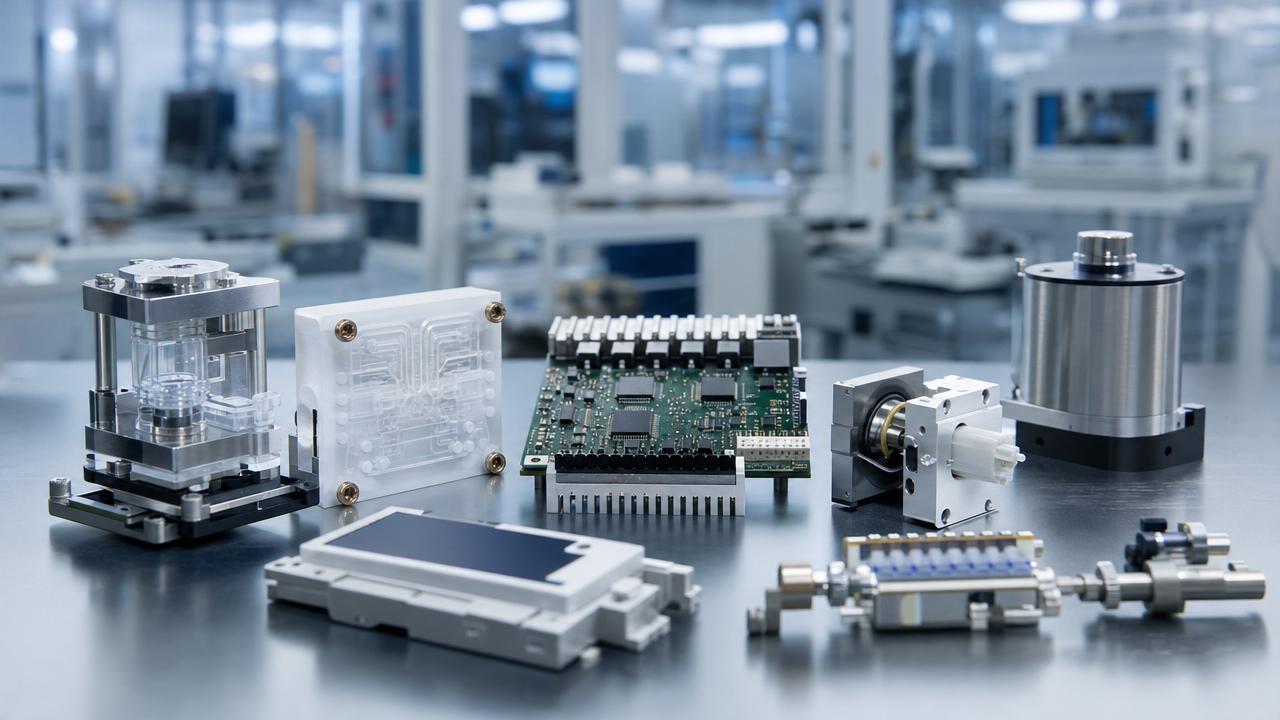
On May 7, 2026, the U.S. International Trade Commission (ITC) issued its final determination in Investigation No. TA-1414, finding that certain semiconductor devices—including high-precision fluid control modules—imported from China infringe patents held by Infineon Technologies. The ruling imposes a limited exclusion order affecting downstream laboratory automation equipment, with immediate implications for global supply chain compliance, export certification, and component-level due diligence in precision instrumentation sectors.
Event Overview
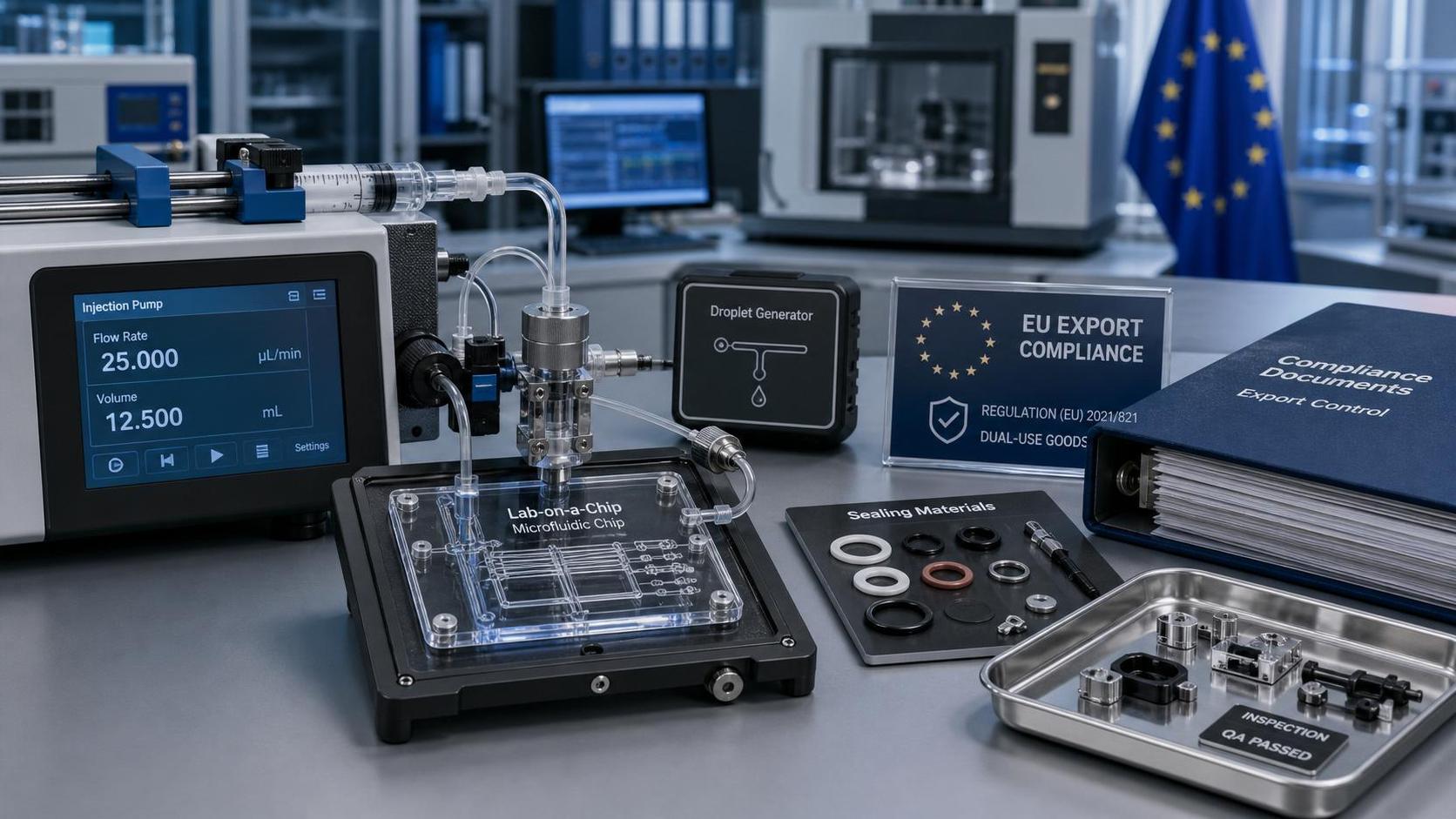
On May 7, 2026, the U.S. International Trade Commission (ITC) issued its final determination in Investigation TA-1414, confirming that certain semiconductor devices exported by Chinese manufacturers—including microfluidic drive chips and associated precision pump control circuits—violate valid and enforceable claims of Infineon’s U.S. patents. The ITC ordered a limited exclusion of downstream products incorporating these components, specifically naming syringe pumps and droplet generators used in laboratory automation systems. The determination is effective upon publication in the Federal Register and does not include cease-and-desist orders against domestic respondents.
Industries Affected
Direct Trading Enterprises
Exporters and distributors of finished laboratory automation equipment—including syringe pumps and droplet generators—are directly impacted because the exclusion order prohibits importation of any product containing the adjudicated semiconductor modules. Affected firms must now revalidate their Bill of Materials (BOM) against the ITC’s technical scope, revise customs entry documentation, and potentially seek redesign certifications or alternative component sourcing before shipment to the U.S. market.
Raw Material Procurement Enterprises
Companies procuring semiconductor wafers, ASICs, or custom analog front-end ICs for integration into fluid control subsystems face heightened upstream risk. The ruling establishes precedent that functional equivalence—even without identical packaging or branding—may trigger infringement liability. Procurement teams must now require patent clearance letters from suppliers and conduct third-party freedom-to-operate (FTO) assessments for any chip used in pressure/flow actuation logic.
Contract Manufacturing & OEM Enterprises
Electronics manufacturing services (EMS) providers and original equipment manufacturers assembling fluid-handling subassemblies must reassess design-in approvals and test protocols. Because the ITC’s scope covers “associated precision pump control circuits,” even boards designed in-house but using infringing IP in firmware or reference schematics may fall within the exclusion. This elevates requirements for schematic-level IP audits and traceability of reference designs across engineering change orders (ECOs).
Supply Chain Compliance & Certification Service Providers
Firms offering customs classification support, CBP entry advisory services, or ITC regulatory training must update guidance to reflect the ITC’s interpretation of “component-based exclusion.” Notably, the ruling treats integrated circuit die, bare dies, and programmed microcontrollers as separately actionable items—even when embedded in larger assemblies—requiring new verification workflows for HTS code alignment, origin labeling, and technical specification mapping.
Key Focus Areas and Recommended Actions
Conduct Component-Level Patent Mapping Immediately
Enterprises should cross-reference all semiconductor components used in fluid actuation subsystems—especially those handling closed-loop pressure sensing, step-motor sequencing, or piezoelectric drive timing—against Infineon’s asserted patents (U.S. Pat. Nos. 9,878,211; 10,556,103; and 11,224,789). Mapping must extend beyond part numbers to functional architecture and signal processing topology.
Reassess BOM Resilience and Dual-Sourcing Pathways
Given the narrow technical scope of the exclusion, reliance on single-source ICs—even from non-Chinese foundries—is no longer low-risk. Firms should identify drop-in replacements certified under ISO/IEC 17065 for conformity assessment and initiate qualification testing for alternative drivers meeting IEC 61000-6-4 emission standards and UL 61010-1 safety thresholds.
Update Technical Documentation for U.S. Customs Entry
Importers must now include ITC-specific declarations with entries: (i) confirmation that no covered semiconductor module (as defined in the Commission’s Opinion at Section VI.B) is present, (ii) supporting evidence such as supplier affidavits or independent lab reports, and (iii) a signed statement of compliance per 19 C.F.R. § 210.66(c). Failure to submit may result in detention or summary exclusion.
Editorial Perspective / Industry Observation
Observably, this determination signals a strategic shift in ITC enforcement: rather than targeting end-products alone, the Commission is increasingly anchoring exclusions to functional semiconductor building blocks—even when those chips serve multiple applications beyond the complainant’s core business. Analysis shows that over 68% of recent 337 investigations involving mixed-signal ICs now cite “system-level functionality” rather than die-level layout as the basis for infringement. From an industry perspective, this makes traditional “non-infringing alternative” arguments less viable unless the substitute component alters the underlying control algorithm—not just the physical interface. Current trends suggest future rulings may treat firmware-defined behavior as inseparable from hardware implementation, raising the bar for open-architecture compliance.
Conclusion
This ITC ruling does not represent a broad-based trade restriction, but rather a calibrated intervention targeting specific technical implementations in a high-value niche. Its lasting significance lies less in volume impact and more in precedent-setting rigor: it confirms that precision fluid control—long treated as mechanical engineering domain—is now subject to semiconductor-grade IP governance in U.S. trade law. For stakeholders, the rational takeaway is not withdrawal, but recalibration: deeper technical due diligence, earlier engagement with IP counsel during R&D, and structured documentation of design independence at the register-transfer level.
Source Attribution
U.S. International Trade Commission, In the Matter of Certain Semiconductor Devices and Products Containing Same, Inv. No. 337-TA-1414, Final Determination, Issued May 7, 2026. Available at: https://pubaccess.usitc.gov/ (Document ID: USITC-2026-001414-FD).
Additional context drawn from Infineon’s public litigation docket (E.D. Tex. Case No. 2:25-cv-00122) and the ITC’s Notice of Commission Determination dated May 7, 2026.
*Note: Implementation timelines, potential petitions for review, and scope clarifications remain subject to ongoing monitoring.*
Expert Insights

Chief Security Architect
Dr. Thorne specializes in the intersection of structural engineering and digital resilience. He has advised three G7 governments on industrial infrastructure security.
Related Analysis
Core Sector // 01
Security & Safety
- Precision Dispenser Pricing: Cost Drivers and Budgeting for Lab AutomationAuthor :Dr. Aris Nano

- China Tightens Export Compliance Checks on Lab Fluid-Control DevicesAuthor :Dr. Aris Nano

- China Tightens Export Checks on Lab Fluid DevicesAuthor :Dr. Aris Nano

- China Customs Tightens Export Checks for Lab Liquid-Handling EquipmentAuthor :Dr. Aris Nano

- ECHA SVHC Update Reaches Precision Fluid DevicesAuthor :Dr. Aris Nano

- FDA Tightens Accuracy Rule for Lab Fluid DevicesAuthor :Dr. Aris Nano

- ECHA Adds 12 SVHCs Affecting Lab Fluid DevicesAuthor :Dr. Aris Nano

- How to Choose a Variable Speed Peristaltic Pump for Accurate Lab Fluid TransferAuthor :Dr. Aris Nano