How process optimization lowers waste in synthesis
Author
Date Published
Reading Time
Why process optimization in chemical synthesis has moved to the center of waste reduction
For high-value R&D and production programs, waste is no longer a side issue.
It now shapes cost control, compliance exposure, energy intensity, and scale-up confidence across the broader industrial landscape.
That is why process optimization in chemical synthesis has become a strategic decision area rather than a narrow laboratory improvement topic.
In pharmaceutical, specialty chemical, and advanced materials workflows, every inefficiency compounds across sourcing, reaction control, purification, and batch release.
Smarter synthesis design lowers solvent loss, reduces off-spec output, and improves reproducibility from pilot through commercial execution.
Within this shift, G-LSP highlights a practical reality.
Fluidic precision, benchmarked equipment performance, and bioconsistent hardware now influence waste profiles as much as chemistry selection itself.
As batch-to-continuous models expand, process optimization in chemical synthesis increasingly defines operational resilience and investment quality.
Current signals show waste reduction is becoming a design requirement, not a retrofit
Several market and technical signals point to a stronger emphasis on synthesis efficiency.
First, raw material volatility makes low-yield routes financially harder to justify.
Second, GMP and quality expectations increasingly reward stable, data-rich, and tightly controlled process windows.
Third, continuous processing and precision liquid handling expose hidden waste that legacy batch methods often mask.
Fourth, sustainability reporting has made solvent recovery, energy use, and reject rates more visible in internal reviews.
As a result, process optimization in chemical synthesis is being evaluated earlier, often before equipment finalization or route lock-in.
This change matters because late-stage fixes usually cost more and deliver less.
When waste is designed out at the reaction architecture stage, downstream separation, cleaning, and validation burdens also shrink.
The strongest trend is the shift from isolated yield thinking to total process efficiency
High yield remains important, but it is no longer enough.
A route with strong yield may still create excessive solvent use, unstable intermediates, or difficult centrifugation and purification demands.
The better benchmark is total process efficiency.
That includes throughput, cycle time, energy input, cleaning frequency, reagent precision, and deviation risk.
This broader lens makes process optimization in chemical synthesis more relevant to enterprise-level performance.
What is driving this trend across synthesis systems and lab-scale production
The drivers behind this change are technical, financial, and regulatory at the same time.
Together, these factors explain why process optimization in chemical synthesis is attracting more attention in capital planning and technical reviews.
How waste actually declines when synthesis is optimized at the system level
Waste falls most effectively when the full process chain is examined instead of isolated steps.
This means linking reaction engineering, dosing accuracy, thermal control, separation behavior, and cleaning strategy.
In this context, process optimization in chemical synthesis creates value through several mechanisms.
- More accurate reagent delivery reduces overuse and side reactions.
- Improved mixing limits concentration hotspots and byproduct formation.
- Stable temperature control prevents degradation and runaway correction steps.
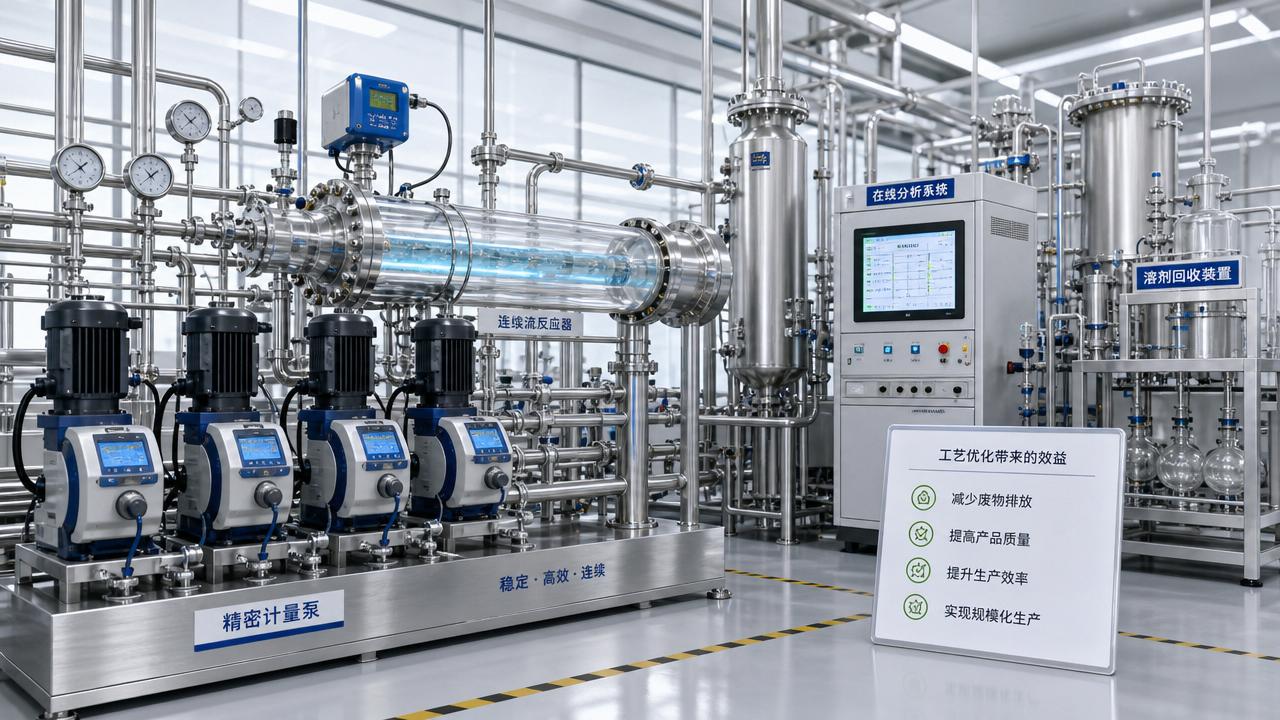
- Better residence-time management supports consistent conversion in continuous systems.
- Optimized separation lowers product loss during centrifugation and purification.
- Cleaner transfer pathways cut hold-up volume and cross-contamination risk.
These gains are especially relevant where lab-scale data must predict larger-scale behavior with minimal waste-related surprises.
Precision hardware increasingly determines process outcomes
Synthesis efficiency depends not only on route chemistry but also on the physical consistency of the equipment platform.
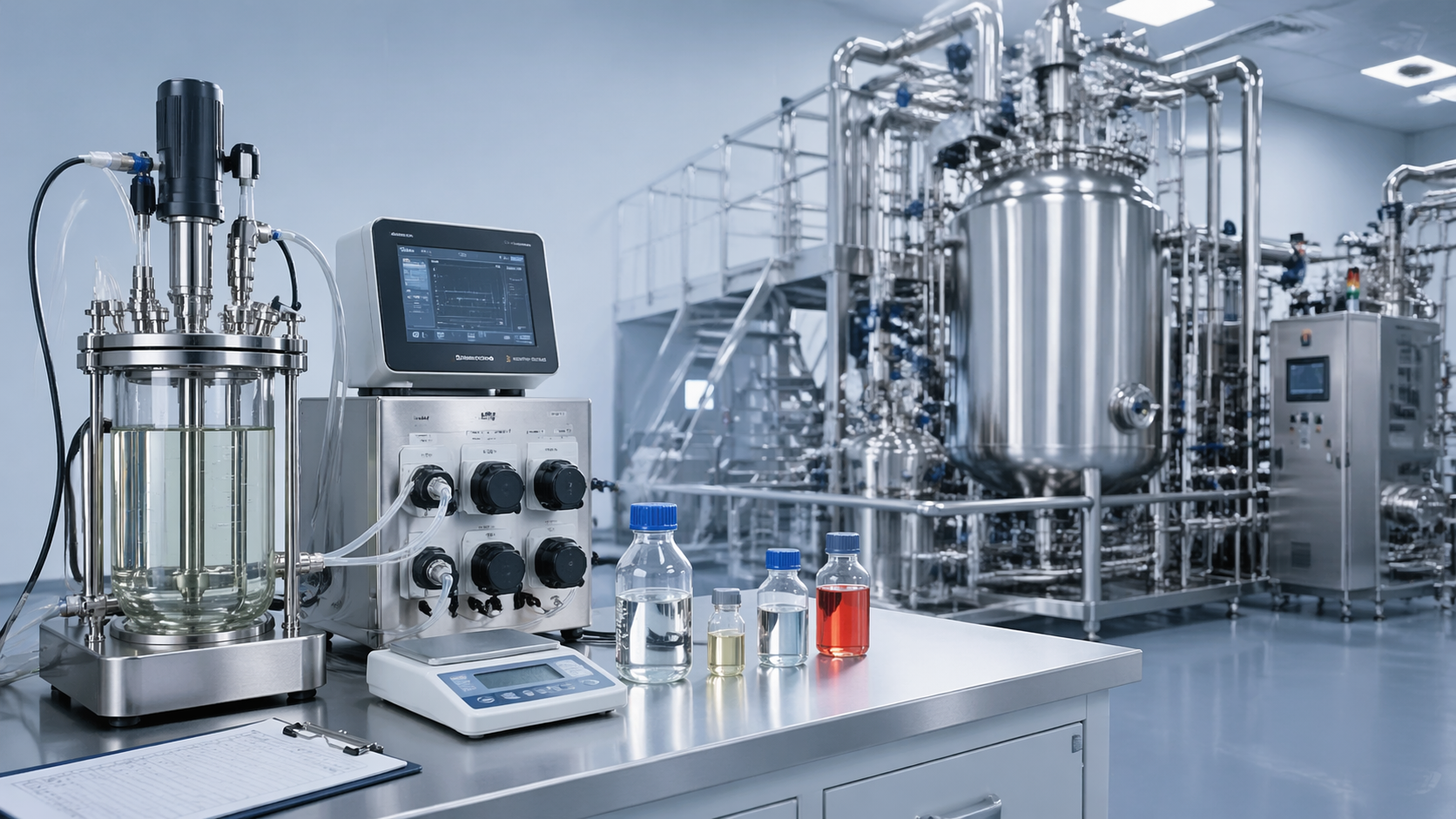
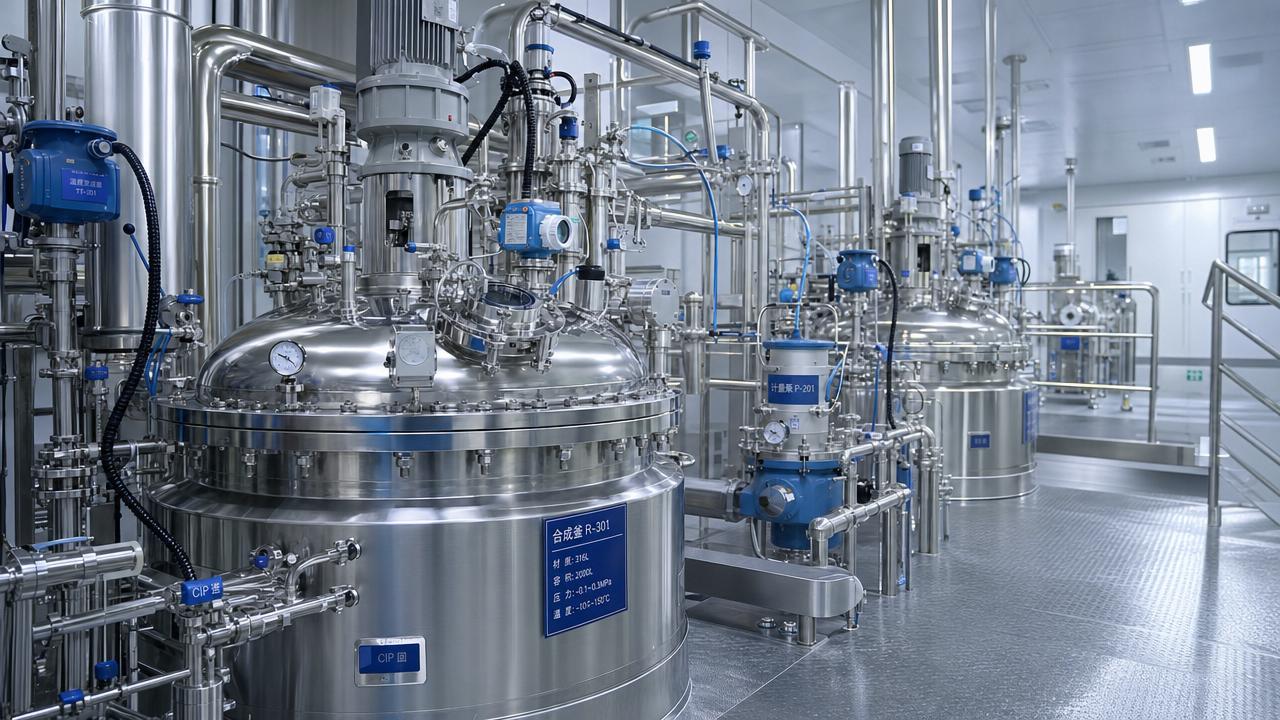
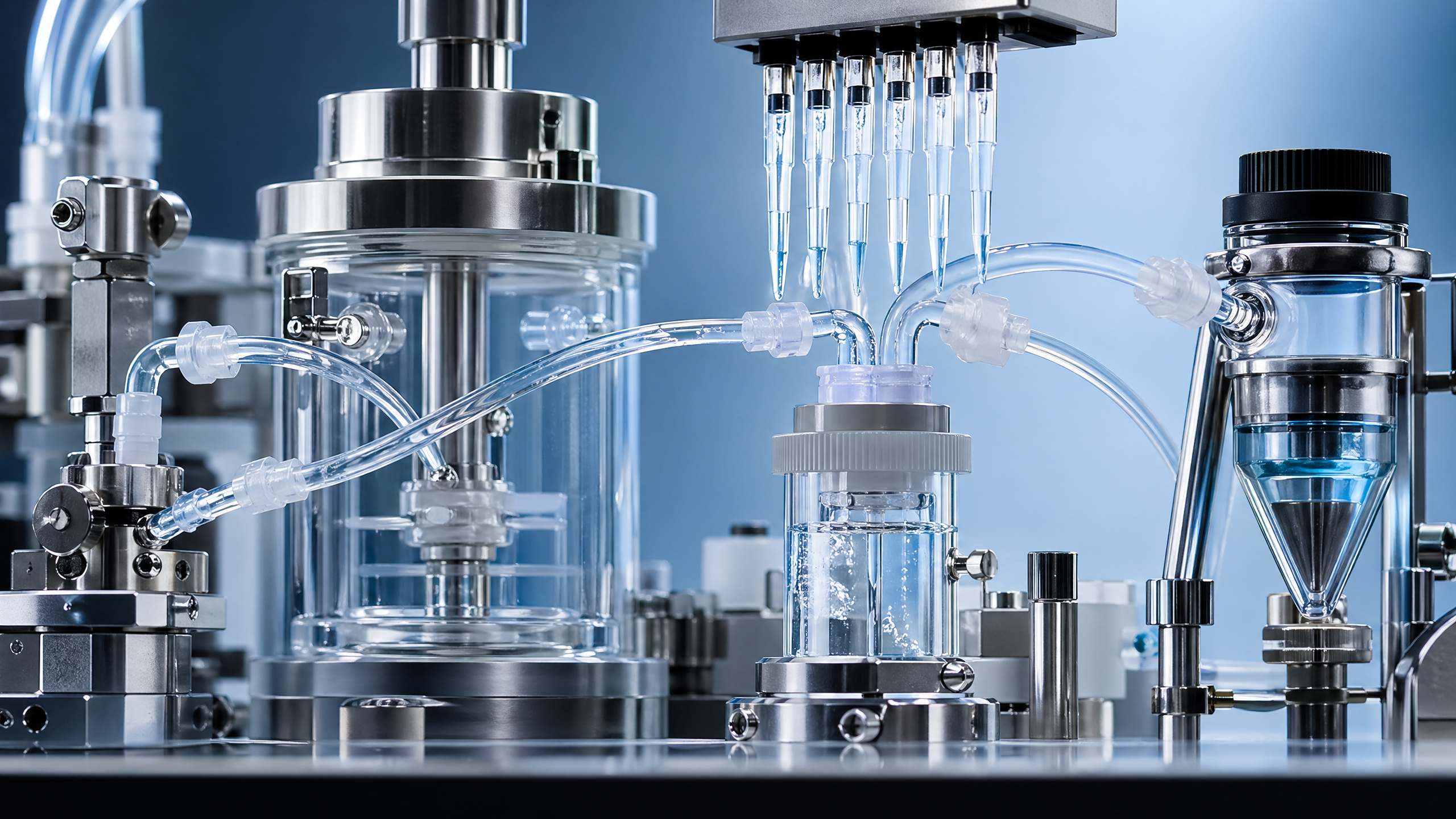
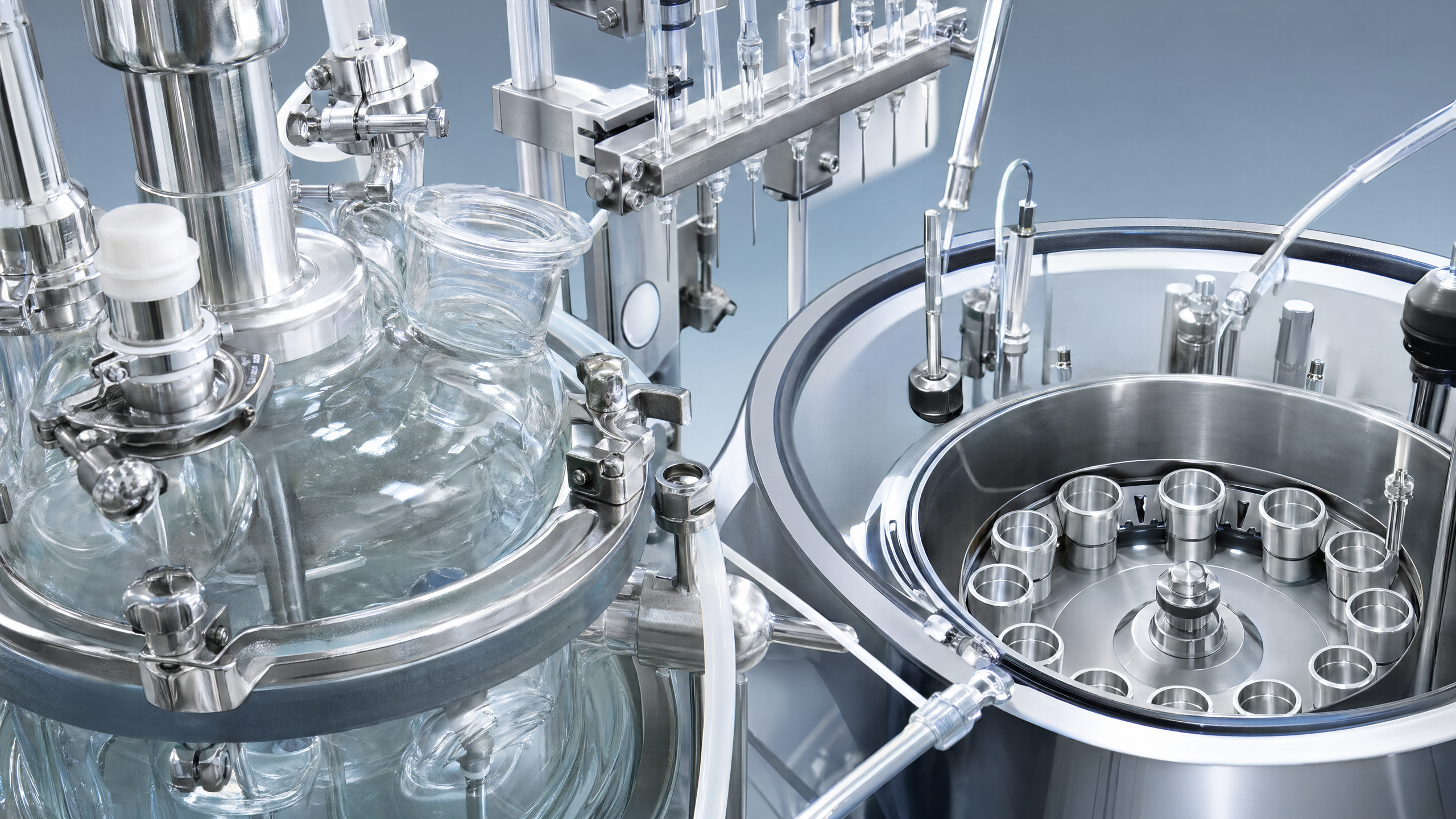
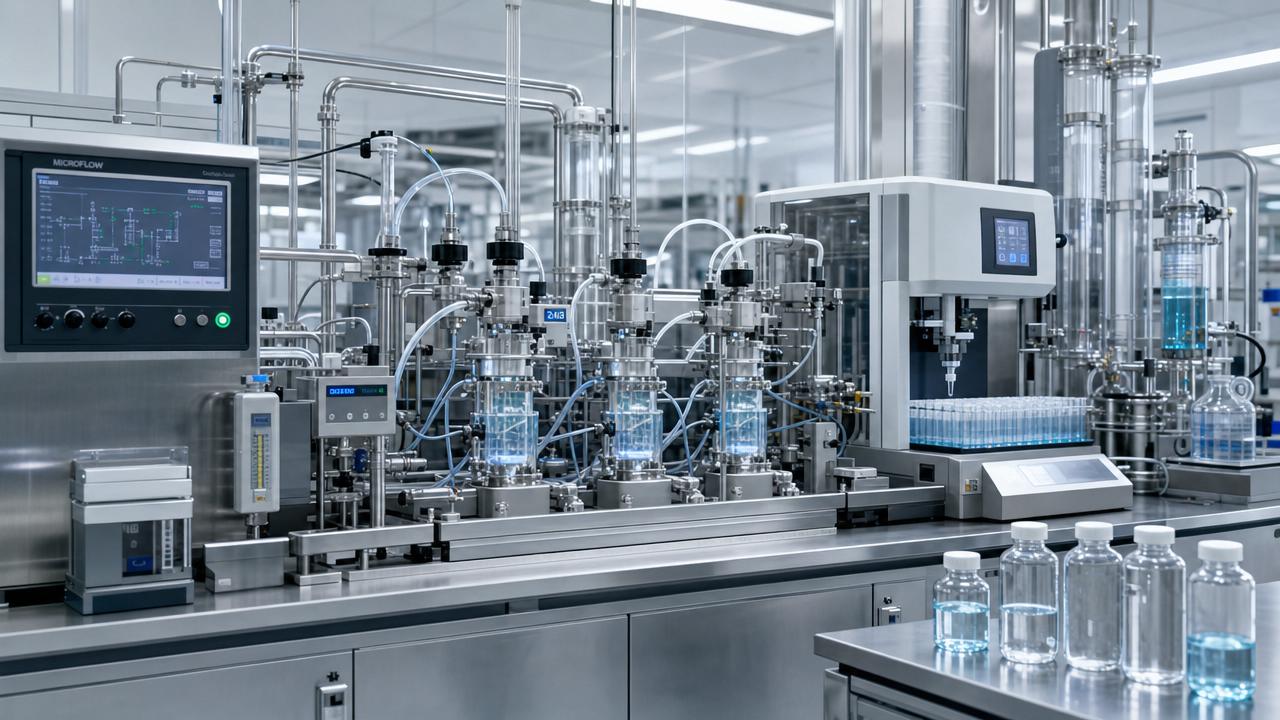
Microfluidic devices, stirred-tank reactors, centrifugation systems, and automated pipetting tools influence variability at every critical junction.
When hardware drift is reduced, process optimization in chemical synthesis becomes more repeatable and more transferable.
That is one reason benchmarking against ISO, USP, and GMP expectations has become operationally important, not merely procedural.
The business impact extends far beyond the reaction vessel
Lower waste in synthesis affects multiple business layers at once.
It changes direct production economics, but it also improves planning accuracy, technical confidence, and compliance readiness.
For integrated operations, process optimization in chemical synthesis often reduces the hidden costs that emerge between departments.
This broader effect explains why optimization decisions should not be separated from equipment architecture and operating model choices.
The most important points to watch as optimization standards keep rising
As the field evolves, several focus areas deserve closer attention.
- Evaluate waste by route, unit operation, and transfer step, not only by final yield.
- Prioritize data from pilot-scale reactors and precision flow systems over assumptions from static batch trials.
- Check dosing repeatability and fluid handling accuracy before scaling sensitive reactions.
- Map solvent, cleaning, and separation burdens early in route development.
- Benchmark hardware performance against recognized technical and regulatory standards.
- Treat process optimization in chemical synthesis as a cross-functional capability, not a one-time experiment.
These checkpoints help distinguish cosmetic efficiency gains from structural waste reduction.
A practical response framework for the next stage of synthesis improvement
The next step is not simply buying newer equipment or rewriting one procedure.
A better response is a staged review model that connects chemistry, hardware, and scale-up evidence.
- Identify the highest waste contributors across reaction, transfer, and separation stages.
- Compare current process behavior with precision benchmarks from relevant reactor and fluidic systems.
- Run targeted pilot studies to test narrower operating windows and lower hold-up volumes.
- Document which changes improve reproducibility, not only short-term output.
- Scale only the routes that show both waste reduction and regulatory stability.
This staged approach makes process optimization in chemical synthesis measurable and investment-ready.
Where to act now for stronger waste control and scale-up reliability
Organizations seeking durable efficiency should start with evidence, not assumptions.
Review synthesis routes through the lens of fluidic precision, reactor behavior, separation losses, and validation impact.
Use benchmarked data to compare lab performance with realistic pilot and production expectations.
That is where G-LSP adds value across pilot-scale reactors, microfluidic devices, bioreactors, centrifugation systems, and automated liquid handling platforms.
In a market shaped by continuous processing and sensitive therapeutic development, process optimization in chemical synthesis is becoming a defining indicator of technical maturity.
The most effective next move is to audit current synthesis workflows, quantify waste sources, and align future upgrades with benchmarked micro-efficiency standards.
Expert Insights

Chief Security Architect
Dr. Thorne specializes in the intersection of structural engineering and digital resilience. He has advised three G7 governments on industrial infrastructure security.
Related Analysis
Core Sector // 01
Security & Safety
- R&D-to-Production Transition breaks when lab data looks too cleanAuthor :Dr. Elena Carbon

- How to Evaluate a Microplate Processing Data Supplier for Traceability and QC ReportingAuthor :Dr. Elena Carbon

- Custom Metal Stamping Parts: Tolerance, Tooling Cost, and Best-Fit ApplicationsAuthor :Dr. Elena Carbon

- When process optimization cuts synthesis waste fastAuthor :Dr. Elena Carbon

- How process optimization lowers waste in synthesisAuthor :Dr. Elena Carbon

- How synthesis systems affect pharma batch consistencyAuthor :Dr. Elena Carbon

- Lab-Scale Production Looks Efficient Until Yield Starts MovingAuthor :Dr. Elena Carbon

- R&D-to-Production Transition Gets Harder With Mixed BatchesAuthor :Dr. Elena Carbon