Lab Automation Investment Insights Beyond the Purchase Price
Author
Date Published
Reading Time
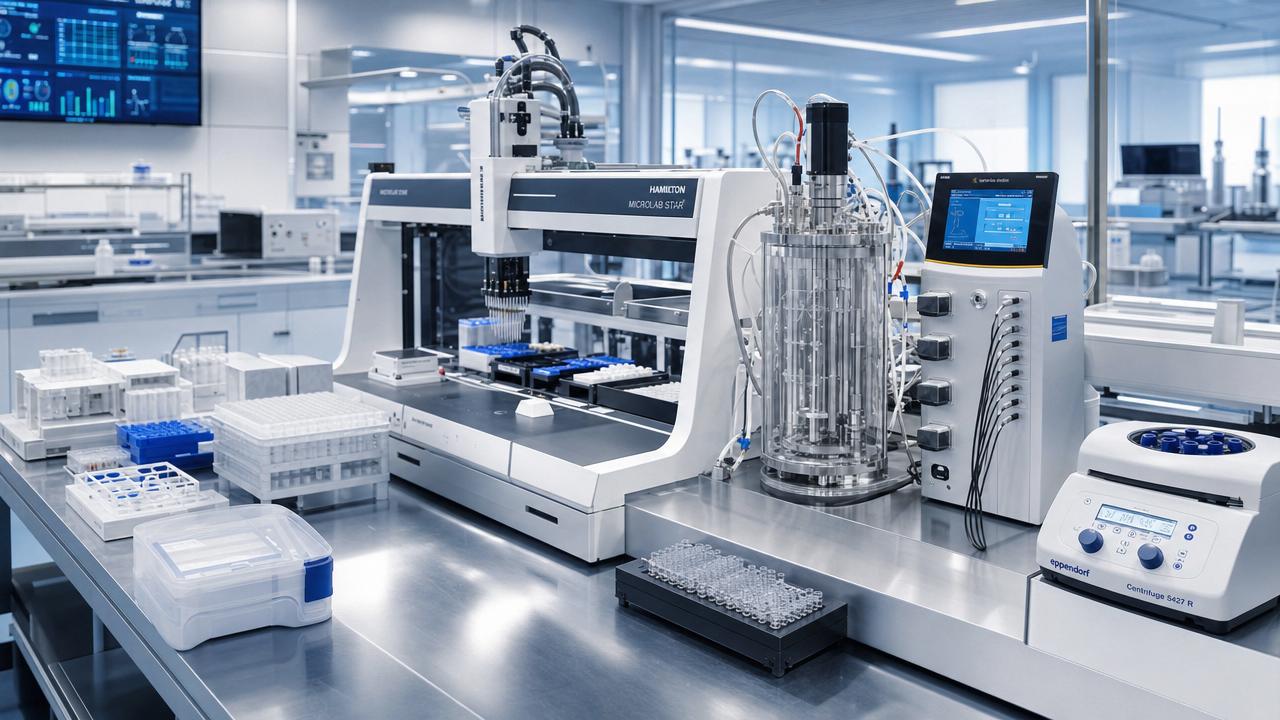
For financial approvers, lab automation investment insights must go far beyond upfront equipment costs. The real value lies in lifecycle efficiency, compliance readiness, precision-driven output, and reduced operational risk across critical lab workflows. This article examines how to evaluate automation investments through a strategic financial lens, helping decision-makers balance capital expenditure with long-term performance, scalability, and measurable returns.
In high-stakes pharmaceutical, chemical, and advanced process laboratories, a purchase decision is rarely about a single instrument. It is about whether automation can improve batch consistency, support audit readiness, reduce labor dependency, and protect throughput when development timelines tighten from 12 months to 6, or when personalized production requires smaller lots with higher precision. For finance teams working alongside lab directors, bioprocess engineers, and procurement officers, the best decisions come from understanding cost across the full operating life of the system.
That is especially true in environments shaped by pilot-scale reactors, microfluidic platforms, bioreactors, centrifugation systems, and automated liquid handling. In these settings, a 1% improvement in dosing accuracy or a reduction of 15 to 30 minutes per run can have a larger financial impact than a negotiated discount at purchase. Strong lab automation investment insights therefore require a broader model: capital cost, installation burden, validation effort, maintenance frequency, operator training, integration complexity, and the financial cost of failure.
Why Purchase Price Is an Incomplete Financial Metric
A finance-led review often begins with CAPEX, but automation decisions in regulated lab environments should start with total cost of ownership over a 3-year to 7-year horizon. A lower-cost system may require more frequent calibration, more manual intervention, or longer downtime during maintenance. Each of those factors quietly shifts cost into OPEX, compliance risk, and delayed project output.
Direct and indirect cost layers
In a typical automation project, the invoice price may account for only 45% to 65% of the actual spend during the first 24 months. The remaining share often includes IQ/OQ support, software licensing, integration with LIMS or MES, cleanroom compatibility adjustments, spare parts, training, and process validation. In fluid-precision applications, even small mismatches between instrument capability and workflow requirements can create recurring hidden cost.
- Installation and commissioning: often 5% to 12% of equipment value
- Method development and validation: commonly 2 to 8 weeks depending on complexity
- Training and SOP alignment: usually 2 to 5 working days for each user group
- Preventive maintenance and recalibration: quarterly, semiannual, or annual cycles
The cost of under-specifying precision
For liquid handling, microfluidics, and bioprocess support workflows, precision gaps can create expensive downstream losses. A sub-microliter dispensing error may look negligible at the bench, yet across 1,000 to 5,000 repetitive actions it can alter assay quality, increase reagent waste, and trigger repeat runs. For financial approvers, this means that technical tolerance is not just an engineering specification; it is a cost control variable.
The same principle applies to centrifugation and separation. If a system introduces variability in spin profiles, temperature control, or balancing sensitivity, the result may be lower yield, delayed release testing, or additional sample handling steps. These are operational leakages that do not appear in purchase comparisons but affect margin, labor efficiency, and project timelines.
The table below shows how financial reviewers can separate visible purchase cost from the cost drivers that shape long-term value.
A disciplined review of these four dimensions gives stronger lab automation investment insights than price-only benchmarking. It also helps finance teams justify a premium system when the premium is tied to lower deviation risk, faster qualification, or measurable productivity improvement over 36 to 84 months.
How Financial Approvers Should Evaluate Return on Automation
The return model for lab automation should combine hard savings with risk-adjusted value. Hard savings include reduced labor hours, fewer reruns, lower reagent waste, and lower error correction cost. Risk-adjusted value includes reduced compliance exposure, higher process stability, and more predictable scale-up from R&D to pilot or production environments.
Four decision metrics that matter
- Payback period: many organizations target 18 to 36 months, depending on validation needs and utilization rate.
- Utilization rate: a system used below 40% capacity often underperforms financially unless it supports critical risk reduction.
- Error avoidance value: cost of prevented reruns, contamination events, and nonconforming batches.
- Scalability value: ability to support increased run volume, more methods, or additional sites without full replacement.
A finance-ready ROI framework
A practical ROI model should calculate annual savings from 5 inputs: labor reduction, throughput gain, consumable efficiency, maintenance cost, and avoided quality incidents. For example, if an automated pipetting platform saves 2 technician hours per day, reduces reagent loss by 3% to 7%, and cuts reruns by 10% to 20%, the value should be translated into annual monetary terms rather than described only as productivity.
For bioreactors and pilot-scale synthesis systems, value should also include consistency in run conditions and improved transferability between lab and manufacturing. A smoother transition from benchtop trials to pilot execution can shorten process development cycles by several weeks and reduce the probability of repeating scale-up experiments because of hardware mismatch.
Questions finance teams should ask before approval
- How many manual steps will be removed per run, shift, or batch?
- What is the expected calibration and preventive maintenance interval?
- Can the system support GMP-aligned documentation and audit trails?
- What are the software upgrade costs over 3 years?
- Does the vendor provide local service within 24 to 72 hours?
- Can the same platform support future method expansion or additional SKUs?
These questions improve lab automation investment insights because they connect equipment capability to budget predictability. They also help compare systems that appear similar in a quote sheet but differ materially in service support, data integrity design, or qualification effort.
Where Automation Creates the Highest Financial Impact
Not all automation investments deliver equal value. Financial gains are usually strongest in workflows that are repetitive, precision-sensitive, labor-intensive, or compliance-critical. In the G-LSP context, these conditions are often found across five categories: pilot-scale reactors, microfluidic devices, bioreactor infrastructure, centrifugation systems, and automated pipetting platforms.
High-impact application zones
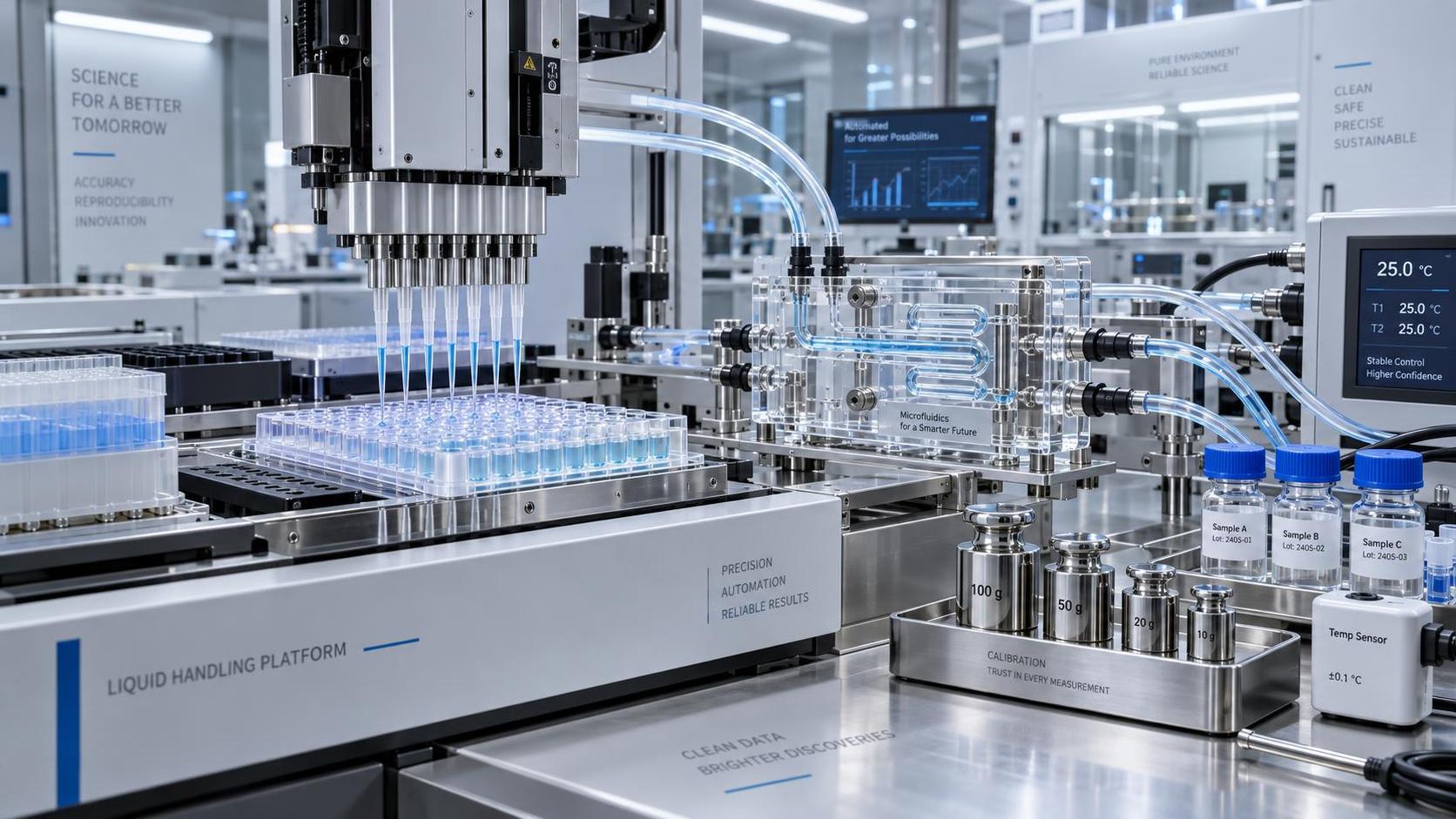
Automated liquid handling often generates fast payback because it reduces high-frequency manual actions and improves repeatability in dosing, dilution, and sample preparation. In many labs, this can affect hundreds of actions per day. Microfluidic automation creates value where sub-microliter control and steady flow conditions are essential for reaction quality or analytical reproducibility.
Bioreactors and cell culture systems produce financial value differently. Their return often comes from contamination control, stable environmental conditions, and better process consistency over 7-day, 14-day, or 21-day growth cycles. Centrifugation and separation technologies reduce bottlenecks where sample throughput, temperature integrity, or handling safety directly affect downstream analysis or release timing.
The following comparison helps finance teams prioritize automation based on operational and financial fit.
This comparison shows why lab automation investment insights should be workflow-specific. A high-cost system may still be the stronger business case if it protects expensive materials, shortens process transfer, or reduces deviation exposure in regulated environments.
When higher-priced equipment is financially justified
A premium platform may be justified when three conditions are present: first, process errors carry high downstream cost; second, validation and traceability requirements are strict; third, the platform is expected to support growth over 3 to 5 years. In these cases, lower downtime, better software integrity, and higher precision often have more value than a 10% lower purchase price.
Implementation Risks That Finance Teams Should Price In
Even a technically strong automation investment can underperform if implementation risk is ignored. Finance approvers should examine the time, labor, and disruption required to move from PO issuance to stable routine operation. In regulated labs, the gap between delivery and productive use can range from 2 weeks to 12 weeks depending on system complexity.
Common risk categories
- Integration risk: incompatibility with existing software, data architecture, or workflow sequence
- Validation delay: incomplete documentation or unclear acceptance protocols
- Training risk: steep learning curve causing low adoption in the first 30 to 90 days
- Service risk: slow spare part replacement or limited field support coverage
- Change-control risk: unmanaged SOP revisions and process ownership gaps
Five-step implementation checkpoint
- Define target workflow and baseline KPIs before purchase.
- Confirm facility fit, utility requirements, and software interfaces.
- Align qualification documents, acceptance criteria, and audit trail needs.
- Schedule user training, SOP revision, and pilot operation period.
- Measure performance at 30, 60, and 90 days against expected ROI inputs.
This structure gives finance teams a clearer view of when savings actually begin. Without such staging, organizations may assume payback starts at installation, when in reality the system only becomes economically productive after qualification, staff adoption, and process stabilization.
Service model and uptime economics
Service support is one of the most overlooked parts of lab automation investment insights. If a critical liquid handling system or pilot reactor is down for 3 days during a compressed development schedule, the lost value may exceed a full year of preventive maintenance fees. Financial reviewers should ask about service-level expectations, remote diagnostics, spare part lead times, and whether calibration can be completed onsite within planned shutdown windows.
A robust support model is not only an operational convenience. It is a financial stabilizer that reduces volatility in project delivery, staffing pressure, and batch scheduling. For labs handling sensitive transitions from R&D to pilot production, that stability is often worth budgeting for upfront.
A Practical Approval Model for Better Automation Decisions
Financial approvers need a method that is repeatable across equipment categories and easy to compare during sourcing. A useful approach is to score each option across six weighted areas: technical fit, lifecycle cost, validation burden, service resilience, scalability, and risk reduction. Each area can be rated on a 1 to 5 scale, then weighted based on business priorities.
Suggested weighting logic
For highly regulated or precision-intensive workflows, technical fit and validation readiness may deserve a combined weighting of 40% to 50%. For multi-site organizations or labs managing frequent method changes, scalability and service coverage may deserve 25% to 35%. Purchase price remains important, but it should be evaluated in relation to the costs it prevents or shifts.
- Technical fit: 20%
- Lifecycle cost: 20%
- Validation and compliance readiness: 20%
- Service and uptime resilience: 15%
- Scalability and future workflow expansion: 15%
- Risk reduction and process consistency: 10%
What stronger approval decisions look like
The strongest decisions are not always the lowest-cost approvals. They are the approvals where finance, engineering, and procurement align on measurable outcomes: fewer deviations, faster qualification, improved output stability, lower labor intensity, and clearer scale-up pathways. In multidisciplinary environments, that alignment turns automation from a capital request into a strategic operating asset.
For organizations comparing systems across G-LSP’s core industrial pillars, the most valuable lab automation investment insights come from benchmarking technical performance against workflow risk and regulatory expectations. That is particularly relevant when dealing with fluidic precision, bioconsistent hardware, and process transfer where small performance differences can create large downstream consequences.
Lab automation investments should be approved on the strength of lifecycle value, not headline price. When financial teams evaluate precision, compliance readiness, service resilience, workflow fit, and scale-up relevance together, they make decisions that protect both budget and operational continuity. If you are assessing automation across pilot-scale reactors, microfluidic systems, bioreactors, centrifugation platforms, or liquid handling workflows, G-LSP can help structure the technical and financial benchmark. Contact us to discuss your application, request a tailored evaluation framework, or explore solution options aligned with your performance and approval goals.
Expert Insights

Chief Security Architect
Dr. Thorne specializes in the intersection of structural engineering and digital resilience. He has advised three G7 governments on industrial infrastructure security.
Related Analysis
Core Sector // 01
Security & Safety
- Regulatory Compliance gaps that delay pharma launchesAuthor :Dr. Elena Carbon

- Pharmaceutical Process Improvement: Reducing Batch Variability Without Delaying Scale-UpAuthor :Dr. Elena Carbon

- Selecting Bioprocessing Modules for Scalable Upstream and Downstream WorkflowsAuthor :Dr. Elena Carbon

- Agricultural Processing Equipment Prices: What Buyers Should Compare Beyond the QuoteAuthor :Dr. Elena Carbon

- Wholesale Mechanical Seals: A Buyer’s Checklist for Materials, Duty, and Supplier QualityAuthor :Dr. Elena Carbon

- How to Qualify a GMP Compliance Supplier for Critical Lab ConsumablesAuthor :Dr. Elena Carbon

- Comparative Technical Benchmarking: Which Metrics Matter for Laboratory Platform Selection?Author :Dr. Elena Carbon

- How to Compare Reactor System Suppliers for Scale-Up, Compliance, and Total CostAuthor :Dr. Elena Carbon