What makes a load cells manufacturer reliable?
Author
Date Published
Reading Time
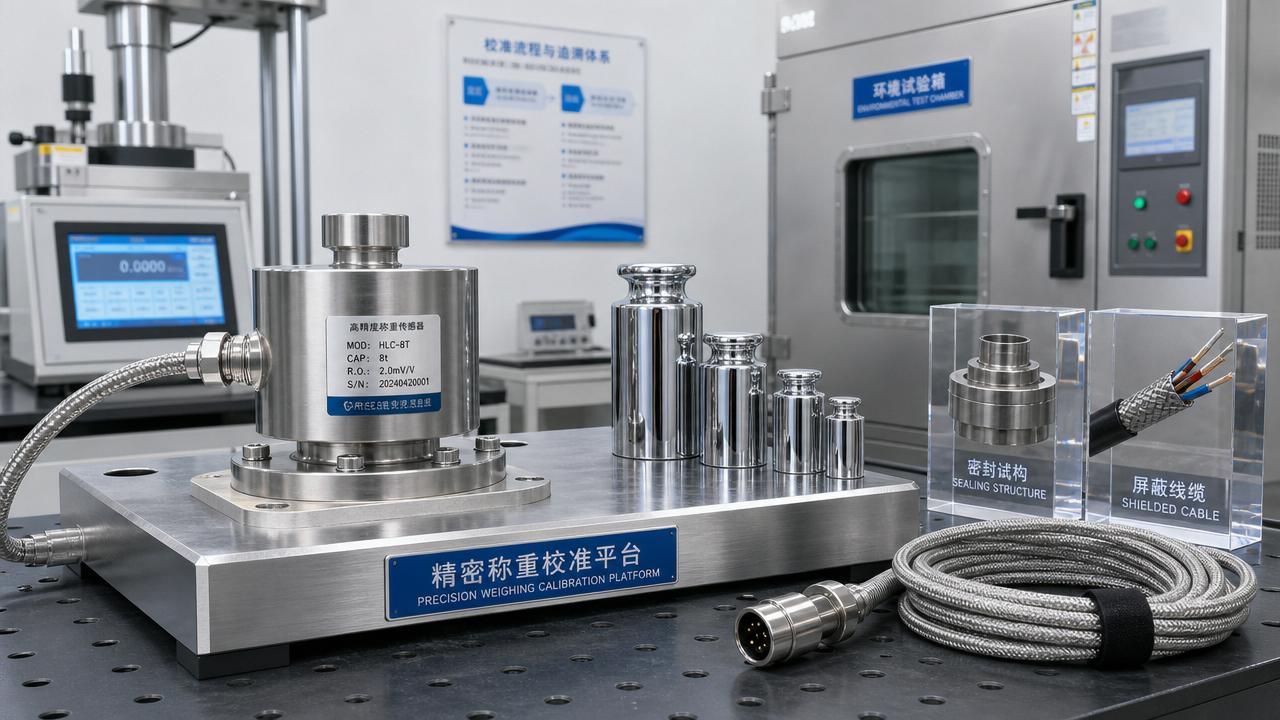
What Makes a Load Cells Manufacturer Reliable?
Selecting a reliable load cells manufacturer is not just a procurement decision.
It affects measurement accuracy, process repeatability, regulatory confidence, and long-term system stability.
Across lab-scale production, fluidic-precision systems, bioprocessing, and automated handling, reliability must be proven technically.
A dependable load cells manufacturer demonstrates calibration integrity, traceable materials, environmental robustness, and application-specific engineering support.
This guide explains the checklist used to separate an engineered partner from a basic component supplier.
Why a Checklist Matters When Evaluating a Load Cells Manufacturer
Load cells often sit quietly inside critical equipment.
They control filling accuracy, reactor mass balance, centrifuge loading, dispensing verification, and automated weighing feedback.
When a sensor drifts, the visible failure may appear elsewhere.
Batch variation, dosing errors, unstable control loops, or unexplained quality deviations may result from weak weighing architecture.
A checklist turns supplier evaluation into a repeatable technical process.
It also helps compare a load cells manufacturer against documented engineering, production, calibration, and support evidence.
Core Checklist for Choosing a Reliable Load Cells Manufacturer
Use the following points before approving any load cell supplier for precision, laboratory, or industrial integration.
- Verify calibration certificates with serial-level traceability, stated uncertainty, test conditions, and reference standards linked to recognized national or international systems.
- Confirm material traceability for stainless steel, aluminum, strain gauges, adhesives, seals, cables, and coatings used in the final sensor assembly.
- Review accuracy specifications under real operating conditions, including non-linearity, hysteresis, creep, repeatability, zero balance, and temperature compensation range.
- Request environmental test data for humidity, vibration, chemical exposure, washdown, thermal cycling, overload, side loading, and electromagnetic interference resistance.
- Evaluate whether the load cells manufacturer offers custom capacity, geometry, mounting, cable exit, sealing level, and signal output options.
- Check production quality controls, including incoming inspection, gauge bonding validation, curing control, bridge balancing, final testing, and batch release records.
- Confirm compliance awareness for ISO, GMP, USP-related environments, cleanroom requirements, hazardous areas, and documented change control expectations.
- Assess engineering support for installation design, load path analysis, mounting accessories, overload protection, summing boxes, amplifiers, and digital interfaces.
- Ask for lifecycle evidence, including field failure rates, warranty handling, spare part continuity, recalibration support, and obsolescence communication.
- Compare documentation quality, because drawings, wiring diagrams, certificates, manuals, and validation files reveal the maturity of the manufacturing system.
Calibration Integrity and Measurement Confidence
Calibration is the first proof point for any load cells manufacturer.
A certificate should show more than a pass statement.
It should include applied loads, output values, environmental conditions, uncertainty, technician identity, equipment references, and calibration date.
For regulated or validated systems, traceability must remain intact from production to installation and periodic recalibration.
A reliable load cells manufacturer also explains how overload events, cable replacement, or mounting changes affect calibration validity.
Practical calibration checks
- Match the serial number on the certificate with the physical sensor, shipment label, and equipment integration record.
- Compare calibration points with the intended working range, not only the nominal rated capacity.
- Check whether recalibration intervals are based on application risk, operating environment, and required measurement uncertainty.
Material Quality, Sealing, and Cleanability
Material quality affects durability, chemical compatibility, hygiene, and dimensional stability.
In fluidic-precision and bioprocessing systems, exposure may include buffers, solvents, detergents, vapor, and sterilization cycles.
A strong load cells manufacturer specifies alloy grade, surface finish, sealing method, ingress protection, and cable jacket compatibility.
Hermetic sealing may be required where condensation, washdown, or aggressive media can compromise bonded strain gauges.
For cleanroom or GMP-adjacent equipment, crevice reduction and cleanable geometry can be as important as rated accuracy.
Application Fit Across Key Technical Scenarios
Pilot-scale reactors and synthesis systems
Reactor platforms require stable mass data during charging, sampling, evaporation, and continuous feed operations.
A load cells manufacturer should account for thermal gradients, agitator vibration, piping forces, and floor-level installation constraints.
Microfluidic and precision dispensing platforms
Small-volume systems depend on low-noise signals and fast response.
The selected load cells manufacturer should support milligram-level verification, shielding guidance, stable electronics, and mechanical isolation from pumps.
Bioreactors and cell culture infrastructure
Bioreactors need weighing components that tolerate cleaning regimes, humid rooms, and long unattended runs.
A dependable load cells manufacturer supports aseptic hardware layouts, corrosion-resistant construction, and drift control over extended cultivation cycles.
Centrifugation and separation technology
Centrifuge-related weighing may involve imbalance detection, rotor loading, or accessory verification.
Here, the load cells manufacturer must address vibration immunity, fatigue strength, shock events, and signal filtering.
Automated pipetting and liquid handling systems
Automated platforms require compact sensors, repeatable mounting, and digital communication compatibility.
The right load cells manufacturer helps validate gravimetric checks without slowing the liquid handling workflow.
Documentation Signals That Reveal Reliability
Documentation quality often predicts operational reliability.
A credible load cells manufacturer provides controlled drawings, revision history, wiring guidance, mounting torque values, and installation limitations.
For validated equipment, change control is especially important.
Unannounced modifications to adhesive systems, cable construction, sealing compounds, or electronics can create qualification problems.
Commonly Overlooked Risks
Side loading is frequently underestimated. Even a premium sensor performs poorly when force enters through an unintended path.
A reliable load cells manufacturer should review mounting design before installation becomes fixed.
Cable integrity is often treated as secondary. Moisture ingress, poor shielding, or incorrect routing can create unstable readings.
Ask the load cells manufacturer for approved cable lengths, grounding schemes, and connector protection methods.
Overload protection is not optional. Lab and production equipment may experience impacts during cleaning, assembly, or maintenance.
Mechanical stops, rated overload limits, and safe handling procedures should be defined early.
Temperature effects can hide inside repeatability problems. Thermal drift may appear as process variation, especially near heaters or chilled vessels.
The load cells manufacturer should disclose compensated ranges and expected output shift under realistic conditions.
Execution Steps for Supplier Qualification
A structured qualification process reduces technical and commercial risk.
- Define the measurement task, including load range, resolution, cycle frequency, cleaning exposure, mounting constraints, and regulatory expectations.
- Shortlist each load cells manufacturer using documented performance, customization capability, industry references, and engineering response quality.
- Request samples or evaluation units, then test them under actual vibration, temperature, wiring, and mechanical installation conditions.
- Validate documentation before purchase approval, including calibration records, drawings, certificates, revision control, and maintenance recommendations.
- Establish acceptance criteria for zero stability, span accuracy, drift, overload recovery, communication reliability, and recalibration procedure.
- Document approved configurations so replacement sensors from the same load cells manufacturer remain interchangeable and audit-ready.
Final Decision Criteria
A reliable load cells manufacturer is defined by evidence, not claims.
The strongest partners combine stable manufacturing, traceable calibration, robust materials, responsive engineering, and long-term configuration control.
Price should be evaluated after the measurement risk is understood.
A low-cost sensor can become expensive if it causes failed validation, downtime, rework, or unexplained process deviation.
For G-LSP-aligned environments, the better choice is usually the load cells manufacturer that can defend every specification.
Start by mapping the load path, required uncertainty, environmental exposure, and documentation burden.
Then compare suppliers against the checklist, request proof, and test performance in the real application.
That approach turns sensor selection into a controlled engineering decision with measurable long-term value.
Expert Insights

Chief Security Architect
Dr. Thorne specializes in the intersection of structural engineering and digital resilience. He has advised three G7 governments on industrial infrastructure security.
Related Analysis
Core Sector // 01
Security & Safety
- Regulatory Compliance gaps that delay pharma launchesAuthor :Dr. Elena Carbon

- Lab-to-Pilot Reactor Scale-Up: Managing Mixing and Heat TransferAuthor :Dr. Elena Carbon

- Biomanufacturing Equipment in Southeast Asia: Evaluating Suppliers and Local SupportAuthor :Dr. Elena Carbon

- Choosing Microplate Washers for Assay Labs: Residual Volume and Plate CompatibilityAuthor :Dr. Elena Carbon

- Automated Buffer Preparation: Troubleshooting pH and Conductivity DriftAuthor :Dr. Elena Carbon

- How to Select an Overhead Crane Pendant Control for Safe, Reliable OperationAuthor :Dr. Elena Carbon

- What Drives Ingredient Processing Equipment Prices Beyond Initial Purchase Cost?Author :Dr. Elena Carbon

- Selecting Modular Chemical Synthesis Equipment for Scalable Process DevelopmentAuthor :Dr. Elena Carbon