When Buffer Throughput Metrics Hide Setup Bottlenecks
Author
Date Published
Reading Time
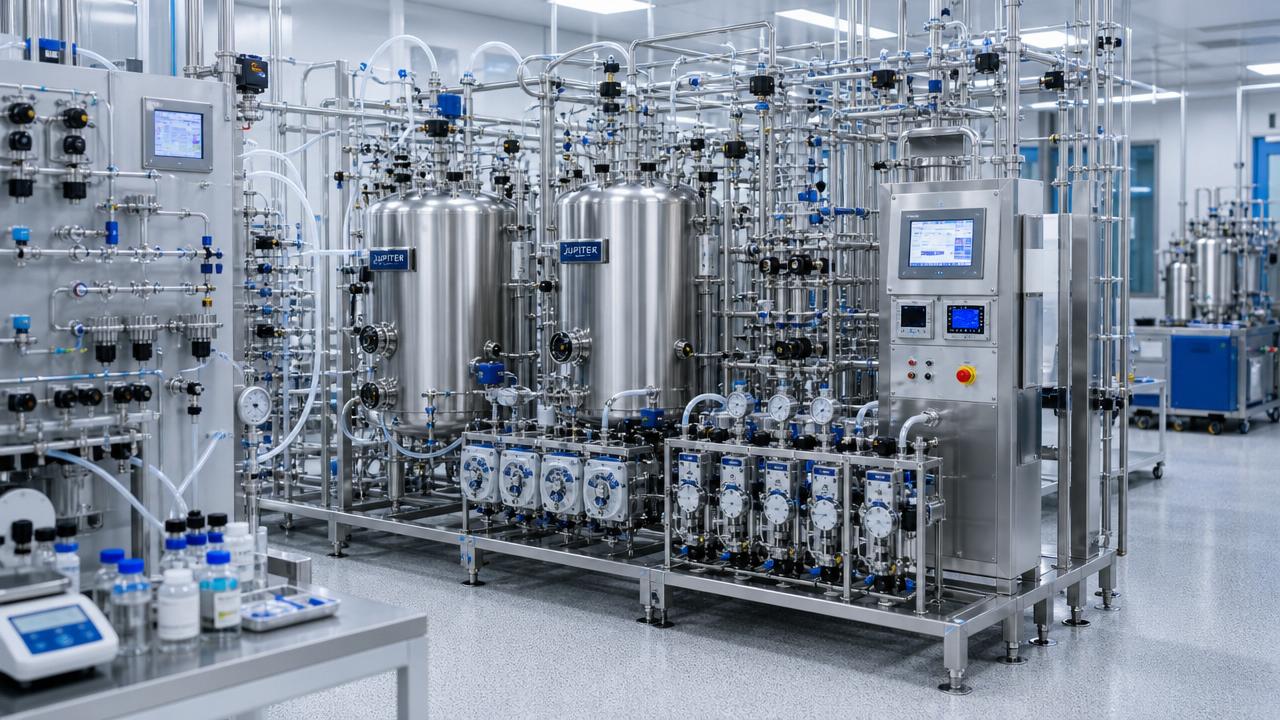
Many project leaders rely on buffer preparation throughput metrics to judge process readiness, yet those numbers can obscure the setup bottlenecks that delay scale-up, strain resources, and distort true production capacity. For engineering decision-makers, understanding what throughput data leaves out is essential to improving fluidic precision, equipment utilization, and execution speed across lab-to-production workflows.
Why buffer performance data is being reinterpreted across lab-to-production programs
A noticeable shift is taking place in how project leaders evaluate readiness in bioprocessing, specialty chemicals, advanced formulation, and other precision-driven environments. In the past, teams often treated buffer preparation throughput metrics as a reliable shorthand for operational strength. If a system could prepare a certain volume per hour, it was assumed that the process was largely scale-ready. That assumption is becoming less defensible.
The reason is not that throughput data has lost value. It is that modern production programs are less tolerant of hidden setup loss. As organizations move faster from development into pilot, clinical, and limited commercial phases, the time spent on line clearance, component changeover, recipe confirmation, tubing configuration, sensor calibration, cleaning verification, and operator coordination has become more visible. In many cases, the true bottleneck is not the mixing step itself but the work required before stable flow begins.
This is especially relevant in environments shaped by personalized therapeutics, smaller batch sizes, higher product variation, stricter documentation, and hybrid batch-to-continuous strategies. Under these conditions, buffer preparation throughput metrics can still look strong while project schedules continue to slip. For engineering managers and project owners, that gap between nominal throughput and executable throughput is now a strategic issue rather than a local operating detail.
The trend signal: setup time is becoming a larger share of total production time
One of the clearest industry signals is that setup duration is consuming a larger proportion of the workday in high-mix, compliance-sensitive operations. This does not always appear in standard dashboards because many performance reviews still emphasize run rate, tank turnover, or prepared liters per shift. But the pattern is increasingly familiar: the equipment achieves target throughput during steady-state operation, yet the overall process underdelivers because preparation windows are fragmented by nonproductive tasks.
For project management leaders, this changes how capacity should be interpreted. A line that looks sufficient on paper may fail under realistic campaign conditions if setup complexity rises faster than production volume. That is why buffer preparation throughput metrics must now be read alongside setup sensitivity, changeover repeatability, operator dependency, and utility coordination. The market is rewarding systems and workflows that reduce friction before the first liter is even delivered.
What is driving this change in the meaning of buffer preparation throughput metrics
Several forces are converging. First, process architectures are becoming more modular. Single-use assemblies, flexible manifolds, and distributed skids improve adaptability, but they also introduce more assembly and verification steps. Second, tighter regulatory and internal quality expectations are increasing documentation, traceability, and confirmation demands around each setup event. Third, more organizations are operating with constrained technical labor, which makes system simplicity and startup standardization more valuable than before.
A fourth driver is the rise of smaller, more frequent campaigns. In these programs, the setup burden repeats more often, meaning hidden inefficiencies accumulate faster. A process that looks efficient for long runs may perform poorly in a multi-changeover week. Finally, digital maturity is exposing old assumptions. As facilities capture better time stamps across staging, verification, transfer, and release steps, they can see that nominal throughput often represents only a fraction of actual elapsed time.
In this environment, buffer preparation throughput metrics are no longer enough as stand-alone indicators. They remain useful, but only when paired with data on startup losses, pre-batch readiness, operator intervention frequency, and utility availability. This broader view helps leaders distinguish between equipment that runs fast and equipment that supports dependable execution.
Where setup bottlenecks usually hide in otherwise high-throughput systems
The most costly setup bottlenecks are rarely dramatic. They are often small interruptions spread across tasks and teams. Tubing routes are revised at the last minute. Sensors require extra checks after cleaning. Raw material staging is technically complete but not aligned to the sequence needed by operators. Recipe management systems are available, yet final parameter confirmation still depends on one experienced person. None of these issues may be reflected in standard buffer preparation throughput metrics, but together they can consume the margin that a schedule depends on.
Another common blind spot is the handoff between disciplines. Mechanical readiness, automation readiness, quality release, and operations readiness can each be marked complete, while the integrated startup path remains fragile. Project leaders often encounter this during scale-up or tech transfer, when a process that worked well in development loses time because site-specific setup requirements were underestimated.
For organizations evaluating fluidic systems, this means throughput should be tested under realistic conditions, not idealized ones. The more a process relies on precision dosing, rapid changeover, or low-volume consistency, the more setup resilience matters. High-performance hardware is still essential, but bioconsistent execution depends equally on how quickly the system becomes ready and repeatable.
Who feels the impact first when throughput metrics hide the real constraint
The impact is not limited to one function. Different stakeholders experience the same hidden bottleneck in different ways, which is why buffer preparation throughput metrics can create cross-functional misunderstanding if they are treated too narrowly.
What engineering decision-makers should evaluate beyond nominal throughput
The practical response is not to stop using buffer preparation throughput metrics, but to place them inside a richer decision framework. Engineering leaders should ask how a system behaves before steady-state begins, how often setup tasks vary by operator, and how easily the process can recover from a minor interruption. They should also examine whether design choices reduce dead legs, simplify priming, shorten calibration, and improve recipe repeatability.
A useful evaluation model includes at least five dimensions: startup time to validated readiness, changeover effort between products or campaigns, degree of manual intervention, dependency on specialist operators, and integration friction with upstream and downstream equipment. When these dimensions are weak, strong throughput numbers can create a false sense of confidence.
This is where technical benchmarking becomes more valuable. Decision-makers need evidence from realistic operating conditions, not only specification sheets. Systems designed around precision fluid handling, controlled dosing, sensor consistency, and stable hardware interfaces are increasingly favored because they compress setup variability as well as support output. In other words, the future advantage belongs to equipment ecosystems that make throughput more usable, not just more impressive.
The next market direction: from speed metrics to readiness metrics
A broader industry direction is emerging from this issue. Buyers and project sponsors are moving from pure speed metrics toward readiness metrics. That means asking not only how fast a buffer can be produced, but how reliably the system can enter production mode, maintain precision, and support fast transitions across campaigns. This shift aligns with larger trends in advanced manufacturing, where utilization, flexibility, and traceability often determine business outcomes more than peak nameplate performance.
For companies involved in lab-scale production, pilot expansion, and fluidic-precision workflows, this has strategic implications. Buffer preparation throughput metrics will still matter in tenders, validation discussions, and internal investment reviews. However, they will increasingly be challenged by questions about deployment speed, process consistency, training burden, and digital observability. Vendors and internal engineering teams that can document these factors credibly will have a stronger position.
How to judge whether your current throughput data is hiding a setup problem
Project leaders do not need a full transformation program to begin. They need better questions. If actual campaign output regularly misses plan despite satisfactory equipment performance during active runs, if different shifts show large variation in startup time, or if experienced operators are consistently required to stabilize early execution, then the problem may be hidden in setup rather than throughput.
It is also worth comparing reported buffer preparation throughput metrics with total elapsed time from staging to approved transfer. That comparison often reveals whether the organization is measuring production in a way that reflects reality. When the gap is wide, the opportunity is not simply to accelerate the mixer or pump. It may be to redesign the startup path, simplify the fluidic layout, standardize assemblies, or improve system interoperability.
Action priorities for teams planning scale-up, procurement, or process redesign
The most effective next step is to combine throughput review with setup mapping. Document every step from material staging to stable operation and identify where approvals, manual adjustments, or sequencing mismatches create drag. Then test whether those losses are structural or correctable. This gives project managers a more realistic basis for scheduling and investment decisions.
For procurement and engineering teams, vendor evaluation should include evidence of startup repeatability, ease of configuration, calibration discipline, and compatibility with actual operating complexity. For operations leaders, performance dashboards should separate nominal production rate from executable cycle performance. And for organizations navigating lab-to-production transitions, the most important question may be this: do current buffer preparation throughput metrics reflect what the system can do in theory, or what the workflow can deliver under live constraints?
If a business wants to understand the trend’s impact on its own workflows, it should confirm three points first: where setup time is truly accumulating, which parts of the process depend too heavily on expert intervention, and whether current equipment selection criteria reward peak speed more than operational readiness. Those answers will do far more for future capacity than another isolated throughput number.
Expert Insights

Chief Security Architect
Dr. Thorne specializes in the intersection of structural engineering and digital resilience. He has advised three G7 governments on industrial infrastructure security.
Related Analysis
Core Sector // 01
Security & Safety
- Regulatory Compliance gaps that delay pharma launchesAuthor :Dr. Elena Carbon

- Pharmaceutical Process Improvement: Reducing Batch Variability Without Delaying Scale-UpAuthor :Dr. Elena Carbon

- Selecting Bioprocessing Modules for Scalable Upstream and Downstream WorkflowsAuthor :Dr. Elena Carbon

- Agricultural Processing Equipment Prices: What Buyers Should Compare Beyond the QuoteAuthor :Dr. Elena Carbon

- Wholesale Mechanical Seals: A Buyer’s Checklist for Materials, Duty, and Supplier QualityAuthor :Dr. Elena Carbon

- How to Qualify a GMP Compliance Supplier for Critical Lab ConsumablesAuthor :Dr. Elena Carbon

- Comparative Technical Benchmarking: Which Metrics Matter for Laboratory Platform Selection?Author :Dr. Elena Carbon

- How to Compare Reactor System Suppliers for Scale-Up, Compliance, and Total CostAuthor :Dr. Elena Carbon