Liquid Handling Software OEM Without Integration Delays
Author
Date Published
Reading Time
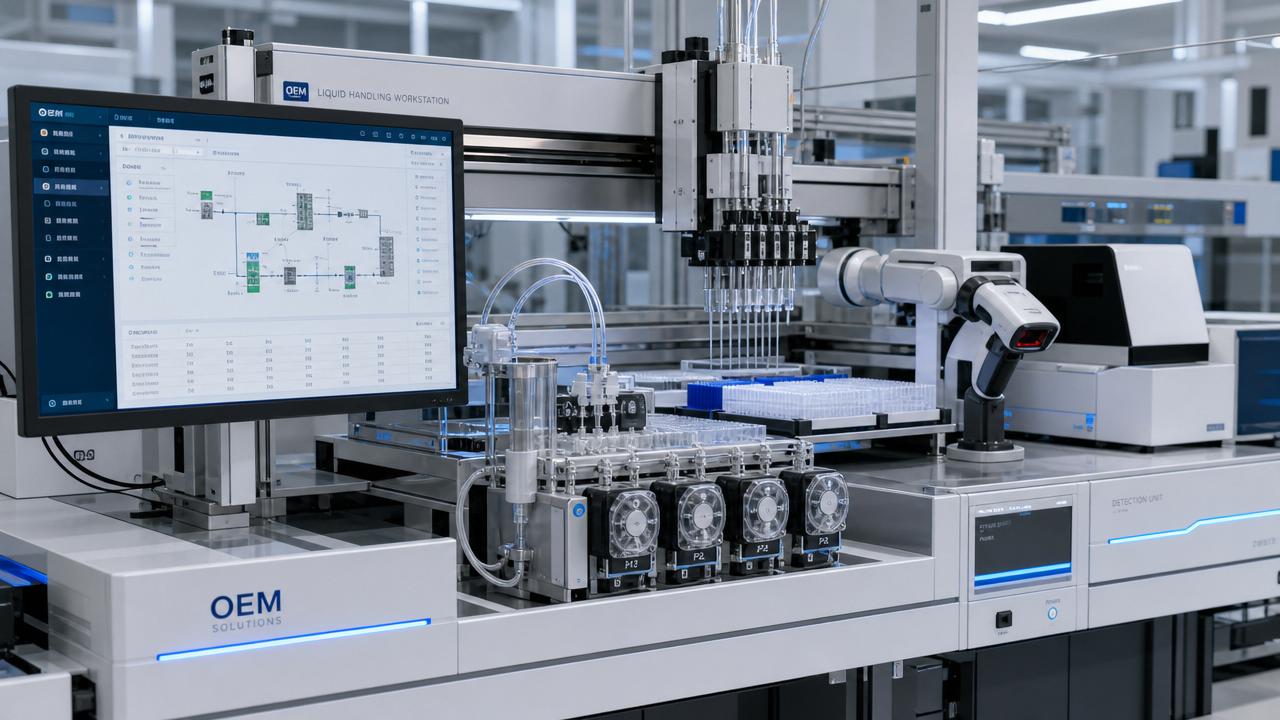
For enterprise buyers under pressure to accelerate automation, liquid handling software oem solutions can remove costly integration bottlenecks while improving compliance, scalability, and workflow precision. This article explores how decision-makers can evaluate OEM-ready platforms that align with advanced lab infrastructure, reduce deployment risk, and support faster transitions from R&D validation to production-grade execution.
Why a checklist-first approach matters before selecting a liquid handling software OEM partner
For enterprise decision-makers, the biggest risk is rarely the software demo itself. The real cost usually appears later: delayed instrument communication, fragmented validation documents, unstable driver support, or an automation stack that works in a pilot lab but breaks during scale-up. A checklist-based evaluation helps buyers avoid being persuaded by interface design alone and focus instead on what determines deployment success.
This is especially relevant in environments influenced by GMP, ISO, USP, traceability requirements, and cross-functional governance. In pharmaceutical, chemical, and advanced lab-scale production settings, liquid handling software oem decisions affect more than pipetting. They influence batch record consistency, method transfer, maintenance planning, audit readiness, and integration with bioprocess, microfluidic, and reactor-adjacent workflows.
A strong evaluation process should therefore answer three practical questions early: can the platform integrate without custom delays, can it scale beyond one workstation, and can it support compliance without creating documentation debt?
The core liquid handling software OEM checklist enterprise buyers should review first
Before discussing licensing or pricing, procurement and technical teams should align on the following priority checks. These points often determine whether a liquid handling software oem project stays on schedule.
- Instrument compatibility: Confirm native support for dispensers, pumps, robotic arms, sensors, barcode systems, incubators, centrifuges, and plate readers already used or planned in your automation cell.
- API and protocol openness: Check whether the OEM platform provides documented APIs, SDKs, communication libraries, and stable command structures instead of closed, service-dependent integration.
- Workflow configurability: Verify whether users can build, edit, version, and replicate methods without rewriting software logic for every assay or transfer step.
- Validation support: Ask for IQ/OQ/PQ readiness, audit trail structure, electronic records compatibility, user permission controls, and documentation templates for regulated environments.
- Data integrity: Review timestamp accuracy, event logging, change history, method approval workflows, and protection against unauthorized edits.
- Deployment architecture: Determine whether the system supports standalone, networked, cloud-connected, or hybrid deployment models suitable for your IT governance.
- Scalability: Confirm how easily one validated workflow can be transferred across multiple sites, instruments, or production-adjacent labs.
- Support model: Clarify response times, firmware coordination, integration engineering ownership, and long-term maintenance obligations.
How to judge whether integration delays are likely before the project starts
One of the most useful ways to evaluate a liquid handling software oem solution is to identify delay signals before signing. Many integration failures are predictable if buyers ask the right questions during technical review.
Fast positive signals
- The vendor has prebuilt drivers for common hardware categories and can show real deployment cases.
- The software supports modular workflow blocks for liquid transfer, mixing, dilution, error recovery, and sample tracking.
- Documentation includes communication maps, exception handling logic, and version compatibility tables.
- The OEM team can define a boundary between software validation, hardware calibration, and customer-side IT tasks.
Warning signals that often lead to delays
- Integration depends on undocumented custom scripts maintained by one engineer.
- Method templates cannot be reused across instruments or sites.
- Audit trails exist, but are difficult to export or reconcile during inspections.
- The supplier cannot state which updates affect validated workflows.
- Software support and hardware support are handled by separate teams with unclear escalation paths.
Operational evaluation table: what enterprise buyers should compare side by side
A structured comparison helps avoid subjective scoring. The table below summarizes practical evaluation dimensions for a liquid handling software oem review in multidisciplinary lab and pilot-scale environments.
Scenario-specific checks: the same OEM platform is not equally suitable for every lab environment
A liquid handling software oem platform may look capable on paper, yet performance depends heavily on the operating context. Enterprise buyers should evaluate scenario fit rather than assuming generic compatibility.
For R&D and assay development labs
Prioritize method flexibility, rapid protocol editing, simulation tools, and support for frequent experimental changes. In this environment, researchers value speed and adaptability. However, the platform should still preserve version history so experimental results remain reproducible when methods mature.
For pilot-scale and process development teams
Focus on method transfer, repeatability, and hardware consistency across multiple units. Teams working between benchtop proof and industrial execution need software that can maintain fluidic precision as volumes, timings, and connected devices become more complex. This is where OEM architectures with modular control logic tend to outperform isolated workstation software.
For regulated production-support labs
The top checks are auditability, access governance, exception logging, and controlled updates. A liquid handling software oem decision in this setting should not proceed without a documented validation strategy and clear ownership of post-upgrade requalification tasks.
For multinational enterprise networks
Standardization becomes critical. Buyers should assess language support, regional service availability, cybersecurity alignment, and the ability to deploy harmonized workflow libraries across sites. The best OEM platform is often the one that reduces cross-site variability, not merely the one with the largest feature list.
Commonly overlooked risks in liquid handling software OEM selection
Several issues are routinely underestimated during procurement. These can erode ROI even when the initial implementation appears successful.
- Underestimating change control: Software updates, firmware changes, and driver revisions can affect validated methods. Buyers should request an update governance policy before approval.
- Ignoring operator training depth: A modern interface does not eliminate training needs. The real issue is whether supervisors, QA teams, and engineers can all use the system correctly within their role boundaries.
- Assuming all APIs are equally usable: Some are technically open but poorly documented, unstable, or limited to read-only functions.
- Separating software from fluidic performance: Precision dispensing accuracy depends on coordinated control of hardware, consumables, calibration, and environmental conditions, not software alone.
- Failing to define ownership: If no one owns integration acceptance criteria, issues remain unresolved between automation, IT, validation, and procurement teams.
Execution guidance: what to prepare before engaging an OEM supplier
The fastest path to a productive supplier discussion is internal preparation. Enterprise buyers should enter the process with a concise but technically meaningful requirement set. This reduces ambiguity and helps compare suppliers fairly.
- Map the current hardware stack: List every instrument, controller, sensor, and external system that must communicate with the liquid handling platform.
- Define target workflows: Identify the exact liquid transfer operations, throughput expectations, precision requirements, and exception paths.
- Classify the compliance level: Distinguish exploratory use from validated or regulated use, because documentation and testing needs differ significantly.
- Set acceptance metrics: Include integration timeline, error tolerance, uptime expectations, traceability needs, and method replication goals.
- Assign decision roles: Involve lab operations, automation engineering, QA, IT security, and procurement early to prevent late-stage objections.
Questions to ask vendors during a liquid handling software OEM review
The quality of supplier answers often reveals more than the product brochure. These questions are particularly useful for enterprise screening:
- Which devices are supported natively, and which require custom integration?
- What documentation is available for APIs, method versioning, and exception handling?
- How are software updates tested against validated workflows?
- Can the same workflow be replicated across multiple instruments and sites without redevelopment?
- What is the standard implementation timeline, and which tasks remain on the customer side?
- How are audit trail exports, user roles, and data retention managed?
- What happens when hardware firmware changes after deployment?
FAQ for decision-makers evaluating liquid handling software OEM options
Is liquid handling software oem mainly a software licensing decision?
No. It is an integration and lifecycle management decision. Licensing matters, but long-term value depends more on compatibility, validation support, maintainability, and workflow transferability.
How can buyers reduce deployment risk quickly?
Start with a defined use case, a complete hardware inventory, and written acceptance criteria. Then ask suppliers to demonstrate how their liquid handling software oem platform handles your exact workflow rather than a generic demo method.
What is the biggest hidden cost?
Custom integration debt. When interfaces, scripts, or exception logic are poorly standardized, every future method change becomes slower and more expensive.
When should enterprise teams involve QA and IT?
At the start. Late involvement often causes rework around cybersecurity, user permissions, data retention, validation scope, and network architecture.
Final decision guide and next-step action list
A strong liquid handling software oem choice should do more than automate transfers. It should shorten integration time, preserve fluidic precision, support compliance expectations, and remain usable as operations expand from R&D to pilot and production-adjacent environments. For enterprise buyers, the most practical decision framework is simple: prioritize proven integration readiness, documented validation support, scalable workflow architecture, and clear post-deployment ownership.
If your organization is moving toward supplier discussions, prepare five items first: required device list, target workflows, compliance level, deployment timeline, and budget range. Then ask vendors to clarify parameter limits, software-hardware compatibility, implementation responsibilities, support terms, and site-scale rollout capability. That information will make it far easier to compare liquid handling software oem options on business value rather than brochure claims alone.
Expert Insights

Chief Security Architect
Dr. Thorne specializes in the intersection of structural engineering and digital resilience. He has advised three G7 governments on industrial infrastructure security.
Related Analysis
Core Sector // 01
Security & Safety
- Selecting Automated Liquid Handling Systems for High-Throughput AssaysAuthor :Lina Cloud

- How to Validate Lab Automation Standards for Reliable, Compliant WorkflowsAuthor :Lina Cloud

- How to Evaluate an Automated Liquid Handling Robot Manufacturer for Reliable Lab Scale-UpAuthor :Lina Cloud

- What Drives Precision Dispensing Technology Cost in Automated Labs?Author :Lina Cloud

- How Liquid Handling Software for Scheduling Improves Throughput in Automated LabsAuthor :Lina Cloud

- How to Choose a Robotic Liquid Handling System for Throughput, Accuracy, and Workflow FitAuthor :Lina Cloud

- Pharmaceutical Liquid Handling for QC: Key Accuracy, Traceability, and Compliance FactorsAuthor :Lina Cloud

- Diagnostic Liquid Handling in Southeast Asia: How to Choose Systems for Throughput and ComplianceAuthor :Lina Cloud