Automated Liquid Handling Robot OEM: Integration Questions First
Author
Date Published
Reading Time
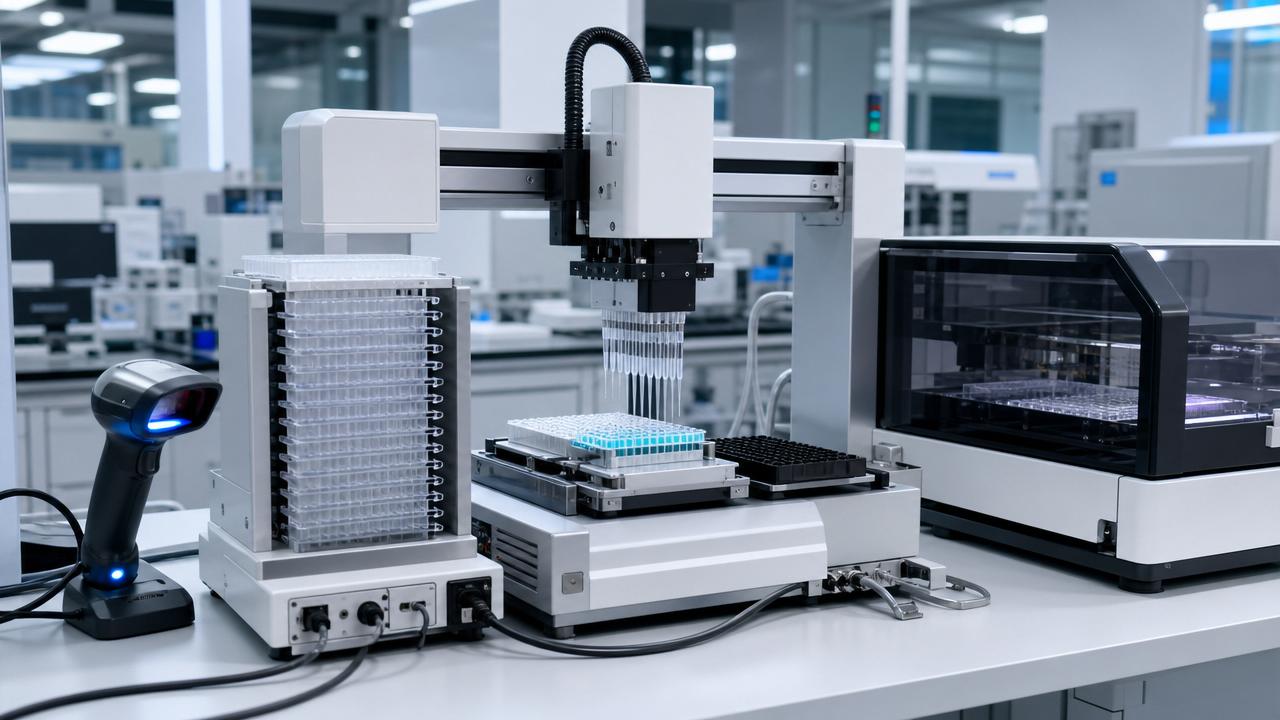
Choosing an automated liquid handling robot OEM is not just about speed, deck size, or headline pricing. For technical evaluators, the real decision starts earlier: can the system integrate cleanly into existing workflows, software environments, validation frameworks, and future automation plans? In most labs, the integration burden—not the dispensing specification—is what determines whether a platform delivers value or becomes a long-term workaround.
That is why the best OEM selection process begins with the right questions. Before comparing channels, tip formats, or quoted throughput, evaluators need to understand how the robot will connect to instruments, LIMS or MES layers, containment requirements, sample traceability controls, and maintenance realities. A strong platform can fail in practice if these answers are vague, proprietary, or deferred until factory acceptance.
For organizations working across sensitive R&D, regulated development, and early production transfer, integration decisions also affect scale-up risk. A liquid handling system that performs well as a standalone unit may still create friction if it cannot support data integrity expectations, method portability, environmental constraints, or third-party device orchestration. In other words, OEM fit is architectural, not merely functional.
This article focuses on the questions technical assessment teams should ask first, what those questions reveal, and how to judge an OEM beyond surface-level claims. The goal is not to create a generic vendor checklist, but to help evaluators identify whether an automated liquid handling robot OEM can support precision workflows today and automation maturity tomorrow.
What technical evaluators are really trying to learn from an OEM review
When users search for an automated liquid handling robot OEM, they are rarely looking for a broad definition of liquid handling automation. Their core intent is practical: they want to assess whether an OEM partner can deliver a system that fits a real laboratory environment without introducing hidden engineering, compliance, or service risk.
For technical evaluators, the primary concern is usually not “Can the robot pipette?” but “Can the robot pipette accurately inside our workflow architecture?” That distinction matters. A system may meet basic liquid transfer specifications and still be a poor fit if it struggles with viscous reagents, requires custom coding for common integrations, or depends on fragile middleware to exchange data with upstream and downstream systems.
Readers in this role also want evidence they can use internally. They need criteria that support technical recommendation, capital justification, and cross-functional alignment with QA, IT, operations, and procurement. As a result, the most valuable content is concrete: integration checkpoints, validation questions, risk indicators, and examples of where OEM assumptions break down during deployment.
This is why the article should prioritize assessment logic over promotional feature lists. Throughput and accuracy matter, but they only become meaningful after the integration layer is understood. In many lab automation projects, the hidden cost sits in custom interfaces, retraining, qualification effort, and change control—not in the robot itself.
Why “integration first” is the right starting point
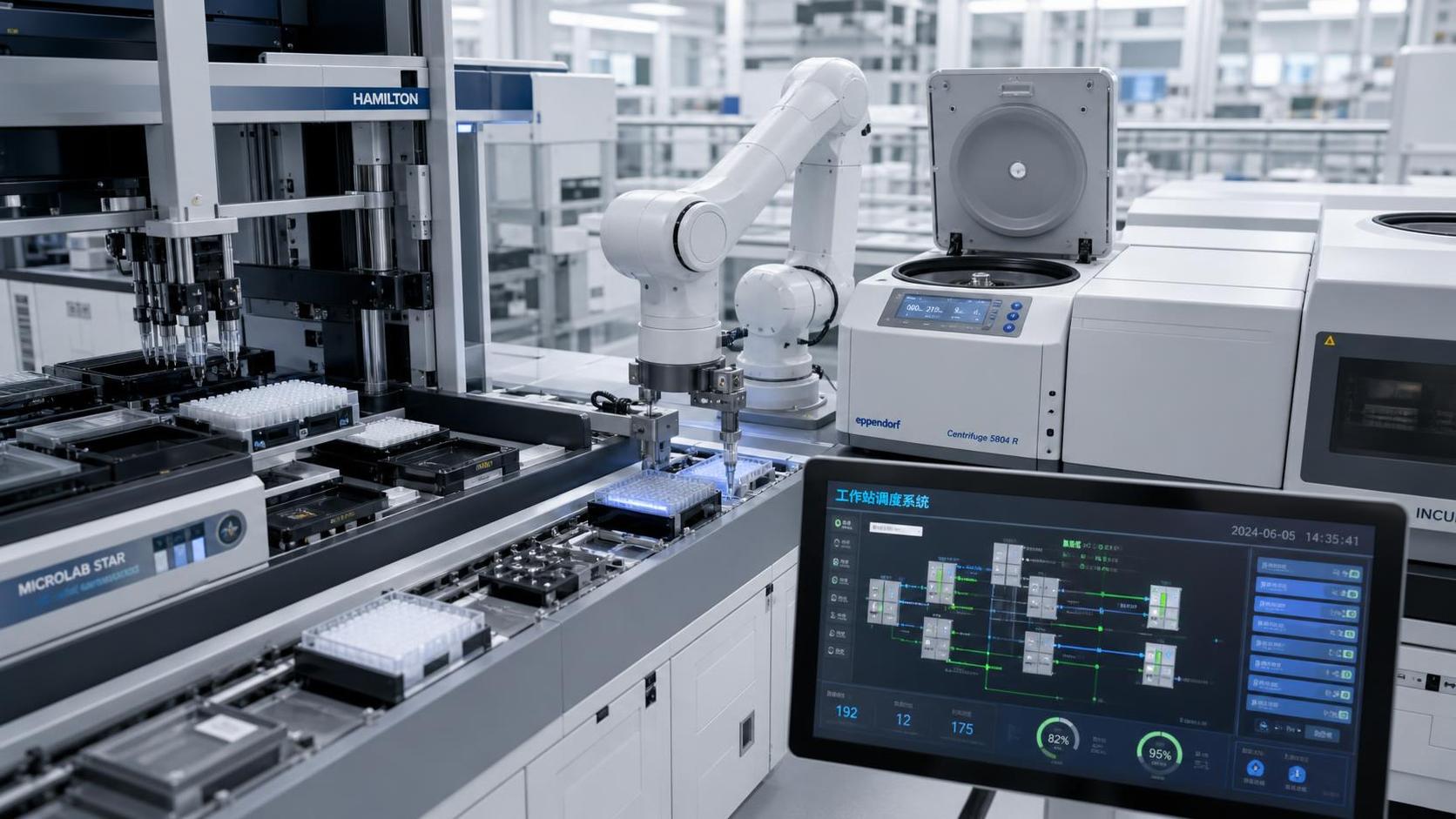
Many OEM conversations begin too late in the system lifecycle. A lab selects a platform based on a successful demo, then discovers that adding barcode readers, balances, sealers, incubators, or analytical instruments requires separate engineering work. The result is a technically capable robot trapped in a fragmented workflow.
Starting with integration questions changes the evaluation sequence. It forces the OEM to explain how the robot behaves as part of a broader automated process, not as an isolated workstation. That includes physical integration, software integration, process integration, and compliance integration. If an OEM cannot answer these areas clearly, the risk is usually transferred to the buyer’s engineering team after purchase.
For technical assessment personnel, this early discipline helps reveal whether the OEM has experience in comparable environments. An OEM that routinely supports pharmaceutical, diagnostics, cell culture, or chemistry workflows will typically discuss integration constraints in detail: deck interoperability, enclosure access, dead volume impacts, audit trail architecture, user permissions, maintenance intervals, and method version control.
By contrast, weak OEMs often rely on abstract assurances such as “customizable,” “open,” or “easy to integrate” without defining the engineering scope behind those words. In a serious evaluation, those terms are not answers. They are prompts for deeper questioning.
The first OEM questions should cover software architecture, not just hardware
One of the most important early questions is simple: What is the software architecture of the system, and how does it communicate with the rest of the lab? This question often reveals more than a long hardware specification sheet. A robot with strong mechanics but weak software openness can become difficult to scale, validate, or maintain.
Evaluators should ask whether the platform supports API access, OPC connectivity, file-based exchange, middleware compatibility, and event-driven communication. The OEM should be able to explain how the robot sends run status, receives worklists, logs user actions, handles method revisions, and records exceptions. If integration relies on manual export-import steps, the automation gain may be more apparent than real.
Another essential question is whether the control environment separates instrument control from orchestration logic. In larger automation architectures, that separation is valuable because it allows workflows to evolve without rewriting every instrument method. If the system only works within the OEM’s own software ecosystem, future expansion may become expensive or operationally restrictive.
Technical evaluators should also probe license structure and software lifecycle management. Does every integration point require additional licenses? How are updates tested and deployed? What happens to validated methods after a software upgrade? Can versions be locked? For regulated or semi-regulated labs, these are not secondary details—they directly affect change control, qualification burden, and business continuity.
Physical integration determines whether the robot fits real lab architecture
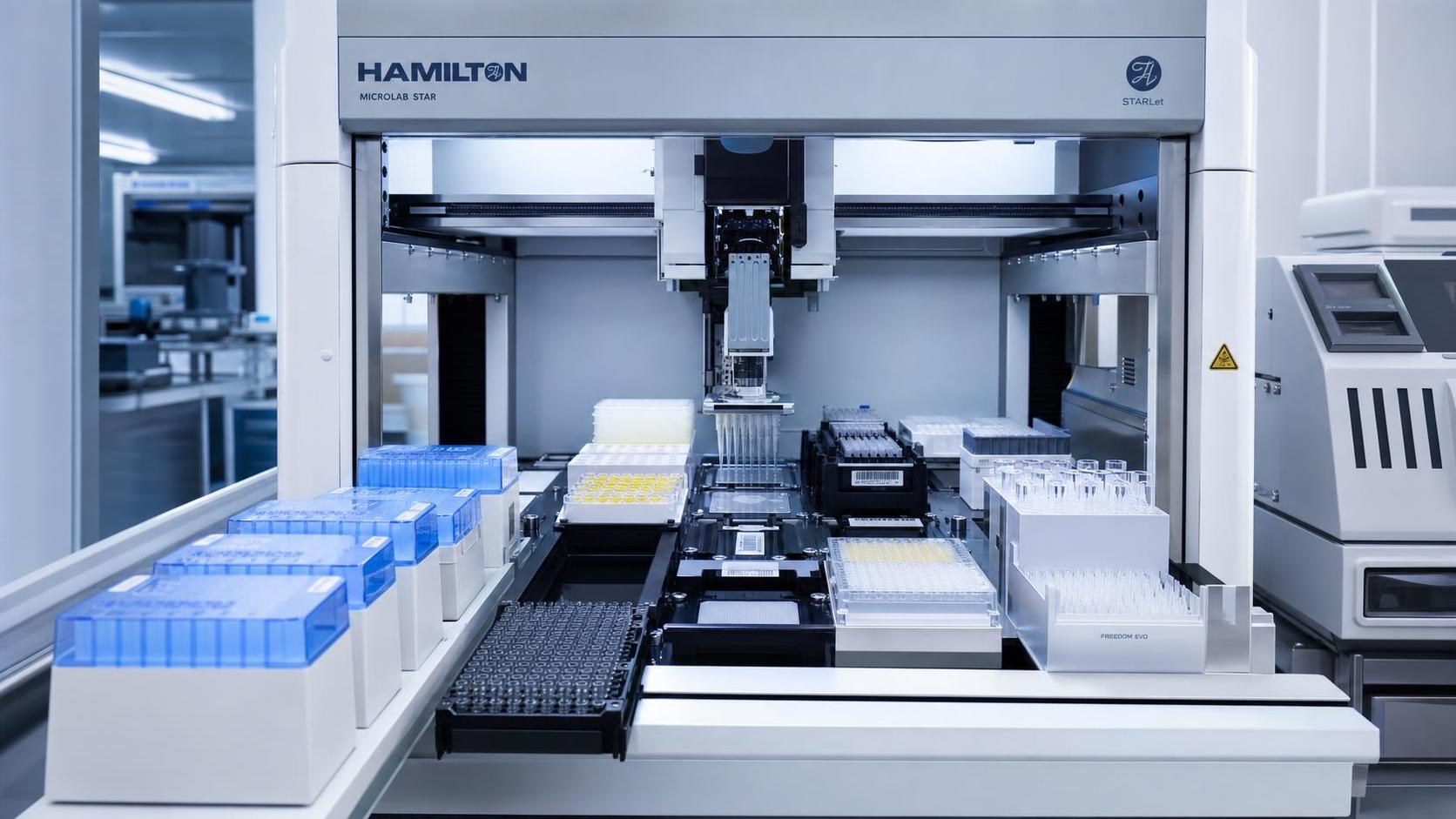
An automated liquid handling robot OEM should also be evaluated on how well the platform fits the physical reality of the lab. Bench space, enclosure constraints, HVAC behavior, vibration sensitivity, utility access, biosafety requirements, and operator ergonomics can all affect system performance and adoption. A compact footprint alone does not guarantee a good installation outcome.
Technical teams should ask how the robot integrates with peripheral devices on and off deck. Can the system accommodate washers, readers, heaters, chillers, shakers, centrifuges, cappers, sealers, or storage units without awkward transfer steps? Are there standardized mounts and communication interfaces, or will each addition require custom fabrication and alignment?
It is also important to understand access patterns for maintenance and cleaning. Some systems look efficient in a brochure but become impractical when tip waste, reservoirs, tubing, or service panels are difficult to reach. If the robot will operate in BSL, GMP-adjacent, or clean environments, assess how the design supports decontamination, material compatibility, and segregation of clean versus waste handling zones.
For high-precision workflows, ask about environmental sensitivity. How does the system perform under temperature variation, airflow disturbance, static load, or high-frequency use? Can calibration stability be maintained in the target environment? OEMs that understand real deployment conditions will provide more than nominal specifications; they will define operating tolerances and mitigation strategies.
Method robustness matters more than demo performance
Many OEM evaluations are influenced by polished demonstrations using ideal liquids, standard plates, and stable timing. But technical evaluators should focus on robustness under actual process conditions. The most useful question is not “Can it run this method once?” but “How reliably can it run this method over time, across operators, lots, and workflow variations?”
That means asking the OEM about liquid classes, dynamic aspiration and dispense control, clot or bubble detection, viscous fluid handling, foaming mitigation, low-retention strategies, and dead volume management. If your workflow includes biologics, enzymes, solvents, cell suspensions, or bead-based assays, the evaluation should reflect those realities instead of generic water-based performance claims.
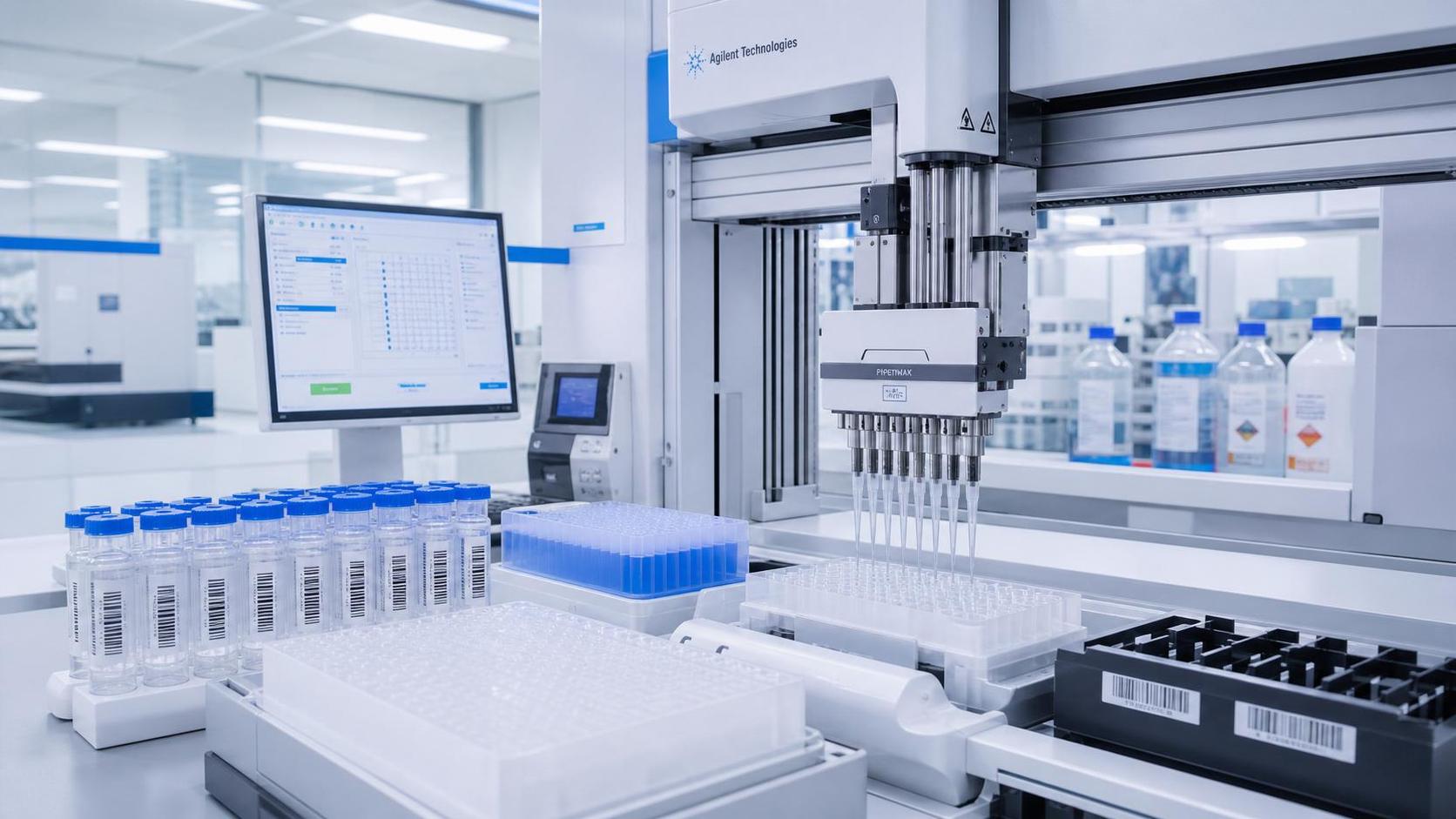
It is also wise to test edge cases. What happens when a plate is slightly warped, a reagent level is low, a tip pickup fails, or a barcode is unreadable? How does the software flag errors, pause runs, support recovery, and preserve traceability? These details indicate whether the OEM has designed for operational resilience rather than ideal conditions alone.
Method portability is another critical issue. If one site develops a workflow, can that method be transferred to another instrument, line, or facility with predictable equivalence? For global organizations, this affects standardization strategy and scale-up confidence. A good automated liquid handling robot OEM should be ready to discuss reproducibility across installed systems, not only on a single demo unit.
Compliance, traceability, and data integrity cannot be added later
For technical evaluators in pharmaceutical, biotech, diagnostics, or quality-driven environments, compliance capability should be addressed at the beginning of OEM discussions. If a system will touch GxP-relevant data, influence batch records, or support release-related testing, data integrity and traceability architecture must be understood before procurement advances.
Ask whether the system supports audit trails, role-based permissions, electronic signatures, time-synchronized event logging, secure method storage, and tamper-evident records. Clarify which data are natively captured, which require external systems, and which are not recorded at all. A surprising number of integration problems come from assuming the robot logs more context than it actually does.
Validation support is equally important. Can the OEM provide IQ/OQ documentation, calibration traceability, software validation packages, cybersecurity documentation, and change notification procedures? If custom integrations are required, who owns validation responsibility for the interface layer? Without a clear answer, qualification scope can expand rapidly after installation.
Even in non-regulated settings, traceability matters. Development labs increasingly need reproducible automation histories to support technology transfer, method comparison, and root-cause analysis. Strong data architecture improves not only compliance readiness but also scientific reliability and collaboration across sites.
Service model and lifecycle support are part of the technical risk profile
A common evaluation mistake is treating service as a procurement topic instead of a technical one. In reality, service capability directly affects uptime, calibration confidence, spare parts continuity, and the speed of issue resolution. An OEM with weak post-install support can undermine even a technically strong platform.
Technical evaluators should ask where service engineers are located, what preventive maintenance schedules are required, which parts are field-replaceable, and how software issues are escalated. Remote diagnostics, log export capability, and documented recovery procedures are especially important for globally distributed labs or high-utilization workflows.
Another high-value question concerns obsolescence planning. How long will the OEM support the current controller, operating system, drivers, and key peripherals? Are there published end-of-life policies? If the platform depends on third-party components, what is the replacement strategy when those components change? These questions help prevent future revalidation or workflow interruption caused by unsupported infrastructure.
Training depth also matters. Is training limited to basic operation, or does it include method optimization, troubleshooting, and administrator-level software management? For complex organizations, the difference between operator competence and true local ownership can determine whether a system scales successfully.
How to compare OEMs without being distracted by headline specifications
When comparing suppliers, technical teams should move beyond side-by-side brochures and build a weighted assessment around workflow fit. The best matrix usually includes six categories: integration architecture, liquid handling performance under actual sample conditions, compliance capability, scalability, service model, and total cost of change.
Total cost of change is particularly important. It includes not just purchase price, but also integration engineering, software licensing, validation effort, training, consumables, preventive maintenance, and the cost of future modifications. Two OEMs may appear similar at the capital expenditure level while having very different lifecycle burdens.
It is also useful to ask each OEM for a boundary statement: what the standard platform does, what requires configuration, what requires custom engineering, and what is outside scope. This forces clarity. It also protects the evaluation process from optimistic assumptions that later become change orders.
Whenever possible, require proof in the form of a workflow-relevant factory acceptance test, a structured user requirement response, and references from comparable installations. For technical evaluators, confidence should come from demonstrated fit, not generic market presence.
A practical shortlist of integration questions to ask first
Before going deep into commercial discussions, technical evaluators should be able to ask and document a focused set of early questions. These questions help expose whether an automated liquid handling robot OEM is likely to support a stable, scalable deployment.
Start with software and controls: How does the robot communicate with LIMS, MES, ELN, schedulers, and third-party instruments? What APIs or standard protocols are supported? How are methods versioned, backed up, restored, and audited? What happens after a software update?
Then move to physical and process integration: Which on-deck and off-deck devices are already qualified for integration? What custom fixturing is typically required? How are plate transfers, barcode reads, consumable checks, and error recoveries handled? Can the system support our actual liquids and labware, not just standard demos?
Finally, address lifecycle risk: What validation documentation is available? What is the maintenance model? What are the expected calibration intervals? How quickly can critical parts be supplied? Which functions are standard, configurable, or custom? The quality of these answers often predicts the quality of the implementation.
Conclusion: the right OEM decision starts with architecture, not automation theater
Selecting an automated liquid handling robot OEM is ultimately a systems decision. Precision dispensing, throughput, and deck flexibility are important, but they are only part of the story. The deeper question is whether the OEM can deliver a platform that integrates into your technical environment with manageable validation effort, reliable traceability, and room for future automation growth.
For technical evaluators, the most productive approach is to ask integration questions first and feature questions second. That order helps identify hidden complexity early, align stakeholders around real implementation needs, and avoid costly surprises after purchase. It also shifts the conversation from marketing claims to operational evidence.
If an OEM can clearly explain software openness, device interoperability, workflow robustness, compliance support, and lifecycle service, it is far more likely to be a credible long-term partner. If those answers remain vague, even an impressive robot may be the wrong fit. In this market, the best procurement outcomes come from evaluating architecture before aspiration speed.
Expert Insights

Chief Security Architect
Dr. Thorne specializes in the intersection of structural engineering and digital resilience. He has advised three G7 governments on industrial infrastructure security.
Related Analysis
Core Sector // 01
Security & Safety
- Selecting Automated Liquid Handling Systems for High-Throughput AssaysAuthor :Lina Cloud

- How to Validate Lab Automation Standards for Reliable, Compliant WorkflowsAuthor :Lina Cloud

- How to Evaluate an Automated Liquid Handling Robot Manufacturer for Reliable Lab Scale-UpAuthor :Lina Cloud

- What Drives Precision Dispensing Technology Cost in Automated Labs?Author :Lina Cloud

- How Liquid Handling Software for Scheduling Improves Throughput in Automated LabsAuthor :Lina Cloud

- How to Choose a Robotic Liquid Handling System for Throughput, Accuracy, and Workflow FitAuthor :Lina Cloud

- Pharmaceutical Liquid Handling for QC: Key Accuracy, Traceability, and Compliance FactorsAuthor :Lina Cloud

- Diagnostic Liquid Handling in Southeast Asia: How to Choose Systems for Throughput and ComplianceAuthor :Lina Cloud