Automated Sample Dilutor Factory Selection Beyond Price
Author
Date Published
Reading Time
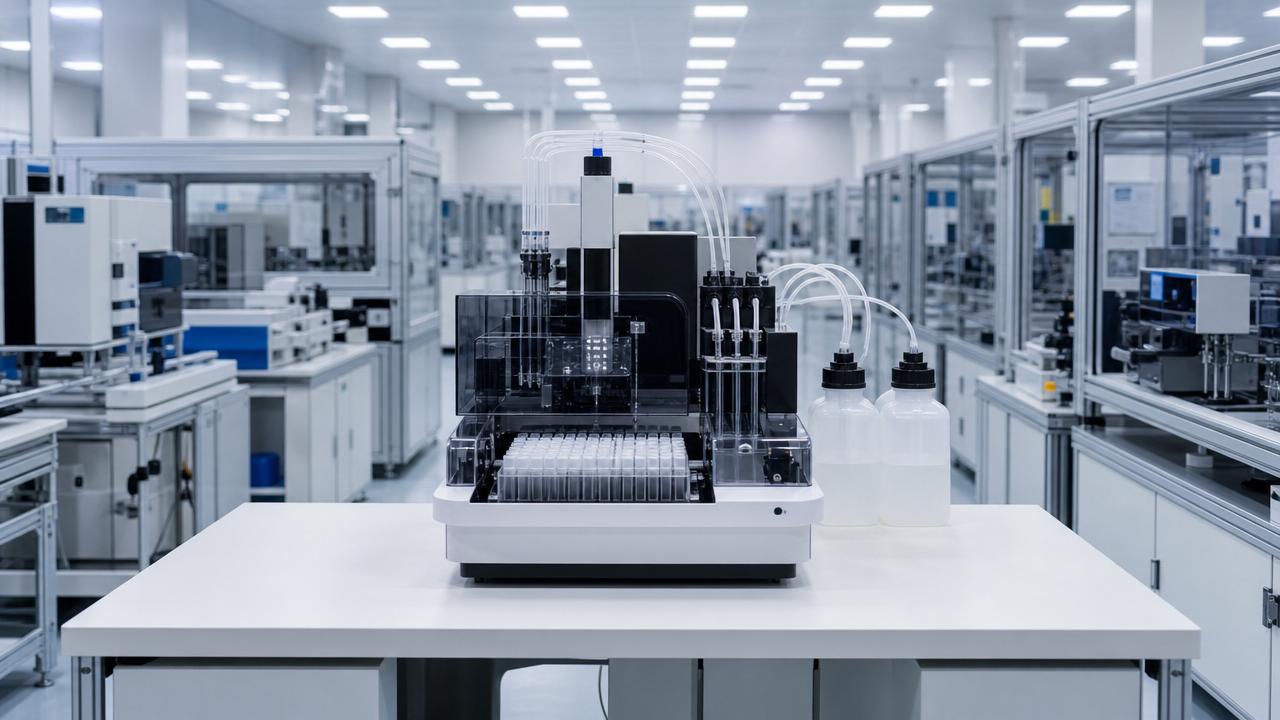
Choosing an automated sample dilutor factory is no longer just about unit cost—it is about precision, compliance, scalability, and supplier reliability. For procurement teams in pharmaceutical, chemical, and laboratory operations, the right factory partner can directly influence workflow consistency, validation readiness, and long-term operational efficiency. This guide explores how to evaluate manufacturers beyond price to support smarter, lower-risk sourcing decisions.
In high-control environments, a poor supplier choice can create hidden costs across calibration drift, delayed installation, documentation gaps, spare-parts shortages, and failed process harmonization between R&D and production support labs. For buyers managing capex, supplier qualification, and internal stakeholder alignment, selecting an automated sample dilutor factory requires a structured review that combines engineering fit, quality systems, lifecycle support, and total operating impact.
Why Price Alone Fails in Automated Sample Dilutor Procurement
An automated sample dilutor is not a simple commodity. In many pharmaceutical and chemical laboratories, it directly affects dilution accuracy, sample traceability, analyst productivity, and method reproducibility. A unit that appears 8% to 15% cheaper at purchase may trigger much higher costs over 3 to 5 years if it requires frequent maintenance, lacks validation documents, or cannot integrate with existing workflows.
For procurement officers, the evaluation should extend beyond the invoice price into measurable operational factors. Typical decision criteria include dilution precision tolerance, throughput per hour, software access control, material compatibility, installation lead time, and service response windows. In regulated sectors, even a 24- to 72-hour delay in technical support can disrupt sample release schedules and create avoidable escalation across QA, QC, and operations.
The hidden cost categories buyers often underestimate
- Requalification effort after repeated component changes
- Downtime caused by pump wear, valve instability, or sensor failure
- Operator retraining when interfaces are not intuitive
- Documentation remediation for IQ/OQ support and audit readiness
- Higher reagent loss from inaccurate low-volume dispensing
- Long spare-parts lead times, often ranging from 2 to 8 weeks
This is why an automated sample dilutor factory should be assessed as a long-term manufacturing partner rather than a one-time equipment vendor. Factories with stable production processes, traceable component sourcing, and repeatable quality control usually offer lower ownership risk, even when the initial quote is not the lowest.
Where low-price sourcing typically breaks down
Low-cost offers often look attractive when procurement is under budget pressure, but the trade-off commonly appears in three areas: incomplete technical files, weaker consistency between production batches, and limited post-sale engineering support. In fluidic systems, even minor variation in tubing quality, seal materials, or pump calibration can influence repeatability at sub-milliliter volumes.
The table below shows how a purchasing team can compare quoted price with broader lifecycle considerations when screening an automated sample dilutor factory.
The key takeaway is straightforward: procurement value comes from stable performance, risk reduction, and support continuity. When buyers compare suppliers only by price, they often miss the variables that most affect uptime, compliance, and internal user satisfaction.
Core Criteria for Selecting an Automated Sample Dilutor Factory
A robust factory assessment should combine manufacturing capability, product design maturity, and quality assurance discipline. For most buyers, 5 core pillars provide a practical framework: precision performance, compliance readiness, production scalability, customization capability, and service infrastructure. These pillars are particularly relevant when sourcing for centralized laboratories, pilot plants, and multi-site analytical networks.
1. Precision and repeatability under real operating conditions
The first question is whether the factory can produce systems that maintain repeatable dilution across the volume ranges your teams actually use. Typical procurement reviews should verify supported dilution ratios, dead-volume management, carryover control, and repeatability at low and mid-volume settings. In many lab workflows, acceptable performance may need to stay within narrow operating tolerances across 10, 50, or 100 consecutive cycles.
Technical points to request during evaluation
- Supported volume range and ratio flexibility
- Calibration method and recommended recalibration interval
- Materials in contact with solvents, buffers, or biological samples
- Cleaning workflow and carryover mitigation design
- Batch test records or outgoing inspection checkpoints
2. Quality documentation and regulated-environment support
For pharmaceutical and controlled chemical settings, documentation is often as important as hardware. A capable automated sample dilutor factory should provide structured records covering assembly inspection, calibration checks, user manuals, maintenance guidance, and component traceability. Buyers should also confirm whether the supplier can support factory acceptance tests, site acceptance activities, and change-notification discipline over time.
If your site works under GMP-aligned expectations or audit-sensitive procedures, even small document gaps can slow qualification by 1 to 3 weeks. Procurement should therefore involve QA or validation representatives early, rather than waiting until a purchase order is already under review.
3. Manufacturing scalability and delivery reliability
A factory may deliver one high-performing prototype yet still struggle with repeat orders. That matters when your organization plans phased deployment across multiple labs or sites. Ask about monthly production capacity, typical lead times, buffer stock for critical components, and how the factory handles urgent orders. Stable delivery windows of 4 to 8 weeks are generally easier to plan around than aggressive promises without production evidence.
4. Customization without uncontrolled complexity
Not every buyer needs customization, but many do need configuration choices such as bottle sizes, tubing materials, interface language, software permissions, or sample rack compatibility. The right automated sample dilutor factory should offer controlled customization with documented engineering review, not improvised changes that introduce maintenance risk later.
The comparison below can help procurement teams build a weighted scorecard before requesting final quotations.
A scorecard like this makes sourcing decisions more defensible internally. It also helps procurement explain why a higher upfront quote may represent lower risk across a 36- to 60-month equipment lifecycle.
Factory Audit Questions That Separate Capable Suppliers from Basic Assemblers
When possible, procurement should move from quotation review to factory-level verification. A site audit, remote technical review, or structured supplier questionnaire can reveal whether the automated sample dilutor factory has the operational discipline required for sensitive lab applications. Buyers do not always need a full audit, but they do need evidence beyond brochures.
Questions to ask during a factory review
- How are fluidic assemblies tested before shipment, and at how many checkpoints?
- Which components are made in-house and which are externally sourced?
- What is the documented process for calibration and final release?
- How does the factory handle design changes, component substitutions, or obsolescence?
- What is the standard spare-parts commitment for the first 12 to 24 months?
- Can the supplier support installation, training, and remote troubleshooting in your region?
What procurement should observe, not just ask
Visual indicators matter. Organized workstations, batch identification, traceable test records, and controlled handling of wetted components often tell more than marketing claims. A factory that can quickly retrieve production records, calibration logs, and revision history is usually better prepared for long-term B2B collaboration than one relying on informal communication and individual technician memory.
For strategic buyers working with intelligence-led sourcing models such as those supported by G-LSP, benchmarking a supplier against international lab and process expectations is especially valuable. It helps bridge the gap between bench-scale evaluation and enterprise deployment, where reproducibility, cross-site comparability, and service governance become decisive.
Implementation, Service, and Lifecycle Planning After Supplier Selection
Selecting the right automated sample dilutor factory is only the first half of the decision. The second half is implementation control. Procurement teams should align with lab management, engineering, and QA on a 4-stage rollout plan covering specification freeze, delivery acceptance, commissioning support, and preventive maintenance scheduling.
A practical 4-stage onboarding model
- Stage 1: Confirm final configuration, utilities, accessories, and documentation package
- Stage 2: Review pre-shipment checks, packing method, and inbound inspection criteria
- Stage 3: Execute installation, user training, and initial performance verification
- Stage 4: Set maintenance intervals, spare-parts list, and escalation contacts
This discipline can reduce post-install surprises and shorten user adoption time. In many facilities, a well-managed onboarding process cuts internal troubleshooting during the first 90 days and improves acceptance across multiple shifts or departments.
Service terms that should be negotiated before purchase order release
Procurement should not wait until after delivery to define support expectations. At minimum, buyers should clarify warranty scope, excluded wear parts, remote support channels, software update policy, and expected response times for critical failures. If the equipment supports regulated testing or high-throughput sample preparation, a spare-parts recommendation for 6 to 12 months is often justified.
Common sourcing mistakes to avoid
- Selecting a supplier before internal users define real sample and solvent conditions
- Comparing quotations without normalizing accessories, validation support, and training scope
- Ignoring service geography and assuming global support is automatically available
- Approving custom changes without assessing maintenance or spare-parts impact
These issues are common because the equipment category appears straightforward at first glance. In practice, the factory’s engineering discipline and support structure often determine whether the investment remains stable over the next 3 years or becomes a recurring operational burden.
Procurement-Focused FAQ for Automated Sample Dilutor Factory Selection
How many suppliers should be benchmarked before final selection?
For most mid- to high-value projects, comparing 3 to 5 qualified suppliers is efficient. Fewer than 3 can limit leverage and technical perspective, while more than 5 often slows alignment unless the project is highly strategic or multi-site.
What lead time is reasonable for this equipment category?
A common planning range is 4 to 8 weeks for standard configurations and 8 to 12 weeks for more customized builds. Buyers should request both manufacturing lead time and spare-parts availability timelines, not just shipping estimates.
Should procurement require a sample test or demonstration?
Yes, especially when viscosity, solvent compatibility, or carryover risk matters. A controlled test using representative sample conditions can reveal practical issues that are not visible in datasheets alone. For critical applications, a structured acceptance checklist is more useful than an informal demo.
How important is post-sale support compared with unit price?
In many B2B lab environments, it is highly important. If a system is used daily or tied to release testing, support delays can cost more than the original price gap. This is why buyers increasingly prioritize supplier stability, response capability, and documentation maturity when choosing an automated sample dilutor factory.
A strong sourcing decision balances technical precision, compliance support, delivery confidence, and lifecycle service—not just the purchase quote. For procurement teams in pharmaceutical, chemical, and advanced laboratory environments, the best automated sample dilutor factory is the one that can deliver repeatable performance, clear documentation, and dependable long-term support aligned with your operating model.
If you are benchmarking suppliers for fluidic-precision equipment or planning a lower-risk sourcing strategy across lab-to-production workflows, now is the right time to refine your factory evaluation criteria. Contact us to discuss your application, request a tailored assessment framework, or explore more solutions for high-precision liquid handling and lab-scale production systems.
Expert Insights

Chief Security Architect
Dr. Thorne specializes in the intersection of structural engineering and digital resilience. He has advised three G7 governments on industrial infrastructure security.
Related Analysis
Core Sector // 01
Security & Safety
- Ultra-Low-Volume Dispensing: Evaluating Accuracy and Precision at Nanoliter ScaleAuthor :Lina Cloud

- Dial Indicators in Bulk: Accuracy Grades, Mounting Styles, and Supplier ChecksAuthor :Lina Cloud

- Why hydraulic hoses bulk orders fail pressure checks?Author :Lina Cloud

- How to Vet a Titration System OEM Supplier Before Scale-UpAuthor :Lina Cloud

- Titration Accuracy and Sensitivity Data That Actually MatterAuthor :Lina Cloud

- Choosing a Peristaltic Pump for Lab Wholesale Without OverbuyingAuthor :Lina Cloud

- How Much Titration Accuracy Is Enough for Routine QC Work?Author :Lina Cloud

- Why automated buffer preparation factory output can vary by batchAuthor :Lina Cloud