Automated Buffer Preparation Factory Claims Worth Testing
Author
Date Published
Reading Time
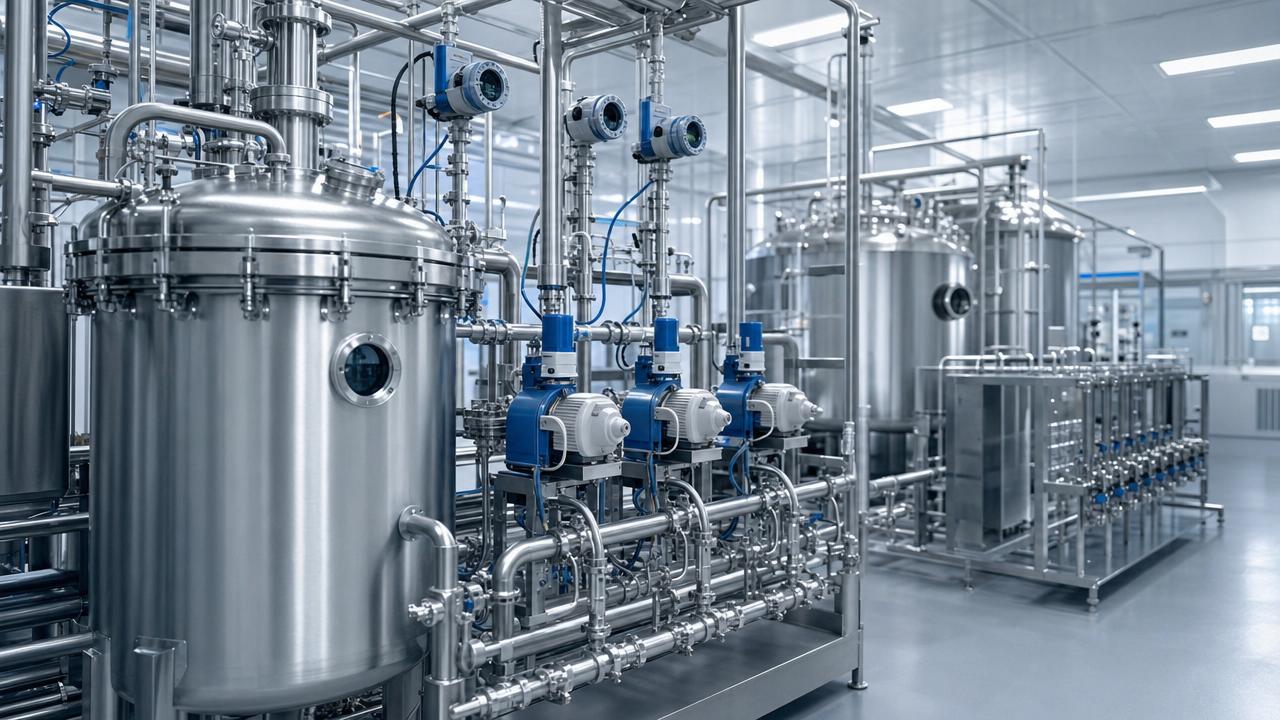
For business evaluators assessing modern lab infrastructure, any automated buffer preparation factory claim deserves close, evidence-based review. In high-stakes bioprocess and chemical environments, performance is not defined by automation alone, but by fluidic precision, batch consistency, compliance readiness, and scalable integration. This article examines which factory-level claims are truly worth testing before procurement decisions shape long-term operational efficiency.
What should business evaluators really test in an automated buffer preparation factory?
The term automated buffer preparation factory often sounds straightforward: reduced manual handling, faster mixing, and improved repeatability. In practice, however, procurement teams are not buying a marketing phrase. They are assessing whether an integrated system can deliver concentration accuracy, traceable batch execution, hygienic design, and reliable handoff to adjacent unit operations.
For commercial evaluation teams in pharmaceutical, biotech, specialty chemical, and advanced laboratory environments, the key question is not whether automation exists, but whether automation performs under production-like variability. Feedstock quality shifts. Water quality can fluctuate. Viscosity changes across formulations. Operator intervention points may still exist. These realities determine whether a claimed automated buffer preparation factory supports scale-up or creates hidden operational risk.
This is where G-LSP provides value. Its benchmarking perspective is built around lab-scale production, fluidic precision, and technical comparability across reactors, microfluidics, bioreactors, centrifugation, and liquid handling systems. That multidisciplinary view matters because buffer preparation is rarely isolated. It affects upstream culture performance, downstream purification stability, analytical reproducibility, and transfer readiness between pilot and production workflows.
- Can the system control dosing precisely across multiple raw material concentrations and target volumes?
- Does it provide verifiable batch consistency rather than only nominal automation?
- Is the design compatible with GMP-oriented cleaning, data traceability, and regulated documentation expectations?
- Will the platform integrate with existing tanks, skids, pumps, MES, SCADA, or single-use infrastructure?
Why factory claims often need deeper verification
Vendors may highlight throughput, touchscreen control, or recipe storage. Those features are relevant, but they do not automatically prove process fitness. A useful business review examines the system under realistic conditions: short batches, frequent recipe changes, different buffer chemistries, and handoffs to bioprocess or chemical synthesis operations. Claims worth testing are those tied to measurable outcomes, not cosmetic automation.
Which performance claims in an automated buffer preparation factory are worth validating first?
Before comparing suppliers, evaluators should define a validation sequence. Not all performance claims carry equal business value. Accuracy, reproducibility, and compliance readiness usually matter more than nominal maximum output. The table below helps prioritize which automated buffer preparation factory claims deserve early technical scrutiny and why they influence procurement risk.
For most buyers, concentration accuracy and repeatability should be tested before headline throughput. If a system mixes quickly but requires frequent calibration correction, manual adjustment, or post-batch verification failures, the claimed efficiency of the automated buffer preparation factory is overstated. G-LSP-style benchmarking encourages evaluators to rank claims by operational consequences, not sales presentation order.
Technical indicators that carry real decision value
Useful indicators often include dosing resolution, sensor stability, mixing homogeneity, dead-leg reduction, CIP or SIP compatibility where relevant, and data traceability. In buffer-intensive settings, even small inconsistencies in pH adjustment or salt concentration can cascade into filtration variability, chromatography shifts, or unstable biological performance.
- Demand evidence from repeated runs rather than a single demonstration batch.
- Ask whether test data were generated under water-for-injection, purified water, or general utility water conditions.
- Review how the system behaves during low-volume, high-value formulations where dosing precision is most exposed.
How do application scenarios change the right automated buffer preparation factory choice?
An automated buffer preparation factory suitable for monoclonal antibody process support may not fit a specialty chemical pilot plant or a multi-product development laboratory. Procurement teams often make poor decisions when they compare systems without anchoring them to actual operating scenarios. The relevant mix of speed, flexibility, hygiene, and integration changes by use case.
The following scenario table shows why application context should shape evaluation criteria, especially when business teams need to justify capital expenditure across multiple departments.
The practical lesson is simple: a flexible lab-facing platform may outperform a larger system if your real need is frequent buffer turnover and rapid analytical support. Conversely, if the goal is pilot-to-production continuity, a more robust automated buffer preparation factory with stronger controls and integration may deliver better total value even at a higher entry cost.
Where G-LSP’s multidisciplinary approach matters
Because G-LSP benchmarks across fluidic handling, reactors, bioreactors, separation, and precision dispensing, it is well positioned to assess interface risks. A buffer system may appear strong in isolation but fail at transfer points: feeding a bioreactor, supplying a chromatography skid, or supporting an automated liquid handling workflow. Business evaluators should treat system compatibility as a core performance dimension, not a secondary installation issue.
Procurement guide: what should you compare beyond brochure specifications?
A strong procurement process for an automated buffer preparation factory should combine technical review, commercial analysis, compliance screening, and implementation planning. Many sourcing mistakes happen because buyers compare only visible hardware and list price while underestimating qualification workload, software constraints, service responsiveness, and changeover losses.
Core evaluation checklist for business teams
- Define the real batch envelope. Include minimum and maximum volumes, buffer families, pH ranges, conductivity targets, and expected recipe switch frequency.
- Review fluid path architecture. Check materials of construction, dead volume, cleaning access, sensor placement, and compatibility with single-use or reusable assemblies.
- Assess control and data capabilities. Confirm recipe management, audit trail options, user permissions, export formats, and integration with plant or lab digital systems.
- Request test protocol details. Ask how the supplier demonstrates repeatability, which analytical endpoints are used, and whether edge-case scenarios are included.
- Estimate lifecycle burden. Include spare parts, calibration frequency, preventive maintenance expectations, consumables, and operator training needs.
For commercial evaluators, this checklist supports internal alignment. Engineering, QA, operations, and procurement often use different decision language. A structured comparison framework translates technical details into business consequences such as ramp-up time, deviation exposure, and cost of delayed validation.
Questions that expose hidden risk
- How does the automated buffer preparation factory perform when raw material concentration varies from lot to lot?
- What manual intervention remains during recipe exception handling, and how is it recorded?
- What is the expected downtime for sensor replacement, recalibration, or cleaning verification?
- Can the platform support future continuous or semi-continuous manufacturing strategies without major redesign?
How should you balance cost, alternatives, and implementation risk?
Not every operation needs a fully integrated automated buffer preparation factory from day one. Some sites can achieve acceptable performance through semi-automated skids, modular dosing systems, or phased deployment. The right choice depends on batch criticality, labor exposure, growth plans, and compliance maturity. Cost comparison must therefore include both direct and indirect factors.
The table below outlines common solution paths and the trade-offs business evaluators should expect when comparing an automated buffer preparation factory against alternative approaches.
The most expensive option is not automatically the most costly over time, and the lowest-price solution may create expensive variability. Evaluators should model labor savings, deviation reduction, time-to-batch-release impact, and expansion fit. In regulated or highly sensitive environments, data integrity and reproducibility often justify a stronger automation platform sooner than expected.
What standards, compliance expectations, and documentation should be reviewed?
A credible automated buffer preparation factory must be assessed not only for process function but also for documentation discipline. In pharmaceutical and life science settings, procurement decisions are tightly linked to validation effort. In chemical and cross-sector laboratory settings, material compatibility, safe operation, and traceable maintenance are equally important. Claims about compliance readiness should be checked against actual deliverables.
Compliance review points worth requesting
- Material documentation relevant to wetted components and chemical compatibility.
- Calibration and maintenance guidance for sensors, pumps, and control loops.
- Functional descriptions for recipe management, alarms, audit trails, and user permissions.
- Support package clarity for FAT, SAT, commissioning, and qualification boundaries where applicable.
- Alignment with common industry frameworks such as ISO-oriented quality expectations, USP-relevant material considerations, and GMP-style documentation discipline when used in regulated production chains.
G-LSP’s benchmarking value is especially relevant here because technical fit and compliance fit often diverge. A platform may perform well mechanically yet create excessive qualification work because the documentation package is weak, software structure is opaque, or component traceability is incomplete. Business evaluators should treat documentation completeness as a commercial risk factor.
Common misconceptions and FAQ about automated buffer preparation factory selection
Is a higher automation level always better?
No. A higher automation level is valuable only if it matches process complexity, staffing model, and validation capacity. Some organizations benefit more from modular automation with clear operator control than from a fully integrated automated buffer preparation factory that exceeds current operational maturity and slows implementation.
What should buyers prioritize if budgets are limited?
Start with the cost of variability, not just the cost of hardware. If buffer inconsistency causes repeated batch adjustment, troubleshooting, analytical delay, or process instability, accuracy and traceability should rank first. In lower-risk environments, phased automation may be more practical than immediate full-factory deployment.
How long does implementation typically take?
Implementation depends on site readiness, utility connections, documentation needs, software integration, and qualification scope. Even a technically strong automated buffer preparation factory can face delays if digital interfaces, cleaning procedures, or user requirement specifications are not defined early. Buyers should ask for a milestone-based delivery plan rather than a single lead-time number.
Which mistakes are most common during supplier comparison?
Common mistakes include comparing maximum throughput without comparing batch repeatability, ignoring changeover time, overlooking service access to pumps and sensors, and assuming documentation will be sufficient because the hardware appears advanced. Another frequent error is evaluating the automated buffer preparation factory as a standalone purchase instead of a node in a wider fluidic ecosystem.
Why choose us for automated buffer preparation factory evaluation support?
G-LSP supports business evaluators who need more than vendor brochures and generic comparison sheets. Our strength lies in technical benchmarking grounded in the architecture of micro-efficiency: fluidic precision, bioconsistent hardware, and cross-platform understanding from lab experimentation to industrial transition. That perspective helps procurement, engineering, and operations teams evaluate whether an automated buffer preparation factory can truly support current workflows and future scale ambitions.
If you are reviewing an automated buffer preparation factory, you can consult us on practical points that affect real procurement outcomes:
- Parameter confirmation for dosing precision, pH control, conductivity targets, and batch range fit.
- Solution selection across pilot-scale reactors, microfluidic interfaces, bioreactor support infrastructure, centrifugation-adjacent workflows, and automated liquid handling compatibility.
- Delivery timeline review, including FAT or SAT planning, commissioning dependencies, and qualification expectations.
- Customized evaluation frameworks for multi-site procurement, phased deployment, or mixed regulated and non-regulated operating environments.
- Documentation and compliance discussions related to ISO-oriented quality expectations, USP references, GMP-relevant workflows, and traceability readiness.
- Quote-stage support focused on comparable scope definition, hidden integration costs, and lifecycle service assumptions.
When procurement decisions influence validation effort, process stability, and long-term expansion, evidence matters more than claims. Contact us to review your automated buffer preparation factory shortlist, compare technical fit across use cases, and build a decision framework that reduces uncertainty before capital is committed.
Expert Insights

Chief Security Architect
Dr. Thorne specializes in the intersection of structural engineering and digital resilience. He has advised three G7 governments on industrial infrastructure security.
Related Analysis
Core Sector // 01
Security & Safety
- Ultra-Low-Volume Dispensing: Evaluating Accuracy and Precision at Nanoliter ScaleAuthor :Lina Cloud

- Dial Indicators in Bulk: Accuracy Grades, Mounting Styles, and Supplier ChecksAuthor :Lina Cloud

- Why hydraulic hoses bulk orders fail pressure checks?Author :Lina Cloud

- How to Vet a Titration System OEM Supplier Before Scale-UpAuthor :Lina Cloud

- Titration Accuracy and Sensitivity Data That Actually MatterAuthor :Lina Cloud

- Choosing a Peristaltic Pump for Lab Wholesale Without OverbuyingAuthor :Lina Cloud

- How Much Titration Accuracy Is Enough for Routine QC Work?Author :Lina Cloud

- Why automated buffer preparation factory output can vary by batchAuthor :Lina Cloud