Titration System OEM Supplier: Signs of a Better Fit
Author
Date Published
Reading Time
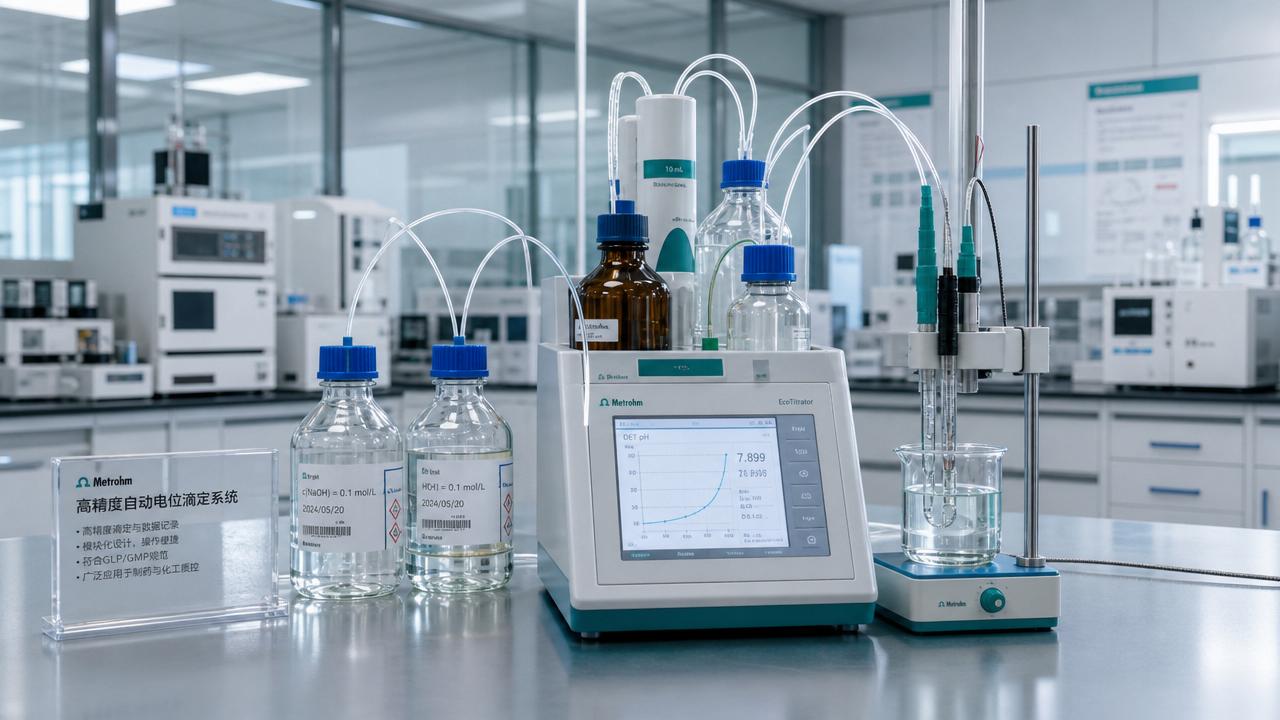
Choosing the right titration system OEM supplier can determine whether your lab scales with confidence or stalls under compliance, precision, and integration risks. For enterprise decision-makers in pharmaceutical and chemical operations, the better fit is not just about equipment cost—it is about fluidic accuracy, regulatory alignment, and long-term production readiness across every stage from lab validation to industrial execution.
In high-value environments where formulation development, raw material verification, in-process control, and final release testing all depend on repeatable analytical performance, a titration system OEM supplier becomes part of the operating model, not just the purchasing file. The difference between an acceptable vendor and a strong-fit partner often shows up in 3 places: measurement consistency, documentation readiness, and integration support over a 5- to 10-year equipment lifecycle.
For procurement leaders, lab directors, and engineering teams, this evaluation goes beyond whether a system can perform acid-base, Karl Fischer, redox, or potentiometric titration. It includes whether the supplier can support multi-site validation, spare parts availability within 48 to 72 hours, firmware traceability, and installation plans aligned with ISO, USP, and GMP expectations. That is especially relevant for organizations moving from lab-scale workflows to pilot or continuous production models.
Why supplier fit matters more than list price
A low initial quote can quickly become expensive if the titration platform introduces manual workarounds, inconsistent endpoint detection, or delayed qualification. In enterprise settings, even a 2% deviation in repeatability or a 1-week delay in validation can disrupt release timelines, method transfer schedules, or internal audit readiness. A strong titration system OEM supplier reduces these risks by designing around process stability and service continuity.
The best-fit supplier also understands where titration data sits in the wider production architecture. In pharmaceutical and chemical organizations, titration is rarely isolated. It connects to LIMS, ELN, batch records, ERP procurement logic, and quality review workflows. If communication protocols, audit trail settings, or user permission structures are weak, the cost of ownership rises long after the procurement event is closed.
The hidden costs of poor alignment
Decision-makers often evaluate 4 visible items first: price, lead time, configuration, and warranty. However, the hidden cost drivers tend to emerge in the first 6 to 12 months. These include reagent overconsumption, calibration drift, unresolved software compatibility issues, and slower analyst onboarding. For a regulated operation, incomplete IQ/OQ documentation can add another 2 to 4 weeks before the system is usable in validated routines.
- Higher rework rates from unstable dosing precision
- Additional operator training due to poor interface logic
- Downtime from delayed spare parts or service escalation
- Data integrity concerns when audit trails are limited
- Method transfer challenges between R&D and production QC labs
Where better-fit suppliers create measurable value
A capable titration system OEM supplier creates value in measurable ways: dosing accuracy at microliter-level control, robust burette durability over thousands of cycles, repeatable endpoint determination across multiple analysts, and service protocols with documented response windows. In many organizations, shortening analyst setup time from 3 days to 1 day or reducing method adjustment cycles from 5 rounds to 2 rounds is operationally more valuable than a modest unit discount.
The table below shows how supplier fit should be assessed beyond headline pricing.
The practical takeaway is clear: a better-fit titration system OEM supplier protects analytical consistency and accelerates readiness across the wider laboratory-to-production chain. That is closely aligned with the G-LSP view of micro-efficiency, where fluidic precision and hardware consistency are not optional features but operating requirements.
The technical signs of a better titration system OEM supplier
Technical fit starts with the supplier’s ability to translate application needs into a stable system architecture. Enterprise buyers should examine 5 areas first: dosing precision, sensor compatibility, chemical resistance, automation flexibility, and data traceability. A supplier that cannot discuss these points in practical detail is unlikely to support scale-up or cross-site standardization effectively.
1. Precision that matches the real method window
Not every titration workflow requires the same control range. For low-volume or high-value assays, dosing increments and endpoint sensitivity matter more than broad catalog claims. A qualified titration system OEM supplier should explain expected performance across sample sizes, reagent types, and endpoint modes, including where precision may vary due to viscosity, temperature, or sample matrix complexity.
Key questions to ask
- What repeatability range is typical for the application volume in question?
- How many dosing cycles are expected before routine maintenance is required?
- Can the system handle both aqueous and non-aqueous methods without frequent hardware changes?
- What is the standard calibration interval: daily, weekly, or method-dependent?
2. Materials and wetted-path compatibility
In chemical and pharmaceutical settings, reagent compatibility is a primary reliability issue. Tubing, seals, burettes, valves, and electrodes must tolerate the actual chemistry in use, not a generic benchmark. A better-fit supplier will map wetted materials to expected solvents, acids, bases, or moisture-sensitive reagents, and identify replacement intervals such as every 6 months, 12 months, or by cycle count.
This is especially important for Karl Fischer applications, aggressive solvent systems, or high-throughput QC environments where 20 to 50 samples may be processed per day on one station. Materials mismatch can cause drift, contamination, and unplanned downtime far earlier than expected.
3. Software, traceability, and regulated use
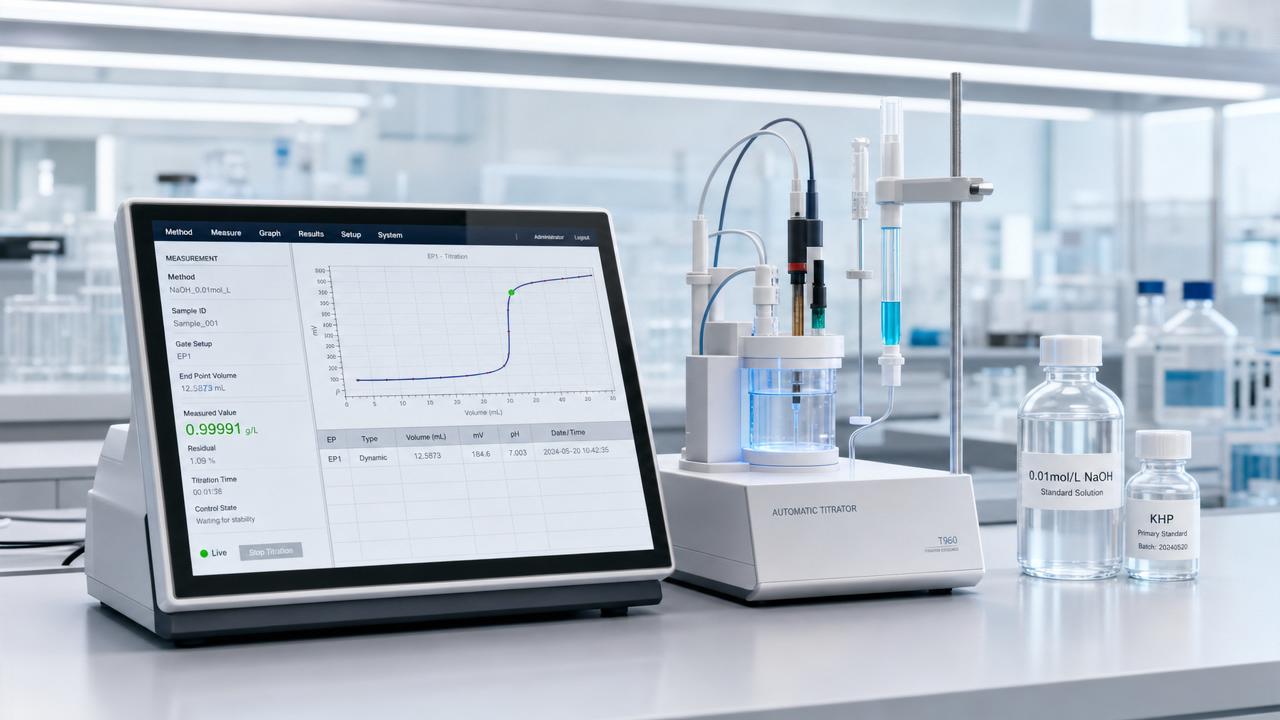
For enterprise decision-makers, software capability is no longer a secondary feature. If the titration platform supports user roles, audit trails, timestamped method revisions, secure exports, and electronic review logic, it reduces compliance friction later. A strong titration system OEM supplier should provide a clear answer on what is configurable, what is standard, and what requires custom development.
The table below outlines technical signs procurement teams can use during supplier comparison.
When a supplier can define these checkpoints clearly, buyers gain a more realistic forecast of implementation success. This is where technical benchmarking becomes valuable: not to chase unnecessary complexity, but to prevent hidden constraints from surfacing after deployment.
Operational and procurement signals that indicate a stronger partner
Technical capability alone does not guarantee a successful OEM relationship. The right titration system OEM supplier must also perform at the commercial and operational level. In enterprise procurement, weak communication, incomplete documentation, and unclear escalation paths often create more risk than moderate differences in hardware specification.
Documentation discipline and implementation planning
A stronger supplier usually provides a structured implementation path in 4 to 6 steps: requirement review, configuration confirmation, factory acceptance logic, site installation, qualification support, and post-startup stabilization. This creates better control for organizations handling multiple facilities or regulated process transfers.
Documentation should cover manuals, maintenance plans, spare lists, recommended consumables, calibration logic, and qualification templates where appropriate. If a supplier cannot define document scope before purchase order release, there is a higher chance of delays during commissioning or internal approval.
Service responsiveness and post-sale continuity
For laboratories supporting commercial production or high-priority development programs, downtime tolerance may be measured in hours, not weeks. Buyers should ask for standard response targets, regional service coverage, spare part stocking logic, and remote troubleshooting capability. A difference between 24-hour remote response and 5-day ticket handling can materially affect release schedules.
- Request standard preventive maintenance frequency, such as every 6 or 12 months
- Clarify whether critical spare parts are stocked locally or shipped internationally
- Confirm training scope for operators, supervisors, and maintenance teams
- Ask how software updates are validated and communicated across sites
Scalability from bench to production support
A better-fit titration system OEM supplier understands that titration data may influence raw material release, solvent recovery decisions, moisture control, reaction endpoint verification, and product stability assessment. In that context, a lab device is part of a broader manufacturing intelligence chain. Suppliers aligned with this reality are more likely to support method standardization across R&D, pilot plants, and QC laboratories without forcing unnecessary procedural divergence.
For organizations influenced by batch-to-continuous transition strategies, this matters even more. Data consistency between a benchtop unit and a production-support environment can affect process confidence, especially where fluidic precision and bioconsistent hardware are required to reduce variability at every stage.
How enterprise buyers can qualify a titration system OEM supplier in practice
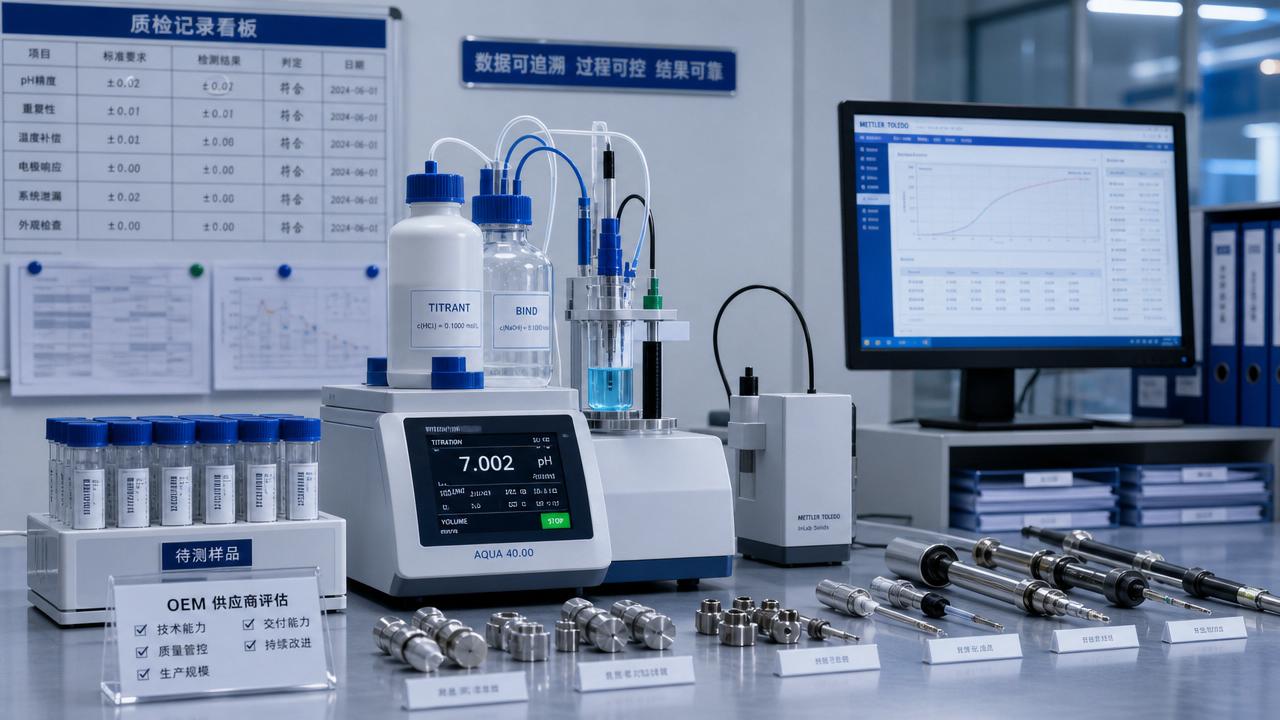
A disciplined sourcing process helps separate polished sales claims from real delivery capability. For most enterprise teams, qualification should include 3 layers: commercial screening, technical review, and deployment readiness. This approach is particularly effective when multiple stakeholders are involved, including procurement, QA, engineering, and lab operations.
A practical 5-step evaluation framework
- Define the application envelope: titration type, sample throughput, reagent profile, and data handling needs.
- Shortlist suppliers based on OEM capability, documentation readiness, and support geography.
- Review technical fit through method scenarios, not brochure claims alone.
- Assess implementation details, including training, IQ/OQ support, and spare availability.
- Compare total ownership impact over 3 to 5 years, including maintenance, consumables, and downtime risk.
Common buyer mistakes to avoid
One common mistake is overvaluing the unit price while underestimating integration cost. Another is approving a supplier without validating support capability in the actual region of use. A third is accepting broad precision statements without asking how performance changes across sample matrices, throughput levels, or operator shifts. These gaps often surface after installation, when correction is slower and more expensive.
Another issue is assuming all OEM suppliers are equally capable of regulated support. Some are strong in hardware manufacturing but weak in validation structure, software governance, or change control communication. For enterprise purchasing teams, those differences should be captured early in the vendor assessment matrix.
Questions that deserve direct answers before approval
Before selecting a titration system OEM supplier, decision-makers should request direct, documented answers to a focused set of questions. These answers help reduce ambiguity and create a stronger basis for technical-commercial alignment.
- What is the typical lead time for configured systems: 2 weeks, 6 weeks, or longer?
- Which components are considered wear parts, and what are the standard replacement intervals?
- What training is included at startup, and how many user groups can be covered?
- How are software revisions controlled and communicated?
- What service levels apply during the first 12 months and after warranty expiration?
- Can the supplier support harmonized deployment across 2, 5, or 10 sites if needed?
A better fit is usually visible before the contract is signed. Suppliers that answer clearly, document thoroughly, and discuss risk honestly tend to perform more reliably during implementation. In a market where precision hardware must support both analytical integrity and business continuity, that clarity is a meaningful procurement advantage.
For organizations navigating sensitive lab-to-production transitions, the right titration system OEM supplier is one that combines fluidic precision, compliant documentation, scalable support, and practical integration discipline. That combination supports faster qualification, steadier analytical output, and lower disruption across R&D, pilot, and QC workflows. If you are evaluating suppliers for pharmaceutical or chemical operations, now is the time to review your requirements against real technical and service criteria. Contact us to discuss your application, request a tailored solution path, or learn more about benchmark-driven titration system selection.
Expert Insights

Chief Security Architect
Dr. Thorne specializes in the intersection of structural engineering and digital resilience. He has advised three G7 governments on industrial infrastructure security.
Related Analysis
Core Sector // 01
Security & Safety
- Ultra-Low-Volume Dispensing: Evaluating Accuracy and Precision at Nanoliter ScaleAuthor :Lina Cloud

- Dial Indicators in Bulk: Accuracy Grades, Mounting Styles, and Supplier ChecksAuthor :Lina Cloud

- Why hydraulic hoses bulk orders fail pressure checks?Author :Lina Cloud

- How to Vet a Titration System OEM Supplier Before Scale-UpAuthor :Lina Cloud

- Titration Accuracy and Sensitivity Data That Actually MatterAuthor :Lina Cloud

- Choosing a Peristaltic Pump for Lab Wholesale Without OverbuyingAuthor :Lina Cloud

- How Much Titration Accuracy Is Enough for Routine QC Work?Author :Lina Cloud

- Why automated buffer preparation factory output can vary by batchAuthor :Lina Cloud