Residual Volume Data That Exposes Washer Performance Gaps
Author
Date Published
Reading Time
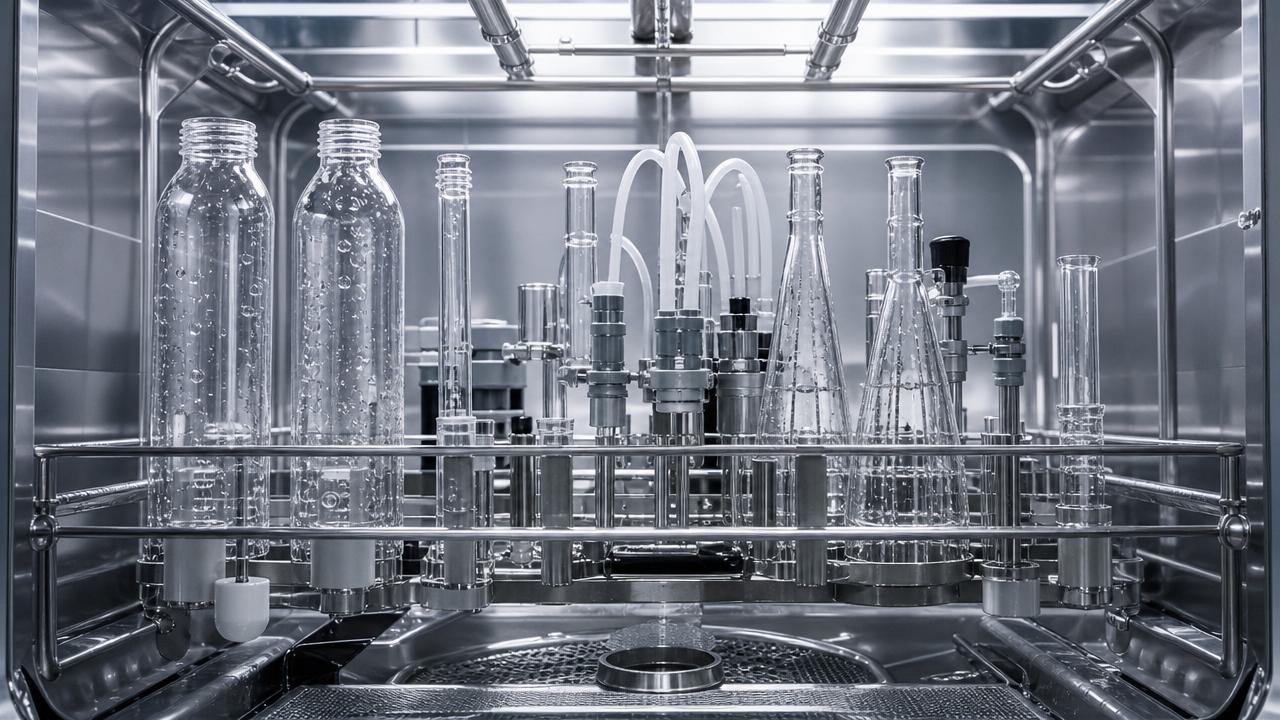
For operators responsible for cleaning consistency and process reliability, automated washer residual volume data reveals where performance gaps quietly undermine repeatability, drying efficiency, and compliance confidence. By examining retained liquid at critical points, teams can identify design limitations, optimize cycle parameters, and make better equipment decisions that support precise, scalable, and standards-aligned laboratory operations.
Understanding What Residual Volume Data Actually Measures
In laboratory and pilot-scale environments, cleaning performance is often judged by visible results, cycle completion, or pass-fail chemistry tests. Yet these indicators do not always show how much liquid remains trapped after washing and drying. That is why automated washer residual volume data matters. It quantifies the retained liquid left in vessels, tubing paths, racks, corners, lids, manifolds, and hard-to-drain surfaces after a programmed cycle.
This retained liquid may include rinse water, cleaning chemistry, product traces, or process residues. Even small volumes can affect downstream operations by causing carryover, extending drying time, diluting the next batch, or introducing uncertainty into validation records. For operators, the value of automated washer residual volume data is practical rather than theoretical: it turns hidden fluid retention into measurable evidence.
Within the broader G-LSP view of micro-efficiency, residual volume is a fluidic precision issue. A washer may look robust in general operation but still perform inconsistently at critical contact points. When retained liquid is mapped across load types and cycle settings, teams gain a more realistic picture of equipment capability under production-like conditions.
Why the Industry Pays Close Attention to Retained Liquid
Across pharmaceutical, chemical, biologics, cell culture, and advanced laboratory workflows, process transfer from benchtop to larger-scale execution depends on repeatability. Washers are often treated as support equipment, but their performance directly influences cleanliness assurance, turnaround speed, and operational confidence. Automated washer residual volume data becomes especially important when organizations operate under ISO-aligned quality systems, GMP expectations, and internal validation standards.
The reason is simple: residue risk is not just about chemistry left on a surface. It is also about the liquid that remains long enough to hold contaminants, redeposit particles, or prevent complete drying. In highly controlled environments, this can affect glassware readiness, reusable component preparation, sample integrity, and equipment availability. For operators working under time pressure, unexplained moisture after a standard cycle is often the first sign of a deeper performance gap.
Automated washer residual volume data also supports cross-functional communication. Operators may observe wet spots, quality teams may request evidence, engineers may adjust spray geometry or loading orientation, and procurement may compare equipment designs. A single data set on retained volume can unify these discussions and move decisions away from assumptions.
Core Performance Gaps That Residual Volume Data Can Expose
One of the strongest benefits of automated washer residual volume data is that it shows where “acceptable operation” is not the same as “optimal operation.” A machine may complete the cycle without alarms while still leaving nonuniform liquid retention across the load. This gap often points to a combination of equipment design, loading practice, and cycle parameter mismatch.
Common performance gaps include poor drainage geometry, inadequate spray reach, shadowed areas caused by dense loading, low final rinse displacement, unstable airflow during drying, and inconsistent orientation of narrow-necked or complex parts. In reusable labware systems, baskets and inserts can also create pooling zones that are not obvious during routine checks. When automated washer residual volume data is reviewed across multiple cycles, patterns emerge that visual inspection alone rarely captures.
These patterns are valuable because they distinguish random wetness from systematic design limitations. If residual volume is repeatedly high in the same component family, the issue may be linked to rack compatibility or spray path design. If results vary by operator, loading discipline and standard work may need improvement. If retained liquid increases with throughput, the root cause may be cycle compression or overloading rather than washer failure.
A Practical Industry Overview of Residual Volume Concerns
Different operating environments interpret automated washer residual volume data through different risk lenses. The table below summarizes how residual volume concerns typically appear across representative settings relevant to lab-scale production and fluidic precision work.
Where Operators See the Greatest Application Value
For end users and operators, automated washer residual volume data is most useful when it informs daily decisions. It can guide which load configurations are safe, which items require special orientation, when a drying phase needs extension, and how to recognize early signs of declining washer performance. This is particularly relevant for facilities handling mixed loads, custom glassware, microfluidic accessories, and reusable production support items.
In many cases, the data improves not only cleaning assurance but also throughput. If operators understand which combinations of cycle type, load density, and part geometry produce low residual retention, they can avoid unnecessary reruns. That translates into less downtime, lower utility use, faster release of washed items, and more predictable shift planning. From a fluidic precision perspective, residual volume performance is closely tied to process readiness.
The data is also valuable in training. New operators often rely on visual cues that can be misleading, especially on transparent surfaces or in enclosed channels. By using automated washer residual volume data as a teaching reference, supervisors can standardize how acceptable outcomes are understood across teams.
Typical Objects and Load Types That Benefit from Residual Volume Analysis
Not every washed item behaves the same way. Narrow passages, angled surfaces, dead legs, flexible tubing, and lightweight parts all influence how liquid drains or remains trapped. The following categories often show the greatest value from automated washer residual volume data review.
How to Interpret Automated Washer Residual Volume Data in Practice
Good interpretation starts with context. A single value is rarely enough. Operators should review automated washer residual volume data by item type, cycle recipe, load position, rack configuration, and drying stage. Trends matter more than isolated results. A consistently low residual volume across repeated runs suggests process control, while wide variation points to unstable conditions.
It is also important to separate acceptable residual volume from unnecessary residual volume. Some complex components may retain trace amounts because of geometry, but the key question is whether that level affects cleanliness, drying readiness, or compliance expectations. Facilities with high-sensitivity applications should define thresholds based on risk, not convenience alone.
Another useful practice is to compare baseline data from a newly qualified washer with periodic rechecks over time. If residual volume begins to rise, the cause may be blocked spray arms, worn seals, airflow decline, drain restriction, or unnoticed changes in accessories. In this way, automated washer residual volume data becomes a maintenance intelligence tool, not only a cleaning metric.
Practical Recommendations for Operators and Lab Teams
To get more value from automated washer residual volume data, operators should apply a structured approach. First, standardize how loads are arranged. If orientation changes between shifts, the data will be hard to compare. Second, include worst-case items in periodic checks rather than testing only easy-to-clean glassware. Third, document both quantitative retention values and visual observations such as pooling points or delayed drying zones.
Teams should also align washer settings with actual item geometry. Longer drying does not always fix poor drainage, and higher spray force does not always improve internal flushing. Sometimes a change in rack design or part positioning creates a larger improvement than modifying cycle time. Where possible, link residual volume findings to SOP updates so that best practice becomes routine practice.
In regulated or quality-driven environments, operators should ensure that automated washer residual volume data is presented in a format usable by engineering, validation, and procurement teams. Clear records help justify equipment changes, accessory upgrades, or revised loading instructions. This supports the larger goal of scalable, standards-aware operation across lab and pilot settings.
Common Evaluation Points Before Equipment Decisions or Process Changes
When organizations assess washer capability, residual volume should be reviewed alongside cleaning chemistry compatibility, thermal profile, airflow design, rack flexibility, and traceable cycle control. For G-LSP-aligned decision-making, this reflects the architecture of micro-efficiency: every retained microliter can signal a system-level mismatch between hardware, fluid path, and intended application.
Before approving process changes or new washer configurations, ask whether automated washer residual volume data covers representative items, maximum load density, difficult geometries, and repeated-cycle variability. Also confirm whether results remain stable after maintenance intervals and under normal operator use. Data collected only under ideal conditions may overstate real performance.
A strong evaluation framework does not require overcomplication. It requires disciplined observation, comparable test conditions, and a willingness to treat retained liquid as a performance signal rather than a minor nuisance. That mindset helps operators and technical managers detect washer performance gaps before they affect production readiness or quality confidence.
Moving from Data Awareness to Better Operational Control
Automated washer residual volume data is most powerful when it leads to action. For operators, that action may mean refining load orientation, separating difficult items, or escalating repeat deviations earlier. For engineers, it may mean adjusting cycle architecture or accessory design. For decision-makers, it provides evidence that supports more precise, scalable, and compliant washer selection.
In modern laboratories and pilot environments, hidden moisture is not a small detail. It affects repeatability, drying efficiency, changeover confidence, and the trust placed in automated cleaning systems. By treating automated washer residual volume data as a core performance indicator, organizations can close subtle reliability gaps and strengthen the connection between lab-scale execution and industrial-quality standards.
If your team is reviewing washer consistency, validating reusable components, or benchmarking fluidic cleaning performance, start with retained liquid evidence. It is one of the clearest ways to understand how a washer truly performs under real operating conditions.
Expert Insights

Chief Security Architect
Dr. Thorne specializes in the intersection of structural engineering and digital resilience. He has advised three G7 governments on industrial infrastructure security.
Related Analysis
Core Sector // 01
Security & Safety
- Dial Indicators in Bulk: Accuracy Grades, Mounting Styles, and Supplier ChecksAuthor :Lina Cloud

- Why hydraulic hoses bulk orders fail pressure checks?Author :Lina Cloud

- How to Vet a Titration System OEM Supplier Before Scale-UpAuthor :Lina Cloud

- Titration Accuracy and Sensitivity Data That Actually MatterAuthor :Lina Cloud

- Choosing a Peristaltic Pump for Lab Wholesale Without OverbuyingAuthor :Lina Cloud

- How Much Titration Accuracy Is Enough for Routine QC Work?Author :Lina Cloud

- Why automated buffer preparation factory output can vary by batchAuthor :Lina Cloud

- When Dilution Factor Precision Starts Affecting Final ResultsAuthor :Lina Cloud