Serological Pipette Wholesale OEM: What Affects Batch Consistency
Author
Date Published
Reading Time
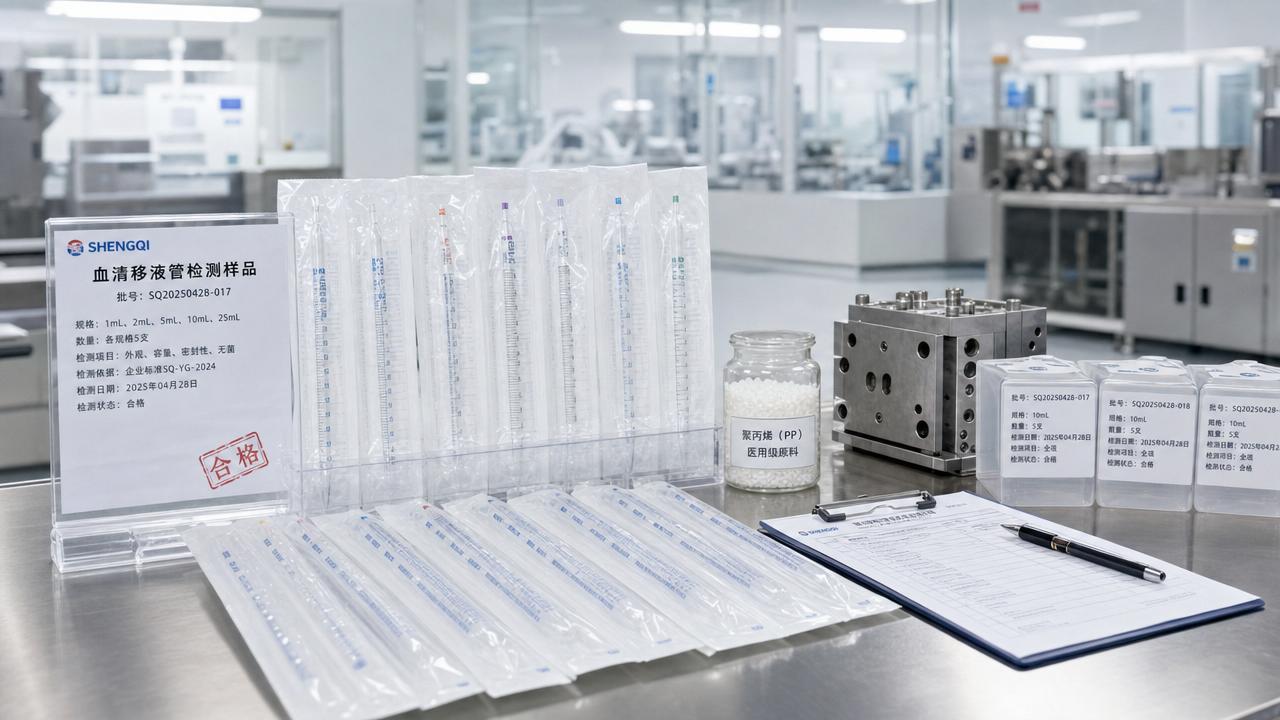
In serological pipette wholesale OEM sourcing, batch consistency is not just a quality metric—it is a core safety and compliance requirement for QC and EHS teams. From resin selection and molding precision to sterilization control and lot traceability, multiple factors can affect product uniformity. Understanding these variables helps buyers reduce risk, strengthen validation, and secure reliable liquid handling performance at scale.
Why batch consistency matters in serological pipette wholesale OEM procurement
For quality control personnel and safety managers, the biggest concern in serological pipette wholesale OEM is not simply whether a pipette can transfer liquid once. The real question is whether every lot performs the same way across sterile handling, cell culture, reagent transfer, and regulated documentation workflows. A minor variation in graduation accuracy, tip geometry, or packaging integrity can trigger revalidation work, deviation reports, or even contamination investigations.
This becomes even more critical in multidisciplinary production environments where lab-scale experiments must connect smoothly to pilot and pre-commercial operations. G-LSP focuses on that exact transition point. By benchmarking fluidic precision hardware against ISO, USP, and GMP-oriented expectations, it helps decision-makers evaluate batch consistency as a systems issue rather than a single-product issue.
- Consistent pipette performance supports repeatable sample preparation, especially where biological sensitivity or hazardous media increases operational risk.
- Uniform lots reduce incoming inspection burden, because fewer variables need to be rechecked when historical process control is stable.
- Stable OEM production quality lowers the chance of discrepancies between validation lots and routine supply lots.
- Better lot traceability improves response speed when CAPA, complaint review, or field-risk assessment is required.
Where inconsistency creates downstream risk
In practice, a serological pipette that looks visually acceptable may still create hidden variability. Flow resistance can change aspiration speed. Surface treatment can alter liquid retention. Packaging defects can compromise sterility assurance. For QC teams, these are not cosmetic issues. They affect data comparability, release confidence, and environmental monitoring risk profiles.
What affects batch consistency most in serological pipette wholesale OEM?
When buyers evaluate serological pipette wholesale OEM partners, they should treat consistency as the output of a controlled manufacturing chain. The table below highlights the most common batch-level variables and how they translate into quality and safety concerns.
The key takeaway is that batch consistency is cumulative. A supplier may control one variable well but still produce unstable lots if change control, maintenance discipline, and in-process verification are weak. That is why experienced procurement teams do not assess OEM capability only by brochure specifications.
Five checkpoints QC teams should ask about
- Whether resin lots are approved through a defined material qualification process rather than spot purchasing.
- How often molding tools are inspected, cleaned, and replaced based on dimensional trend data.
- Whether graduation printing is validated for legibility, adhesion, and chemical resistance.
- How sterilization dose or process parameters are monitored and reconciled per lot.
- Whether packaging integrity is verified using seal-strength, leak, or visual particulate controls.
How to evaluate an OEM supplier beyond nominal specifications
Many buyers compare only volume range, sterility label, and unit price. That approach is too narrow for serological pipette wholesale OEM projects serving regulated or safety-sensitive facilities. A more reliable method is to assess process maturity, data transparency, and lot-change governance.
Supplier evaluation criteria that matter in real operations
The following comparison framework is useful when QC, procurement, and EHS must align on one supplier approval decision. It is especially relevant where multiple departments use the same disposable liquid handling components.
For G-LSP users, this style of assessment aligns with broader R&D-to-production benchmarking. It places fluidic hardware inside a documented performance ecosystem, which is exactly what multinational buyers need when standardizing procurement across sites.
Which technical parameters deserve the closest review?
Not every specification has the same operational weight. In serological pipette wholesale OEM projects, some parameters are routine, while others are leading indicators of batch stability. Buyers should prioritize those with a direct link to validation burden, contamination control, and operator safety.
High-priority parameters for incoming qualification
- Graduation accuracy and visual contrast, because reading errors increase when markings shift or fade.
- Tip and upper-end dimensional consistency, especially where pipette aids, controllers, or multi-user environments require predictable fit.
- Material clarity and rigidity, which influence observation quality, aspiration stability, and breakage risk during repeated use within one task cycle.
- Sterile barrier integrity, including pouch seal quality and transport robustness.
- Endotoxin, RNase, DNase, or pyrogen-related declarations where applicable to the user environment and process sensitivity.
Why nominal capacity alone is a poor selection basis
Two 10 mL serological pipettes can behave differently in practice if one has inconsistent inner bore geometry or higher residual liquid retention. For safety managers, that difference may affect splashing, aerosol generation, and operator technique. For QC managers, it may alter dilution accuracy and result reproducibility. This is why test-based review of handling behavior often matters more than catalog labeling.
How compliance, traceability, and change control influence approval decisions
In regulated laboratories and production support environments, disposable liquid handling tools must fit documented quality systems. Serological pipette wholesale OEM programs should therefore be reviewed not only for product conformity, but also for documentation discipline. Compliance risk usually emerges when changes happen silently or trace records are incomplete.
Practical compliance checks before supplier approval
- Confirm whether the supplier can provide lot-linked manufacturing information suitable for internal vendor files and audit preparation.
- Review how sterilization statements are issued and whether they are tied to controlled processing records.
- Check if packaging labels support warehouse segregation, shelf-life control, and rapid quarantine actions.
- Ask whether process or material changes trigger formal notice, comparative testing, or requalification recommendations.
G-LSP’s technical benchmarking perspective is valuable here because it interprets product consistency through international standards logic rather than sales language. For buyers handling sensitive transitions from lab methods to scalable workflows, that perspective reduces blind spots during supplier selection.
What procurement teams should include in a serological pipette wholesale OEM RFQ
A weak RFQ often produces weak supply outcomes. If the RFQ only asks for size, packaging quantity, and sterilization status, suppliers may quote similar-looking products with very different consistency controls. A better RFQ makes quality expectations visible from the start.
Recommended RFQ checklist
- Define application environment, such as cell culture, analytical prep, microbiology, chemical transfer, or mixed-use labs.
- Specify required capacities, packaging format, sterility expectations, and any special cleanliness declarations.
- Request dimensional consistency information relevant to fit with existing pipette controllers.
- Ask for documentation on lot coding, change notification, and complaint handling workflow.
- Clarify sample evaluation needs, validation lot expectations, and target annual volume with delivery cadence.
Cost pressure versus risk control
Low quoted price can look attractive, but serological pipette wholesale OEM sourcing should be judged by total quality cost. If lower-cost lots generate more incoming inspection failures, operator complaints, or deviation management time, the apparent savings disappear quickly. For safety-critical or regulated facilities, stable supply usually delivers better value than nominal unit cost reduction.
Common mistakes that lead to unstable lots
Even experienced buyers sometimes approve an OEM source too quickly. Most problems do not come from one dramatic failure. They come from overlooked details that accumulate over several purchase cycles.
- Relying on one successful sample lot without verifying whether the mass-production process matches the sample conditions.
- Accepting generic sterility claims without understanding sterilization method consistency and packaging interaction.
- Ignoring compatibility between pipette geometry and existing pipette aids used across departments.
- Skipping cross-functional review, which leaves QC, EHS, and procurement focused on different approval criteria.
- Failing to define acceptable change-control boundaries for resin, tooling, print process, or packaging materials.
FAQ: practical questions buyers ask about serological pipette wholesale OEM
How should we qualify a new OEM lot before full-scale purchase?
Start with a structured pilot evaluation. Check dimensions, graduation readability, fit with pipette aids, packaging integrity, and handling consistency in real use conditions. If the application is sensitive, involve both QC and end users. Then compare the trial lot against a retained reference or current approved source so differences are documented rather than judged informally.
Which applications are most sensitive to batch inconsistency?
Cell culture, microbiology, assay preparation, and high-value reagent handling are particularly sensitive. In these environments, even minor differences in liquid retention, readability, or sterile packaging can influence both result reliability and contamination risk. Chemical labs handling aggressive or hazardous solutions should also review material compatibility and breakage resistance carefully.
What should we ask about delivery cycles in serological pipette wholesale OEM projects?
Ask about standard lead time, surge capacity, lot size flexibility, and whether documentation is released with shipment or afterward. Delivery timing matters because urgent orders sometimes increase the risk of mixed lots, compressed inspection windows, or packaging substitutions. Stable replenishment planning is often part of consistency control.
Can a compliant-looking product still create safety issues?
Yes. A pipette may appear acceptable on paper but still generate practical safety issues if tip fit is unstable, aspiration behavior is erratic, or the pouch opens poorly and encourages non-aseptic handling. EHS teams should therefore evaluate user interaction, not only specification sheets.
Why choose us for serological pipette wholesale OEM evaluation and sourcing support
G-LSP supports buyers who need more than catalog matching. Our strength lies in connecting liquid handling hardware decisions to broader lab-scale and scale-up performance requirements. That is especially useful when QC teams, safety managers, and procurement officers must approve one serological pipette wholesale OEM source for multiple technical environments.
You can contact us for practical support on parameter confirmation, supplier comparison logic, sample review priorities, change-control checkpoints, expected delivery planning, and documentation requirements tied to your internal qualification process. We also help clarify how serological pipette selection interacts with adjacent fluidic systems, so purchasing decisions remain consistent with wider validation and operational goals.
If you are screening OEM partners, preparing an RFQ, reviewing sample lots, or comparing documentation depth across suppliers, reach out with your target capacities, packaging format, annual demand, and compliance expectations. A more disciplined assessment at the sourcing stage can prevent costly inconsistency later.
Expert Insights

Chief Security Architect
Dr. Thorne specializes in the intersection of structural engineering and digital resilience. He has advised three G7 governments on industrial infrastructure security.
Related Analysis
Core Sector // 01
Security & Safety
- Dial Indicators in Bulk: Accuracy Grades, Mounting Styles, and Supplier ChecksAuthor :Lina Cloud

- Why hydraulic hoses bulk orders fail pressure checks?Author :Lina Cloud

- How to Vet a Titration System OEM Supplier Before Scale-UpAuthor :Lina Cloud

- Titration Accuracy and Sensitivity Data That Actually MatterAuthor :Lina Cloud

- Choosing a Peristaltic Pump for Lab Wholesale Without OverbuyingAuthor :Lina Cloud

- How Much Titration Accuracy Is Enough for Routine QC Work?Author :Lina Cloud

- Why automated buffer preparation factory output can vary by batchAuthor :Lina Cloud

- When Dilution Factor Precision Starts Affecting Final ResultsAuthor :Lina Cloud