2026柯桥纺博会 Launches Microfluidic Functional Coating Zone
Author
Date Published
Reading Time
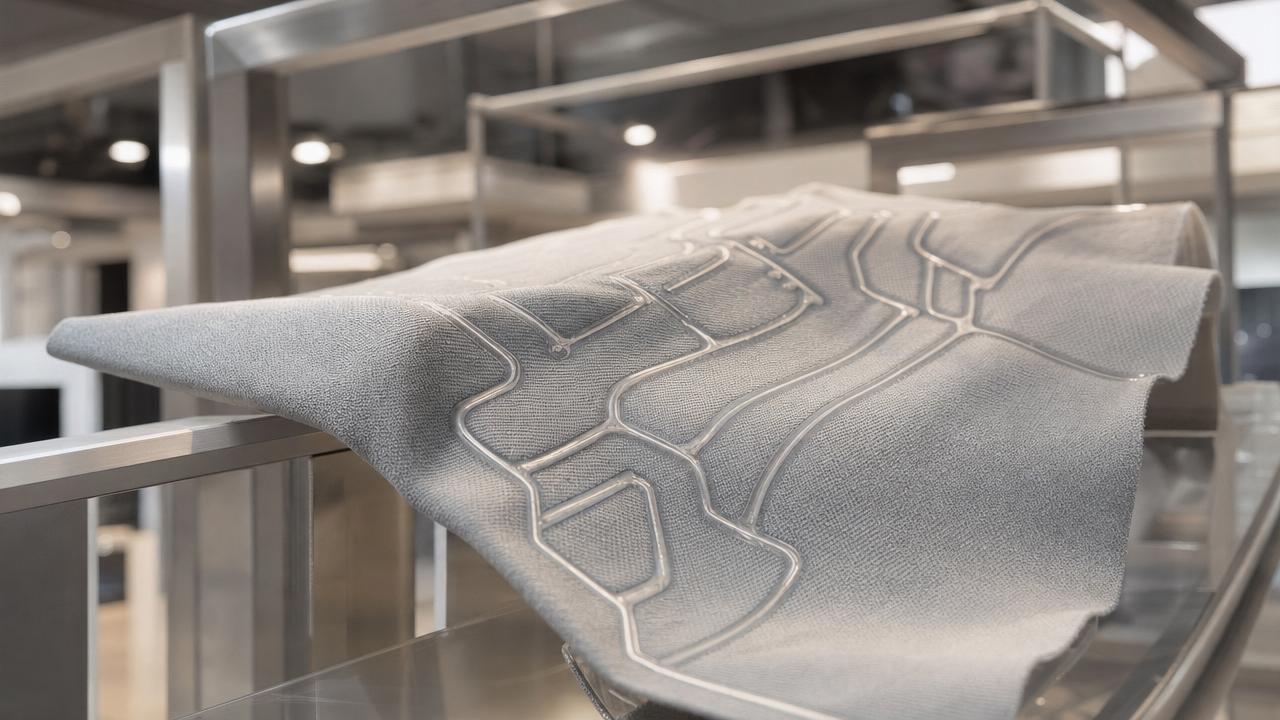
On May 13, 2026, the Keqiao International Textile Expo debuted a dedicated ‘Microfluidic Functional Coating’ zone — the first of its kind in China’s textile trade fair landscape. This initiative signals a strategic convergence of microfluidics engineering and advanced textile functionalization, with implications for global textile chemical sourcing, smart material development, and cross-sector technology transfer.
Event Overview
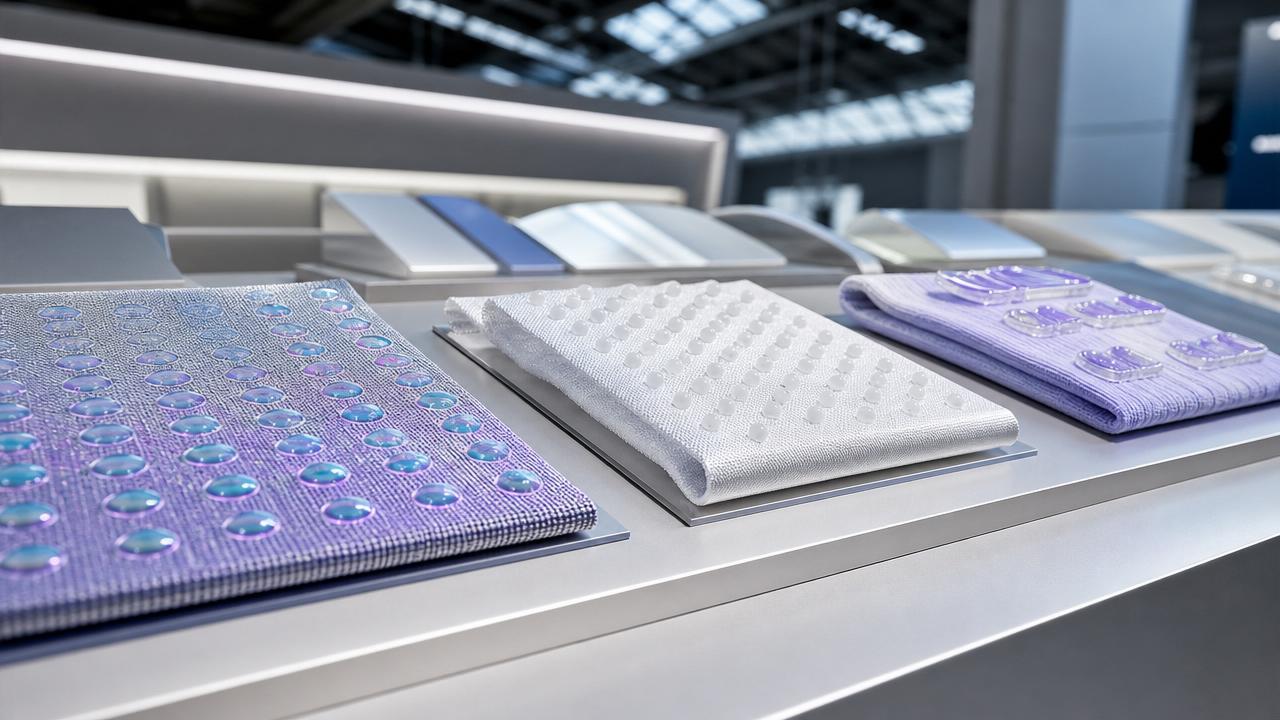
The 2026 Keqiao International Textile Expo opened on May 13, 2026, featuring a newly established ‘Microfluidic Functional Coating’ zone. A total of 23 Chinese enterprises specializing in Nano Flow and Lab-on-a-Chip technologies exhibited there, showcasing applications including controlled-release drug coatings for therapeutic textiles, thermochromic microcapsules, and flexible liquid-drop sensor arrays. The zone was explicitly designed to highlight textile-integrated microfluidic functionalities — not standalone diagnostic devices.
Industries Affected
Direct Trading Enterprises: Importers and distributors of textile auxiliaries and functional finishes — particularly those serving European and North American apparel brands — now face an expanded supplier base offering next-generation, stimuli-responsive coating systems. Their procurement workflows must adapt to evaluate not only chemical performance but also fluidic architecture compatibility, encapsulation stability, and wash durability metrics previously outside standard textile chemical specifications.
Raw Material Procurement Enterprises: Companies sourcing polymer carriers, phase-change materials, or biocompatible surfactants are encountering new demand signals: e.g., ultra-low-viscosity silicone oils for droplet actuation, or photo-crosslinkable monomers compatible with microcapsule wall formation. These requirements shift sourcing criteria from bulk purity and cost-efficiency toward batch-to-batch rheological consistency and microstructure reproducibility.
Manufacturing Enterprises: Textile coaters, laminators, and digital printing facilities must assess whether existing application equipment (e.g., knife-over-roll coaters, inkjet printheads) can accommodate microfluidic formulations without clogging or phase separation. Process validation now includes micro-droplet uniformity testing and stimulus-response latency measurement — capabilities not typically embedded in conventional textile QA labs.
Supply Chain Service Enterprises: Logistics providers handling temperature-sensitive or shear-sensitive microcapsule dispersions need updated handling protocols; certification bodies face emerging gaps in standardized test methods for ‘microfluidic functionality retention after industrial laundering’. Third-party testing labs may need to invest in high-speed imaging or micro-thermal analysis tools to support verification claims.
Key Focus Areas and Recommended Actions
Evaluate Technical Interface Compatibility
Importers and brand technical teams should conduct joint feasibility studies with exhibiting Nano Flow firms — specifically mapping coating formulation parameters (e.g., droplet size distribution, interfacial tension) against existing textile substrate types and finishing lines. Avoid assuming drop-in replacement capability.
Update Supplier Qualification Frameworks
Purchasing departments must revise vendor assessment checklists to include evidence of microfluidic system validation under textile-relevant stress conditions (e.g., mechanical stretching, repeated flexing, alkaline scouring), not just biocompatibility or diagnostic accuracy data.
Monitor Standardization Trajectory
Stakeholders should track ongoing work at ISO/TC 38 and AATCC Committee RA57, where draft protocols for ‘stimuli-responsive textile coating performance evaluation’ are under preliminary review. Early engagement may influence test method scope before formal ballot.
Editorial Perspective / Industry Observation
Observably, this zone is not merely an exhibition novelty — it reflects a structural shift in how microfluidics value is being reconfigured. Rather than remaining siloed within life sciences, the technology is undergoing ‘materials-first’ repackaging: functional units (e.g., microcapsules, droplet arrays) are being engineered as modular, textile-anchored components. Analysis shows that the participating firms largely avoid positioning themselves as medical device suppliers; instead, they emphasize process integration, scalability, and regulatory alignment with REACH and OEKO-TEX® Standard 100 — signaling deliberate market repositioning. From an industry perspective, this represents less a ‘technology transfer’ and more a ‘domain translation’ — where fluidic principles are re-expressed through textile engineering grammar.
Conclusion
The launch of the microfluidic functional coating zone marks a tangible inflection point: microfluidics is no longer evaluated solely by its diagnostic yield, but by its capacity to enable new textile performance paradigms — responsive, adaptive, and system-integrated. For global supply chains, this does not imply immediate substitution of legacy chemistries, but rather the emergence of parallel capability tracks. A rational interpretation is that the zone serves as both a signal and a sandbox — accelerating dialogue between traditionally separate innovation communities while revealing critical gaps in interoperability infrastructure.
Source Attribution
Official announcement issued by Keqiao International Textile Expo Organizing Committee, May 10, 2026; verified via exhibitor list published on keqiaotextileexpo.com/en/exhibitors-2026. Ongoing developments in microfluidic textile standardization remain under observation — particularly proposals submitted to ISO/TC 38/WG 15 (Functional Finishes) and AATCC TM229 draft revision cycle.
Expert Insights

Chief Security Architect
Dr. Thorne specializes in the intersection of structural engineering and digital resilience. He has advised three G7 governments on industrial infrastructure security.
Related Analysis
Core Sector // 01
Security & Safety
- 2026柯桥纺博会 Launches Microfluidic Functional Coating ZoneAuthor :Dr. Aris Nano

- PSB Expands Nano Flow Chip Lab Whitelist with 8 Chinese ISO/IEC 17025 LabsAuthor :Dr. Aris Nano

- 2026柯桥纺博会 Launches Microfluidic Textile Coating ZoneAuthor :Dr. Aris Nano

- Singapore PSB Expands Nano Flow Chip Whitelist with 8 Chinese LabsAuthor :Dr. Aris Nano

- 2026柯桥纺博会 Launches Microfluidic Functional Coating ZoneAuthor :Dr. Aris Nano

- PSB Expands Nano Flow Chip Lab Whitelist with 8 Chinese ISO/IEC 17025 LabsAuthor :Dr. Aris Nano

- Microfluidic pump OEM supplier: the maintenance issue often missedAuthor :Dr. Aris Nano

- 2026柯桥纺博会首设 Microfluidic Coating ZoneAuthor :Dr. Aris Nano