How to Compare a Microfluidic Pump OEM Supplier
Author
Date Published
Reading Time

Choosing the right microfluidic pump OEM supplier is not a simple price comparison exercise. For procurement teams in pharmaceutical, chemical, diagnostics, and advanced laboratory environments, the supplier you select will influence flow stability, product quality, compliance readiness, maintenance burden, and the long-term reliability of your supply chain. In practice, the best supplier is rarely the one with the lowest quote. It is the one that can repeatedly deliver the required performance, document it clearly, support qualification, and scale with your program.
This matters even more in lab-scale and pilot-scale settings, where small errors in fluid handling can distort experimental results, delay technology transfer, or create avoidable validation work later. A capable OEM partner should not only provide pumps, but also demonstrate engineering depth, manufacturing discipline, and a clear understanding of application risk.
This guide explains how procurement professionals can compare suppliers in a structured way. It focuses on the decision criteria that actually affect sourcing outcomes: technical fit, manufacturing consistency, quality systems, regulatory support, total cost of ownership, and supplier responsiveness.
Start with the real procurement question: can this supplier support your process without creating downstream risk?
When buyers search for a microfluidic pump OEM supplier, they are usually not looking for a basic product overview. They want a reliable way to separate technically strong suppliers from those that look acceptable on paper but create problems during qualification, integration, or scale-up.
For procurement, the core question is practical: can this supplier deliver pumps that match your application requirements consistently, on schedule, and with enough documentation to satisfy internal engineering, quality, and regulatory stakeholders? If the answer is uncertain, even an attractive price can become expensive.
That is why comparison should begin with process impact rather than catalog features. A pump used in reagent dispensing, microreactor flow control, cell handling, or analytical fluid delivery must support the actual operating window of your system. If the supplier cannot prove repeatability under your conditions, the sourcing decision remains high risk.
Define the application requirements before you compare quotes
One of the most common procurement mistakes is requesting quotations before aligning internal technical requirements. Suppliers are then compared on incomplete or inconsistent assumptions, which makes the final decision less reliable. Before evaluating vendors, define a structured requirement set with input from engineering, operations, and quality teams.
At minimum, this requirement set should include flow rate range, pressure range, fluid viscosity, chemical compatibility, pulsation tolerance, accuracy and repeatability targets, wetted materials, sterilization needs, expected duty cycle, and integration requirements such as footprint, control interface, and power specifications.
It is also important to specify the use environment. A pump selected for R&D benchtop work may not be suitable for pilot manufacturing, GMP-adjacent processes, or long-duration continuous operation. Procurement teams should ask whether the supplier’s standard product is truly designed for the intended use case or simply adapted for it.
With clear specifications in hand, supplier comparisons become more meaningful. You can evaluate each OEM partner against the same performance and compliance criteria instead of relying on marketing language or broad technical claims.
Compare flow performance, not just nominal specifications
In microfluidic applications, nominal performance values are only the starting point. A supplier may claim a broad flow range, but the real question is whether the pump can maintain stable, reproducible flow at the exact operating points your process requires. This is especially important at very low flow rates, where drift, pulsation, and startup inconsistency can compromise results.
Procurement teams should request test data that shows actual performance across the working range, including low-end stability, response time, repeatability, and pressure sensitivity. If your application involves precise dosing, laminar flow control, gradient generation, or sensitive biological samples, ask how the pump performs under dynamic conditions rather than steady-state ideal conditions alone.
It is also useful to ask how the supplier defines and measures accuracy. Different companies report specifications under different assumptions, and a number on a datasheet may not reflect your fluid type, back pressure, or temperature range. A strong OEM supplier should be able to explain test methodology and provide traceable evidence rather than generic claims.
For procurement, the key takeaway is simple: a supplier with a narrower but well-characterized performance window is often a safer choice than one advertising broader capabilities without robust validation data.
Evaluate material compatibility and bioconsistency early
Material selection is often underestimated during early supplier screening, yet it has direct consequences for product integrity, maintenance frequency, and compliance risk. In microfluidic systems, small-volume fluid paths amplify the impact of adsorption, extractables, corrosion, swelling, and particulate generation.
Procurement teams should review all wetted materials carefully, including tubing, seals, diaphragms, valves, connectors, and pump heads. The right choice depends on the fluid profile: solvents, acids, buffers, proteins, cell suspensions, diagnostic reagents, and aggressive chemistries each create different compatibility requirements.
For pharmaceutical and biotech applications, bioconsistency can be as important as chemical resistance. Suppliers should be able to discuss material inertness, cleanability, sterilization options, and where relevant, available information related to USP, ISO, or other applicable standards. If the application may later move closer to regulated production, early material decisions can reduce qualification friction.
A useful procurement question is whether the supplier offers documented material traceability and change notification. Even a technically suitable material becomes a sourcing risk if substitutions can occur without adequate control or communication.
Assess manufacturing consistency and OEM quality maturity
A microfluidic pump that performs well in one sample unit is not enough. OEM sourcing decisions should focus on manufacturing consistency across batches and over time. Procurement professionals need confidence that the units delivered six or twelve months later will match the ones validated today.
This is where supplier quality maturity becomes critical. Ask whether the OEM operates under a formal quality management system, whether critical dimensions and functional parameters are controlled statistically, and how final testing is performed. A mature supplier should be able to explain incoming inspection, in-process controls, final verification, and nonconformance handling.
It is also worth examining the degree of vertical integration. Suppliers that control more of their machining, assembly, calibration, and testing processes may offer better consistency and lead-time control than those heavily dependent on fragmented subcontracting. Outsourcing is not automatically negative, but it increases the importance of supplier oversight and traceability.
For procurement teams serving high-stakes laboratory or pilot operations, audit readiness matters. If a supplier cannot support a structured quality review, provide stable documentation, or explain process controls clearly, that is a warning sign regardless of pricing.
Look closely at regulatory and documentation support
Many procurement decisions fail not because the pump cannot move fluid, but because the supplier cannot support internal qualification, validation, or regulated documentation expectations. This is particularly relevant in pharmaceutical, diagnostics, and advanced chemical environments where purchasing decisions often involve quality, engineering, and compliance stakeholders.
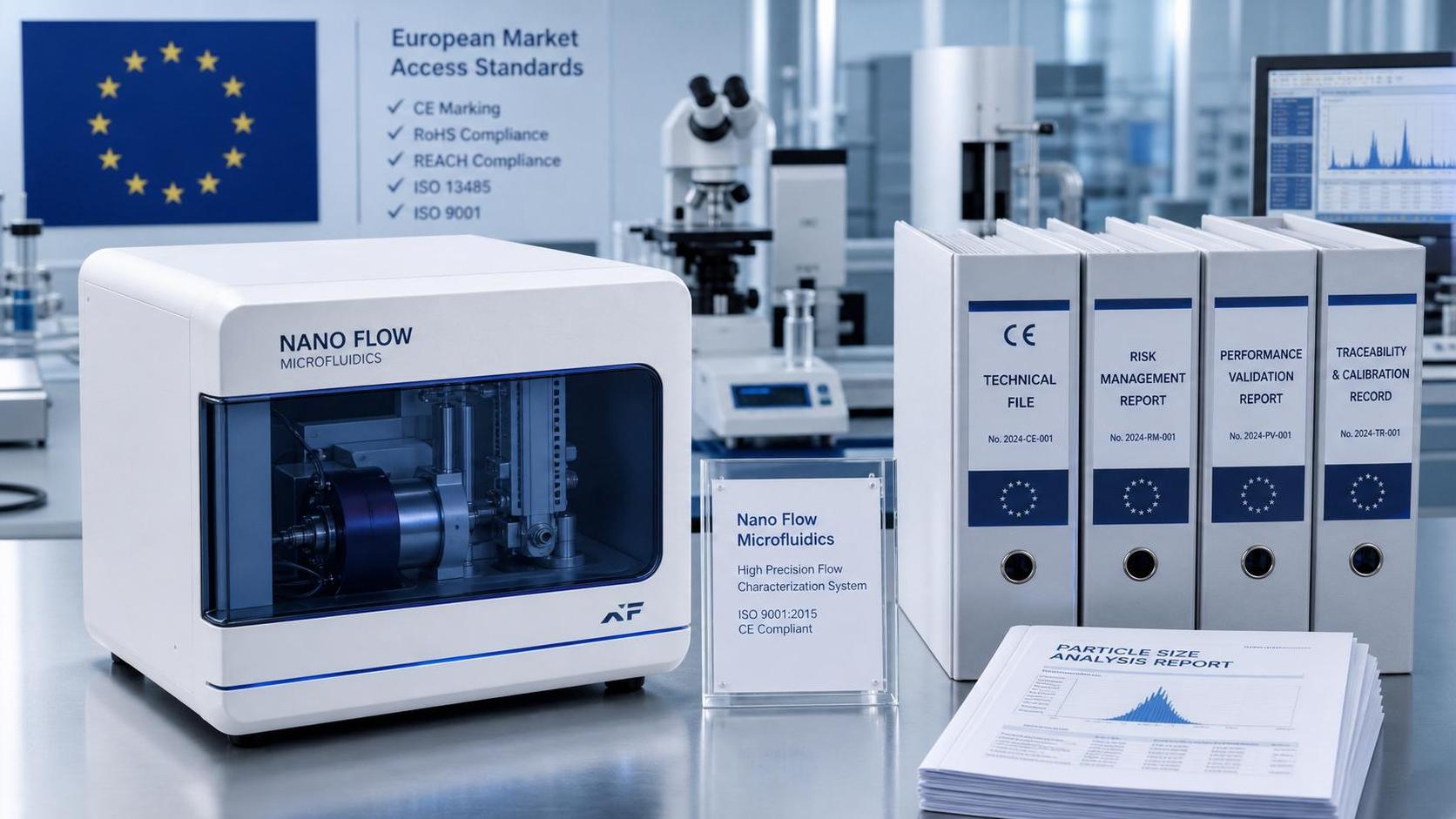
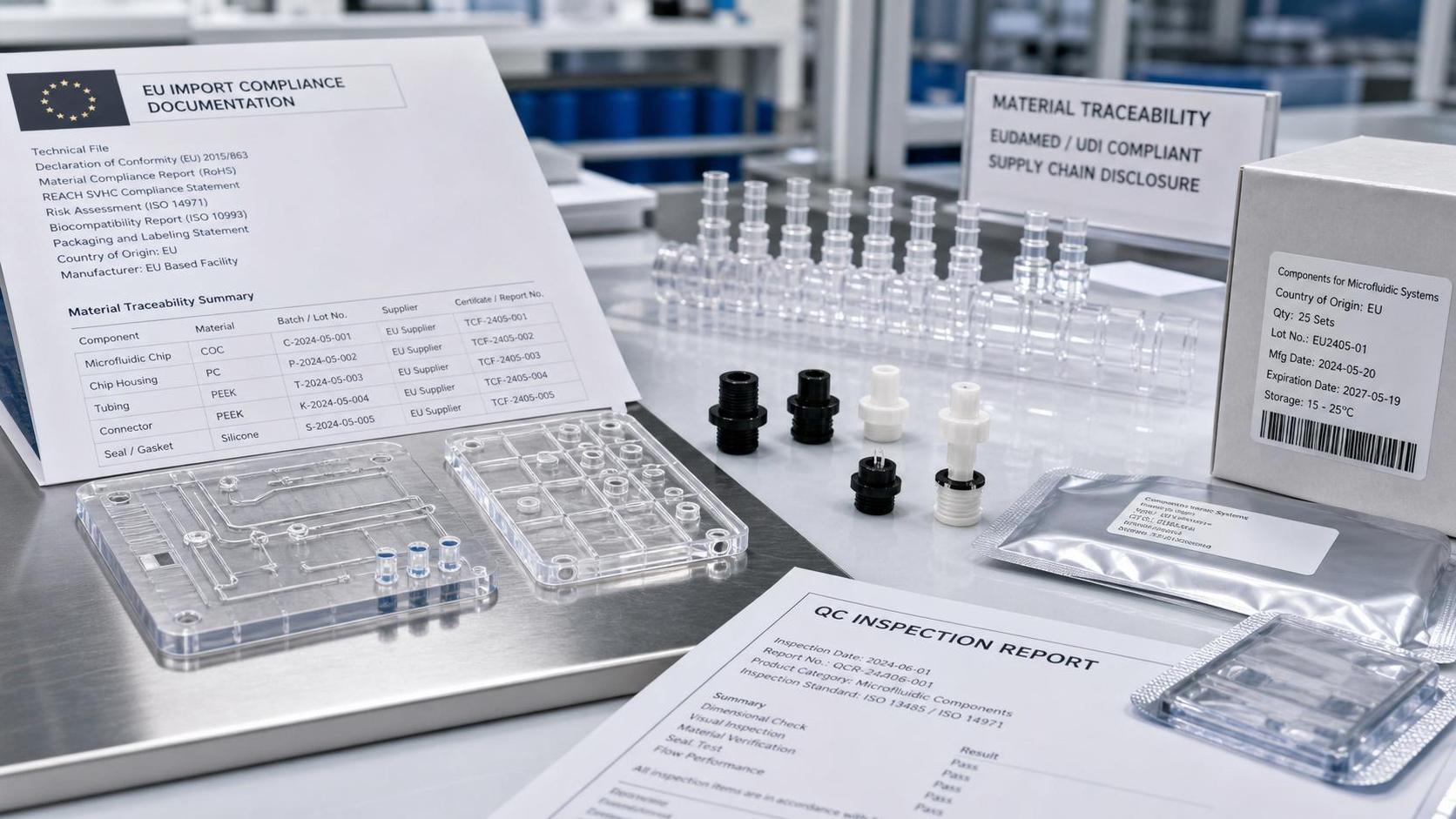
When comparing a microfluidic pump OEM supplier, ask what documentation is available as standard and what can be supplied upon request. Examples include certificates of conformity, material certifications, calibration records, inspection reports, lot traceability, change control notices, and reliability data.
If the pump may be incorporated into equipment sold into regulated markets, documentation discipline becomes even more important. OEM buyers should understand whether the supplier can support design history expectations, component traceability, risk assessment inputs, and controlled revision management.
A supplier does not need to promise everything, but it should be transparent about what it can provide consistently. Strong documentation support saves time during qualification, reduces internal back-and-forth, and lowers the risk of costly sourcing delays later.
Measure engineering support, customization ability, and integration fit
For many OEM projects, the pump is not a standalone purchase. It becomes part of a larger instrument, skidded system, analytical platform, or pilot-scale flow architecture. That means supplier comparison should include not only component quality, but also ease of integration and engineering collaboration.
Procurement teams should ask whether the supplier can support customization in areas such as control protocols, mounting geometry, fluidic connections, enclosure constraints, and software interfacing. However, customization should be evaluated carefully. Too much customization can create sole-source dependency, extended lead times, and more difficult service planning.
The best OEM suppliers typically balance configurable standard platforms with disciplined engineering change processes. They can adapt products where necessary, but they also know how to protect repeatability and manufacturability. That balance often delivers the strongest long-term value.
Responsiveness also matters. During technical evaluation, note how quickly the supplier answers engineering questions, clarifies tolerances, and provides drawings or test data. Slow or vague responses during the sales phase often predict future support challenges after the order is placed.
Compare total cost of ownership, not unit price alone
Price matters, but unit price alone is a poor decision metric for critical fluidic components. A lower-cost pump can become more expensive if it causes higher scrap rates, more recalibration, shorter service life, or repeated engineering work to stabilize performance. Procurement should therefore evaluate total cost of ownership across the expected lifecycle.
Relevant cost factors include spare parts frequency, maintenance intervals, serviceability, calibration needs, expected failure rate, replacement lead time, operator training burden, and the internal cost of documentation management. If downtime affects valuable R&D or pilot manufacturing schedules, reliability carries direct financial value.
It is also useful to assess commercial stability. Ask about minimum order quantities, forecast commitments, lead-time variability, end-of-life policy, and price stability for key materials. In a volatile supply environment, dependable availability may be worth more than a small upfront discount.
For procurement professionals, a useful framework is to calculate cost in terms of “qualified performance delivered over time,” not simply “purchase price per unit.” That approach better reflects operational reality.
Check supply chain resilience and long-term supplier viability
Even technically excellent suppliers can become sourcing risks if their supply chains are fragile or their business model is unstable. This is especially important for OEM relationships, where redesigning around a failed supplier can be costly and time-consuming.
Procurement teams should review manufacturing location, critical sub-supplier dependence, buffer inventory practices, business continuity planning, and geographic risk exposure. If a key pump platform depends on one custom valve, one specialty polymer, or one small machining partner, that dependency should be understood early.
Long-term viability also matters. Consider the supplier’s customer base, product roadmap, investment in engineering, and evidence of continued support for mature product lines. A supplier that discontinues products quickly or shifts priorities frequently may not be a reliable OEM partner for multi-year programs.
In many cases, the most suitable microfluidic pump OEM supplier is the one that combines technical competence with disciplined operational continuity. Procurement should value both.
Use a weighted supplier scorecard to make decisions more defensible
Because supplier evaluation involves multiple technical and commercial variables, a weighted scorecard is often the best way to compare options objectively. This helps procurement communicate decisions internally and reduces bias toward whichever supplier made the strongest initial sales impression.
A practical scorecard might include categories such as flow performance, material compatibility, quality system maturity, documentation support, integration fit, customization discipline, lead time reliability, lifecycle cost, and service responsiveness. Each category can be weighted according to the application’s risk profile.
For example, in a regulated or bioprocess-adjacent environment, documentation and traceability may deserve a higher weight. In a high-throughput analytical platform, flow repeatability and maintenance burden may rank highest. The scoring model should reflect real operational priorities rather than a generic template.
It is also wise to include a supplier validation stage before full commitment. This may involve sample testing, engineering review, quality assessment, and a limited pilot order. Structured validation provides evidence that the selected supplier can perform under actual use conditions, not just in a commercial presentation.
Questions procurement should ask before selecting a microfluidic pump OEM supplier
Before final selection, procurement teams should be able to answer several practical questions. Can the supplier demonstrate stable performance at our real operating point? Are the wetted materials suitable for our fluids and cleaning regime? Is the quality system mature enough to support repeatable production? Can the supplier provide the documentation our internal stakeholders require?
They should also ask whether the integration path is straightforward, whether product changes are controlled, whether support is responsive, and whether the supplier can scale with future demand. If any of these questions remain unresolved, the sourcing process is not yet complete.
Strong procurement decisions are rarely based on one perfect specification. They result from balancing technical performance, quality assurance, supply continuity, and commercial practicality. The best supplier is the one that reduces uncertainty across all four areas.
Conclusion: choose the supplier that lowers risk while protecting performance
To compare a microfluidic pump OEM supplier effectively, procurement professionals should move beyond brochure claims and unit pricing. The most valuable comparison framework focuses on what will matter after purchase: flow precision, material suitability, manufacturing consistency, regulatory documentation, engineering support, lifecycle cost, and supply reliability.
In lab-scale and pilot-scale operations, these factors directly affect experimental integrity, process stability, and the ease of scaling into more demanding environments. A supplier that can document performance, support qualification, and maintain consistency over time will usually deliver far greater value than one that simply offers a lower quote.
In short, the right OEM partner is not just a component vendor. It is a risk-reduction partner for precision fluid handling. When procurement evaluates suppliers through that lens, decisions become more defensible, more strategic, and more aligned with long-term operational success.
Expert Insights

Chief Security Architect
Dr. Thorne specializes in the intersection of structural engineering and digital resilience. He has advised three G7 governments on industrial infrastructure security.
Related Analysis
Core Sector // 01
Security & Safety
- Nano Flow Technology for LC-MS: Improving Sensitivity in Low-Volume SamplesAuthor :Dr. Aris Nano

- Selecting a Micro-Volume Dispensing System for Accurate Low-Volume AssaysAuthor :Dr. Aris Nano

- How to Specify Fluidic Precision Components for Reliable Low-Volume DosingAuthor :Dr. Aris Nano

- FDA Extends GMP Traceability to Nano Flow DevicesAuthor :Dr. Aris Nano

- EU Tightens CE File Rules for Nano Flow DevicesAuthor :Dr. Aris Nano

- ECHA Revisits REACH Exemption for Nano Flow DevicesAuthor :Dr. Aris Nano

- ECHA Update Puts Nano Flow Components Under New SVHC Disclosure RuleAuthor :Dr. Aris Nano

- ISO Issues ISO/TS 23572:2026 for Nano-Flow TestingAuthor :Dr. Aris Nano