FDA Finalizes Syringe Pump Dynamic Flow Tolerance Guidance
Author
Date Published
Reading Time
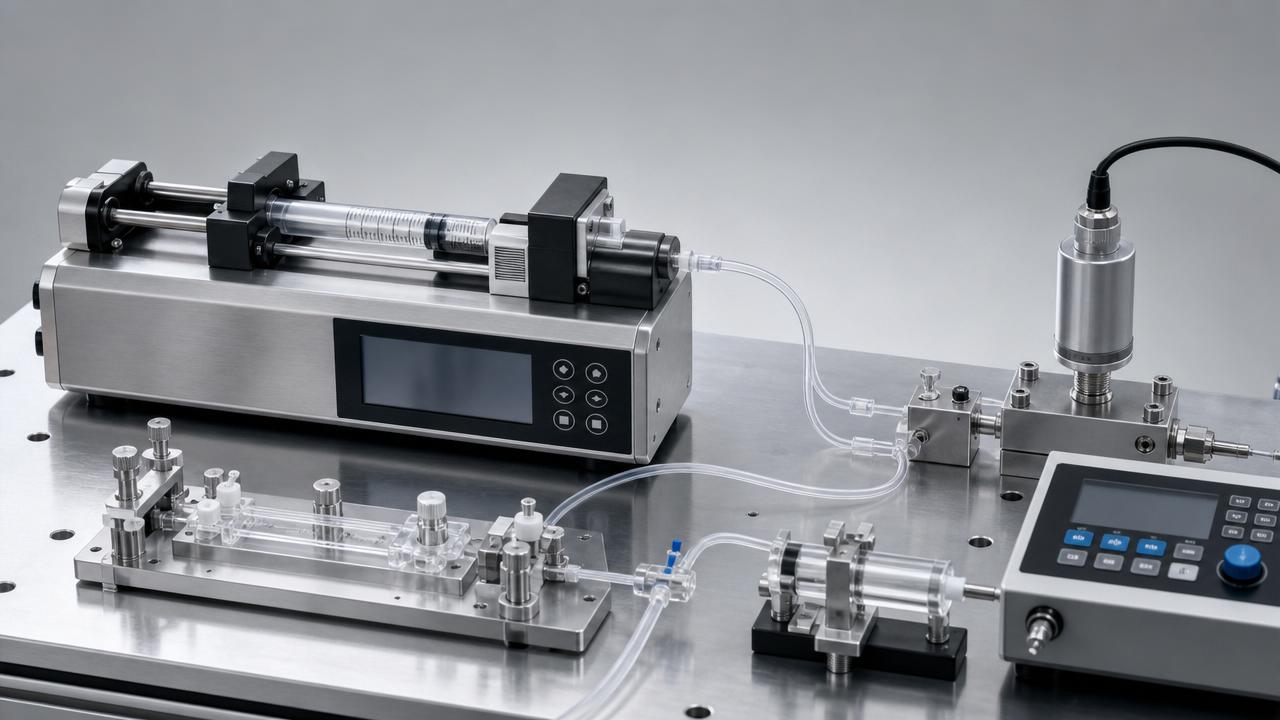
U.S. FDA’s newly finalized guidance on syringe pump validation marks a pivotal regulatory shift for global infusion device manufacturers — particularly those exporting to the U.S. market. Effective 1 November 2026, the requirement for ±0.5% dynamic flow tolerance verification will become mandatory for premarket clearance of clinical-grade syringe pumps, raising technical and compliance thresholds across the supply chain.
Event Overview
On 6 May 2026, the U.S. Food and Drug Administration (FDA) issued the final version of its draft guidance titled Syringe Pumps for Clinical & Research Use: Dynamic Flow Tolerance Validation Guidance. The document formally establishes ±0.5% dynamic flow fluctuation tolerance as a required premarket validation criterion for devices intended for clinical use. The requirement applies to all new 510(k) submissions submitted on or after 1 November 2026. Among the 237 China-manufactured syringe pump models currently holding active 510(k) clearance, only 41 meet this newly codified performance threshold.
Industries Affected
Direct Exporters & Trade Enterprises
Export-oriented medical device companies face immediate portfolio risk: models cleared under legacy performance benchmarks may no longer qualify for renewal or new indications without revalidation. Impact manifests in delayed market access, increased post-clearance audit exposure, and potential loss of distributor contracts tied to FDA-compliant specifications.
Raw Material & Component Suppliers
Suppliers of precision stepper motors, micro-actuators, high-stability pressure sensors, and low-drift microcontroller units (MCUs) are seeing revised technical inquiries from OEMs — notably requests for dynamic response characterization data (e.g., step-response time, settling error under pulsatile load). Demand for traceable calibration documentation and lot-level dynamic performance certification is rising.
Contract Manufacturers & OEMs
Manufacturers must now integrate dynamic flow testing into design verification (DVR) and process validation (PV) protocols — requiring upgraded test benches capable of simulating physiological flow profiles (e.g., pulsatile, ramped, intermittent infusions). This entails capital investment, staff retraining, and extended design iteration cycles. Notably, firmware validation scope expands to include real-time flow compensation algorithms.
Regulatory & Compliance Service Providers
Consultancies and testing labs report surging demand for dynamic flow tolerance test method development, protocol review, and FDA submission support. However, standardized test fixtures and reference methods remain scarce — creating service differentiation opportunities but also variability in assessment rigor across third-party labs.
Key Considerations & Recommended Actions
Conduct Immediate Portfolio Gap Assessment
Manufacturers should benchmark existing 510(k)-cleared models against the ±0.5% dynamic tolerance threshold using FDA-recommended test conditions (e.g., 1–10 mL/h range, 100–500 mmHg backpressure, sinusoidal flow modulation at 0.1–2 Hz). Prioritize models with highest U.S. revenue or clinical risk profile.
Engage Component Suppliers Early on Dynamic Specifications
Procurement teams must revise supplier qualification criteria to include dynamic performance parameters — not just static accuracy. Contracts should specify allowable phase lag, overshoot, and steady-state error under defined load transients.
Align Internal Validation Protocols with FDA Test Methodology
Internal DVR plans must explicitly reference Annex A of the guidance, which outlines test setup geometry, fluid viscosity standards, sensor placement rules, and data sampling requirements (minimum 100 Hz acquisition rate, ≥30-second duration per test point).
Prepare for Increased FDA Scrutiny During Submissions
Expect more frequent requests for raw dynamic test datasets (not just summary statistics), uncertainty budgets for measurement systems, and justification of worst-case test conditions. Pre-submission meetings are advised for complex or first-of-kind designs.
Editorial Perspective / Industry Observation
Analysis shows this guidance reflects FDA’s broader shift toward performance-based regulation for life-critical electromechanical devices — moving beyond static accuracy to system-level behavior under realistic physiological stress. Observably, the ±0.5% threshold was selected not as an arbitrary precision target, but as the upper limit correlating with clinically detectable hemodynamic perturbation in sensitive populations (e.g., neonates, critical care). From an industry perspective, the gap between current compliance rates (17%) and the new bar suggests a multi-year consolidation phase ahead — especially among mid-tier Chinese OEMs lacking in-house metrology labs. Current more actionable insight is that firms investing now in closed-loop flow control architecture and ISO/IEC 17025-accredited dynamic testing capability are positioning for both regulatory resilience and premium pricing power.
Conclusion
This guidance does not represent a technical outlier — rather, it signals a maturation of regulatory expectations for infusion safety. Its enforcement reinforces that regulatory compliance in advanced medical devices is increasingly inseparable from embedded system engineering rigor. A rational conclusion is that the impact extends beyond syringe pumps: it sets a precedent for dynamic performance validation in other programmable delivery devices (e.g., enteral pumps, wearable injectors), making early adoption of robust real-time verification frameworks a strategic imperative — not merely a compliance exercise.
Source Attribution
U.S. FDA Guidance Document: Syringe Pumps for Clinical & Research Use: Dynamic Flow Tolerance Validation Guidance (Final Version, Docket No. FDA-2025-D-XXXXX), published 6 May 2026. Available via FDA’s Guidance Documents Portal.
Compliance timeline and historical 510(k) data sourced from FDA 510(k) Summary Database (as of 30 April 2026).
Note: FDA has indicated that formal recognition of consensus standards addressing dynamic flow testing (e.g., IEC 60601-2-24 Ed. 4.0 Annex BB) remains pending — this area warrants continued monitoring.
Expert Insights

Chief Security Architect
Dr. Thorne specializes in the intersection of structural engineering and digital resilience. He has advised three G7 governments on industrial infrastructure security.
Related Analysis
Core Sector // 01
Security & Safety
- Precision Dispenser Pricing: Cost Drivers and Budgeting for Lab AutomationAuthor :Dr. Aris Nano

- China Tightens Export Compliance Checks on Lab Fluid-Control DevicesAuthor :Dr. Aris Nano

- China Tightens Export Checks on Lab Fluid DevicesAuthor :Dr. Aris Nano

- China Customs Tightens Export Checks for Lab Liquid-Handling EquipmentAuthor :Dr. Aris Nano

- ECHA SVHC Update Reaches Precision Fluid DevicesAuthor :Dr. Aris Nano

- FDA Tightens Accuracy Rule for Lab Fluid DevicesAuthor :Dr. Aris Nano

- ECHA Adds 12 SVHCs Affecting Lab Fluid DevicesAuthor :Dr. Aris Nano

- How to Choose a Variable Speed Peristaltic Pump for Accurate Lab Fluid TransferAuthor :Dr. Aris Nano