FDA Updates Syringe Pumps Dynamic Flow Verification Guidance
Author
Date Published
Reading Time
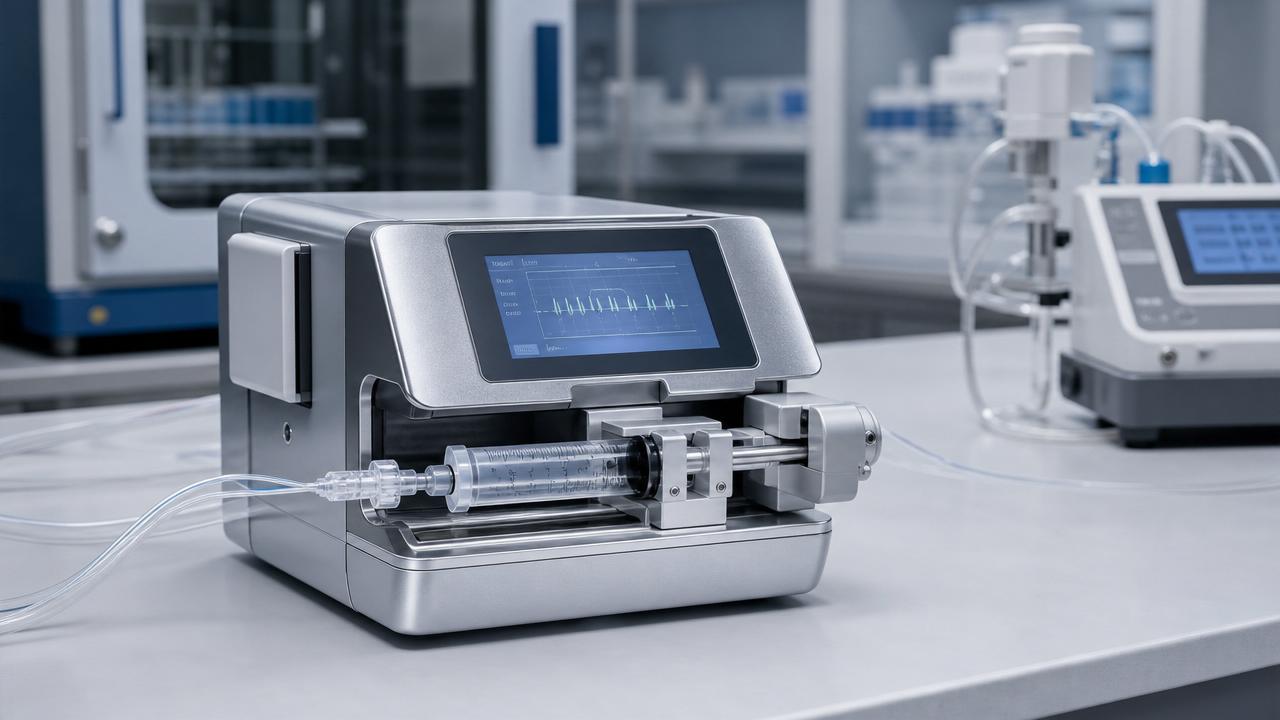
U.S. FDA updates syringe pump verification requirements effective July 2026, tightening dynamic flow accuracy to ±1.5% — a move with immediate implications for medical device exporters, contract manufacturers, and component suppliers serving the U.S. market.
Event Overview
The U.S. Food and Drug Administration (FDA) issued Revision 2 of its Technical Guidance for Dynamic Flow Rate Accuracy Verification of Syringe Pumps on May 12, 2026. The updated guidance mandates that all syringe pumps intended for infusion use in the U.S. must demonstrate dynamic flow rate deviation within ±1.5% — tightened from the previous ±3% threshold. Validation must be conducted under controlled conditions: at 37°C ambient temperature and across the full low-flow range of 0.5–5 mL/h. Compliance becomes mandatory for all new submissions and marketed devices subject to revalidation starting July 1, 2026.
Industries Affected
Direct Exporters (U.S.-bound Medical Device Companies)
These firms face direct regulatory exposure: non-compliant devices may be refused entry, detained at port, or subject to enforcement action including Warning Letters or import alerts. Post-market surveillance now includes retrospective review of flow validation protocols; previously accepted test reports lacking 37°C thermal control or full-range testing are no longer sufficient.
Raw Material & Component Suppliers
Suppliers of precision-machined syringe barrels, micro-stepper motors, pressure sensors, and silicone tubing must reassess material tolerances and thermal stability. For example, tubing exhibiting >0.8% flow drift between 25°C and 37°C may invalidate system-level compliance — prompting demand for new thermal characterization data and tighter batch-level QC documentation.
Contract Manufacturing Organizations (CMOs) and OEMs
Manufacturers performing final assembly, calibration, or software validation must update their design verification (DV) test plans and IQ/OQ/PQ protocols. The revised guidance explicitly requires real-time flow monitoring during ramp-up, hold, and ramp-down phases — not just steady-state sampling — increasing test duration and instrumentation complexity.
Regulatory & Quality Service Providers
Consultancies and testing labs must revise their SOPs and accreditation scopes (e.g., ISO/IEC 17025) to cover dynamic thermal flow profiling. Third-party test reports submitted to FDA will now be scrutinized for traceability to NIST-traceable flow standards calibrated at 37°C — a capability not universally available among current service providers.
Key Focus Areas and Recommended Actions
Review Existing Validation Protocols Against Rev.2 Requirements
Confirm whether legacy validation covers the entire 0.5–5 mL/h range at 37°C, uses continuous (not spot-check) measurement, and accounts for syringe plunger friction variability across barrel types. Gaps require protocol revision and re-execution prior to July 2026.
Engage Component Suppliers Early on Thermal Performance Data
Request updated thermal expansion coefficients, viscosity-temperature curves, and dynamic response data for critical subsystems (e.g., motor-driver assemblies, pressure transducers). Do not rely on room-temperature specs alone.
Update Technical Documentation for FDA Submissions
New 510(k), De Novo, or PMA filings after July 1, 2026 must include Rev.2-aligned test reports. For existing clearances, FDA expects justification — or remediation — if post-market validation does not meet the new standard.
Editorial Perspective / Industry Observation
Analysis shows this revision reflects FDA’s broader shift toward performance-based, physiology-relevant verification — moving beyond static lab conditions to clinically meaningful operating environments. Observably, the 37°C requirement signals heightened attention to thermal effects on fluid dynamics in ambulatory and ICU settings, where ambient temperature fluctuations directly impact dosing fidelity. From an industry perspective, the change is less about introducing novel technology and more about enforcing rigor in existing test infrastructure. Current more relevant concern is capacity strain: few accredited labs currently offer fully compliant dynamic flow profiling at scale, potentially creating bottlenecks ahead of the deadline.
Conclusion
This update marks a consequential step in FDA’s risk-based oversight of infusion safety — emphasizing reproducibility under physiological conditions over theoretical specifications. It does not signal a new classification or premarket pathway, but rather raises the evidentiary bar for demonstrating consistent, real-world performance. Rational interpretation suggests it favors vertically integrated manufacturers with in-house metrology capabilities — while increasing due diligence burdens across global supply chains serving U.S. patients.
Source Attribution
U.S. FDA, Technical Guidance for Dynamic Flow Rate Accuracy Verification of Syringe Pumps, Revision 2, issued May 12, 2026. Available via FDA Guidance Documents Portal (guidance.fda.gov). Note: FDA has indicated that future revisions may extend similar dynamic thermal requirements to other infusion devices (e.g., volumetric pumps, elastomeric infusers); stakeholders should monitor FDA’s Device Good Manufacturing Practice (cGMP) updates and the Center for Devices and Radiological Health (CDRH) Emerging Science Program for further developments.
Expert Insights

Chief Security Architect
Dr. Thorne specializes in the intersection of structural engineering and digital resilience. He has advised three G7 governments on industrial infrastructure security.
Related Analysis
Core Sector // 01
Security & Safety
- FDA Updates Syringe Pumps Dynamic Flow Verification GuidanceAuthor :Dr. Aris Nano

- CAICT Releases 2026 Export Compliance White Paper on High-Precision Fluid Control DevicesAuthor :Dr. Aris Nano

- CAICT Releases 2026 Syringe Pumps Export Compliance White PaperAuthor :Dr. Aris Nano

- FDA Updates Syringe Pumps Dynamic Flow Verification GuidanceAuthor :Dr. Aris Nano

- Peristaltic pump for lab wholesale: hidden costs after installationAuthor :Dr. Aris Nano

- FDA Finalizes Syringe Pump Dynamic Flow Tolerance GuidanceAuthor :Dr. Aris Nano

- CAICT Releases 2026 Export Compliance White Paper on High-Precision Fluid Control DevicesAuthor :Dr. Aris Nano

- FDA Releases New Validation Guidance for Syringe PumpsAuthor :Dr. Aris Nano