Flow Rate Drift in Peristaltic Pumps and Its Real Cost
Author
Date Published
Reading Time
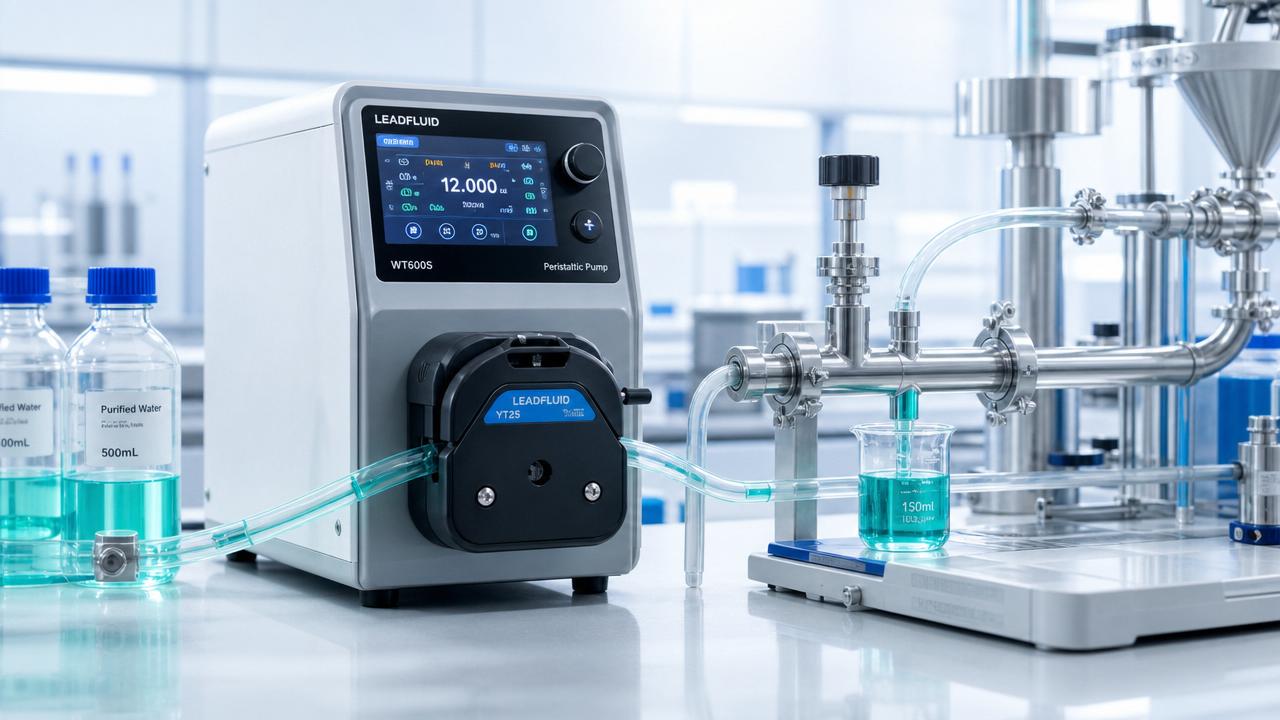
For finance approvers, flow inconsistency is not just a technical issue—it is a hidden cost driver affecting yield, compliance, and maintenance budgets. Understanding peristaltic pump flow rate stability helps quantify how small drift compounds into batch loss, rework, and unplanned downtime, making equipment selection a strategic investment rather than a routine purchasing decision.
In lab-scale production, pilot manufacturing, and precision fluid handling environments, even a small deviation in delivered volume can distort cost assumptions. A pump specified at 100 mL/min but drifting by 3% to 8% over a run may appear acceptable in a technical summary, yet the financial impact becomes material when the process involves high-value reagents, cell culture media, APIs, or tightly controlled buffer addition steps.
For procurement teams supporting pharmaceutical, chemical, and advanced research operations, the question is no longer whether flow drift exists. It is how quickly that drift turns into measurable cost. In settings benchmarked by G-LSP, where fluidic precision underpins scale-up confidence and regulatory readiness, peristaltic pump flow rate stability should be reviewed as a lifecycle cost variable, not as a minor equipment specification.
Why Flow Rate Drift Matters to Financial Performance
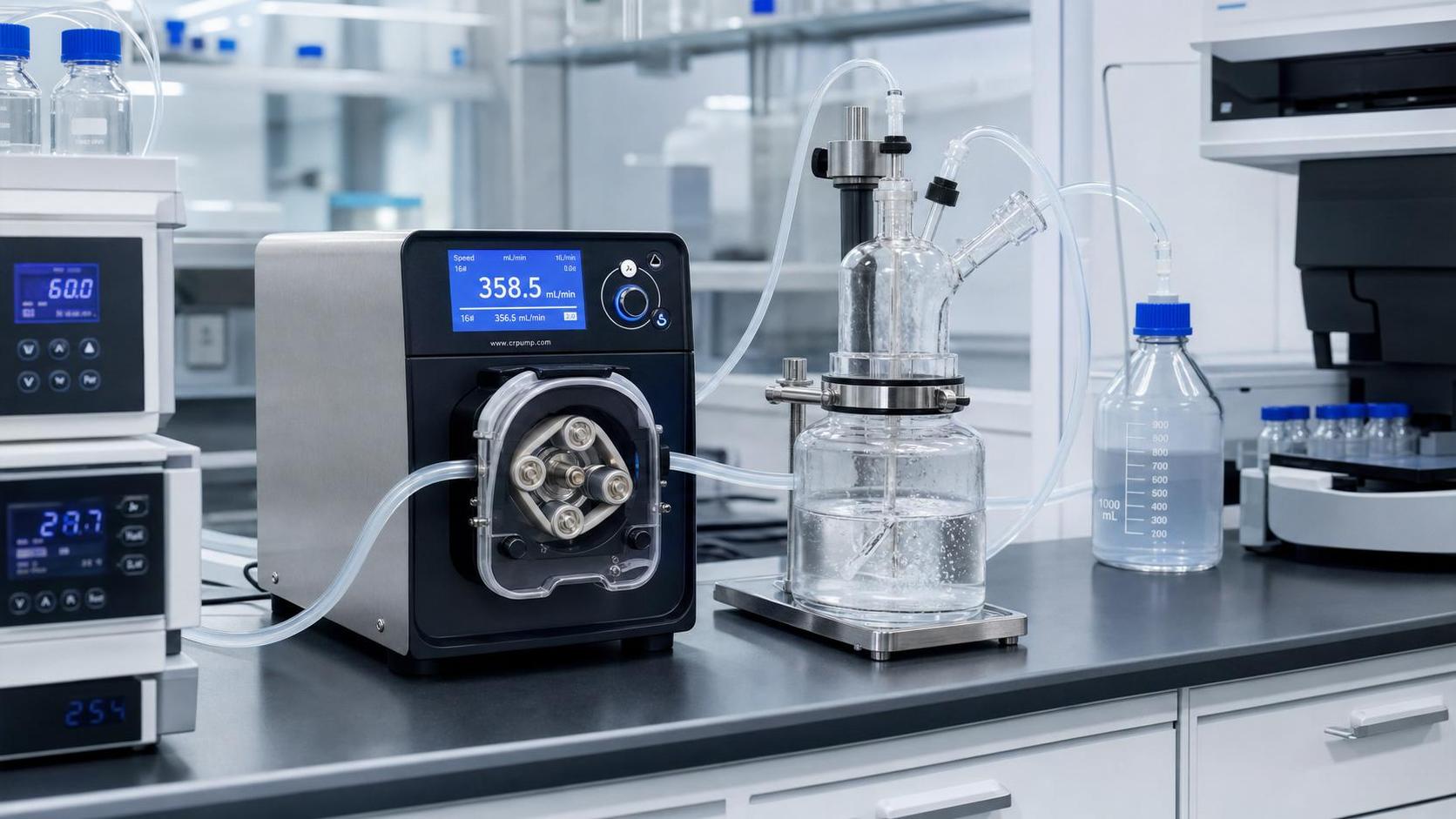
A peristaltic pump is often selected for sterile transfer, gentle handling, and easy tubing replacement. Those advantages are real. However, the mechanism that makes the technology useful also creates variability. Tube compression, tubing fatigue, back pressure changes, viscosity shifts, and rotor speed tolerance can all affect delivered volume over time. In many production-support workflows, the practical drift range may fall between ±1% and ±10%, depending on tubing quality, duty cycle, and process conditions.
From a finance perspective, three cost channels deserve attention. First, there is direct material loss. Second, there is process inefficiency, including extra operator checks and re-calibration. Third, there is the compliance burden when actual delivery deviates from validated or expected dosing windows. A small inconsistency repeated across 20, 50, or 200 cycles per month rarely remains small on the balance sheet.
The hidden multiplication effect of small percentage errors
Consider a pilot process that doses a buffer at 2.0 L per batch, with 40 batches per quarter. If the average actual delivery drift is 4%, the process is off by 80 mL per batch. That may be operationally tolerable in one experiment, but over 40 batches it becomes 3.2 L of accumulated deviation. If the liquid is a low-cost utility fluid, the issue may be manageable. If it is a formulated media component or a specialty reagent, the cost can quickly exceed the original purchase-price gap between a standard pump and a more stable system.
In bioprocessing and fine chemical environments, the bigger financial problem is often not the liquid itself but the resulting process variation. Off-ratio additions can alter pH adjustment windows, residence time assumptions, concentration endpoints, or cell response. That leads to repeated sampling, longer run times, and in some cases partial or full batch rejection. Finance teams reviewing capital requests should therefore ask not only for unit cost, but also for expected drift over 8-hour, 24-hour, and multi-shift use.
Where budget leakage usually starts
- Overdelivery of expensive reagents by 2% to 5% in repetitive dosing steps
- Underdelivery that requires rework, retesting, or process extension
- Shortened tubing life causing replacement cycles every 2 to 6 weeks instead of planned intervals
- Operator intervention increasing labor time by 10 to 20 minutes per shift
- Deviation investigations when recorded output and target output do not match
The table below translates typical drift patterns into financial risk categories that finance approvers can use during equipment review. The exact values vary by process, but the framework helps compare seemingly similar pumps on a more realistic cost basis.
The main conclusion is straightforward: peristaltic pump flow rate stability has a threshold effect. Below a certain drift level, costs remain contained. Once the process crosses that threshold, cost increases are no longer linear. They begin to spread across materials, labor, quality review, and schedule disruption.
Why purchase price alone can mislead decision-makers
A lower-cost pump can look attractive in a capital approval sheet if only the initial invoice is considered. But finance approvers should review at least a 12-month cost horizon and, for critical applications, a 24- to 36-month ownership horizon. In many cases, the extra cost of a higher-stability drive, better tubing compatibility, or integrated calibration controls is recovered through lower waste and fewer interruptions.
This is especially relevant in environments transitioning from batch to continuous or hybrid processing. When run durations increase from 30-minute transfers to 6-hour or 12-hour steady dosing windows, drift becomes more visible and more expensive. G-LSP benchmarking logic emphasizes this scale-up reality: bench performance is only valuable if it remains predictable under extended operational load.
What Causes Flow Instability in Peristaltic Pumps
Finance leaders do not need to become pump designers, but they do need to understand which technical factors materially affect cost. Peristaltic pump flow rate stability is influenced by several interacting variables, and not all of them are visible on a quotation sheet. A vendor may list speed range and maximum flow, yet omit how output changes after 4 hours of continuous operation or after repeated tubing replacement cycles.
1. Tubing wear and compression set
Tubing is the most common source of gradual drift. As it is repeatedly compressed by the rollers, the material loses elasticity. This compression set reduces recovery and changes the displaced volume per rotation. In high-duty applications, tubing may need replacement every 50 to 300 operating hours, depending on material, pressure, and temperature. If replacement intervals are not planned, both flow performance and budget forecasting suffer.
2. Back pressure and system resistance
Peristaltic pumps perform differently in a simple transfer line than in a system with filters, check valves, or narrow-bore fluidic paths. A rise in back pressure can reduce actual throughput compared with the nominal value established during open-flow testing. In microfluidic or formulation support tasks, even a modest pressure increase may create a 2% to 6% delivery gap unless the system is properly characterized.
3. Fluid viscosity and temperature shifts
Water-like fluids behave differently from shear-sensitive media, polymer solutions, or concentrated buffers. Viscosity changes with temperature can alter tubing refill behavior and line resistance. In processes operating between 15°C and 30°C, a fluid that thickens at the lower end may produce a measurable output change even if motor speed remains constant. That mismatch often goes unnoticed until yield or consistency problems appear downstream.
4. Drive accuracy, control resolution, and calibration practice
Not all drives hold speed equally well, and not all facilities calibrate at the same frequency. A pump with better speed regulation but poor tubing selection may still drift. Likewise, excellent tubing cannot compensate for weak control resolution or inconsistent preventive maintenance. Stable output is usually achieved through system matching, not through one component alone.
The following table gives finance approvers a practical view of which variables should be checked before approving a purchase or replacement cycle.
These questions help distinguish commodity pricing from application-fit value. In finance review meetings, this framework often reveals that the cheapest pump is only cheaper on day one, not over the operating life of the asset.
How to Evaluate the Real Cost of Ownership
A strong approval process should convert technical uncertainty into measurable financial inputs. For peristaltic pump flow rate stability, that means moving beyond catalog flow range and asking how the pump behaves in actual service. A useful model includes five cost layers: capital cost, tubing consumption, labor for monitoring, quality impact, and downtime exposure.
A simple 5-factor review model
- Initial equipment price and any accessories required for accurate operation
- Annual tubing and wetted-path replacement frequency
- Operator time for calibration, correction, and documentation
- Cost of nonconforming runs, discarded material, or repeated tests
- Downtime risk during critical transfers, feed steps, or pilot campaigns
Even in moderate-throughput facilities, one additional operator check per shift can add up quickly. If a technician spends 15 minutes verifying or correcting flow during two shifts per day, that becomes 30 minutes daily, roughly 10 to 11 hours monthly in a 22-day operating month. At that point, labor cost becomes part of the pump economics, not a separate issue.
Comparing low-price and high-stability procurement options
The most useful comparison is not “cheap versus expensive.” It is “lower first cost versus lower process variance.” In regulated or high-value fluid handling, the second option often produces a better financial outcome. This is particularly true when the process uses expensive media, personalized therapeutics inputs, specialty catalysts, or limited campaign windows where schedule slippage is costly.
A finance approver should also distinguish between noncritical transfer applications and precision dosing applications. For a simple waste transfer line, a wider drift band may be acceptable. For nutrient feed, reagent metering, or micro-volume support, a narrower stability band is worth paying for. One specification should not be generalized across all pump use cases.
Recommended approval checkpoints
- Request expected flow accuracy and repeatability under actual pressure conditions
- Review tubing replacement intervals in hours, not just calendar dates
- Ask whether the pump was benchmarked for 1-hour, 8-hour, and continuous-use scenarios
- Confirm whether calibration records can support GMP or internal quality documentation
- Estimate annual cost at 70%, 85%, and 100% of planned utilization
Selection Criteria for Finance Approvers in Precision Fluidic Operations
In multidisciplinary environments such as those covered by G-LSP, pump selection rarely affects only one department. Lab directors care about reproducibility, engineers care about integration, and quality teams care about traceability. Finance approvers need a cross-functional filter that ties all three into a capital decision. The best way to do that is to score options against operational fit, not just list price.
Four purchasing criteria that directly affect ROI
First, match the pump to the process window. A system that is stable at 20 mL/min may not be equally stable at 2 mL/min or 200 mL/min. Second, check consumable economics. If tubing cost appears low but replacement is required every week, annual spend may exceed expectations. Third, review documentation quality. In ISO-, USP-, or GMP-aligned environments, poor documentation creates hidden labor and audit risk. Fourth, assess service response and spare-part availability, especially if downtime can delay a production campaign.
Typical fit by application criticality
For noncritical utility movement, acceptable flow drift may sit in a broader range. For pilot-scale synthesis additions, single-use bioprocess support, or automated liquid handling support, the tolerance is much tighter. Finance teams should therefore ask for an application matrix rather than approve one general-purpose pump for every duty. That avoids under-specifying a critical task or overpaying for a noncritical one.
Common approval mistake
One frequent mistake is treating pump stability as an engineering preference rather than a budget control measure. In reality, peristaltic pump flow rate stability affects forecast accuracy. When output drift is not controlled, planned batch economics, maintenance scheduling, and consumables budgeting all become less reliable. That creates avoidable variance in operating expenditure.
Implementation, Monitoring, and Risk Reduction
Buying a suitable pump is only the first step. To protect return on investment, organizations should implement a monitoring routine that catches drift before it becomes a deviation. In many facilities, a lightweight verification plan is enough: baseline the actual flow at installation, re-check after tubing change, and verify again at fixed operating intervals such as every 40, 80, or 120 hours depending on process criticality.
A practical control routine
- Establish a reference fluid and target flow condition
- Record actual delivered volume over a defined time window
- Set an internal alert threshold, such as drift above 2% or 3%
- Replace tubing or recalibrate before the drift reaches process-critical levels
- Document trend data for procurement and maintenance review
This approach supports better budgeting because maintenance becomes planned rather than reactive. It also improves sourcing decisions over time. After 6 to 12 months of documented use, finance and engineering teams can compare suppliers using real cost-per-stable-hour rather than theoretical specifications.
Where G-LSP-style benchmarking adds value
For organizations moving from benchtop experimentation to pilot or early production, benchmarking under standardized conditions is essential. A pump that appears accurate in a short, water-based test may perform differently in a bioconsistent workflow with higher viscosity, longer duty cycles, or stricter documentation needs. Technical benchmarking helps finance approvers defend spend decisions with operational evidence rather than assumptions.
That is particularly important in multinational pharmaceutical and chemical operations, where one procurement choice can influence multiple sites. If a stable pumping platform reduces drift, simplifies validation support, and lowers intervention frequency across several workflows, the financial benefit scales beyond one department or one quarter.
Peristaltic pump flow rate stability is not a narrow engineering metric. It is a cost-control factor that influences yield, compliance readiness, maintenance planning, and capital efficiency. For finance approvers evaluating fluidic equipment in lab-scale production, pilot synthesis, bioprocess support, or precision dosing environments, the most reliable decision framework is to compare total ownership impact over 12 to 36 months rather than focus on purchase price alone.
When flow drift is quantified early, procurement becomes more strategic, operating variance becomes more manageable, and high-value processes become easier to scale with confidence. If you are reviewing pump options for sensitive R&D-to-production transitions, now is the right time to assess stability, consumables burden, and validation fit together. Contact us to discuss your application, request a tailored evaluation framework, or learn more about precision fluidic solutions aligned with your operating and budget priorities.
Expert Insights

Chief Security Architect
Dr. Thorne specializes in the intersection of structural engineering and digital resilience. He has advised three G7 governments on industrial infrastructure security.
Related Analysis
Core Sector // 01
Security & Safety
- China Tightens Export Compliance Checks on Lab Fluid-Control DevicesAuthor :Dr. Aris Nano

- China Tightens Export Checks on Lab Fluid DevicesAuthor :Dr. Aris Nano

- China Customs Tightens Export Checks for Lab Liquid-Handling EquipmentAuthor :Dr. Aris Nano

- ECHA SVHC Update Reaches Precision Fluid DevicesAuthor :Dr. Aris Nano

- FDA Tightens Accuracy Rule for Lab Fluid DevicesAuthor :Dr. Aris Nano

- ECHA Adds 12 SVHCs Affecting Lab Fluid DevicesAuthor :Dr. Aris Nano

- How to Choose a Variable Speed Peristaltic Pump for Accurate Lab Fluid TransferAuthor :Dr. Aris Nano

- FDA Tightens Import Rules for Syringe PumpsAuthor :Dr. Aris Nano